“Talent may get someone off the starting blocks faster, but without a sense of direction or a goal to strive for, it won’t count for much.” – David Bayles and Ted Orland
WHAT ARE YOU DOING WELL with the application of your ACRYLIC PAINT – Give yourself that thought today! PAINT OUT AND WORK!
What is the most successful aspect of your painting? What is the least successful part of the painting? Stop and think – explain your feelings so you can look back on this when we come back.
Know about solving visual challenges (making art) using analysis (breaking the work into its parts).
How are you going to work on the ideas behind the portrait over the break? What FAMOUS images come to mind when you think of ART HISTORY? You are going to use ideas from Art History in the final work… What worries do you have?
AP Studio Art: Log In and Log On… AP is WAITING to hear from you!
WHAT? Look at the WORK here! WOW!
Goals:
3.2 apply subjects, symbols, and ideas in art and use skill to solve visual challenges – WHAT ARE YOUR CHALLENGES?
Which works are you most proud of and why? What is working with the pieces that you would choose as your “quality” works? Why do the other ones NOT work? What do you have to do over break?
“Talent may get someone off the starting blocks faster, but without a sense of direction or a goal to strive for, it won’t count for much.” – David Bayles and Ted Orland
Kahine Wiley – Interview Magazine Article… Research HIP HOP and Graffiti! How can you use a name, tag, slogan in your composition in the style of graffiti to add to the BACKGROUND?
Goals:
Identify the intentions and purposes behind making art.
4.4 evaluate and interpret your art for relationships in 4.4.1 form 4.4.2 context. 3.2 apply subjects, symbols, and ideas in art and use skill to solve visual challenges.
How does your art compare with the work of “professionals” and how can you work to create a better understanding of your approach / intent / ideas?)
“Talent may get someone off the starting blocks faster, but without a sense of direction or a goal to strive for, it won’t count for much.” – David Bayles and Ted Orland
Apply acrylic paint focusing on mixing techniques, and processes (one shape at a time) with an 1.1.3 awareness so that your ideas (modifying the image to one specific color scheme) are executed well.
What is the most difficult part to mixing colors with the acrylic paints? What do you feel makes it the most challenging / frightening medium for some? What are you enjoying about this process?
Create multiple solutions to your CONCENTRATION visual challenges and apply media, techniques, and processes with skill confidence and awareness so that your ideas are executed well.
What were the biggest impressions you had from the classmate’s works? What were the most difficult things you felt as you presented your work? Conversation between classmates about the 2 questions for your exam. How does this work relate to your concentration?
“Talent may get someone off the starting blocks faster, but without a sense of direction or a goal to strive for, it won’t count for much.” – David Bayles and Ted Orland
Apply acrylic paint using the mixing techniques, and processes (one shape at a time with an 1.1.3 awareness so that your ideas (modifying the image to one specific color scheme) are executed well .
What is FUN about the use of acrylic paints? If you are NOT painting yet… what do you need to finish up so you can begin painting tomorrow? How can you use this in other classes, other aspects of your life?
1.4 Initiate, define, and solve challenging visual arts problems using skills of (1.4.1) analysis (.2) synthesis (.3) evaluation. (P).
Research and Information Fluency – Students apply digital tools to gather, evaluate, and use information. – Get out there and visit a bit about Henri Matisse!
What was the most challenging way to draw? Why was this most difficult way to go? How OFF were you from the original that you drew from your memory? What is most important about drawing when it comes to observation? Facial Proportions
4.4 evaluate and interpret your art for relationships in 4.4.1 form 4.4.2 context and 4.4.3 meanings showing understanding of the work of various art professionals* ANSWER THIS FOR YOUR GOALS? What relationships do you see between your work and the ORIGINAL Scientists vision of the microorganism?
What was the best and the worst part of the work? What are you going to take into your next major artwork that you learned from this artwork? What makes you stop and THINK about the work you have seen bu others?
Drawing: FINAL DAY! These are AWESOME – Get Ready to WRITE about the work as you make your artist statement!
4.4 evaluate and interpret your art for relationships in 4.4.1 form 4.4.2 context and 4.4.3 meanings showing understanding of the work of various art professionals* – Answer this for your GOALS:What are the STRONG relationships you have with Kandinsky in his work and yours?
What did you take away from this overall DEEP and difficult project?
AP Studio Art: 1 Drawing today – 20 minute reclining figure – How about looking at a Henry Moore instead of the Mary Cassatt.
2.3 create artworks that solve visual challenges – ANSWER THIS: What has been the BIGGEST CHALLENGE you have faced with the idea / activity of the figure drawing? How will you handle 20 minutes today?
How did things go today? Look at everyones drawings and make comments about their figure drawings in their binders.
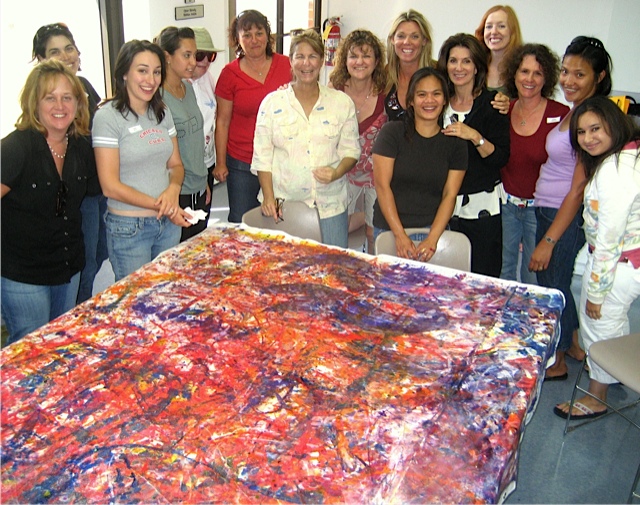
While in class we set goals in class based on the N.V.A.S. and the N.E.T.S… let’s take a look at our individual picture for a moment. Please think about the larger goal (NVAS) that is presented, but write out what we were hoping to gain from these experiences. It is always good to “look into the rear view mirror” to see who we were that made us who we are. Challenging to really see perhaps, but always good to think about and reflect upon.
“No matter how many goals you have achieved, you must set your sights on a higher one.” – Jessica Savitch
What does your pastel drawing say about how you understand the relationships in 4.4.1 form 4.4.2 context and 4.4.3 meanings? What were YOU hoping to learn or take away from this project?
REVIEW the work you have done for today. What do you need to do for tomorrow? What do you need to expand on, tweak? Share the ideas / challenges with your neighbors.
Drawing: What does your music say to you? Perhaps revisit the song and see if it takes you where you wanted to go.
What does your Kandinsky inspired pastel drawing say about how you understand the relationships in 4.4.1 form 4.4.2 context and 4.4.3 meanings? What were YOU hoping to learn or take away from this project?
How does your art compare with the work of “professionals” and how can you work to create a better understanding of your approach / intent / ideas? Please don’t think of worse than or better than, but rather compare / contrast, similar / different.
AP Studio Art: Great to be a GROUP again… Let’s draw MORE of US!
3.2 apply our models poses, and idea of capturing the human form QUICKLY and use skill to capture that pose and form completely. What does this mean to you?
What are the strengths of the Composition? Where do you find the weaknesses in your work? How can you reflect tomorrow to change / alter / move forward from that?
69th Annual ASCD Conference Attendees (and Janie) – Welcome to my DAY to DAY Goals Website!
Take a tour, have a look, follow me, and see how I effectively use technology as a tool for interaction, content, resources, collaboration and communications tool in my classroom. If you would like to contact me – you can e-mail me at fjkorb@gmail.com. Enjoy!
GOALS:
Know about how one teacher uses technology in the classroom as a tool for interaction, engagement, content, and a resource for students, parents, and the world!
Know about the benefits and positive aspects GANAG and all its components have added to one teacher’s ability to be more effective instructor and planner for my students (and the world)!
Take a minute and discuss with your neighbors about any questions about the how I use technology in my classroom? How are you effectively using technology as a learning tool, interactive tool, tool of engagement in your classroom? What else might you try out? Did you get my e-mail address for questions you might have? How about my website address?
Shane Koyczan – TED Talk “To This Day”... for the Bullied and Beautiful… “If you can’t see anything beautiful about yourself, get a better mirror, look a little closer, stare a little longer, because there’s something inside you that makes you keep trying despite everyone who told you to quit.”
Join Mr. Korb’s Remind 101 Texting Service for the following classes for:
How are you communicating 5.5.1 rationale, 5.5.2 ideas and, 5.5.3 opinions. How does the drawing relate to the idea of PERSPECTIVE and making art inspired from SCIENCE and OTHER IDEAS?
Based on the ideas of science and microscopic images, is your work successful in creating a NEW and INTERESTING COMPOSITION? What is SUCCESSFUL? Composition? Technique with OIL PASTELS? Process with PERSPECTIVE?
Drawing: Kandinsky – What did you take from yesterday?
5.5 evaluate responses to works of art for communicating 5.5.1 rationale, 5.5.2 ideas and, 5.5.3 opinions. How does the drawing relate to the idea of COLOR / MEANING / EMOTION / Spirituality / YOU / Music?
What’s working? What’s not? What to do to wrap it up for next week?
1.1 apply whatever media you are choosing and use a variety of techniques, and processes with 1.1.1 skill and 1.1.3 and awareness so that your ideas are executed well.
What have you got to do this weekend to present your work? ANSWER The TWO QUESTIONS AGAIN… ONLINE!
Shane Koyczan – TED Talk “To This Day”... for the Bullied and Beautiful… “If you can’t see anything beautiful about yourself, get a better mirror, look a little closer, stare a little longer, because there’s something inside you that makes you keep trying despite everyone who told you to quit.”
Join Mr. Korb’s Remind 101 Texting Service for the following classes for:
2.4 compare Kandinsky’s points of view and your theory regarding composition and meaning in artwork
As this develops, how are your ideas and Kandinsky’s similar and how are they different? What might you take away from this experience? How can you share that idea with the world? WRITE this out from the beginning of the hour. Has it Changed?
Shane Koyczan – TED Talk “To This Day”... for the Bullied and Beautiful… “If you can’t see anything beautiful about yourself, get a better mirror, look a little closer, stare a little longer, because there’s something inside you that makes you keep trying despite everyone who told you to quit.”
Join Mr. Korb’s Remind 101 Texting Service for the following classes for: