AP – 4.2Ad: Critique, justify, and present choices in the process of analyzing, selecting, curating, and presenting artwork for a specific exhibit or event.
Painting – 3.1Ac: Engage in constructive critique with peers, then reflect on, re-engage, revise, and refine works of art and design in response to personal artistic vision.
Last Day of the Crit? Hope so… Of all the works you have seen so far, what has been the most successful aspect to that work? Be specific and thoughtful. OR Of the works you have seen what has been the weakest aspect of the work – BE SPECIFIC AND THOUGHTFUL!
4.2Ad: Critique, justify, and present choices in the process of analyzing, selecting, curating, and presenting artwork for a specific exhibit or event.
3.1Ac: Engage in constructive critique with peers, then reflect on, re-engage, revise, and refine works of art and design in response to personal artistic vision.
What was (is going to be) helpful about 1) seeing your work from a distance and 2) hearing what others thought about the work you created?
What is something that you took away from the critique today – whether it be about YOUR work or about another person’s work.
If you FORGOT your RUBRIC for tomorrow’s crit… BRING IT DONE AND READY TO TALK (and bring a snack to share – YUM)! If you DID forget to bring it home… LINK IS HERE! Get your work ready to present over the next couple of days!
AP: 4.2Ad: Critique, justify, and present choices in the process of analyzing, selecting, curating, and presenting artwork for a specific exhibit or event.
PAINTING: 3.1Ac: Engage in constructive critique with peers, then reflect on, re-engage, revise, and refine works of art and design in response to personal artistic vision.
As an individual, what do you think you are going to struggle with the most in today’s (and tomorrow – and maybe Wednesday’s) Critique.
What one thing did you add to the critique that nobody else did?
7.2P: Analyze how one’s understanding of the world is affected by experiencing visual imagery.
Other than using perspective… what other technique(s) do you feel one could use to create a believable sense of FORM on a 2 dimensional picture plane?
What habits are you having a hard time shaking as you begin to work with the forms that are outlined on the worksheet? Share the changes you are finding with these new techniques.
3.1Ad: Reflect on, re-engage, revise, and refine works of art or design considering relevant traditional and contemporary criteria as well as personal artistic vision.
Take a FEW MOMENTS and think about the work you have in front of you – your work. Like yesterday – write a brief self critique about your work, using the art terms at the top of the page. When you have made your comments – go to work and try to resolve the images.
What did you take away from the brief SELF critique today? Write down what you have taken from the crit. ON YOUR written SELF-CRIT from the beginning of class.
3.1Ac: Engage in constructive critique with peers, then reflect on, re-engage, revise, and refine works of art and design in response to personal artistic vision.
How is this collage / painting using traditional and contemporary ideas in the 1) Composition and 2) Techniques? – 5 Minute SELF – EVALUATION today… this will / can be used to FURTHER your thoughts on MONDAY and TUESDAY!
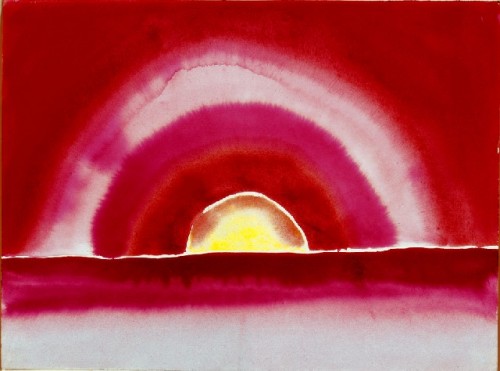
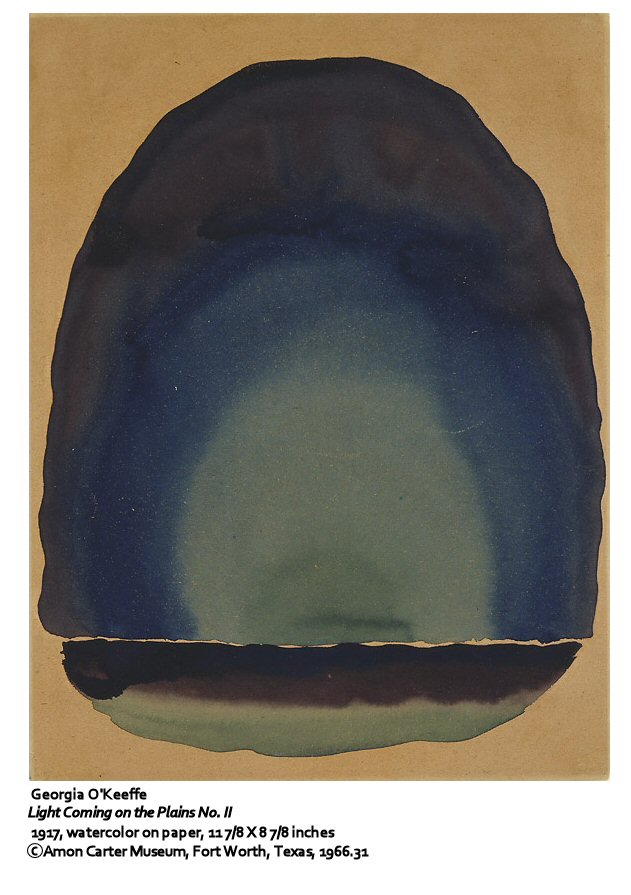
Monday Crit – Plan on spending time cutting the work out from the board and mounting it to a frame. Do you have work to do this weekend? WHAT and WHEN? Make plans for the weekend. LASTLY – – – What stood out with O’Keefe’s work as you looked them over this week? Anything stand out? Anything (art terms) that you really liked or disliked?
3.1Ad: Reflect on, re-engage, revise, and refine works of art or design considering relevant traditional and contemporary criteria as well as personal artistic vision.
Take a look at your classmates work – on the corkboards in the hallway and give them feedback / critique – using art terms (listed on the page handed out to you).
What did you take away from the critique today? Write down what you have taken from the written crit
Painting: Painting this week – Starting to think about ACRYLICS.
3.1Ac: Engage in constructive critique with peers, then reflect on, re-engage, revise, and refine works of art and design in response to personal artistic vision.
Looking at the work in front of you – and knowing we are critiquing on MONDAY and TUESDAY – What CRITERIA would you consider as we begin to consider evaluation? Please consider some of the NATIONAL VISUAL STANDARDS as you write this one up – it may take a few minutes to complete this before you begin PAINTING!
What CRITERIA are you focused on in the creation of your work? Are you drawn to that criteria in additional works you make?
7.2P: Analyze how one’s understanding of the world is affected by experiencing visual imagery.
Thinking about the ideas of perspective – looking at the drawings you did in WEEK 1 and comparing them to the real objects in front of you – what sort of differences do you see in how the forms recede in space (go back into space).
How does using VALUE and SHADING help you create a more believable sense of space on a two dimensional picture plane?
1.2Ad: Choose from a range of materials and methods of traditional and contemporary artistic practices, following or breaking established conventions, to plan the making of multiple works of art and design based on a theme, idea, or concept.
Having taken the time to talk yesterday and now looking at the artwork you have in front of you … what do you enter into today’s studio time thinking about with your drawing?
How do you feel about the work you are creating today? Three sentences (minimum) on the sticky note and attach it to your GOALS page.
Painting: Painting this week – Starting to think about ACRYLICS.
2.1Ac: Through experimentation, practice, and persistence, demonstrate acquisition of skills and knowledge in a chosen art form.
Again, thinking about working with WATERCOLORS and moving onto the next medium of Acrylics… based on PAST EXPERIENCES… what differences do you see being part of the process?
Biggest accomplishment with the watercolor today? how have you seen stagnation – non-experimentation / growth as an artist so far?
9.1P: Establish relevant criteria in order to evaluate a work of art or collection of works.
Looking at the forms you created – what is the STRONGEST / MOST SUCCESSFUL aspect of these four objects? What is the WEAKESST / LEAST SUCCESSFUL aspect of these four objects?
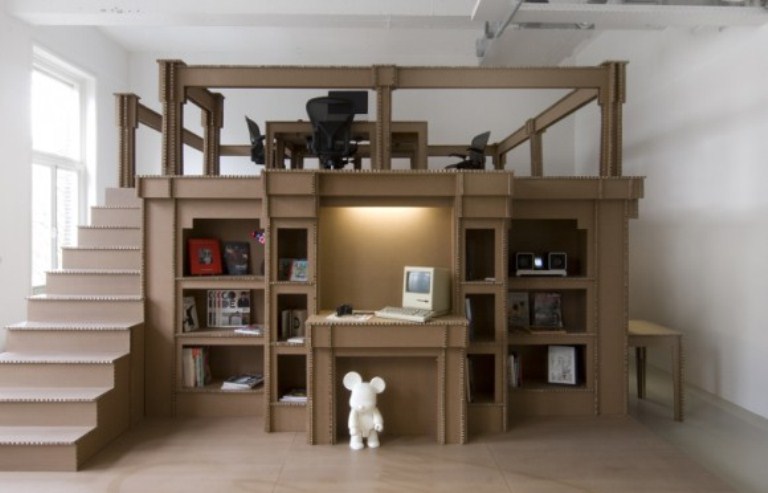
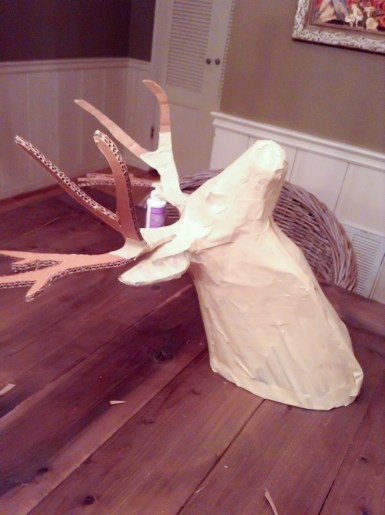
What form was the most challenging for you to create with the CARDBOARD? Why do you feel that was the biggest challenge? Use the ART TERMS that you know (Form, Shape, Effort, Execution…)
1.2Ad: Choose from a range of materials and methods of traditional and contemporary artistic practices, following or breaking established conventions, to plan the making of multiple works of art and design based on a theme, idea, or concept.
Looking at the assembly of the composition, what is NEW in the approach to CREATING the artwork? Knowing I am asking you to think outside of the “box,” how is it different? Easier? More Difficult? – Share on your GOALS page the differences and how they may be challenging you. SHARE THIS WITH YOUR CLASSMATES.
How did having conversation with your classmates about the processes / materials that you are using give you different ways, new ideas about the work you are making?
Painting: Painting this week – Starting to think about ACRYLICS – but CRIT first.
2.1Ac: Through experimentation, practice, and persistence, demonstrate acquisition of skills and knowledge in a chosen art form.
How do you feel that working with WATERCOLORS might take you to the next medium of Acrylic? Based on PAST EXPERIENCES… what similarities do you see being part of the process?
Biggest accomplishment with the watercolor today? how have you seen GROWTH as an artist so far?
10.1P: Document the process of developing ideas from early stages to fully elaborated.
These forms may not be your MASTERPIECE of all time, but they did require focus, work, and attention to detail. Looking at ALL the FORMS you created, what do you feel about the ease or difficulty about creating a work of art.
If you are NOT done with the paper mache forms, what could you / should you have done over that past 2 weeks to make sure you DID get them finished by the end of the period? YOU WILL COME TO CLASS TOMORROW with them done.
1.1Ac: Individually or collaboratively formulate new creative problems based on student’s existing artwork.
Looking over the work you have, what surprises do you see from where you started from two weeks ago? Stronger than you expected? Weaker? EXPLAIN! I will be asking you about Georgia O’Keefe’s work on Friday – anything stand out today? Keep an eye on her work as the week progresses.
What ELEMENT of art do you find being the strongest one that you are using? Color? Line? Shape? Form? Space? Tell me about it!
Painting: Painting this week – Starting to think about ACRYLICS – but CRIT first.
1.2Ad: Choose from a range of materials and methods of traditional and contemporary artistic practices, following or breaking established conventions, to plan the making of multiple works of art and design based on a theme, idea, or concept.
What are you most comfortable with? Pencil, Charcoal, Pastel, or Paint? Why? What medium are you struggling with? Why? how can you move forward in your work with the UNCOMFORTABLE medium? (1, 2, 3, 7)
What have you added to this composition that is NEW to you? Something that you have NOT done in the past. Anything that is new…
REMEMBER! Create a ONE PAGE PAPER – DUE LAST FRIDAY – I’m Calling you on it TODAY!
(TYPED! double spaced, 11 or 12 point Times New Roman, Palatino – Serif-ed type font) that discusses the artists and their works. Use ideas about the work as to what drew you to the work, what styles did you like, what techniques do you appreciate? A small history of the artist and personal reflection. How will you use similar ideas in your work as they did in theirs? Here are the artists to research: Winslow Homer, Charles Demuth, Thomas Eakins, Edward Hopper, Dong Kingman, Reginald Marsh, Charles Sheeler, J.M.W. Turner, Thomas Moran, Georgia O’Keefe, James Whistler, or Andrew Wyeth. PAPER IS DUE ON Friday, September 19, 2014.
7.1P: Hypothesize ways in which art influences perception and understanding of human experiences.
When you see the forms in a finished state, how do you see it as relating to your experience as a person – as part of the art making experience? How could you see it as a moving you forward in the art making experiences? What can you learn and practice with and from these forms?
What was your biggest success over these past two weeks working on the sculptural forms? What are 2 criteria you would set up for yourself as a GRADING criteria? How would you EVALUATE YOURSELF in completing these criteria? a – F and WHY?
10.1Ad: Synthesize knowledge of social, cultural, historical, and personal life with art-making approaches to create meaningful works of art or design.
Working on the plants all week – look carefully and think about HOW ARE YOU GOING TO MOVE FORWARD WITH THE IMAGE? Do you have a PERSONAL STORY you could express WITH the work? Maybe not immediately recognizable, but through symbolism?
Do you find meaning in your work? Do you find something interesting in the plants? What is challenging you? Why’d you do what you did? Elements / Principles you are REALLY thinking about?
2.1Ac: Through experimentation, practice, and persistence, demonstrate acquisition of skills and knowledge in a chosen art form.
What would you say are some NEW SKILLS you have developed in the beginning of the painting process? Layering / Glazing? Wet on Wet Graded Washes? Observational Drawing? Collage Techniques? GRIT and Persistence?
What are the STRONGEST aspects of your work this week? What do you see as being ONE challenge you need to REALLY focus on next week?
REMEMBER! Create a ONE PAGE PAPER – DUE TOMORROW!(TYPED! double spaced, 11 or 12 point Times New Roman, Palatino – Serif-ed type font) that discusses the artists and their works. Use ideas about the work as to what drew you to the work, what styles did you like, what techniques do you appreciate? A small history of the artist and personal reflection. How will you use similar ideas in your work as they did in theirs? Here are the artists to research: Winslow Homer, Charles Demuth, Thomas Eakins, Edward Hopper, Dong Kingman, Reginald Marsh, Charles Sheeler, J.M.W. Turner, Thomas Moran, Georgia O’Keefe, James Whistler, or Andrew Wyeth. PAPER IS DUE ON Friday, September 19, 2014.





 Art With Korb