“Go and make interesting mistakes, make amazing mistakes, make glorious and fantastic mistakes. Break rules. Leave the world more interesting for your being here. Make. Good. Art.” ~ Neil Gaiman
For audio issue in B107 – it should all be set but… the RECEIVER SHOULD BE SET TO AUDIO 1 and one can help with the volume. STUDENTS – Help out if it is needed.
Intro to Painting – Book Binding and Plein Air Paintings
Intro to Digital Art and Photography – Photoshop and Art History and Portraits.
Art Foundations – Perspective and Value – Look at the GOOGLE CLASSROOM for the assignment
This doesn’t happen often – TWO POSTS in ONE WEEK! It is a busy week. If you are looking for this weeks LESSONS and PLANS for the Classroom Studio… Scroll below.
Follow all the episodes HERE at Authentic Obsessions website or listen wherever you get your podcasts.
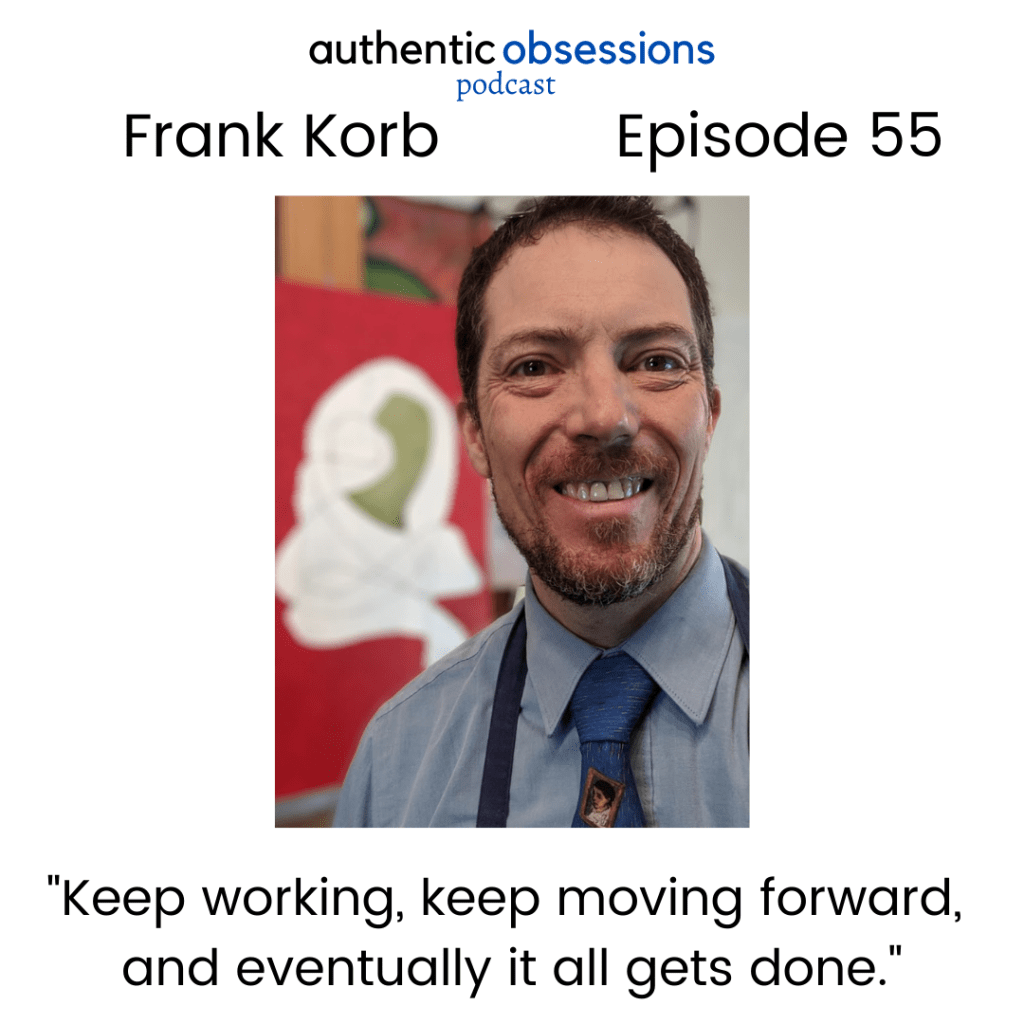
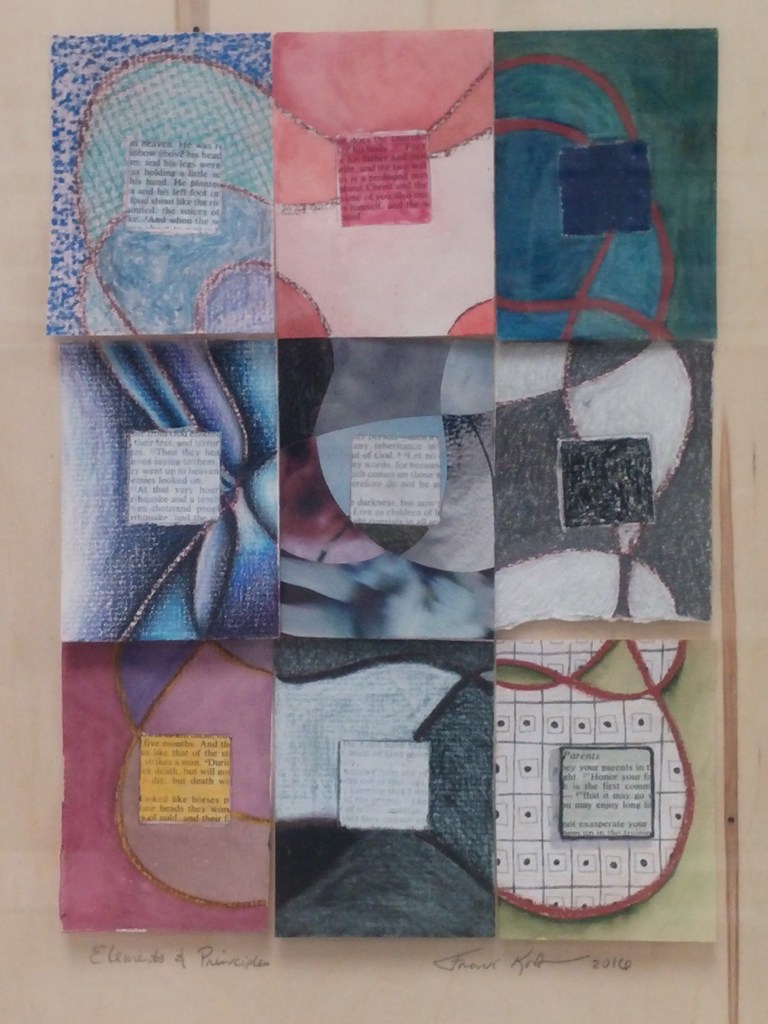
Patient, purposeful and persistent, high school arts educator and abstract painter Frank Korb is fascinated with building frames, stretching canvases, and preparing his materials. Frank focuses on the formal elements and principles of art and the push and pull of relationships. Frank starts each work by laying down bible pages to add texture and text. Frank is in his studio every day, often spending only 45 minutes each session, but his persistence pays off!
Disclaimer: If you are listening to this podcast as a student, parent or guardian of Mr. Korb’s remember that this is Frank Korb the artist speaking not Mr. Korb the teacher. The ideas and beliefs presented in the podcast are not the same as what is taught in the classroom.
“Go and make interesting mistakes, make amazing mistakes, make glorious and fantastic mistakes. Break rules. Leave the world more interesting for your being here. Make. Good. Art.” ~ Neil Gaiman
2021 WAEA Outstanding Secondary Teacher of the Year
Intro to Painting – Binding and Painting in Acrylics – SPHERES!
LET’S BEGIN BY HANDING OUT THE NEW SUPPLIES AND PREPPING OURSELVES FOR SUCCESS FOR THE WEEK! – Frank, Don’t Forget!
This is where we are headed.
We are wrapping up the binding of the books and completing TWO RUBRICS: One for the paintings and the other for the book. Please use your time wisely to make sure these get done. Homework? In the Studio?
We are going to begin to use ACRYLIC PAINTS as well and thefirst SERIES of paintingsare going to be based on you watching me online and following along. Each painting will take some time so do not think you will be done in the 30 minutes the video takes. Be prepared to work and experiment and work and reflect. These skills are the foundation for all the paintings you will make from here on out.
This is where we will go to for the next week or so – after the books are done.
Intro to Digital Art and Photography – Art History and Adobe Illustrator – Hilma Af Klint!
CRITIQUE: Make sure you are ready to speak about the work – an elevator pitch – 30 seconds to 1 minute to explain your work. Take the time to think about the skills you are developing. Think about the challenges that you are overcoming with this process. Tell us about the work and where it came from. Tell us about the tools and the skills you developed. Tell us about the challenges you had and how you overcame them. This work is TIME and TOOLS… how are you using and preparing for the time we have together?
Next: Hilma Af Klint and Adobe Illustrator – there is a lot to learn and it is a NEW APPROACH to making the works… Be Patient. BE PATIENT!
We will be PRACTICING with Adobe Illustrator by using these two images. They are important works of art from Hilma Af Klint and are based on the use of GEOMETRY… this is the way to begin with AI.
We are wrapping up the critiques of the Portraits inspired by Art History. Then we move into Adobe Illustrator. The first EXPERIMENT will be using – ART HISTORY. Investigate Hilma Auf Klint and find one of her works that you truly enjoy. We are going to be thinking about the shapes that she used and building it up using AI.
Layers
Gradients
Colors
Similarities and Differences between Photoshop and Illustrator.
Art Foundations – One and Two Point Perspective and the Still Life!
The Value Scales, the Spheres and Polyhedrons are DONE and now we are working on the idea of perspective. How is your understanding?
After we have all finished these videos we will then begin to think about and develop the ideas of the still life. Make sure you have all the necessary objects for the work. This is important because YOU ARE GOING TO WORK ON THIS FOR SOME TIME! This is going to be all about the placements, the space, the marks, the positive and negative space, the values, the composition. This is YOUR WORK – not mine.
We ARE looking at the Italian Artist Giorgio Morandi
Blocks
Small jar / cup
Circular / spherical objects
Reflective objects
Transparent and opaque objects
Piece of fabric with pattern (dots, stripes, plaid… patterns)
Some small things that you can carry with you or set up in front of you and are not fragile. 4 or 5 objects total.
Pay attention to everything that is in the still life – lighting is part of it as well.
Intro to Painting – Book Binding and Plein Air Paintings
This week we are painting and / or BUILDING our books. Remember that this is a process and that we are learning how to do this. The steps are many, the measurements are important, and the skills developed are lifelong. Please pay attention to the instructions and demos. The image above allows you to see that there are MANY approaches to the binding style… I make it simple and give just a few. You have options so allow yourself that time to think about it.
We wrap up the painting this week and the books as well… I hope. This will be a great series of works to look back upon in the near and distant future.
Intro to Digital Art and Photography – Photoshop and Art History and Portraits.
Art At Home in the days of the Covid 19 Pandemic gave a lot of time for art history! Thanks pandemic!
We are CRITIQUING our Self Portraits in the style of a masterpiece this week and then moving into LOGO Design and Adobe Illustrator. The use of Illustrator is EQUALLY as important as Photoshop. IT used DIFFERENT skills and similar tools. BE PATIENT with yourself as we work through the challenges that it entails.
Make sure you are ready to speak about the work – an elevator pitch – 30 seconds to 1 minute to explain your work. Take the time to think about the skills you are developing. Think about the challenges that you are overcoming with this process. Tell us about the work and where it came from. Tell us about the tools and the skills you developed. Tell us about the challenges you had and how you overcame them. This work is TIME and TOOLS… how are you using and preparing for the time we have together?
Art Foundations – Value, Space, Mark Making and now… PERSPECTIVE!
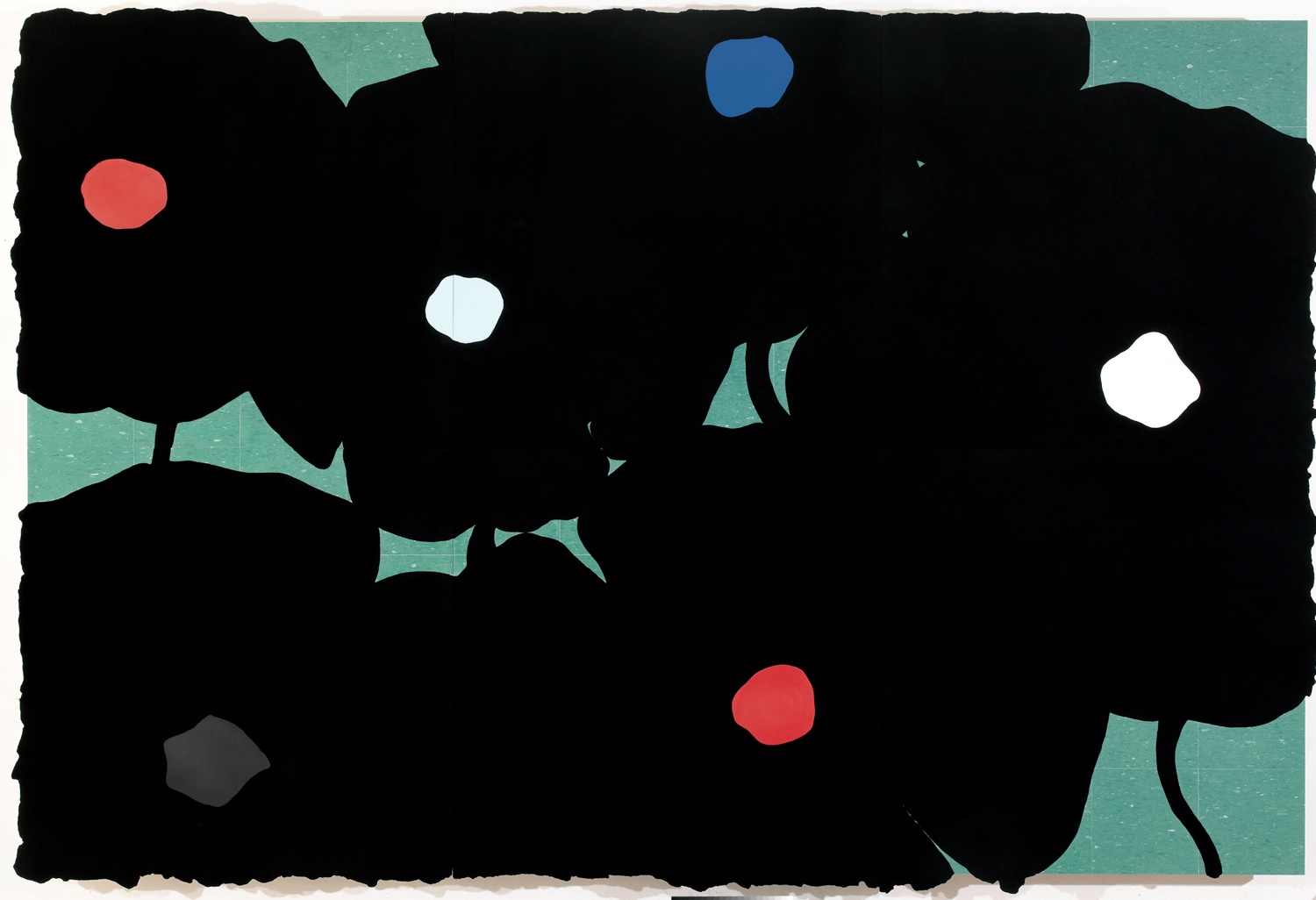
Note how Donald Sultan uses the negative space and positive space in new and unique ways? How are you understanding the ideas of Negative and Positive Space?
DO YOU HAVE YOUR VALUE SCALES DONE? I will be coming around during work time as you continue to work on your positive negative compositions to assess and evaluate as IDEATION / PLANNING stages to the still life. Are you willing to plan? Are you willing to come up with NEW IDEAS? I hope so.
Everything that you have known about space and marks and values has been challenged and we are going to continue to challenge that this week. Wrapping up the ideas of the Positive and Negative space compositions is one thing but we are also – and you are also – going to be working on the ideas of PERSPECTIVE. Sit back and buckle up – the videos will walk you through the processes and you will ALSO become pros in the ideas of one and two point perspective… ALL of this adds up to larger things.
#17 Drawing is About Mark Making “Every mark has a distinct character and quality.Every mark is a signature. Variations in pressure and weight is the visual equivalent of intonation. Marks, or lines, of consistent weight or thickness surrounding a figure or object will flatten the image. Tapering or breaking a line in a curve can connote a highlight or make the curve flow. Also, a tentative line will read as such. Give every mark or line authority and make sure it serves a purpose. Try to use only the marks you need.” 101 Things Learned in Art School, Kit White, 2011, MIT Press
Intro to Painting – Book Binding and Plein Air Paintings
Did you get the TWO ADDITIONAL PAINTINGS done over the weekend? One day this week we will talk about the book and take a break form the painting – get started on cutting the covers. Then we will finish with a day of painting so we can assemble the books next week. You need to have 8 – 12 paintings finished and ready to go for next week (12 is better than 8).
Intro to Digital Art and Photography – Photoshop and Art History and Portraits.
This week – week 3 in the process – is about finishing up the portrait. There is a lot that you need to consider. Think about the photograph you made but also consider the original painting / artwork that you worked up from. How can you include the ideas of the negative space, the brushwork, the textures into the final “painting” of yours?
Critique first thing next week – self assessment as well. This work will be modifying the assessment scale to a 4 point scale to help transition into a TRUE standards based class. I want to help you understand this process.
Make sure you are ready to speak about the work – an elevator pitch – 30 seconds to 1 minute to explain your work. Take the time to think about the skills you are developing. Think about the challenges that you are overcoming with this process.
Art Foundations – Values and Space and Mark Making
Value and mark making is out plan for the week. Make sure you have your tools ready to for the work ahead of us. This is ALL IN PLANNING for the upcoming still life experience where you will be exploring ALL of the techniques that we have used. Hatching and cross-hatching are looking a little shaky right now… as is stippling – we will work on that together.
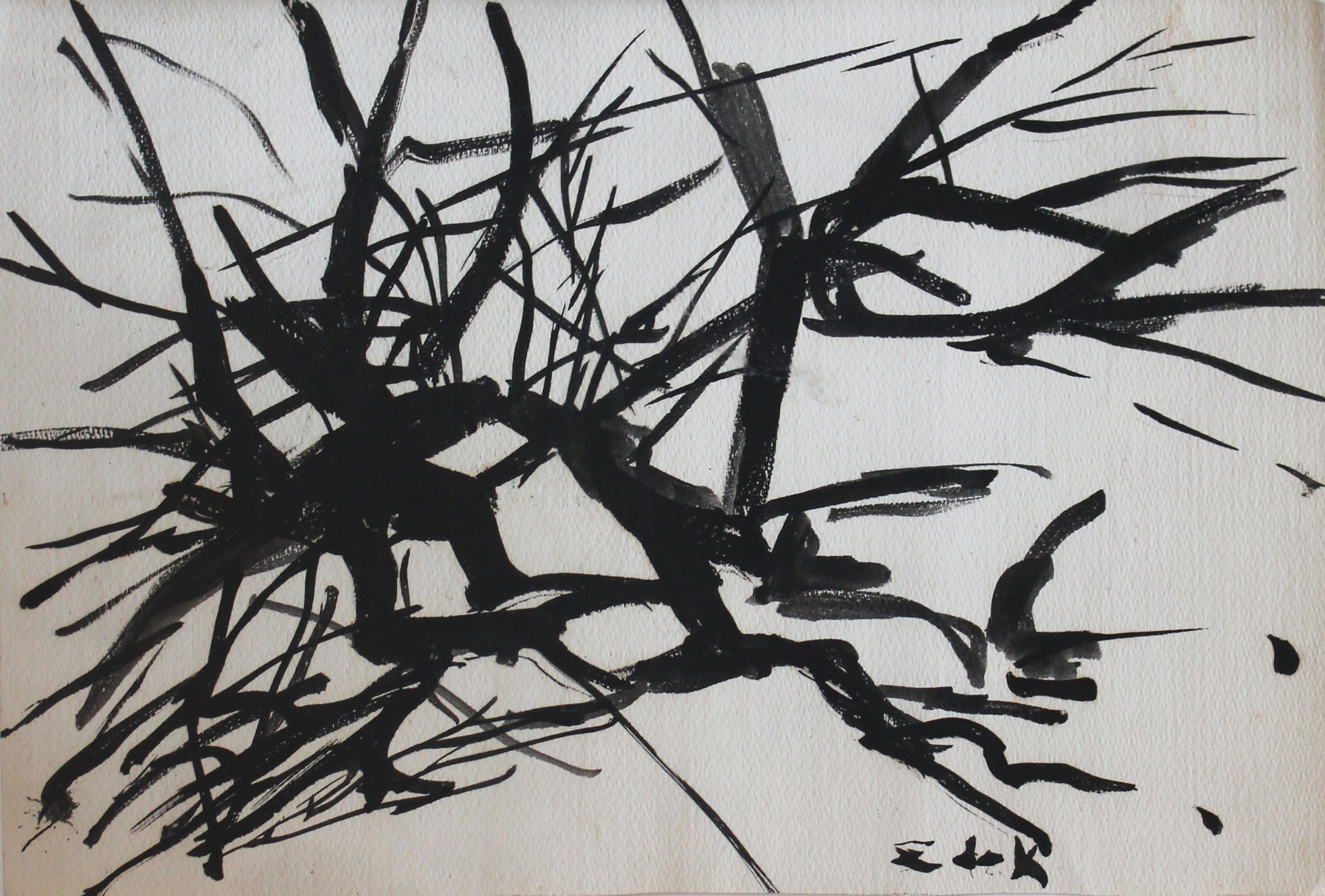
Positive and Negative space are a true struggle for many artists and it is important to know how to work with them together as we work through our compositions. We will be going outside and working with nature / trees in tack or branches we find on the ground to develop our understanding of how space works.
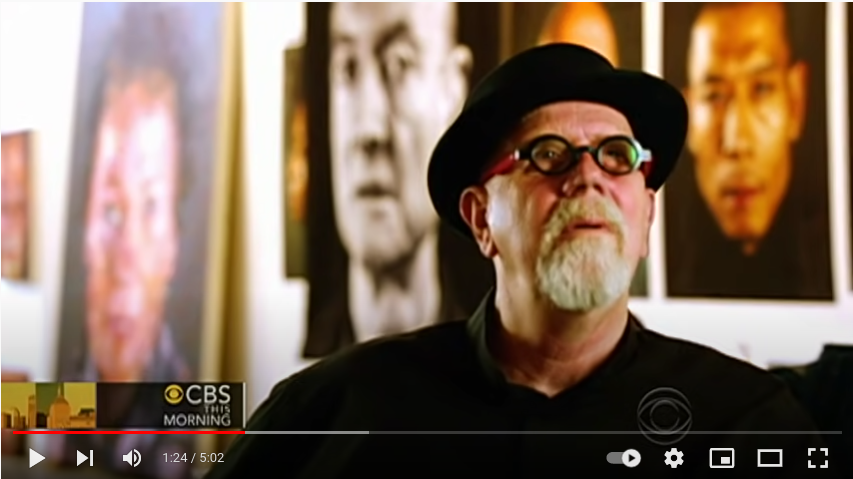
Chuck Close “What difference does it make whether you’re looking at a photograph or looking at a still life in front of you? You still have to look.”
Chuck Close 1940 – 2021
Intro to Painting
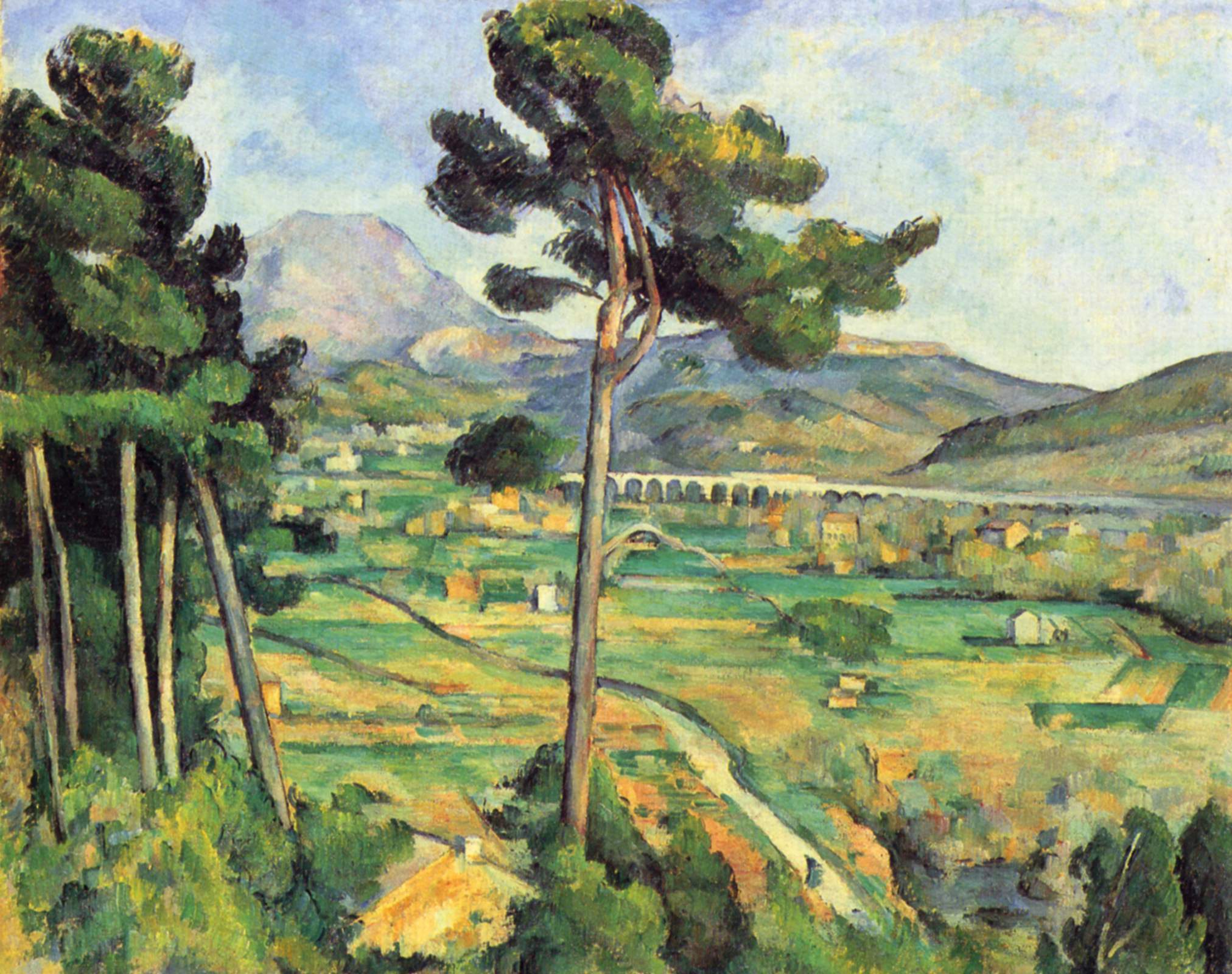
Paul Cezanne: Mont. St. Victoire
The goals and expectations for our days outside are to create at least one work of art every day that we are outside. Your job over the upcoming weekend is to make two artworks.
Before we do anything OUTSIDE – we desperately need to talk about COMPOSITION again…
Intro to Digital Art and Photography
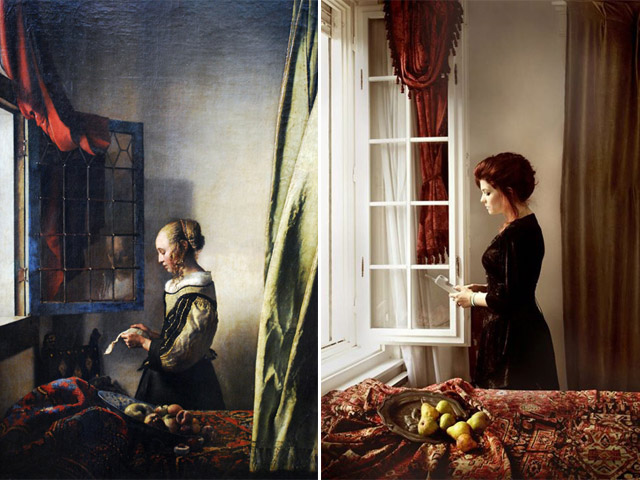
Masterpiece in Photography and Photoshop. What is the masterpiece you have begun? Who inspires you enough to make a photograph based on and then invest the time to make it into a painted photoshop image?
Mid-Critique during the second day of the week! Make sure you are ready to speak about the work that you are making. Take the time to think about the skills you are developing. Think about the challenges that you are overcoming with this process.
Art Foundations
In addition to Collage and Poetry, we are begining the ideas and techniques in VALUE and SHADING.
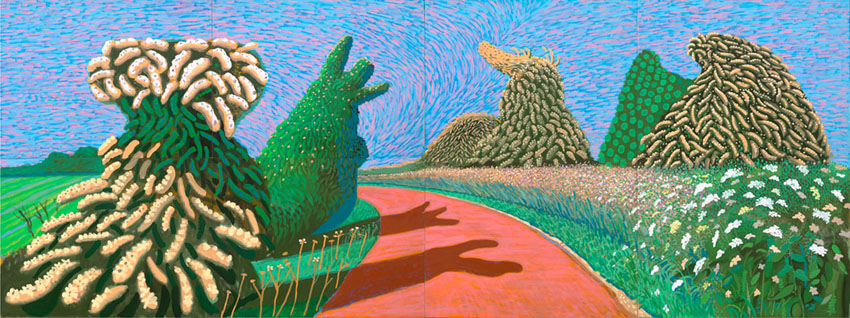
Hockney working with OILS Plein Air – we are dealing with Watercolors.
The scale of your paintings will be smaller than the page of a sketchbook. Tearing the paper will allow us to get more pages into our finished hand bound books. We will be painting from observation as we are outside and the GOAL is to get one solid painting PER DAY!
What image have you created and what was the inspiration for it?
One on One conversations and it is work time – SHARE with me the work you are doing in Adobe Photoshop when we meet.Remember to work this in LAYERS in Photoshop so that we can put it all together neatly and in an organized fashion.
Mid-Critique at the end of the week! Woah! know what your tools and techniques are and have been!
Art Foundations
How Did Romare BEarden use TEXTURES and SHAPES to build his figures and space?
What challenges do you think you will face as it comes to the idea of an INTERESTING collage?
What are you doing to SUCCESSFULLY create a REAL sense of SPACE in your COMPOSITION? This is the last day to cut and paste into the collage. WRAP it up TODAY!
Reset the original in class as best you can and work from photographs on your own.
Use your ET as often as possible in the studio so you are ready to critique next week Tuesday.
Look carefully
Begin large to small
General to detail
Overlap and layer frequently
Be patient.
Make daily photographs of the progress of the work. If you do a major thing, make a photograph and document it.
Work some of EACH of the techniques in to the final composition(s).
Begin with a LIGHT SKETCH (if you so choose) before you begin the final painting.
Allow for the pentimenti of the work to be in the final work… this demonstrates the process… or don’t.
This is a SOLID WORK WEEK so – check my lesson plans and Google Classroom for more information if you need to.
Intro to Digital Art and Photography
We are still using PHOTOGRAPHY as the start of our work, but we are also using art history as inspiration and then… PHOTOSHOP to paint it once again! WOW!
Adobe Photoshop Portrait in the composition of a FAMOUS work of art. Due in TWO WEEKS.
HERE is the assignment – it is also in Google Classroom
Research Paintings
Make a HANDFUL of Photographs to get things rolling
Begin to use Photoshop and work with: Painting, Drawing, Layering, Filter Tools in Photoshop to RECREATE the Image as a Digital Drawing / Painting.
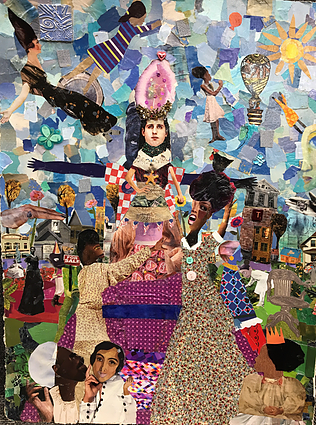
Take a look at a good friend of mine in Della Wells – how has she used COLLAGE to communicate a message? Did she use ONE IMAGE or a BUNCH of IMAGES to develop her work? This is a hunting and gathering process and then we are going to be working hard to develop the images and perfect them. What is your social topic?
Let’s ALSO take a look at the idea of COMPOSITION.
The above are REALLY IMPORTANT in what we are going to be doing this semester. The end result is yours, but we are here together to learn and know that we all have skills to develop.
The STILL LIFE is in our sights for the week – a series of still lives – from direct observation AND from photographs we have created.
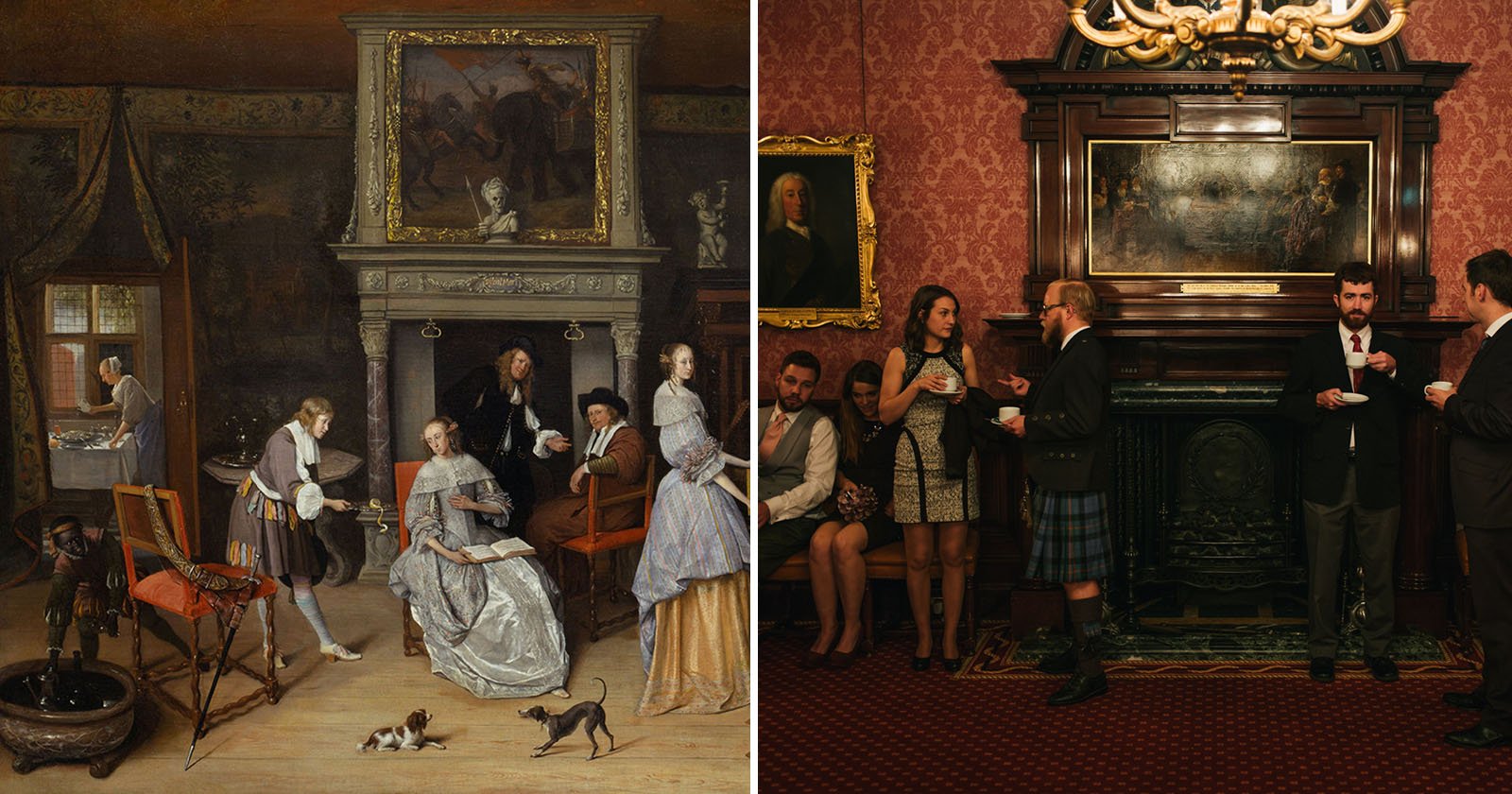
This year is going to begin with reviewing the ideas of COMPOSITION. How do we set up an image in our picture plane to create a successful work of art and / or photograph. There are CERTAIN approaches we can focus on and we will talk about a number of them.
IF YOU ARE STRUGGLING with this project. think about how you are making images. Look at the world from a unique POINT OF VIEW. Think about the images as creating a SERIES OF IMAGES. TELL A STORY with your images. Think about STAGING your compositions. Look at finding people and make images that are CANDID. There are MILLIONS and MILLIONS of images uploaded EVERYDAY… you can add to the QUALITY of these by being focused on your composition.
Let’s get into the ARTIST TRADING CARDS project. Two days and a weekend!
Sol LeWitt Inspiration! Simplicity and Complication
The Elements and Principles of art are what we are beginning with. Be ready to explore and experiment with ideas, images, colors and the like. Worry not however, this is just a dipping our toes into the waters of art making.
This is what comes up when I Googled Artist Trading Cards, start here (?) to begin some ideas? Maybe think about what you like to make art about… What do you draw? Paint? Look at for inspiration? These are ALL ABOUT YOUR INTERPRETATION of the pairing of the Elements and Principles.
HERE is a place to visit the Elements and Principles
Artist Trading Cards based on the Elements and Principles of Art!
This year is going to begin with reviewing the ideas of COMPOSITION. How do we set up an image in our picture plane to create a successful work of art and / or photograph. There are CERTAIN approaches we can focus on and we will talk about a number of them.
No Horizon and Left Heavy
Art Foundations
The Elements and Principles of art are what we are beginning with. Be ready to explore and experiment with ideas, images, colors and the like. Worry not however, this is just a dipping our toes into the waters of art making.
HERE is a place to visit the Elements and Principles
Artist Trading Cards based on the Elements and Principles of Art!











 Art With Korb