Art Foundations: Collage Social Commentary and then Ceramics from the collage idea.
G: 10.1P: Document the process of developing ideas from early stages to fully elaborated ideas.
A: What are you doing to SUCCESSFULLY create a REAL sense of SPACE in your COMPOSITION? This is the last day to cut and paste into the collage. WRAP it up TODAY! Next time we RUBRIC (and gel medium or mog podg) and move into the CERAMICS, SCULPTURE, and MANIPULATION approach to the artworks.
G: How have you been able to think about your artwork being something that CAN affect how someone who looks at your work and their ideas about bullying?
Introduction to Painting: Abstraction and Canvas Building
G: 1.2Ac: Choose from a range of materials and methods of traditional and contemporary artistic practices to plan works of art and design.
A: What did you do last block and what do you need to do today to get a solid block of work accomplished? This is using the skills that you have and the research that you have done to make strong progress in the abstraction. The artists you have researched are a part of the work as well. Some of the artists are going to be easier to incorporate into the work. Hey… what about the negative space? The background? What is the CONTENT – the MEANING / MESSAGE behind your work? Are you thinking about that? WHILE YOU WAIT TO SAW AND BUILD… MAKE SURE YOU ARE DRAWING and ADDING COLOR to your designs and plans! This is MANDATORY in the planning process. Abstraction Handout
G: day 2 of building is done… What are your results and what do you need to do to take this home over the weekend to get a good set of work done for the remaining days in the studio?
Intro to Digital Art and Photography: RUBRIC and HAND IT IN! Photography and the Elements and Principles! TODAY we MAKE PHOTOGRAPHS!
G: 1.2Ac: Choose from a range of materials and methods of traditional and contemporary artistic practices to plan works of art and design.
A: Photography – Let’s look at the ideas of what makes for a good photograph and how you can use this to create a strong body of work… Today we will be going out into the building to make photographs based on the ELEMENTS and PRINCIPLES. Your final project here will be a presentation of the portfolio of Element and Principle Photographs and a final series of images that demonstrate your understanding of a strong photograph.
You WILL have an assignment that uses these and additional photographs made specifically for this assignment (you CANNOT use old photos made prior to last time we met. This is an honor thing.
G: What did you accomplish today in the time we had for photography? Strong images? How were you able to make the best use of your time? Thinking about the images you created today… how many of the Elements and Principles were you able to document? Able to capture in a unique and original way?
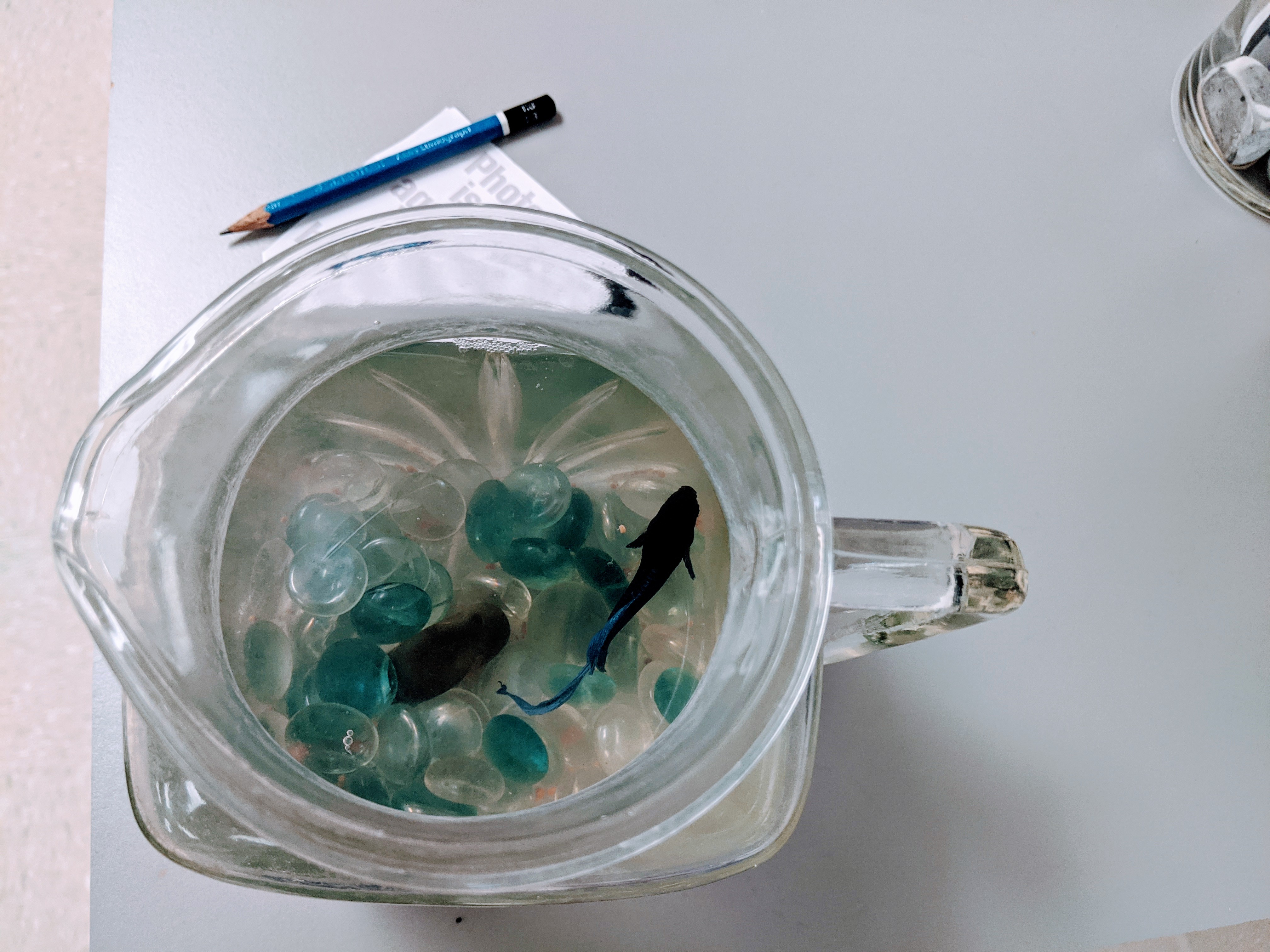
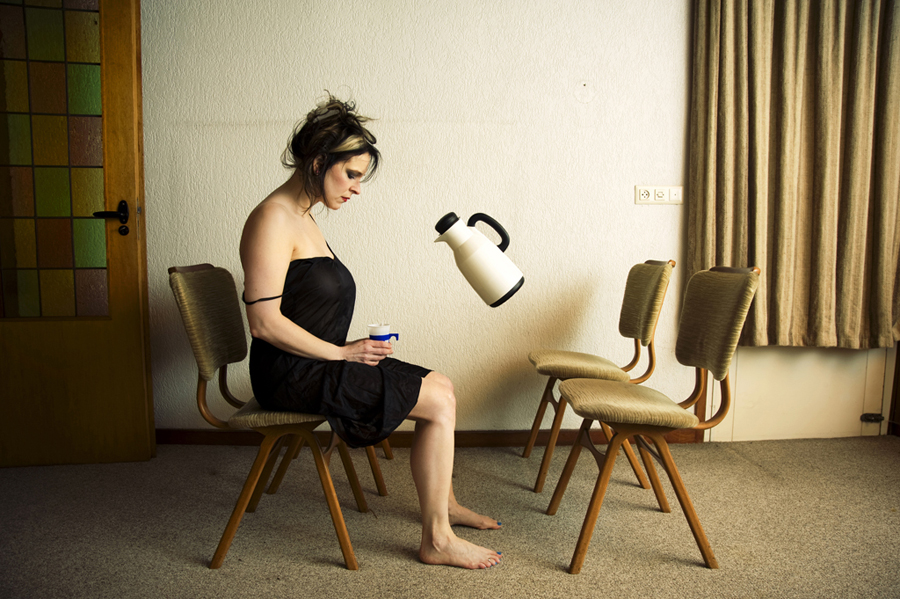
TAKE YOUR SKETCHBOOK and MAKE NOTES about what you are working to communicate or emphasize in the work. Look at the setting of your camera and make literal note of what setting you are using. i.e.: I am making this photograph of my fish, Yves Klein, to demonstrate the composition of No Horizon, Frame Within a Frame, and Rule of Thirds. The principle is Balance (asymmetry) as the fish and bowl are pushed hard to one side of the picture plane. My Element is Space as I am creating a large negative space with the counter top and floor and positive space with the fish and bowl. What is this PHOTOGRAPH about? https://www.dodho.com/wp-content/uploads/2014/01/AHouseIsNotAHome_2012_selfportrait_lilith.jpg
Art Foundations: Collage Social Commentary and then Ceramics from the collage idea.
Richard Hamilton “Just What is it that Makes Today’s Homes So Different, So Appealing? POP Art was named after this work!
G: 1.2P: Shape an artistic investigation of an aspect of present-day life using a contemporary practice of art or design.
A: What challenges do you think you will face as it comes to the idea of an INTERESTING collage that creates an ENVIRONMENT, a SPACE?
G: How do you feel your composition successfully uses the GOLDEN MEAN or another type of COMPOSITION and imagery to explain the ideas of your social topic? EXPLAIN your answers. What IS your composition?
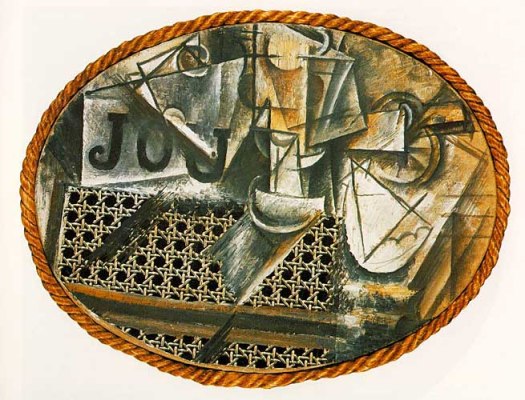
First Collage: Picasso’s “Still Life With Chair Canning”
Introduction to Painting: Abstraction and Canvas Building
G: 1.2Ac: Choose from a range of materials and methods of traditional and contemporary artistic practices to plan works of art and design.
A: What artists have you chosen to use as your reference and inspiration? Remember that you now have a lot of methods and experiences to paint with… this abstraction is up to you. Make sure that you are going to be ready to work as hard as you can, as we are going to be building the canvases and working on the planning this week. On the sticky notes… what are your plans this week to get the most work done that you can? Abstraction Handout
G: Looking at the day you had today… what did you accomplish? What fell short? Remember that we have VERY LITTLE TIME in studio to work. Will you be ready? What are you going to be doing outside of class to get the work done? The painting created?
Raque Ford: Abstraction with DIFFERENT approaches than we have talked about. What is DIFFERENT here How are you doing in the planning? Are you ready to BUILD your canvases?
G: 1.2Ac: Choose from a range of materials and methods of traditional and contemporary artistic practices to plan works of art and design.
A: Photography – Let’s look at the ideas of what makes for a good photograph and how you can use this to create a strong body of work… Today we will be going out into the building to make photographs based on the ELEMENTS and PRINCIPLES. Your final project here will be a presentation of the portfolio of Element and Principle Photographs and a final series of images that demonstrate your understanding of a strong photograph. Begin by taking your camera – or my cameras – and go out into the building to make photographs based on the E’s and P’s.
G: What did you accomplish today in the time we had for photography? Strong images? How were you able to make the best use of your time? Thinking about the images you created today… how many of the Elements and Principles were you able to document? Able to capture in a unique and original way?
G: 1.2P: Shape an artistic investigation of an aspect of present-day life using a contemporary practice of art or design.
A: What are the textures you are hoping to work into your collage (remember that this will be translated into a SCULPTURE)? What types of SOCIAL COMMENTARY are you able to talk about with this work?
G: How is the collage coming along? What is ONE VERY SUCCESSFUL aspect to the work SO FAR? What is one area you are having a CHALLENGE with?
Introduction to Painting: Abstraction and Canvas Building
G: 1.2Ac: Choose from a range of materials and methods of traditional and contemporary artistic practices to plan works of art and design.
A: What is your GOAL for today? Research is going to happen while I test each of you at the saw and AFTER you have all taken the SAFETY TEST. You MUST earn a 100% on the safety test to work the saw, so I hope you paid attention to the process and took notes. While I am testing the class you are RESEARCHING and SKETCHING and PREPARING YOUR WORKS!
G: What did you do this week to get things set for a successful abstraction based on your own thoughts and research? Make sure you are 100% ready to roll on MONDAY with your ideas as we are doing a 1 to 1 conversation about your plans and your work. This is a lot of prep time…
HOW CAN YOU START AN ABSTRACTION?
Observation and then change it up! DEMO
Straight from the ideas of MARK MAKING! DEMO
VARIOUS TECHNIQUES WE HAVE YET TO DEAL WITH: Grattage, Frottage, Decalcomania!
Geometry and COLOR SCHEMES!
SO MUCH TO THINK ABOUT!
Intro to Digital Art and Photography: Last days to work on the Letterhead and the like!
2.1Ac: Through experimentation, practice, and persistence, demonstrate acquisition of skills and knowledge in a chosen art form.
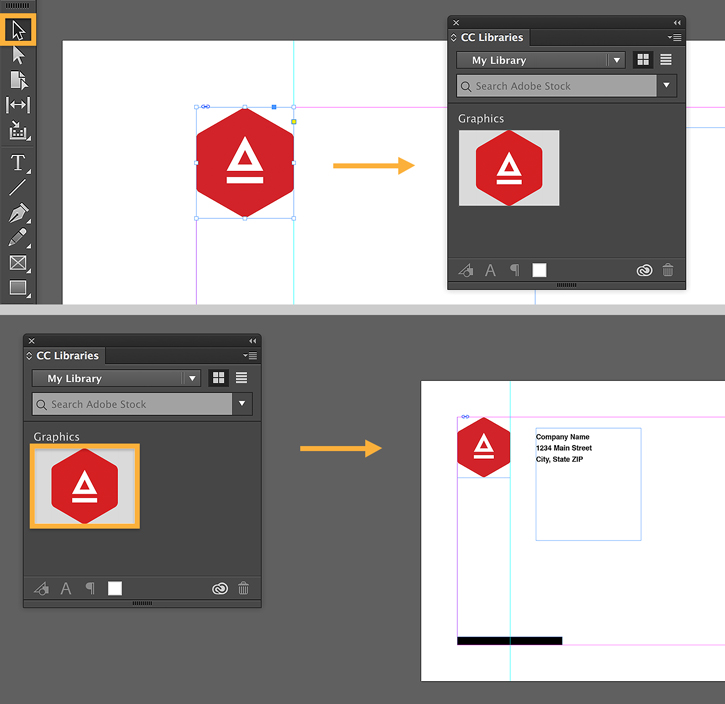
A: This is the final day of working on this corporate id. I will be walking you through the END OF THE DAY ASSEMBLAGE by sharing with you a TEMPLATE for you to PLACE YOUR DOCUMENTS INTO. This will be through GOOGLE CLASSROOM and will require you to be paying attention. Use the next 50 minutes WISELY! I’m setting a timer and we are going to stick to it. We will be working in LAYERS and keeping EVERYTHING very organized so that I can see and explore the designs. https://www.online-stopwatch.com/
G: WHY (in sentence form and a sticky note in order to leave the room) are you PLEASED with your design OR STILL STRUGGLING with the imagery and assemblage of the work?
G: 1.1P: Use multiple approaches to begin creative endeavors.
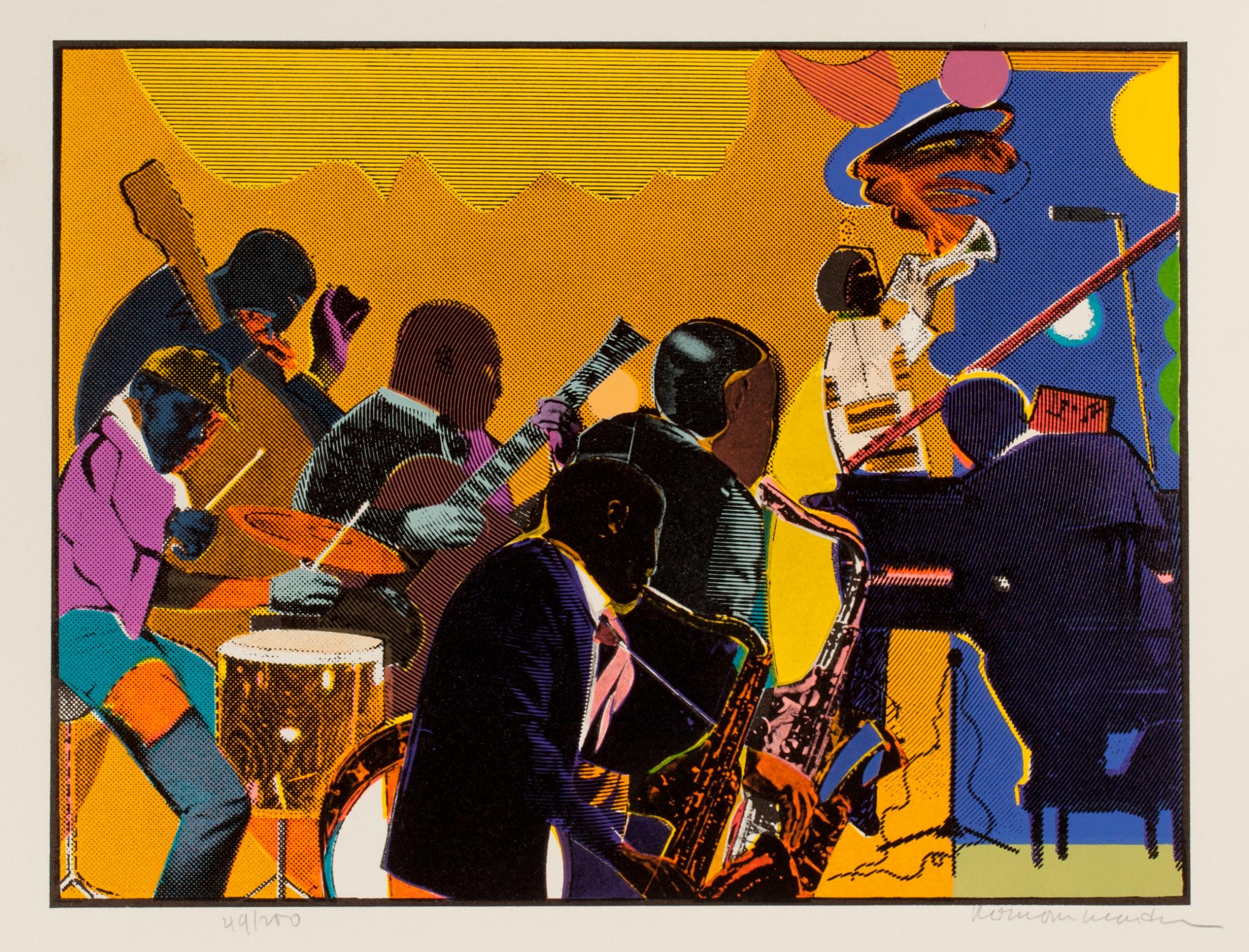
A: Looking at the ROMARE BEARDEN collage on the screen, what do you think this work is about? WHY? Please work with your neighbor on answering the questions on the planning handout about social topics. This will be the basis for the final ceramics project as well as a completed design for the collage. Collage can be a way to develop ideas for additional works as well as making sketches and photographs. Collage is DIFFICULT.
G: Explain why creating art that is CLEARLY NARRATIVE / Tells a story / explains something that is of importance to you is challenging? Explain 2 major points…
Introduction to Painting: Abstraction and Canvas Building
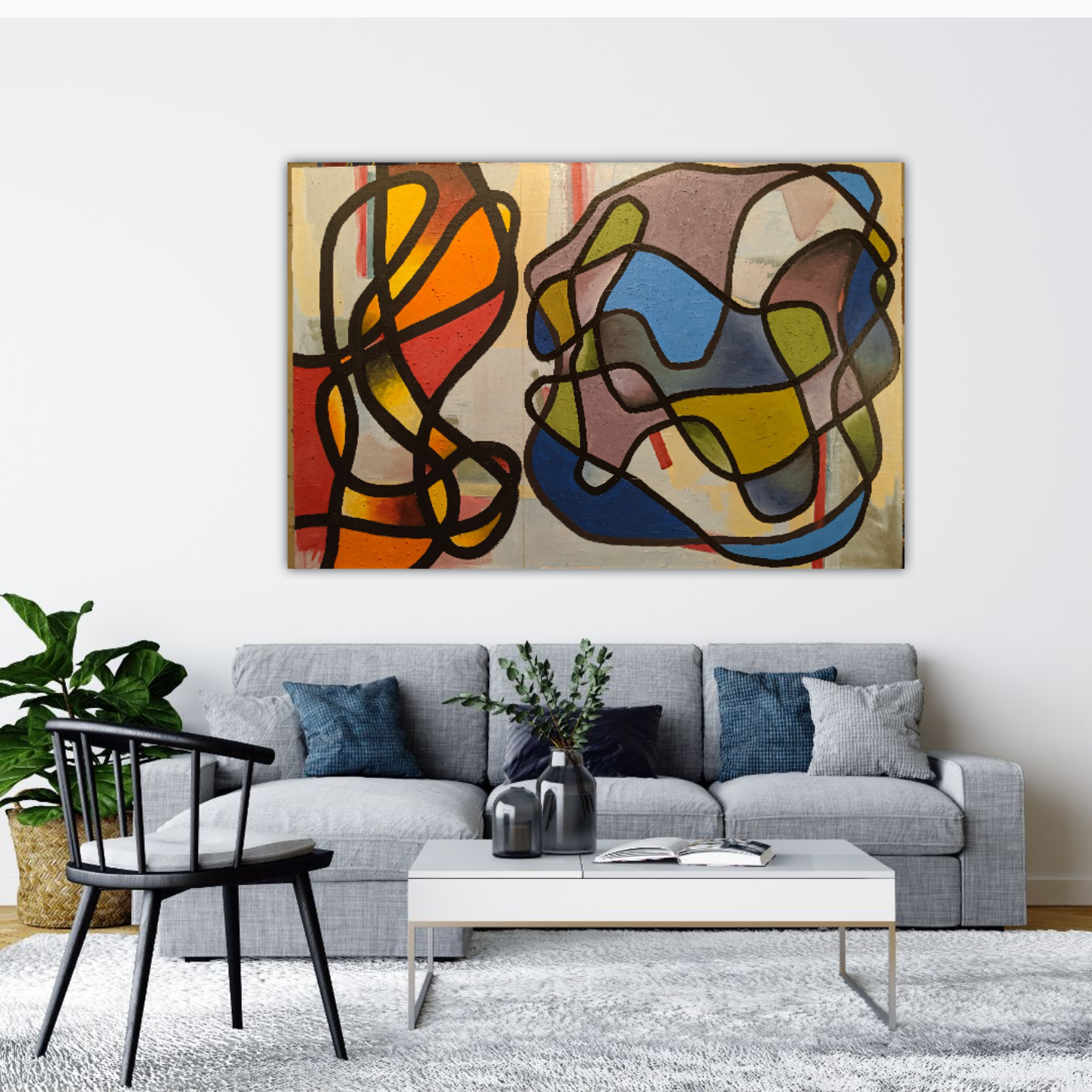
Maryam Hoseini : Cultured Magazine Artist – Contemporary Abstraction
G: 1.2Ac: Choose from a range of materials and methods of traditional and contemporary artistic practices to plan works of art and design.
A: Looking at the idea of constructing canvases, what scale, size, position, plans are you going to work at in your abstract work? Hard to think about at this point I suppose. NEXT WEEK you will have your RESEARCH DONE and the IDEAS for your ABSTRACT WORK READY TO ROLL so we can build the canvas. This takes TIME and you will be tested before you can build. BE prepared to WATCH in a little bit. Abstraction Handout and LINKS to Contemporary Artists.
G: We looked at the process of the canvas building – think about the scale that you are going to be using. What scale, position, proportion, inspiration are you going to be thinking about in regards to the portrait? The PRELIMINARY DRAWINGS and PLANNING must get done so that you are ready to build next time and painting over BREAK. Consider the idea of coming in during enrichment to build.
Intro to Digital Art and Photography: Last days to work on the Letterhead and the like!
G: Develop Craft: Learning to use tools, materials, artistic conventions; and learning to care for tools, materials, and space.
G: 3.1Ac: Engage in constructive critique with peers, then reflect on, re-engage, revise, and refine works of art and design in response to personal artistic vision.
A: Looking at the designs that you have begun – step back and SEE what you have done, what is working? What are you struggling with? List two struggles and One success. We are doing a MID CRITIQUE in 45 minutes. This work is DUE (logos will also be graded at the same time) at the END of the next meeting.
G: What are 3 things that you see about your work that is in need of redesign or reconsideration? I hope that you have listened to the class / me about the successes and missed opportunities in your work.
“When you do nothing, you feel overwhelmed and powerless. But when you get involved, you feel the sense of hope and accomplishment that comes from knowing you are working to make things better.” — Zig Ziglar
Art Foundations: Still Life Drawing
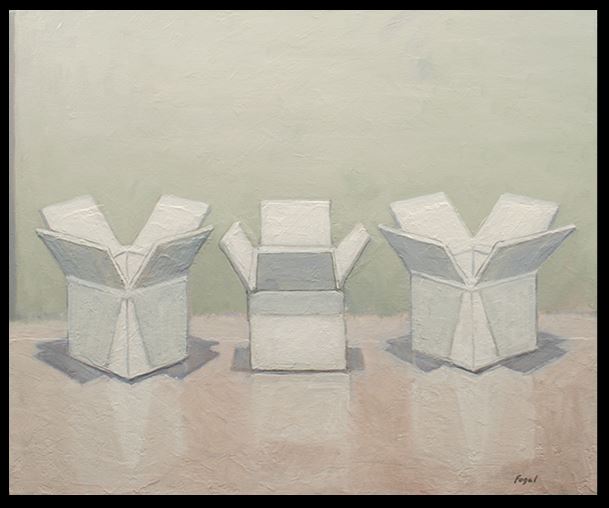
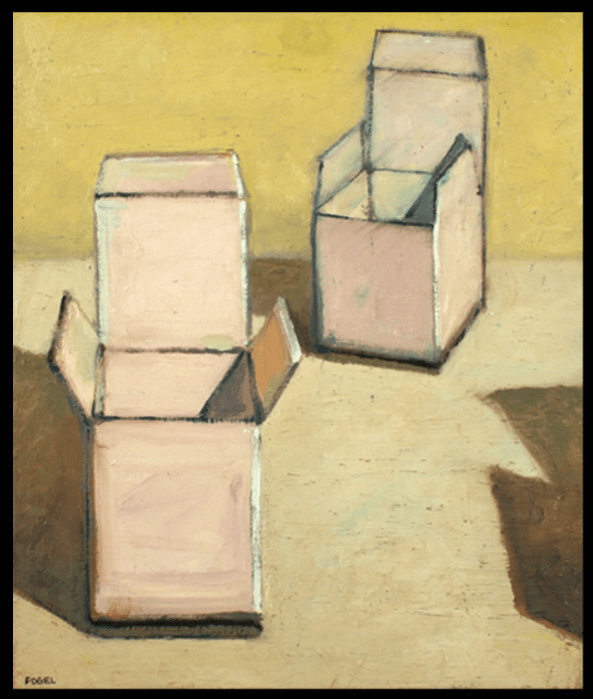
Fogal Painting of Boxes. Fill the space and look at the shadows.
G: 10.1P: Document the process of developing ideas from early stages to fully elaborated ideas.
A: Last day to work these drawings out. Next time we CRITIQUE! In your handbook – what TECHNIQUES have you developed with this drawing? Be specific and write out 5 different things you did to develop this drawing.
G: What are you most pleased with in your still life drawing?
G: 2.1Ac: Through experimentation, practice, and persistence, demonstrate acquisition of skills and knowledge in a chosen art form.
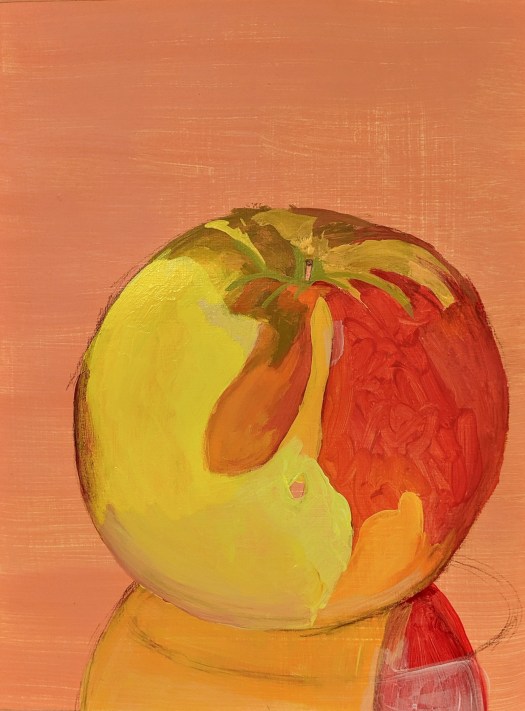
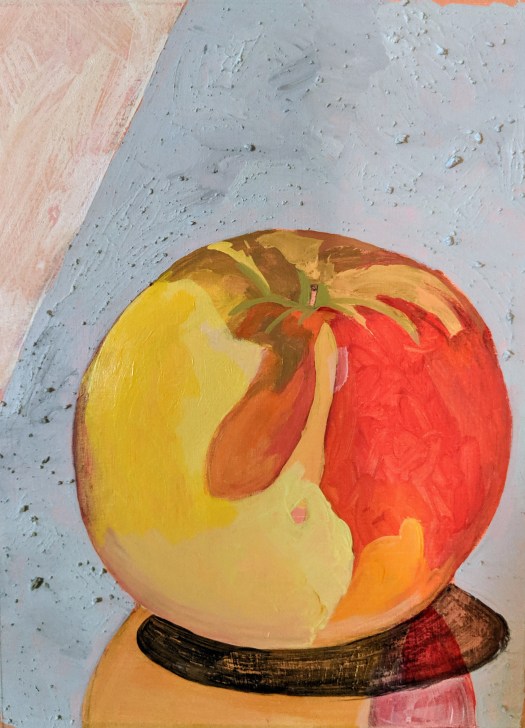
A: Acrylic Painting Techniques. Collage/Additive, High Gel Relief/ Impasto, Variations on Color Shifting. Now we begin with acrylic paintings – DAY 3. We’re going to look at two more SETS of techniques today (and you will have to gather some ADDITIVE products to the group of materials that you will need. We are working the paintings for TECHNIQUES. LEARN THE TECHNIQUES here artists.
G: Well.. What have you accomplished in the processes of painting? We will work 2 more FULL SESSIONS to create 4 total paintings. Be prepared to identify the techniques and processes you went through in each.
Intro to Digital Art and Photography: Adobe InDesign! Let’s be patient with one another… this takes some time!
2.1Ac: Through experimentation, practice, and persistence, demonstrate acquisition of skills and knowledge in a chosen art form.
A: This is a solid working day of working on this corporate id. I will be talking to each of you to look at your ideas and your online homework. 3 minutes each perhaps. Time to work.
G: WHY (in sentence form and a sticky note in order to leave the room) are you PLEASED with your design OR STILL STRUGGLING with the imagery and assemblage of the work?
MoMA (the Museum of Modern Art in New Your City) reopened (after a 4 month multi million dollar renovation) this weekend! Check out this email and see what you CAN’T miss this weekend when you visit! EMail HERE!
“When you do nothing, you feel overwhelmed and powerless. But when you get involved, you feel the sense of hope and accomplishment that comes from knowing you are working to make things better.” — Zig Ziglar
Art Foundations: Still Life Drawing
Look at the ENTIRE composition as you are working on the still life.
Fogel Painting of BOXES – We are making important artwork!
G: 10.1P: Document the process of developing ideas from early stages to fully elaborated ideas.
A: Last days to work these drawings out. Last time we MID-CRITIQUED! In your handbook – what TECHNIQUES / IDEAS did you focus on with your drawing? Be specific and write out 3 things you are going to focus on today?
G: What did you accomplish today?
Sighting In – use your arm and the pencil as measuring devices.
Shhhhh… “We were all focused and not talking. We worked better when we are focused on it.” – One of YOU said this.
No Finger blending.
80% of time is on the looking at the object in front of you and 20% of the time is on the looking at the drawing and drawing
G: 2.1Ac: Through experimentation, practice, and persistence, demonstrate acquisition of skills and knowledge in a chosen art form.
A: Acrylic Painting Techniques. Now we begin with acrylic paintings – DAY 2. What objects have you brought in today for the still life. We are going to work on our canvas with the variety of techniques that are in the handout about techniques.
G: What are your thoughts about the works you have sketched / painted out today? Will you be ready for the final paintings and still life for next time?
Intro to Digital Art and Photography: Adobe InDesign! Let’s be patient with one another… this takes some time!
G: Develop Craft: Learning to use tools, materials, artistic conventions; and learning to care for tools, materials, and space.
A: What did you learn last time about your work as we did a brief critique? What can you do to move the work ahead and resolve to make stronger? List three things that you found are the same
G: What are 3 things that you accomplished with your letterhead, business cards and /or envelopes that you see as unique, original, or tie into your logo design? Part of the process of design is to make your work stand out from the work of others.
MoMA (the Museum of Modern Art in New Your City) reopened (after a 4 month multi million dollar renovation) this weekend! Check out this email and see what you CAN’T miss this weekend when you visit! EMail HERE!
“When you do nothing, you feel overwhelmed and powerless. But when you get involved, you feel the sense of hope and accomplishment that comes from knowing you are working to make things better.” — Zig Ziglar
Art Foundations: Still Life Drawing
G: 10.1P: Document the process of developing ideas from early stages to fully elaborated ideas.
A: Last day to work these drawings out. Next time we CRITIQUE! In your handbook – what TECHNIQUES have you developed with this drawing? Be specific and write out 5 different things you did to develop this drawing.
G: What are you most pleased with in your still life drawing?
G: 2.1Ac: Through experimentation, practice, and persistence, demonstrate acquisition of skills and knowledge in a chosen art form.
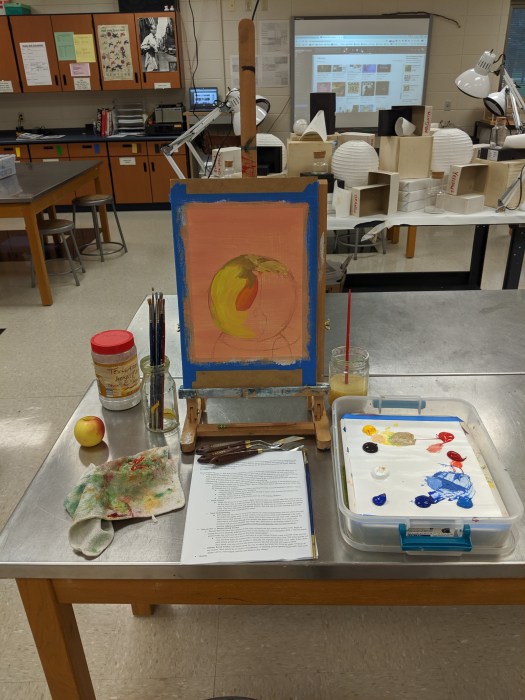
A: Acrylic Painting Techniques. Now we begin with acrylic paintings – DAY 1. What objects have you brought in today for the still life. We are going to work on our canvas with the variety of techniques that are in the handout about techniques. We are going to do 4 small paintings of a SINGLE OBJECT to get familiar with the techniques and then move into the final paintings in 2 days. Jude Rae is the artist we are going to explore for a while here. Let’s take a look at her works.
G: What are your thoughts about the works you have sketched / painted out today?
Intro to Digital Art and Photography: Let’s Draw our ideas about the corporate ID.
G: Develop Craft: Learning to use tools, materials, artistic conventions; and learning to care for tools, materials, and space.
G: 3.1Ac: Engage in constructive critique with peers, then reflect on, re-engage, revise, and refine works of art and design in response to personal artistic vision.
A: Looking at the designs that you have begun – step back and SEE what you have done, what is working? What are you struggling with? List two struggles and One success. We are doing a MID CRITIQUE in 45 minutes. This work is DUE (logos will also be graded at the same time) at the END of the the next meeting.
G: What are 3 things that you see about your work that is in need of redesign or reconsideration? I hope that you have listened to the class / me about the successes and missed opportunities in your work.
“Go and make interesting mistakes, make amazing mistakes, make glorious and fantastic mistakes. Break rules. Leave the world more interesting for your being here. Make. Good. Art.” ~ Neil Gaiman
“Go and make interesting mistakes, make amazing mistakes, make glorious and fantastic mistakes. Break rules. Leave the world more interesting for your being here. Make. Good. Art.” ~ Neil Gaiman
G: 2.1P: Engage in making a work of art or design without having a preconceived plan.
A: How did you start with your still life on the big paper? How are you learning to draw something in 3 dimensions? What are different techniques you know and practice? What did you do successfully last time that you can continue with today? What is it you need to erase, change, resolve to make the drawing today even more successful.
G: What is one thing you are putting into your drawing of the 3D Forms that might be related to the ELEMENTS and PRINCIPLES as the building blocks of Art – things you really need to be aware of AS you are making art.
G: 3.1Ac: Engage in constructive critique with peers, then reflect on, re-engage, revise, and refine works of art and design in response to personal artistic vision.
A: What do you feel about talking aloud when it comes to other’s works? What are your thoughts about why you may be apprehensive or confident when discussing other individual’s work? TWO CRITIQUE all on ONE RUBRIC.
G: What were 3 things that you took away from today’s personal step back and look critique?
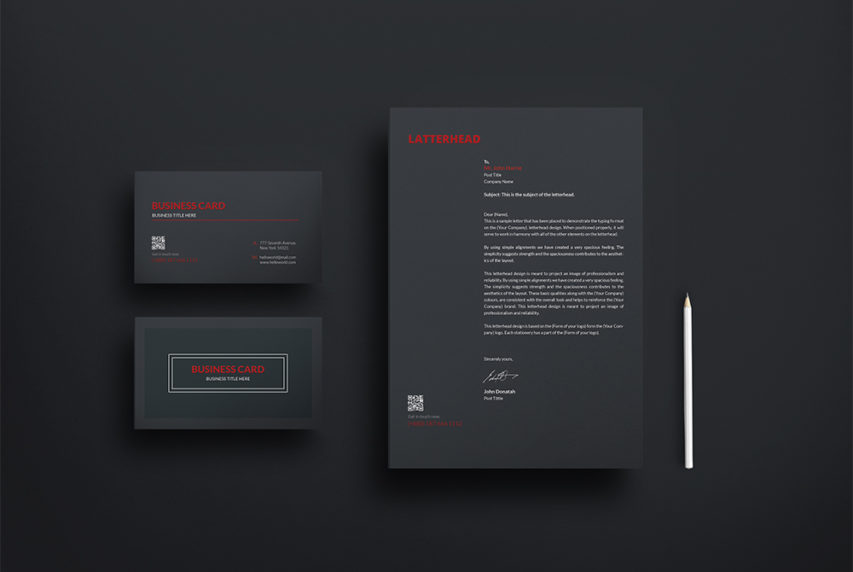
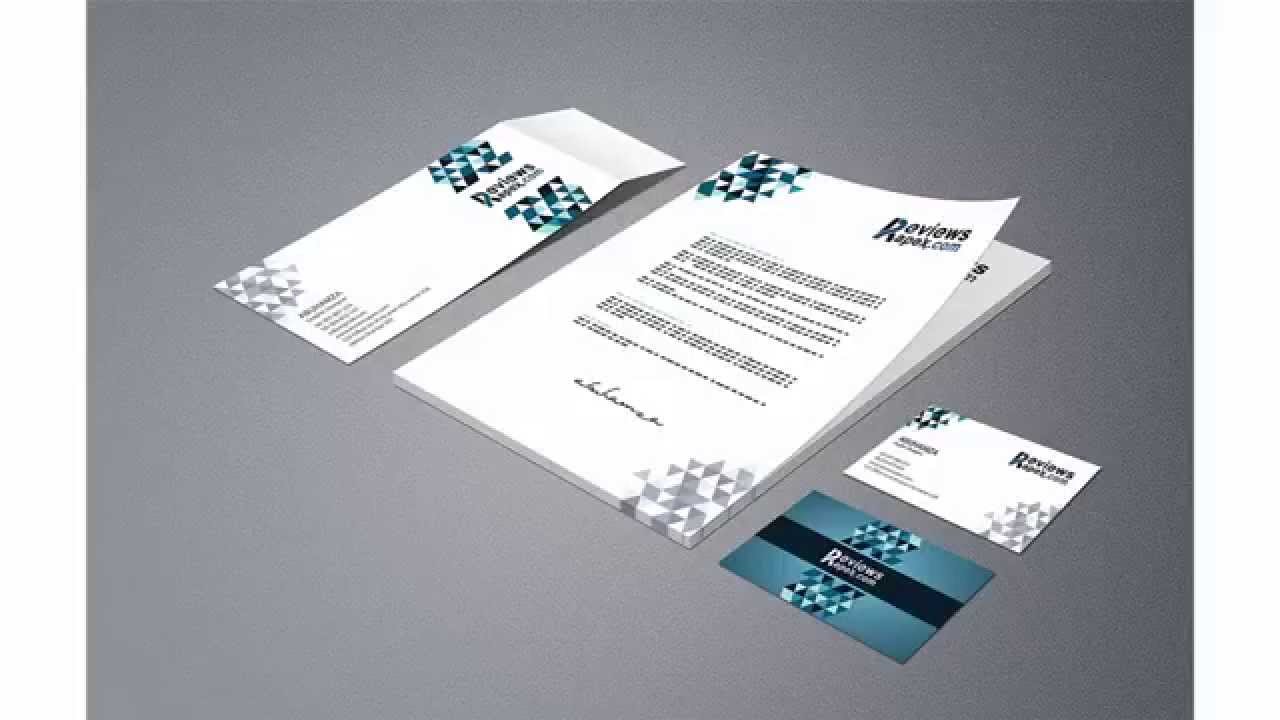
Intro to Digital Art and Photography: Work Day and DEMO in Adobe In-Design… Letterhead, Business Cards, and Envelopes.
G: 7.1Ac: Recognize and describe personal aesthetic and empathetic responses to the natural world and constructed environments.
A: What do you need to do in order to make this logo design work in 3 ways? Letters Only, Words Only, and the COMBINATION MARK (and also the SYMBOL / ICON – 4 ways I guess. What will you do to be ready to combine it with a partner in the process?
G: What are you HAPPIEST with regarding your designs? What is it about them that you see as working SPECIFICALLY with the PAUL RAND ideas from last time?
G: 2.1P: Engage in making a work of art or design without having a preconceived plan.
A: How DO you draw something in 3 dimensions? What are different techniques you know? What did you do successfully yesterday that you can continue with today? What is it you need to erase, change, resolve to make the drawing today even more successful.
G: What is one thing you are putting into your drawing of the 3D Forms that might be related to the ELEMENTS and PRINCIPLES as the building blocks of Art – things you really need to be aware of AS you are making art.
1.1Ac: Individually or collaboratively formulate new creative problems based on student’s existing artwork
2.1Ac: Through experimentation, practice, and persistence, demonstrate acquisition of skills and knowledge in a chosen art form.
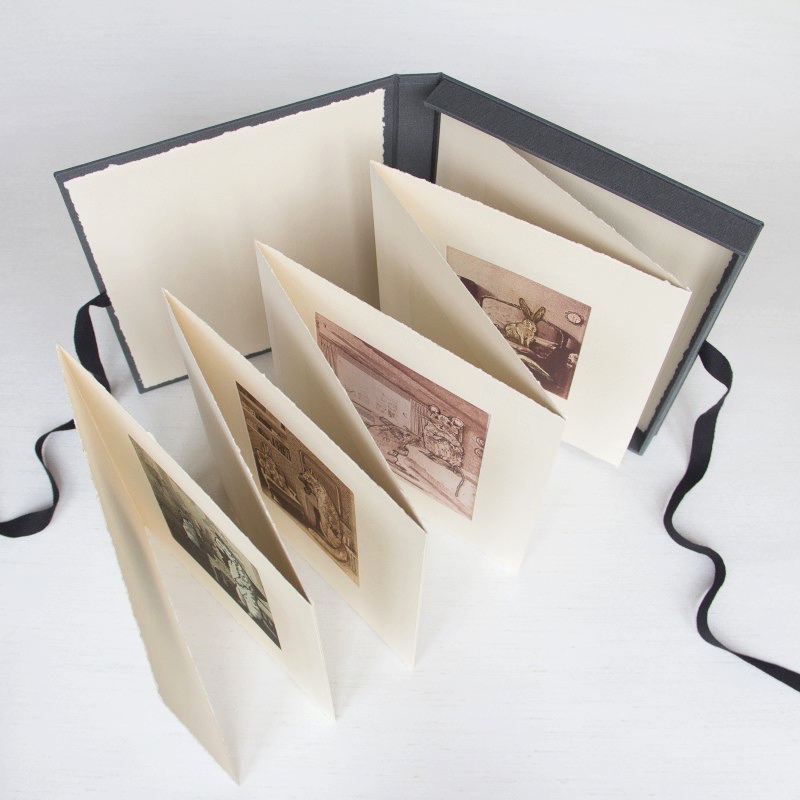
How do you see yourself being able to use these kinds of skills, construction of an object like a book, in the future? X-Acto Knife, Drawing / Painting from Observation, Stiching… This is more than a one project lesson.
G: What are the challenges you had in the making of this book? Difficulties? Step by Step stuff? And hey… how do you feel about the final work? Let’s sit and write a reflection in pencil inside the book.
G: 7.1Ac: Recognize and describe personal aesthetic and empathetic responses to the natural world and constructed environments.
A: What do you need to do in order to make this logo design work in 3 ways? Letters Only, Words Only, an the COMBINATION MARK (and also the SYMBOL / ICON – 4 ways I guess. What will you do to be ready to combine it with a partner in the process?
G: What are you HAPPIEST with regarding your designs? What is it about them that you see as working SPECIFICALLY with the PAUL RAND ideas from last time?

















 Art With Korb