Fail Big… and make sure you learn from what didn’t work!

“Don’t be intimidates by what you don’t know. That can be your greatest strength and ensure you do things differently from everyone else.” Sara Blakely (inventor of SPANX and youngest Self Made Female BILLIONAIRE – 10 Lessons I Learned from Sarah Blakely – Forbes Magazine)

Art Foundations: Negatively Positive! Drawing the Negative Space of the Branches

How do you see the NEGATIVE space in comparison to the Positive Space?

VIDEOS – Look back to FRIDAY’s post or the the RIGHT of this screen under VIDEOS!

Stanly Kubrics increcible use of 1 Point Perspective in his films… see how IMPORTANT perspective can be?

GOALS:

  1. 1.4 create, define, and solve visual challenges by analyzing the negative space of the branches. Think about COMPOSITION!

hat did you find as the most difficult aspect of the creation of the drawing? What was the hardest? What was the easiest? Are you able to see the negative space in the 1 – drawing, 2 – actual object?

Drawing: Kandinsky and Geometry / Measurements

What do colors mean to you? Here is what they mean to Kandinsky… http://img2.mappio.com/ewant/kandinsky-color-theory-4170-Large.jpg

GOALS:

  1. 3.1 reflect on how art differs and describe how it relates to history and cultures
  2. 3.2 apply subjects, symbols, and ideas in art and use skill to solve challenges in Non-Objective Art and Color Theory

hat NEW ideas might you have had about COLOR and SHAPE in the art you were creating?

AP Studio Art: Concentration Works and Uploads – Payment Due TOMORROW? TODAY?

So… Tell me about the Pieter Bruegel? What are you impressed with in the work? https://art.unt.edu/ntieva/postit.jpg
  1. 2.2 PEER-evaluate the effectiveness of artworks and GET SOME REAL FEEDBACK!

What were the biggest impressions you had from the classmate’s works? What were the most difficult things you felt as you presented your work? Conversation between classmates about the 2 questions for your exam. How does this work relate to your concentration? Peer Consultation: What do you say to one another about your ideas?

Be Positive about the Negative (space that is…)

“We’ve gotten to the point where we think the camera can capture anything at all…Well, it can’t really. The camera can’t compete with painting at all. The paintings are much more vivid about the place than photographs are.” – David Hockney

Art Foundations: Lets be POSITIVE about the NEGATIVE

How challenging is it to see the negative? http://media-cache-ec0.pinimg.com/236x/61/fe/ef/61feef888dd0ab4efcf490f250427224.jpg

GOALS:

  1. 1.4.1 analyze artwork into its basic elements of positive and negative space
  2. 6.2 compare characteristics of the visual arts from pre-Renaissance through the Renaissance to today.

DUE MONDAY – Two Point Perspective – The Cube

DUE TUESDAY – Two Point Perspective – Windows and Doors

What challenges did you feel as you worked through the ideas of Positive Negative Space?  TWO POINT PERSPECTIVE VIDEOs for the Weekend. Come with TWO SUCCESSFUL PAGES from the Online video for Tuesday!

Drawing: Listen – write, Look – write, Measure – write, Draw – write

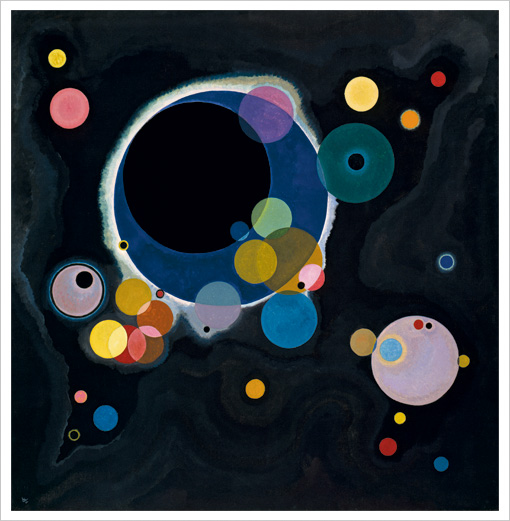
Kandinsky – Circles – How do you feel you can create a composition? http://web.guggenheim.org/exhibitions/kandinsky/images/several_circles.jpg
Color! What do you think about it? http://img2.mappio.com/ewant/kandinsky-color-theory-4170-Large.jpg

GOALS:

  1. 3.1 reflect on how art differs and describe how it relates to history and cultures
  2. 3.2 apply subjects, symbols, and ideas in art and use skill to solve visual challenges

What NEW ideas might you have had about the use of SHAPE or the creation / inspiration for IMAGERY in art?

AP Studio Art: WORK – Shhhhhh… Mr. Korb will leave you alone.

Hmmm… different than anything you are doing – CONCENTRATION is a BIG DEAL – What you do is ALL ABOUT YOU! http://media.collegeboard.com/digitalServices/image/ap/3D_C_3_Leichman_01_th.jpg

Goals:

  1. (2.2) Evaluate the effectiveness of artwork.
  2. 1.4.3 evaluation [critique] (formative and summative reflections about your artwork) of your artwork through digital media. (Technology Operations and Concepts and Communication and Collaboration)

Share with your neighbor the plans and advancements for this and the next pieces… Scary huh?

Can I have mustard with that? What else goes well with your art?

“We’ve gotten to the point where we think the camera can capture anything at all…Well, it can’t really. The camera can’t compete with painting at all. The paintings are much more vivid about the place than photographs are.” – David Hockney

Modern Painters, “David Hockney, on his latest inspiration – Yorkshire, Into the Woods,” by: Marina Cashdan, April 2010, p. 66.

Art Foundations: REALLY wrap it up and then onto Form and Shape

What is the artist REALLY focused on in this drawing? https://artwithkorb.com/wp-content/uploads/2013/10/10f00-treesilhouette.jpg

GOALS:

  1. 1.4 create, define, and solve visual challenges using 1.4.1 analysis of SPACE!

What did you find as the most difficult aspect of the creation of the drawing? What was the hardest? What was the easiest? Are you able to see the negative space in the 1 – drawing, 2 – actual object?

Drawing: Shall we try to get the Google Dive fixed? Let’s move on AFTER we get the Google Fixed… LISTEN TO ME!

What do these shapes mean to you? How do you see them relating to each other – or to you? http://littleguyintheeye.files.wordpress.com/2010/08/shapes-in-nature.jpg

GOALS:

  1. 3.1 reflect on how art differs (shapes and forms, colors, and music) and describe how it relates to history and cultures
  2. 3.2 apply subjects, symbols, and ideas in art and use skill to solve visual challenges

What NEW ideas might you have had about COLOR and Shape in the art you were creating?

AP Studio Art: No Talking today! Plan and Plan and REVISIT your CONCENTRATION!

What is YOUR concentration doing? Write out the goals and GET TO WORK! http://fc07.deviantart.net/fs71/i/2012/128/5/3/ap_concentration__5__garbage_dog_by_uchifan-d4yzavl.jpg

GOALS:

  1. Technology Operations and Concepts – Update your AP Central Site… Introduction to  the site.
  2. 1.3 communicate ideas clearly

What has been happening in your work that FITS with your statements? How can you continue to think about the statement you have written and refresh your ideas?

34 works of art in 50 seconds… Thanks Southampton Art Fair and Blouin Art Info for the Inspiration

It seems like I have been on a two week sabbatical… it has been busy and I am glad to be back.

Thanks to the Inspiration of Blouin Art Info‘s Southampton Art Fair (the Third and LARGEST art fair in Southampton), and the 60 works in 60 seconds video produced to publicize the show (Link Here). I present to you 34 Works of Art in 50 seconds. The video of my works (with music presented by YouTube – Thanks) I offer a brief glimpse of the works currently on display (and for sale) at Cafe LuLu in the Bay View neighborhood of Milwaukee, WI. If you happen to be in the neighborhood – please stop in and take a look. If you are in Southampton, do the same for their show!

April 20, 2013 – Saturday – Hello Art Evaluation SwapMeet!

Visual Art GOALS and OBJECTIVES

National Visual Arts Standards – Standard 1
Understanding and applying media, techniques, and processes

Frank Korb

There are 6 OVERARCHING GOALS that all of my art students work toward and focus on during the year in all of my art classes. The goals are referred to on a daily basis and are been modified, but not “dumbed down,” from the National Standards for the Visual Arts so that they make more sense to the students who are working with them through their art making and other art experiences.

The use of GOALS in my classroom (in any classroom for that matter) is an essential part of the process of running a high energy and well planned / focused classroom. The introduction of the GOALS, and the interaction of the student with that goal, literally fires up and activates the neurons in the brain and gets the young artist (student, teacher, whomever) focused on the work that will be undertaken. This OPENS THE FOLDER to learning.

This is the first of  six weeks that we will be looking at and unpacking the goals so that they are more easily understood. It is important to note that, when the goals are given to the students, they are restructured (a smidgen) so that they are meaningful and pertinent to the day’s activity. Notice, they are not agenda items but rather bigger thinking topics.

The National Standards for the Visual Arts have been developed into a series of GOALS that are clear, measurable, observable, and understandable to the students, parents, and community. The use of goals is to keep the mind open to the idea of learning and focused on the act of learning, By combining both declarative (mind) and procedural (application) knowledge the intentionality is focused on the combination of art theory and art making as well as the investigating the close relationship between the two.

~~~

Standard #1: Understanding and applying media, techniques, and processes
As an art student you will demonstrate the ability to:

  • 1.1 apply media, techniques, and processes with
    • 1.1.1 skill
    • 1.1.2 confidence
    • 1.1.3 and awareness so that your ideas are executed well
  • 1.2 create art that demonstrates an understanding of how your ideas relate to the
    • 1.2.1 materials
    • 1.2.2 techniques
    • 1.2.3 and processes you use
  • 1.3 communicate ideas clearly
  • 1.4 create, define, and solve visual challenges using
    • 1.4.1 analysis (breaking up the artwork / subject matter to basic elements)
    • 1.4.2 synthesis (put all the parts of a work together to form a whole)
    • 1.4.3 evaluation [critique] (formative and summative reflections about your artwork)

~~~

One last note about the day to day activities in the class and GOALS specifically is that when we wrap up the class – the last couple of minutes, we take time to reflect, to GENERALIZE the relationship to the goals and the day’s work. This is the CLOSING THE FOLDER that allows the neurons to settle down and pack away the learning, the experiences, until the following day.

You can find these (and more) in my Visual Arts Handbook HERE.

Thanks –

Frank

April 19, 2013 – Friday – Welcome to Community Day!

“Go and make interesting mistakes, make amazing mistakes, make glorious and fantastic mistakes. Break rules. Leave the world more interesting for your being here. Make. Good. Art.”

~ Neil Gaiman

~~~

Art Foundations: Final day to wrap up the cityscape drawings. Use your time wisely!

Where are you? Where is the horizon line? How does this relate to you? How do you, as the viewer, relate to the city?

GOALS:

  1. 2.1 Form criticism about 2 point perspective drawings that work to accomplish personal meanings.
  2. 5.3 Describe meanings of artworks by analyzing 5.3.1 techniques of linear perspective.

Cityscape Instructions HERE.

COLOR WHEEL:

Here is the color wheel I promised…
In your journal section of the Goals Sheets… What is the one area that you are the most proud as you look at and explore your city? What do you need to review for yourself when it comes time for the final drawing at exam time? Color is coming up next… we will get to know this color wheel well.
~~~Drawing: How did your eyes and mouth go yesterday? Today we will be drawing Daryl’s favorite facial feature… the ear!

Yum!

GOALS:

  1. 3.3 describe the creation of ears, the ideas behind drawing them, and explain why the skill of observation is of value
  2. 1.4 create, define, and solve visual challenges of the ears (from various angles) using 1.4.1 analysis (breaking up the artwork / subject matter to basic elements)

What was the most difficult part of your drawing today? What have you SEEN as being different that you though it would have been? What is different in drawing the ear than you found in drawing the MOUTH and EYES? What was it that made it so different?

~~~

AP Studio Art: Today we are in the computer lab working on uploading and getting our accounts all set and ready to ROCK and ROLL!

How proud of your work are you? How much fun are you having with the body of work you have produced? What did you GAIN from all the reflection yesterday?

GOALS:

  1. Communication and Collaboration – Students use digital media and environments to communicate and work collaboratively, including at a distance, to support individual learning and to the learning of others.

What else have you got to do with the body of work you have produced? How many works have you in each of the 3 categories? What do you need to continue working on? MONDAY… prepare yourself for a work that will test your CHARACTER!

~~~

Study Hall: What is it to have a strong sense of Honor?

GOALS:

  1. Know about the core concepts of HONOR.
  2. Identify an individual in your life and explain why you feel they are HONORABLE.

On your goals sheet, write out your definition of HONOR. What components do you feel best define someone of high character?

April 18, 2013 – Thursday

“Go and make interesting mistakes, make amazing mistakes, make glorious and fantastic mistakes. Break rules. Leave the world more interesting for your being here. Make. Good. Art.”
~ Neil Gaiman

~~~

Art Foundations: Work on your cityscapes. What do you need to do to make it even more AWESOME? You are working with VALUE and COLOR! Make sure that you are NOT SHARING the colored pencils that are out on the BLACK BOX. DO NOT SHARE!

What can you do to make the cityscape REALLY outstanding. Do not outline… work with the color and the shading to ELIMINATE the ideas of the outline. Please.

GOALS:

  1. 2.1 Form criticism about 2 point perspective drawings that work to accomplish personal meanings.
  2. 5.3 Describe meanings of artworks by analyzing 5.3.1 techniques of linear perspective.

Cityscape Instructions HERE.

COLOR WHEEL:

Here is the color wheel I promised…

10 minutes before the end of class – Self – evaluation of the writing for the day, in the JOURNAL SECTION of the week today. What did you find NEW in your work that you forgot you did well or struggled with? How are you working with the new ideas of color in your drawing? What is a specific place in your drawing that you are REALLY pleased with? Give a SPECIFIC AREA! We will be sharing  your ideas QUICKLY on Friday!

~~~

Drawing: Today you are going to be working on the MOUTH (that is also on the CHALKBOARD). What can you do to make your drawing even more successful? Look at the shapes – REALLY carefully! Check out these Eyelashes!

How big are YOUR eyelashes? As big as these? Thanks Joanna!

GOALS:

  1. 3.3 describe the creation of mouths, the ideas behind drawing them, and explain why the skill is of value
  2. 1.4 create, define, and solve visual challenges of the mouth using 1.4.1 analysis (breaking up the artwork / subject matter to basic elements)

What was the most difficult part of your drawing today? What have you SEEN as being different that you though it would have been? What is NEW in the MOUTH, DIFFERENT, UNIQUE, UNUSUAL… WHY?

~~~

AP Studio Art: Great critiques yesterday – grades will be in the book shortly…

It is THINKING time… So Sorry!

GOAL:

  1. 5.2 Stand behind your evaluation of art as you answer the 2 questions from the AP Poster.
  2. 4.5 Look at the qualities of art from various times to judge works of art and explain the GROWTH of your work

In addition to having written and reflected on your work, you are going to be needing to continue to PRESENT and EDIT your works. TODAY should have been a PERFECT opportunity to do just that. What was your biggest accomplishment today in the tasks you chose to work on today? Please share your ideas and thoughts with a classmate.

April 17, 2013 – Wednesday, Waffle Wednesday

“Go and make interesting mistakes, make amazing mistakes, make glorious and fantastic mistakes. Break rules. Leave the world more interesting for your being here. Make. Good. Art.” ~ Neil Gaiman

~~~

Art Foundations: FINAL DAY to work on your cityscapes. What do you need to do to make it more AWESOME? Do it today!

What might this architect have been thinking when he designed this structure? What is ONE thing that you did that you see in this drawing – ONE THING?

GOALS:

  1. 2.1 Form criticism about 2 point perspective drawings that work to accomplish personal meanings.
  2. 5.3 Describe meanings of artworks by analyzing 5.3.1 techniques of linear perspective.

10 minutes before the end of class – Self – evaluation of the writing for the day – What did you find NEW in your work that you forgot you did well or struggled with? PREZI Self – Evaluation


~~~~

Drawing: How’d your eyes turn  out yesterday? How about drawing a set of lips? A Mouth? Let’s give it a shot.

What is the GROUND of your image going to be? Let’s try to find something that relates to YOU and is a NEW ground for you to work on.

GOALS:

  1. 3.3 describe the creation of facial features and ideas behind them and explain why they are of value
  2. 1.4 create, define, and solve visual challenges of facial features using 1.4.1 analysis (breaking up the artwork / subject matter to basic elements)

What successes did YOU have in the drawings of the EYES and MOUTH? What is one area that you really felt were unsuccessful when it came to the areas you struggled? Be explicit and specific – PLEASE!

~~~

AP Studio Art: Critique

Deborah Butterfield – Early work…
Late Work…

GOALS:

  1. 3.3 describe the creation of your concentration and ideas and explain why they are of value.
  2. 4.5 look at the qualities of art from the rest of your classmates / cultures to judge works of art – What is similar in the qualities and successes?

What did you go through mentally in building your concentration? What is the earliest memory of the decision? What were the stumbling blocks that you REMEMBER as being in front of you? Where were the support systems that helped you out of the pits of self-doubt etc…?

~~~

Study Hall: What was the ONE thing you learned or struggled with or wrote down at the end of yesterday’s class? What is your response to it today?


GOALS:

  1. Work to accomplish the current homework or missing work you have in your classes.
  2. Understand that the responsibility lies with you – but that you have a lot of people willing and working to help you.

How much time are you putting into your schoolwork OUTSIDE of school? What is the biggest challenge for you at home? What are you doing to hold yourself accountable for the work you need to accomplish?

April 16, 2013 – Tuesday

“Go and make interesting mistakes, make amazing mistakes, make glorious and fantastic mistakes. Break rules. Leave the world more interesting for your being here. Make. Good. Art.” ~ Neil Gaiman

Make Mistakes… Mkae Mjoar Misktes…

~~~

Art Foundations: 2 more days to work on the city scape. What is your plan of action for the last 2 days? Value? Perspective? ACCURACY?

Oldenburg / van Bruggen and Gehry works together!

GOALS:

  1. 2.2 evaluate the effectiveness of artworks
  2. 3.1 reflect on how art differs and describe how it relates to history and cultures

What have you done today to move your drawing forward toward completion? What is the STRONGEST aspect of your drawing? The thing you are most proud of? What are you in need of working on STILL? It is ok… but what still needs work?

~~~

Drawing: Today – Eyes, Nose, Mouth, and Ears – Find 4 examples of each – larger than OR about the same size as REAL eyes from MAGAZINES that we have in the classroom – Slightly smaller if necessary, but… try to go large. Cut them out and GLUE them into your sketchbook. We are looking at the face this week…

Lovely No?

GOALS:

  1. 3.3 describe the creation of images and ideas and explain why they are of value
  2. 3.4 evaluate and defend the validity of sources for ideas

What mistakes did YOU make – how bad were they when it came to eyes?

Homework: Collect images from the newspaper or magazines that represent you or that you feel are important to you in today’s social environment. The images MUST be in your sketchbook at the beginning of class tomorrow!

~~~

AP Studio Art: CRITIQUE of the Works you have accomplished SO FAR… ALMOST DONE!!! Bring out one of your EARLIEST concentration works and set it along side of the 3 most recent works we are looking at today.

Early Stuart Davis
Mid Career Stuart Davis
Late Career Stuart Davis

GOALS:

  1. 3.3 describe the creation of images and ideas and explain why they are of value.
  2. 4.5 look at the qualities of art from various times and cultures to judge works of art.

Ok… By Wednesday – You will have your 2 questions worked out for the upload of the projects to AP College Board… WE NEED TO SHARE THESE ALOUD and HELP ONE ANOTHER. What do you feel about the work you have created here?

~~~

Study Hall: What are the classes you KNOW – before we meet with you – that you have missing work in?

What have you got in your backpack? What should be in your teachers’ hands?

GOALS:

  1.  Bring everything you need, nothing you don’t
  2. What do you need to accomplish today? Write BOTH of these goals down and BE AWARE OF THEM AS YOU WORK TODAY!

What was ONE NEW THING you learned today in ONE of your classes – be particular about the facts and information. How does it tie into what you will be able to use tomorrow? What is one thing you heard about today that you are not 100% sure on? Why might it be important tomorrow or in the future for your classes?

April 13, 2013 – Saturday

Visual Art GOALS and OBJECTIVES

Frank Korb

There are 6 OVERARCHING GOALS that all of my art students work toward and focus on during the year in all of my art classes. The goals are referred to on a daily basis and are been modified, but not “dumbed down,” from the National Standards for the Visual Arts so that they make more sense to the students who are working with them through their art making and other art experiences.

The use of GOALS in my classroom (in any classroom for that matter) is an essential part of the process of running a high energy and well planned / focused classroom. The introduction of the GOALS, and the interaction of the student with that goal, literally fires up and activates the neurons in the brain and gets the young artist (student, teacher, whomever) focused on the work that will be undertaken. This OPENS THE FOLDER to learning.

Over the next six weeks, we will be looking at and unpacking the goals so that they are more easily understood. It is important to note that, when the goals are given to the students, they are restructured (a smidgen) so that they are meaningful and pertinent to the day’s activity. Notice, they are not agenda items but rather bigger thinking topics.

1.      Understanding and applying media, techniques, and processes.

2.      Using knowledge of principles and functions.

3.      Choosing and evaluating a range of subject matter, symbols, and ideas.

4.      Understanding the visual arts in relation to history and cultures.

5.      Reflecting upon and assessing the characteristics and merits of the visual arts.

6.      Making connections between visual arts and other disciplines.

One last note about the day to day activities in the class and GOALS specifically is that when we wrap up the class – the last couple of minutes, we take time to reflect, to GENERALIZE the relationship to the goals and the day’s work. This is the CLOSING THE FOLDER that allows the neurons to settle down and pack away the learning, the experiences, until the following day.

You can find these (and more) in my Visual Arts Handbook HERE.

Thanks –

Frank