May 3, 2013, FRIDAY – SO FAST…

Hey Mom – The kids loved our conversation. They are also looking forward to cookies…

~~~

ALL LATE SKETCHBOOKS / MAJOR PROJECTS ARE DUE TODAY at 3:05p.m. – THEY WILL BECOME ZERO’S PERMANENTLY AFTER TODAY…

~~~

“Don’t let the perfect be the enemy of the good.” — Voltaire

~~~

Art Foundations: Balance is IMPORTANT – Symmetry, Approximate Symmetry, Radial Balance, Asymmetry. What else can help create balance in an artwork?

Great to see how Chuck Close works… a VIDEO LINK is in this image. Click to go to the SFMoMA site.
Chuck Close’s first painting after he THREW AWAY all that he knew… Video Beneath this Image.

GOALS:

  1. Know about the creation of images (through the grid AND using your own images) and explain why they are of value.
  2. 6.1 Work on mathematical ratios in art and KNOW WHY THIS WILL MAKE IT EASIER to process the drawing.

What part of the grid process is giving you difficulties? What part of the grid process is making it easier for you to create the work you are creating? How can you use this in the future? BALANCE: Please TEACH a classmate about the four different types of balance and talk about how you are using it in your composition.

~~~

DRAWING: We are working on the portraits, making photographs of our current work – posting them into our GOOGLE DOCS over the weekend and commenting on them, and learning about PASTELS and how we can use ARBITRARY COLORS to make them work in our portraits.

GOALS:

  1. 5.5 evaluate your personal and classmates responses to works of art for communicating ideas
  2. Communication and Collaboration – Students use digital media and environments to communicate and work collaboratively, including at a distance, to support individual learning and to the learning of others. – WHO will we share our GOOGLE DRIVE DOCUMENTS WITH  (MONDAY) so we can begin COLLABORATIVE critiquing?
Andre Derain Self Portrait

What has challenged you THE MOST about this process? Why is the portrait so important? Teach your classmate a little about what you have learned in the process of using PROPORTIONS and FACIAL FEATURE shapes and forms that has helped you in the drawing of your Fauvist / Hip-Hop Contemporary Portrait.

~~~

AP Studio Art: With the time left… how are you doing? What more have you got to accomplish. Can we take time today to look over your work or do we need it to WORK on presenting our portfolios?

Austin – you need to check your registration – your name is in it twice – First First or Last Last… Please fix that…

How is Art and Fear making you think about making your art?

GOALS:

  1. Work on Quality Mounting of artworks and ASSEMBLE THE PORTFOLIO!
  2. 3.3 ONLINE Describe the creation of images and ideas and explain why they are value. (if you and NOT submitting a portfolio – I will be collecting your answers on Tuesday through an E-MAIL or Shared Google Document)

Are you READY? Are you Good to go? Please teach a classmate a bit about your work and why you have chosen the works that you did. Write out the most important thing that comes to mind about the QUALITY work you have gathered for the next 3 minutes – NON STOP WRITING…

May 2, 2013 – Thursday – Already?

  •  Ginger Boglitsch Hey Frank
  •  Ginger Boglitsch I was impressed with all the math you were teaching!:)

    THANKS MOM!

~~~

ALL LATE SKETCHBOOKS / MAJOR PROJECTS ARE DUE ON FRIDAY – THEY WILL BECOME ZERO’S PERMANENTLY AFTER FRIDAY…

~~~

“Don’t let the perfect be the enemy of the good.” — Voltaire

~~~

Art Foundations: GRIDS – Finally Grids. Chuck Close video – brief, and then onto MATH – Ratios 1:4. How can we use a ruler successfully? Did you bring your photo?

GOALS:

  1. 3.3 Know about the creation of images and explain why they are of value. (How can this help you in the making of art in the future?)
  2. 6.1 Work on mathematical ratios in art as other disciplines might use math. (How might you use the idea of RATIOS / MATH in your future works?)

One square at a time… how is it going? We dealt with pencils today – have you got the basics of the drawing in? What was your biggest issue with the grid and RATIOs? Think about the problems and the accomplishments you are having. Be aware of the process. Self – evaluation Share image with your classmate and explain the process of measuring and transferring images.

~~~

Drawing: WORK – little to no lecture. WORK through the process of drawing these portraits.

What a change in Matisse’s work from yesterday! Matisse later on in life.

GOALS:

  1. (2.3) Create artworks that use organization and function to solve specific visual challenges.
  2. (5.1) Identify the intentions and purposes behind making art.

Now that we are a little further in the process, how are things going? What are your big challenges today with these LARGER than LIFE drawings? Write out your ACCOMPLISHMENTS today. What was the most challenging way to draw? Why was this most difficult way to go? What is most important about drawing when it comes to observation?

~~~

AP Studio Art: WORK mi Amigo’s – Get to the process of presenting… How was the Brewer’s game?

GOALS:

  1. Work on Quality Mounting of artworks.
  2. Evaluate the effectiveness of artworks.

Tomorrow is Friday… what are you lacking in completion for next Tuesday? What situation in life is it important to present yourself in the best light possible? When does it not matter so much? How does the presentation of your artwork relate?

May 1, 2013 – Wednesday – May Already?

HI MOM!

~~~

ALL LATE SKETCHBOOKS / MAJOR PROJECTS ARE DUE ON FRIDAY – THEY WILL BECOME ZERO’S PERMANENTLY AFTER FRIDAY…

~~~

“Don’t let the perfect be the enemy of the good.” — Voltaire

~~~

Art Foundations: GRIDS – Finally Grids. Chuck Close video – brief, and then onto MATH – Ratios 1:4. How can we use a ruler successfully?

GOALS:

  1. 3.3 Know about the creation of images and explain why they are of value.
  2. 6.1 Work on mathematical rations in art as other disciplines might use math.

What part of the process are you struggling with? How can you use MATH elsewhere in life – the idea of the RATIO?

~~~

Drawing: No SHAKY Video today – that was AWFUL!

Madame Matisse

GOALS:

  1. (2.3) Create artworks that use organization and function to solve specific visual challenges. (P).
  2. (5.1) Identify the intentions and purposes behind making art.

Looking at the challenges you had today… what can you do to continue moving forward? What was the most challenging part of  enlarging your head today? Why was this most difficult way to go?How can you use your knowledge of the SHAPES of the facial features to help? What is most important about drawing when it comes to observation?

~~~

AP Studio Art: Art and Fear Chapters 3 and 4 – brief reading. How much MORE to do for the PORTFOLIO? If you are NOT actively working on the portfolio – READ YOUR CHAPTER!

ART and FEAR Chapter ARTWORK REQUIREMENTS:

  • We are all going to work on the SAME SIZE PAPER… 18 TALL x 9 WIDE… How to deal with those constraints? This is going to be a challenge you have to deal with.
What do you do to PROCEED?

GOALS:

  1.  Work on wrapping up the portfolios and presentation of the BEST work.
  2. 2.6 create multiple solutions to visual challenges that show understanding in relationships between composition and meaning of artwork .

How many ideas do you feel you need to come up with ONE solid / successful composition for your Art and Fear Chapter? What are you going to do about the proportional challenge?

April 30, 2013 – Tuesday

ALL LATE SKETCHBOOKS / MAJOR PROJECTS ARE DUE ON FRIDAY – THEY WILL BECOME ZERO’S PERMANENTLY AFTER FRIDAY…

~~~

“Don’t let the perfect be the enemy of the good.” — Voltaire

~~~
Art Foundations: Grid our paper and finish our color wheels. If you are done with the color wheel and you finish the grid… make sure your sketchbook and LATE WORK are complete.

Click on the “head” to see a video on how Chuck Close paints with a grid.

GOALS:

  1. Describe the creation of images and explain why they are of value.
  2. Work on Mathematical Ratios and Transferring images.

What COLOR SCHEMES are you struggling with understanding? Go through EACH of the color schemes with your neighbor and explain each one to one another. In your GOALS PAGES COMMENTS – write down your most challenging understanding of color schemes.

~~~

DRAWING: We are working with proportions and getting the drawing “picture plane” onto the photograph. Let’s get the drawing CAREFULLY up to the drawing paper. This paper is NOT CHEAP – it is a one sheet rule.

Henri Matisse’s painting of Andre Derain – I think they knew one another!

GOLAS:

  1. 3.1 reflect on how art differs and describe how it relates to history and cultures
  2. 4.1 recognize differences in historical and cultural contexts of art

What part of the math was a challenge to you? How well were you able to read the ruler and figure out how to make a QUALITY picture plane? As you draw this up, make sure that you are making references to the RELATIONSHIPS of COMPOSITIONAL ELEMENTS. We are looking for good to great – NOT PERFECT.

~~~

AP Studio Art: Chapters in the book – Paragraph 1 Chapter 1 and Chapter 2… Sit and Enjoy!

What’s your chapter? We are going to READ and MAKE ART and EDUCATE… YOU WILL TEACH!

GOALS:

  1. Work on finishing up presentation of portfolios and uploads.
  2. 2.6 create multiple solutions to visual challenges of Art and Fear that show understanding in relationships between composition and meaning of artwork.

What did you get done today? What have you read from the book?

April 29, 2013 – Monday – Week 14: 5 more to go… SO much to do!

“Don’t let the perfect be the enemy of the good.” — Voltaire

~~~

What are the colors used? Piet Mondrian – De Stijl Artist!

Art Foundations: Continue on the color wheel AND learn about using a GRID to plan out an artwork.

GOALS:

  1. 1.4 Define color schemes and value scales using analysis (what are the colors that we, as painters / drawers use to make all the other colors?)
  2. 1.2 Create art that demonstrates an understanding of how your ideas relate to materials and techniques.

Share image with your classmate and explain the process of measuring and transferring images.

~~~

Drawing: Transfer the photograph to the paper with pencil and consider the colors you might use (Color Scheme) to communicate a message / emotion.

Portrait of Henri Matisse by Andre Derain.

GOALS:

  1. 3.1 reflect on how art differs and describe how it relates to history and cultures
  2. 3.2 apply subjects, symbols, and ideas in art and use skill to solve visual challenges

What was the most challenging aspect of your drawing to get done today? How are you using OBSERVATION and COMPARISON – sighting in – to get your drawings set up correctly?

~~~

AP Studio Art: We are beginning a NEW ARTWORK based on literature. We are ALSO finishing the wrapping up of the portfolio.

How are you filling this?

GOALS:

  1. Work on Quality Mounting of artworks.
  2. 3.2 apply subjects, symbols, and ideas in art and use skill to solve visual challenges

As last week – what do you need to complete so that you have a complete portfolio by Friday?

April 27, 2013 – Saturday – NVAS: Standard 2

Visual Art GOALS and OBJECTIVES

National Visual Arts Standards – Standard 2
Using knowledge of PRINCIPLES and FUNCTIONS

Frank Korb

As I have said in previous posts, there are 6 OVERARCHING GOALS that my  students work toward and focus on EVERY DAY during the year in all of my art classes. These standards are modified, but not “dumbed down,” from the National Standards for the Visual Arts so that they make more sense to the students and parents who are working with them through their art making and other art experiences.

AS I use GOALS in my classroom (in any classroom for that matter) the essential part of the process of the goal is that it fires up and activates the neurons in the brain and gets the artist (student, teacher, whomever) focused on the work that will be undertaken. This OPENS THE FOLDER to learning.

This is the second in the series that we will look at and “unpack” so the standards (or GOALS at this point) are known about (declarative knowledge). It is important to note that, when the goals are given to the students, they are restructured (a smidgen) so that they are meaningful and pertinent to the day’s activity. Notice, they are not agenda items but rather bigger thinking topics.

The National Standards for the Visual Arts are now GOALS that are clear, measurable, observable, and understandable to the students, parents, and community. The use of goals is to keep the mind open to the idea of learning and focused on the act of learning, By combining both declarative (mind) and procedural (application) knowledge the intentionality is focused on the combination of art theory and art making as well as the investigating the close relationship between the two.

~~~

Standard #2: Using knowledge of PRINCIPLES and FUNCTIONS

As an art student you will demonstrate the ability to:

  • 2.1 form criticism about artworks that work to accomplish
    •      2.1.1    commercial
    •      2.1.2    personal
    •      2.1.3    communal
    •      2.1.4    or other meanings

Critiquing is an essential part of the reflection process as we make our art and work towards the development of the skills we need to make successful art. The use of the critique allows artists to be self-reflective while also being able to be critical (constructively hopefully) to their fellow artists (in the classroom, around the coffee shop table, via the internet and collaborative discussions.

  • 2.2 evaluate the effectiveness of artworks

What is working and what is not. The thought about the use of materials, communication of messages, asking deeper questions about the successful and unsuccessful aspects – with deliberate and specific parts of the work in mind.

  • 2.3 create artworks that solve visual challenges

By the simple act of making marks, the challenges and struggles that MAKING art can allow for solutions to be dealt with.

  • 2.4 compare different points of view regarding composition and meaning in artwork

This is great to hear when one has a group of kids / artists. Getting more feedback (formative and summative) from more than one person is great. It is also a great thing for the kids to hear from their classmates and NOT JUST FROM THE TEACHER!

  • 2.5 defend personal evaluations

Being able to justify and stand behind the works through the use of ART VOCABULARY is a great way to help the artist learn to SPEAK ABOUT THEIR ART. I have heard MANY BAD discussions and I hope that my students walk out with the skills and confidence to be public speakers who can voice their opinions and back them up with evidence.

  • 2.6 create multiple solutions to visual challenges that show understanding in relationships between composition and meaning of artwork

Here is the place that making a lot of work is key. 10 sketches, 3 drawing, 7 sculptures, 100 bowls… all in the name of becoming stronger int he solution of the challenges that are at hand. Relationships, forms, balance… you name it and all of these will be realized (and more) as more and more art is made.

~~~

Keep in mind that once you open the door, you also need to close it.  During the last couple of minutes of my classes, we take time to reflect, to GENERALIZE the relationship to the goals and the day’s work. This is the CLOSING THE FOLDER that allows the neurons to settle down and pack away the learning, the experiences, until the following day.

You can find these (and more) in my Visual Arts Handbook HERE.

Thanks –

Frank
April 26, 2013 – Friday – Already? A REAL week has passed.

“You never truly lead anybody until you learn to serve, and you never truly learn to serve until you learn there’s something so much greater than yourself.”

~~~

Art Foundations: Color Scheme readings and Color Scheme Notecards… that’s it…

GOALS:

  1. 1.4 Define color schemes using analysis (what are the colors that we, as painters / drawers use to make all the other colors?)
Color Wheel from Class – Label as such…

What color schemes do you fully understand? What color schemes are you struggling with a little bit? Write them out and have a conversation with your neighbor as to which ones you are challenged with.

~~~

Drawing: SnapChat… You made portraits yesterday and 2 days ago… today you are going to show me the image you would like to use and then get them printed out. We begin with pastel drawing – guided experimentation first. Photo Folder to SAVE IMAGE and ADD TO YOUR RUBRIC!

Matisse a bit toned down from yesterday… Still on the changed colors? A smidge maybe…

GOALS:

  1. (1.4.1) Know about solving visual challenges (making art) using analysis (breaking the work into its parts).

What were the challenges that you had with the guided use of the pastels? What are you a bit worried about with the upcoming project. How have you chosen to use the color printout and modify the composition?

~~~

AP Studio Art: Ok guys and gals – you have been great this week – so far… Biggest concerns?

GOALS:

  1. Work on Quality Mounting of artworks. 3.3 Describe the creation of images and ideas and explain why they are value.  

What situation in life is it important to present yourself in the best light possible? When does it not matter so much? How does the presentation of your artwork relate?

April 25, 2013 – Thursday

“You never truly lead anybody until you learn to serve, and you never truly learn to serve until you learn there’s something so much greater than yourself.”

~~~

Art Foundations: Color Scheme readings and Color Scheme Notecards… that’s it…

Working on Color Schemes today!

GOALS:

  1. 1.4 Define color schemes using analysis (what are the colors that we, as painters / drawers use to make all the other colors?)

What color schemes do you fully understand? What color schemes are you struggling with a little bit? Write them out and have a conversation with your neighbor as to which ones you are challenged with.

~~~

Drawing: SnapChat… You made portraits yesterday and 2 days ago… today you are going to show me the image you would like to use and then get them printed out. We begin with pastel drawing – guided experimentation first.


GOALS:

  1. (1.4.1) Know about solving visual challenges (making art) using analysis (breaking the work into its parts).

What were the challenges that you had with the guided use of the pastels? What are you a bit worried about with the upcoming project.

~~~

AP Studio Art: Ok guys and gals – you have been great this week – so far… Biggest concerns?

GOALS:

  1. Work on Quality Mounting of artworks. 3.3 Describe the creation of images and ideas and explain why they are value.  

What situation in life is it important to present yourself in the best light possible? When does it not matter so much? How does the presentation of your artwork relate?

April 24, 2013 – Wednesday – Already?

Are you a leader? How do you demonstrate your leadership abilities?

“You never truly lead anybody until you learn to serve, and you never truly learn to serve until you learn there’s something so much greater than yourself.”

~~~

Art Foundations: Color Scheme readings and Color Scheme Notecards… that’s it…

GOALS:

  1. 1.4 Define color schemes using analysis (what are the colors that we, as painters / drawers use to make all the other colors?)

While you made your color schemes… which of these cause you the most challenge to understand? Why do you think that artists choose various color schemes to create their artwork? What would your favorite color scheme be (if you had to have one)?

~~~

Drawing: SnapChat… You made portraits yesterday… today we are going to look at them and then get them printed out. Tomorrow – we begin with pastel drawing – experimentation first.

LL Cool J.

GOALS:

  1. Research and Information Fluency – Students apply digital tools to gather, evaluate, and use information.
  2. (5.1) Identify the intentions and purposes behind making art. (D)

What was it that made you choose the image you did for our pastel drawing? What emotions / feelings do you hope that you are able to communicate with the drawing? What do you know about the Fauvists? What is the importance of using TECHNOLOGY in a responsible fashion? I know that technology like Snap Chat can be used inappropriately… make wise, responsible choices.

~~~

AP Studio Art: Ok guys and gals – you have been great this week – so far… Biggest concerns?

When are we going to hang your show in New York? Let’s keep the presentation and representation in mind as you work and prepare to present!

GOALS:

  1. Work on Quality Mounting of artworks.
  2. 3.3 Describe the creation of images and ideas and explain why they are value.

What did you get done? If I go to your login page… what will I see? How is that statement? May 7 – 6th hour is coming up REALLY FAST. We will BE DONE WITH THE ENTIRE PRESENTATION AND PORTFOLIO BEFORE THAT TIME! Nobody goes into that weekend without being done…

April 23, 2013 – Tuesday

“You never truly lead anybody until you learn to serve, and you never truly learn to serve until you learn there’s something so much greater than yourself.” What is the last thing you did to help someone out with their greater good in mind? What have you recently done to to mover yourself forward as a leader?

~~~

Art Foundations: WE are working with COLOR today. Color wheel, mixing up of colors, using colored paints and colored pencils… let’s get making art.

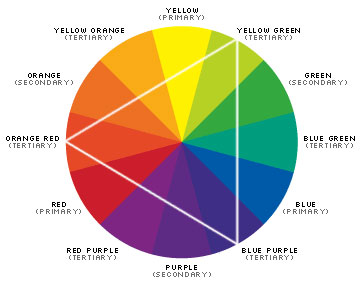
What seems “not quite right” with this color wheel?

GOALS:

  1. 1.4 Define visual challenges using analysis (what are the colors that we, as painters / drawers use to make all the other colors?) How do we label them?

Review with neighbors the relationships of the colors on the color wheel? QUIZ one another on the names, types and relationships of the colors.

~~~

Drawing: Oh the faces you have! I really hope you can make a face and have some fun! Grab a MIRROR and let’s draw a BASIC head – NO INSTRUCTIONS… YET.

BASIC – remember that!

GOALS:

  1. 1.4 Initiate, define, and solve challenging visual arts problems using skills of (1.4.1) analysis (.2) synthesis (.3) evaluation. (P).
  2. Research and Information Fluency – Students apply digital tools to gather, evaluate, and use information.

What was the most challenging way to draw? Why was this most difficult way to go? How OFF were you from the original that you drew from your memory? What is most important about drawing when it comes to observation?

~~~

AP Studio Art: Alright guys and gals… what have you accomplished since yesterday? What do you need to do? What can Mr. Korb help you with? What can you do to help another?

Hi Billy… are you all prepared?

GOALS:

  1. Work on Quality Mounting of artworks. 3.3
  2. Describe the creation of images and ideas and explain why they are value.

Once again… what have you accomplished today? Take a look and a read on your works and the statements… what have you got?

~~~

STUDY HALL: Who are your HEROES? What HEROIC deeds have you seen? Have you ever gone ABOVE and BEYOND the call of duty to help someone else out who was in need of your assistance?

Who are your real life heroes?
GOALS:

  1. Have a 95% work time on current work so that it is done and ON TIME.
  2. Continue to work on back assignments so that your grades can be brought up to passing (or better than they are currently).

What have you accomplished today? What is it that you need to finish so that you are up to speed in one of your classes? LOOK AT YOUR GRADE SHEETS from yesterday.