April 29, 2013 – Monday – Week 14: 5 more to go… SO much to do!

“Don’t let the perfect be the enemy of the good.” — Voltaire

~~~

What are the colors used? Piet Mondrian – De Stijl Artist!

Art Foundations: Continue on the color wheel AND learn about using a GRID to plan out an artwork.

GOALS:

  1. 1.4 Define color schemes and value scales using analysis (what are the colors that we, as painters / drawers use to make all the other colors?)
  2. 1.2 Create art that demonstrates an understanding of how your ideas relate to materials and techniques.

Share image with your classmate and explain the process of measuring and transferring images.

~~~

Drawing: Transfer the photograph to the paper with pencil and consider the colors you might use (Color Scheme) to communicate a message / emotion.

Portrait of Henri Matisse by Andre Derain.

GOALS:

  1. 3.1 reflect on how art differs and describe how it relates to history and cultures
  2. 3.2 apply subjects, symbols, and ideas in art and use skill to solve visual challenges

What was the most challenging aspect of your drawing to get done today? How are you using OBSERVATION and COMPARISON – sighting in – to get your drawings set up correctly?

~~~

AP Studio Art: We are beginning a NEW ARTWORK based on literature. We are ALSO finishing the wrapping up of the portfolio.

How are you filling this?

GOALS:

  1. Work on Quality Mounting of artworks.
  2. 3.2 apply subjects, symbols, and ideas in art and use skill to solve visual challenges

As last week – what do you need to complete so that you have a complete portfolio by Friday?

April 27, 2013 – Saturday – NVAS: Standard 2

Visual Art GOALS and OBJECTIVES

National Visual Arts Standards – Standard 2
Using knowledge of PRINCIPLES and FUNCTIONS

Frank Korb

As I have said in previous posts, there are 6 OVERARCHING GOALS that my  students work toward and focus on EVERY DAY during the year in all of my art classes. These standards are modified, but not “dumbed down,” from the National Standards for the Visual Arts so that they make more sense to the students and parents who are working with them through their art making and other art experiences.

AS I use GOALS in my classroom (in any classroom for that matter) the essential part of the process of the goal is that it fires up and activates the neurons in the brain and gets the artist (student, teacher, whomever) focused on the work that will be undertaken. This OPENS THE FOLDER to learning.

This is the second in the series that we will look at and “unpack” so the standards (or GOALS at this point) are known about (declarative knowledge). It is important to note that, when the goals are given to the students, they are restructured (a smidgen) so that they are meaningful and pertinent to the day’s activity. Notice, they are not agenda items but rather bigger thinking topics.

The National Standards for the Visual Arts are now GOALS that are clear, measurable, observable, and understandable to the students, parents, and community. The use of goals is to keep the mind open to the idea of learning and focused on the act of learning, By combining both declarative (mind) and procedural (application) knowledge the intentionality is focused on the combination of art theory and art making as well as the investigating the close relationship between the two.

~~~

Standard #2: Using knowledge of PRINCIPLES and FUNCTIONS

As an art student you will demonstrate the ability to:

  • 2.1 form criticism about artworks that work to accomplish
    •      2.1.1    commercial
    •      2.1.2    personal
    •      2.1.3    communal
    •      2.1.4    or other meanings

Critiquing is an essential part of the reflection process as we make our art and work towards the development of the skills we need to make successful art. The use of the critique allows artists to be self-reflective while also being able to be critical (constructively hopefully) to their fellow artists (in the classroom, around the coffee shop table, via the internet and collaborative discussions.

  • 2.2 evaluate the effectiveness of artworks

What is working and what is not. The thought about the use of materials, communication of messages, asking deeper questions about the successful and unsuccessful aspects – with deliberate and specific parts of the work in mind.

  • 2.3 create artworks that solve visual challenges

By the simple act of making marks, the challenges and struggles that MAKING art can allow for solutions to be dealt with.

  • 2.4 compare different points of view regarding composition and meaning in artwork

This is great to hear when one has a group of kids / artists. Getting more feedback (formative and summative) from more than one person is great. It is also a great thing for the kids to hear from their classmates and NOT JUST FROM THE TEACHER!

  • 2.5 defend personal evaluations

Being able to justify and stand behind the works through the use of ART VOCABULARY is a great way to help the artist learn to SPEAK ABOUT THEIR ART. I have heard MANY BAD discussions and I hope that my students walk out with the skills and confidence to be public speakers who can voice their opinions and back them up with evidence.

  • 2.6 create multiple solutions to visual challenges that show understanding in relationships between composition and meaning of artwork

Here is the place that making a lot of work is key. 10 sketches, 3 drawing, 7 sculptures, 100 bowls… all in the name of becoming stronger int he solution of the challenges that are at hand. Relationships, forms, balance… you name it and all of these will be realized (and more) as more and more art is made.

~~~

Keep in mind that once you open the door, you also need to close it.  During the last couple of minutes of my classes, we take time to reflect, to GENERALIZE the relationship to the goals and the day’s work. This is the CLOSING THE FOLDER that allows the neurons to settle down and pack away the learning, the experiences, until the following day.

You can find these (and more) in my Visual Arts Handbook HERE.

Thanks –

Frank

April 26, 2013 – Friday – Already? A REAL week has passed.

“You never truly lead anybody until you learn to serve, and you never truly learn to serve until you learn there’s something so much greater than yourself.”

~~~

Art Foundations: Color Scheme readings and Color Scheme Notecards… that’s it…

GOALS:

  1. 1.4 Define color schemes using analysis (what are the colors that we, as painters / drawers use to make all the other colors?)
Color Wheel from Class – Label as such…

What color schemes do you fully understand? What color schemes are you struggling with a little bit? Write them out and have a conversation with your neighbor as to which ones you are challenged with.

~~~

Drawing: SnapChat… You made portraits yesterday and 2 days ago… today you are going to show me the image you would like to use and then get them printed out. We begin with pastel drawing – guided experimentation first. Photo Folder to SAVE IMAGE and ADD TO YOUR RUBRIC!

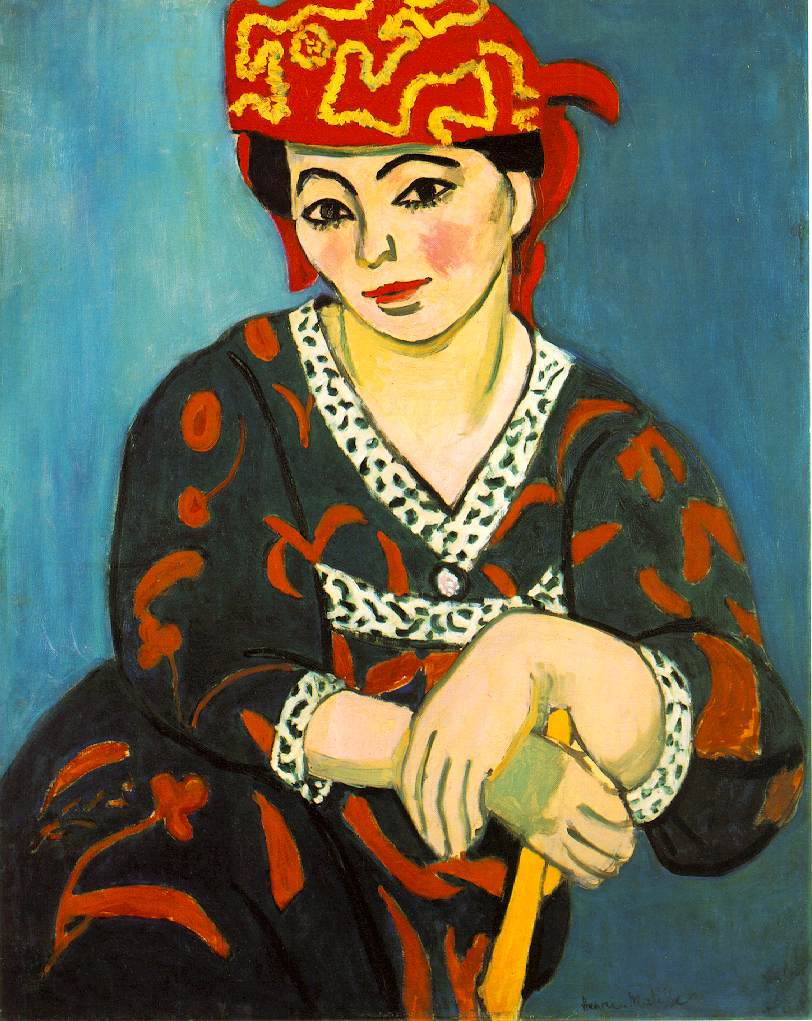
Matisse a bit toned down from yesterday… Still on the changed colors? A smidge maybe…

GOALS:

  1. (1.4.1) Know about solving visual challenges (making art) using analysis (breaking the work into its parts).

What were the challenges that you had with the guided use of the pastels? What are you a bit worried about with the upcoming project. How have you chosen to use the color printout and modify the composition?

~~~

AP Studio Art: Ok guys and gals – you have been great this week – so far… Biggest concerns?

GOALS:

  1. Work on Quality Mounting of artworks. 3.3 Describe the creation of images and ideas and explain why they are value.  

What situation in life is it important to present yourself in the best light possible? When does it not matter so much? How does the presentation of your artwork relate?

April 25, 2013 – Thursday

“You never truly lead anybody until you learn to serve, and you never truly learn to serve until you learn there’s something so much greater than yourself.”

~~~

Art Foundations: Color Scheme readings and Color Scheme Notecards… that’s it…

Working on Color Schemes today!

GOALS:

  1. 1.4 Define color schemes using analysis (what are the colors that we, as painters / drawers use to make all the other colors?)

What color schemes do you fully understand? What color schemes are you struggling with a little bit? Write them out and have a conversation with your neighbor as to which ones you are challenged with.

~~~

Drawing: SnapChat… You made portraits yesterday and 2 days ago… today you are going to show me the image you would like to use and then get them printed out. We begin with pastel drawing – guided experimentation first.


GOALS:

  1. (1.4.1) Know about solving visual challenges (making art) using analysis (breaking the work into its parts).

What were the challenges that you had with the guided use of the pastels? What are you a bit worried about with the upcoming project.

~~~

AP Studio Art: Ok guys and gals – you have been great this week – so far… Biggest concerns?

GOALS:

  1. Work on Quality Mounting of artworks. 3.3 Describe the creation of images and ideas and explain why they are value.  

What situation in life is it important to present yourself in the best light possible? When does it not matter so much? How does the presentation of your artwork relate?

April 24, 2013 – Wednesday – Already?

Are you a leader? How do you demonstrate your leadership abilities?

“You never truly lead anybody until you learn to serve, and you never truly learn to serve until you learn there’s something so much greater than yourself.”

~~~

Art Foundations: Color Scheme readings and Color Scheme Notecards… that’s it…

GOALS:

  1. 1.4 Define color schemes using analysis (what are the colors that we, as painters / drawers use to make all the other colors?)

While you made your color schemes… which of these cause you the most challenge to understand? Why do you think that artists choose various color schemes to create their artwork? What would your favorite color scheme be (if you had to have one)?

~~~

Drawing: SnapChat… You made portraits yesterday… today we are going to look at them and then get them printed out. Tomorrow – we begin with pastel drawing – experimentation first.

LL Cool J.

GOALS:

  1. Research and Information Fluency – Students apply digital tools to gather, evaluate, and use information.
  2. (5.1) Identify the intentions and purposes behind making art. (D)

What was it that made you choose the image you did for our pastel drawing? What emotions / feelings do you hope that you are able to communicate with the drawing? What do you know about the Fauvists? What is the importance of using TECHNOLOGY in a responsible fashion? I know that technology like Snap Chat can be used inappropriately… make wise, responsible choices.

~~~

AP Studio Art: Ok guys and gals – you have been great this week – so far… Biggest concerns?

When are we going to hang your show in New York? Let’s keep the presentation and representation in mind as you work and prepare to present!

GOALS:

  1. Work on Quality Mounting of artworks.
  2. 3.3 Describe the creation of images and ideas and explain why they are value.

What did you get done? If I go to your login page… what will I see? How is that statement? May 7 – 6th hour is coming up REALLY FAST. We will BE DONE WITH THE ENTIRE PRESENTATION AND PORTFOLIO BEFORE THAT TIME! Nobody goes into that weekend without being done…

April 23, 2013 – Tuesday

“You never truly lead anybody until you learn to serve, and you never truly learn to serve until you learn there’s something so much greater than yourself.” What is the last thing you did to help someone out with their greater good in mind? What have you recently done to to mover yourself forward as a leader?

~~~

Art Foundations: WE are working with COLOR today. Color wheel, mixing up of colors, using colored paints and colored pencils… let’s get making art.

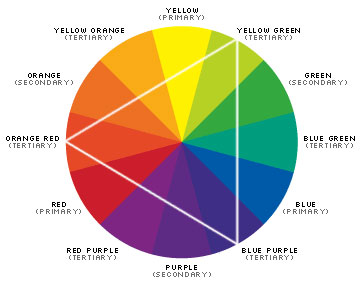
What seems “not quite right” with this color wheel?

GOALS:

  1. 1.4 Define visual challenges using analysis (what are the colors that we, as painters / drawers use to make all the other colors?) How do we label them?

Review with neighbors the relationships of the colors on the color wheel? QUIZ one another on the names, types and relationships of the colors.

~~~

Drawing: Oh the faces you have! I really hope you can make a face and have some fun! Grab a MIRROR and let’s draw a BASIC head – NO INSTRUCTIONS… YET.

BASIC – remember that!

GOALS:

  1. 1.4 Initiate, define, and solve challenging visual arts problems using skills of (1.4.1) analysis (.2) synthesis (.3) evaluation. (P).
  2. Research and Information Fluency – Students apply digital tools to gather, evaluate, and use information.

What was the most challenging way to draw? Why was this most difficult way to go? How OFF were you from the original that you drew from your memory? What is most important about drawing when it comes to observation?

~~~

AP Studio Art: Alright guys and gals… what have you accomplished since yesterday? What do you need to do? What can Mr. Korb help you with? What can you do to help another?

Hi Billy… are you all prepared?

GOALS:

  1. Work on Quality Mounting of artworks. 3.3
  2. Describe the creation of images and ideas and explain why they are value.

Once again… what have you accomplished today? Take a look and a read on your works and the statements… what have you got?

~~~

STUDY HALL: Who are your HEROES? What HEROIC deeds have you seen? Have you ever gone ABOVE and BEYOND the call of duty to help someone else out who was in need of your assistance?

Who are your real life heroes?
GOALS:

  1. Have a 95% work time on current work so that it is done and ON TIME.
  2. Continue to work on back assignments so that your grades can be brought up to passing (or better than they are currently).

What have you accomplished today? What is it that you need to finish so that you are up to speed in one of your classes? LOOK AT YOUR GRADE SHEETS from yesterday.

April 20, 2013 – Saturday – Hello Art Evaluation SwapMeet!

Visual Art GOALS and OBJECTIVES

National Visual Arts Standards – Standard 1
Understanding and applying media, techniques, and processes

Frank Korb

There are 6 OVERARCHING GOALS that all of my art students work toward and focus on during the year in all of my art classes. The goals are referred to on a daily basis and are been modified, but not “dumbed down,” from the National Standards for the Visual Arts so that they make more sense to the students who are working with them through their art making and other art experiences.

The use of GOALS in my classroom (in any classroom for that matter) is an essential part of the process of running a high energy and well planned / focused classroom. The introduction of the GOALS, and the interaction of the student with that goal, literally fires up and activates the neurons in the brain and gets the young artist (student, teacher, whomever) focused on the work that will be undertaken. This OPENS THE FOLDER to learning.

This is the first of  six weeks that we will be looking at and unpacking the goals so that they are more easily understood. It is important to note that, when the goals are given to the students, they are restructured (a smidgen) so that they are meaningful and pertinent to the day’s activity. Notice, they are not agenda items but rather bigger thinking topics.

The National Standards for the Visual Arts have been developed into a series of GOALS that are clear, measurable, observable, and understandable to the students, parents, and community. The use of goals is to keep the mind open to the idea of learning and focused on the act of learning, By combining both declarative (mind) and procedural (application) knowledge the intentionality is focused on the combination of art theory and art making as well as the investigating the close relationship between the two.

~~~

Standard #1: Understanding and applying media, techniques, and processes
As an art student you will demonstrate the ability to:

  • 1.1 apply media, techniques, and processes with
    • 1.1.1 skill
    • 1.1.2 confidence
    • 1.1.3 and awareness so that your ideas are executed well
  • 1.2 create art that demonstrates an understanding of how your ideas relate to the
    • 1.2.1 materials
    • 1.2.2 techniques
    • 1.2.3 and processes you use
  • 1.3 communicate ideas clearly
  • 1.4 create, define, and solve visual challenges using
    • 1.4.1 analysis (breaking up the artwork / subject matter to basic elements)
    • 1.4.2 synthesis (put all the parts of a work together to form a whole)
    • 1.4.3 evaluation [critique] (formative and summative reflections about your artwork)

~~~

One last note about the day to day activities in the class and GOALS specifically is that when we wrap up the class – the last couple of minutes, we take time to reflect, to GENERALIZE the relationship to the goals and the day’s work. This is the CLOSING THE FOLDER that allows the neurons to settle down and pack away the learning, the experiences, until the following day.

You can find these (and more) in my Visual Arts Handbook HERE.

Thanks –

Frank

April 19, 2013 – Friday – Welcome to Community Day!

“Go and make interesting mistakes, make amazing mistakes, make glorious and fantastic mistakes. Break rules. Leave the world more interesting for your being here. Make. Good. Art.”

~ Neil Gaiman

~~~

Art Foundations: Final day to wrap up the cityscape drawings. Use your time wisely!

Where are you? Where is the horizon line? How does this relate to you? How do you, as the viewer, relate to the city?

GOALS:

  1. 2.1 Form criticism about 2 point perspective drawings that work to accomplish personal meanings.
  2. 5.3 Describe meanings of artworks by analyzing 5.3.1 techniques of linear perspective.

Cityscape Instructions HERE.

COLOR WHEEL:

Here is the color wheel I promised…
In your journal section of the Goals Sheets… What is the one area that you are the most proud as you look at and explore your city? What do you need to review for yourself when it comes time for the final drawing at exam time? Color is coming up next… we will get to know this color wheel well.
~~~Drawing: How did your eyes and mouth go yesterday? Today we will be drawing Daryl’s favorite facial feature… the ear!

Yum!

GOALS:

  1. 3.3 describe the creation of ears, the ideas behind drawing them, and explain why the skill of observation is of value
  2. 1.4 create, define, and solve visual challenges of the ears (from various angles) using 1.4.1 analysis (breaking up the artwork / subject matter to basic elements)

What was the most difficult part of your drawing today? What have you SEEN as being different that you though it would have been? What is different in drawing the ear than you found in drawing the MOUTH and EYES? What was it that made it so different?

~~~

AP Studio Art: Today we are in the computer lab working on uploading and getting our accounts all set and ready to ROCK and ROLL!

How proud of your work are you? How much fun are you having with the body of work you have produced? What did you GAIN from all the reflection yesterday?

GOALS:

  1. Communication and Collaboration – Students use digital media and environments to communicate and work collaboratively, including at a distance, to support individual learning and to the learning of others.

What else have you got to do with the body of work you have produced? How many works have you in each of the 3 categories? What do you need to continue working on? MONDAY… prepare yourself for a work that will test your CHARACTER!

~~~

Study Hall: What is it to have a strong sense of Honor?

GOALS:

  1. Know about the core concepts of HONOR.
  2. Identify an individual in your life and explain why you feel they are HONORABLE.

On your goals sheet, write out your definition of HONOR. What components do you feel best define someone of high character?

April 18, 2013 – Thursday

“Go and make interesting mistakes, make amazing mistakes, make glorious and fantastic mistakes. Break rules. Leave the world more interesting for your being here. Make. Good. Art.”

~ Neil Gaiman

~~~

Art Foundations: Work on your cityscapes. What do you need to do to make it even more AWESOME? You are working with VALUE and COLOR! Make sure that you are NOT SHARING the colored pencils that are out on the BLACK BOX. DO NOT SHARE!

What can you do to make the cityscape REALLY outstanding. Do not outline… work with the color and the shading to ELIMINATE the ideas of the outline. Please.

GOALS:

  1. 2.1 Form criticism about 2 point perspective drawings that work to accomplish personal meanings.
  2. 5.3 Describe meanings of artworks by analyzing 5.3.1 techniques of linear perspective.

Cityscape Instructions HERE.

COLOR WHEEL:

Here is the color wheel I promised…

10 minutes before the end of class – Self – evaluation of the writing for the day, in the JOURNAL SECTION of the week today. What did you find NEW in your work that you forgot you did well or struggled with? How are you working with the new ideas of color in your drawing? What is a specific place in your drawing that you are REALLY pleased with? Give a SPECIFIC AREA! We will be sharing  your ideas QUICKLY on Friday!

~~~

Drawing: Today you are going to be working on the MOUTH (that is also on the CHALKBOARD). What can you do to make your drawing even more successful? Look at the shapes – REALLY carefully! Check out these Eyelashes!

How big are YOUR eyelashes? As big as these? Thanks Joanna!

GOALS:

  1. 3.3 describe the creation of mouths, the ideas behind drawing them, and explain why the skill is of value
  2. 1.4 create, define, and solve visual challenges of the mouth using 1.4.1 analysis (breaking up the artwork / subject matter to basic elements)

What was the most difficult part of your drawing today? What have you SEEN as being different that you though it would have been? What is NEW in the MOUTH, DIFFERENT, UNIQUE, UNUSUAL… WHY?

~~~

AP Studio Art: Great critiques yesterday – grades will be in the book shortly…

It is THINKING time… So Sorry!

GOAL:

  1. 5.2 Stand behind your evaluation of art as you answer the 2 questions from the AP Poster.
  2. 4.5 Look at the qualities of art from various times to judge works of art and explain the GROWTH of your work

In addition to having written and reflected on your work, you are going to be needing to continue to PRESENT and EDIT your works. TODAY should have been a PERFECT opportunity to do just that. What was your biggest accomplishment today in the tasks you chose to work on today? Please share your ideas and thoughts with a classmate.

April 17, 2013 – Wednesday, Waffle Wednesday

“Go and make interesting mistakes, make amazing mistakes, make glorious and fantastic mistakes. Break rules. Leave the world more interesting for your being here. Make. Good. Art.” ~ Neil Gaiman

~~~

Art Foundations: FINAL DAY to work on your cityscapes. What do you need to do to make it more AWESOME? Do it today!

What might this architect have been thinking when he designed this structure? What is ONE thing that you did that you see in this drawing – ONE THING?

GOALS:

  1. 2.1 Form criticism about 2 point perspective drawings that work to accomplish personal meanings.
  2. 5.3 Describe meanings of artworks by analyzing 5.3.1 techniques of linear perspective.

10 minutes before the end of class – Self – evaluation of the writing for the day – What did you find NEW in your work that you forgot you did well or struggled with? PREZI Self – Evaluation


~~~~

Drawing: How’d your eyes turn  out yesterday? How about drawing a set of lips? A Mouth? Let’s give it a shot.

What is the GROUND of your image going to be? Let’s try to find something that relates to YOU and is a NEW ground for you to work on.

GOALS:

  1. 3.3 describe the creation of facial features and ideas behind them and explain why they are of value
  2. 1.4 create, define, and solve visual challenges of facial features using 1.4.1 analysis (breaking up the artwork / subject matter to basic elements)

What successes did YOU have in the drawings of the EYES and MOUTH? What is one area that you really felt were unsuccessful when it came to the areas you struggled? Be explicit and specific – PLEASE!

~~~

AP Studio Art: Critique

Deborah Butterfield – Early work…
Late Work…

GOALS:

  1. 3.3 describe the creation of your concentration and ideas and explain why they are of value.
  2. 4.5 look at the qualities of art from the rest of your classmates / cultures to judge works of art – What is similar in the qualities and successes?

What did you go through mentally in building your concentration? What is the earliest memory of the decision? What were the stumbling blocks that you REMEMBER as being in front of you? Where were the support systems that helped you out of the pits of self-doubt etc…?

~~~

Study Hall: What was the ONE thing you learned or struggled with or wrote down at the end of yesterday’s class? What is your response to it today?


GOALS:

  1. Work to accomplish the current homework or missing work you have in your classes.
  2. Understand that the responsibility lies with you – but that you have a lot of people willing and working to help you.

How much time are you putting into your schoolwork OUTSIDE of school? What is the biggest challenge for you at home? What are you doing to hold yourself accountable for the work you need to accomplish?