June 13, 2013 – Thursday – How’s Summer?

Please follow me by entering your e-mail address (see the right of the screen) to get daily updates, ideas, and inspirations. Share, Retweet – however you can share me…

Welcome to Thursday! As the summer has entered the second half of its first week, I have set my summer goal to post on Monday’s and Thursday’s. Next week I will be presenting at the Interactiv Learning Conference in Whitewater, Wisconsin so… I may be posting a few more times than twice next week. Enjoy!
~~~
What was your favorite aspect of this class? Please go into some explanation to allow for a fully developed thought and answer.

  • “Trying hard on my work and Mr. Korb recognizing the quality of my work even when I can’t.”– Art Foundations Artist 2013 – NVAS Goal 2.3, 2.4, and 4.5
  • “Your humor, your environment. The general fun in the class” – Art Foundations Artist 2013 – NVAS Goal 3.3
  • “Being able to choose things that relate to me.” – Art Foundations Artist 2013 – NVAS Goal 2.6 and 3.1

~~~

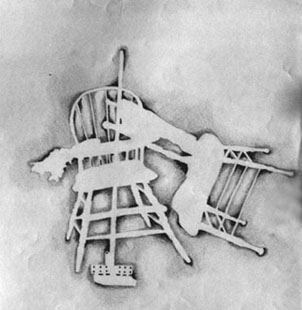
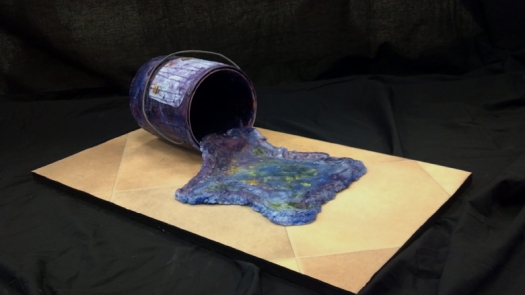
AP Studio Artists Works - Kyle S.'s Mixed Media installation... I am curious as to where this work has ended up... Click on the image to visit the AP Google Presentation of their entire body of work from 2012 - 2013.
AP Studio Artists Works – Kyle S.’s Mixed Media installation… I am curious as to where this work has ended up… Click on the image to visit the AP Google Presentation of their entire body of work from 2012 – 2013.

May 5, 2013 – Wednesday – Exam Day 2!

What was the single greatest accomplishment for you over the past semester?

“I feel my understanding of what makes art has developed further. I am more open minded.” 2013 WUHS Art Student – Art Foundations

~~~

If we write our dreams and goals down, we dramatically increase our odds of realization. If we share them with others, they become potent and alive.” ―Kristin Armstrong

Write out those dreams… then share your dreams with others. ~~~ 

~~~

4th Hour EXAMS: 7:25 – 8:55

AP Studio Art: 2012 – 13 Portfolios – Collaborative Presentation

5th Hour EXAMS: 9:05 – 10:35

Drawing:

6th hour EXAM: 10:45 – 12:15

~~~

10 Lessons the Arts Teach Children

  1. The arts teach children to make good judgments about qualitative relationships. Unlike much of the curriculum in which correct answers and rules prevail, in the arts, it is judgment rather than rules that prevail.
  2. The arts teach children that problems can have more than one solution and that questions can have more than one answer.
  3. The arts celebrate multiple perspectives. One of their large lessons is that there are many ways to see and interpret the world.
  4. The arts teach children that in complex forms of problem solving purposes are seldom fixed, but change with circumstance and opportunity. Learning in the arts requires the ability and a willingness to surrender to the unanticipated possibilities of the work as it unfolds.
  5. The arts make vivid the fact that neither words in their literal form nor numbers exhaust what we can know. The limits of our language do not define the limits of our cognition.
  6. The arts teach students that small differences can have large effects. The arts traffic in subtleties.
  7. The arts teach students to think through and within a material. All art forms employ some means through which images become real.
  8. The arts help children learn to say what cannot be said. When children are invited to disclose what a work of art helps them feel, they must reach into their poetic capacities to find the words that will do the job.
  9. The arts enable us to have experience we can have from no other source and through such experience to discover the range and variety of what we are capable of feeling.
  10. The arts’ position in the school curriculum symbolizes to the young what adults believe is important.

Eisner, E. (2002). The Arts and the Creation of Mind, In Chapter 4, What the Arts Teach and How It Shows. (pp. 70-92). Yale University Press. Available from NAEA Publications. NAEA grants reprint permission for this excerpt from Ten Lessons with proper acknowledgment of its source and NAEA.

May 4, 2013 – Tuesday – EXAM DAY

If we write our dreams and goals down, we dramatically increase our odds of realization. If we share them with others, they become potent and alive.” ―Kristin Armstrong

Write out those dreams… then share your dreams with others.

~~~ 

Art Foundations: Abstract Paintings – Link Here

1st Hour EXAMS: 7:25 – 8:55

2nd Hour EXAMS: 9:05 – 10:35

Drawing:

3rd hour EXAM: 10:45 – 12:15

~~~

10 Lessons the Arts Teach Children

  1. The arts teach children to make good judgments about qualitative relationships. Unlike much of the curriculum in which correct answers and rules prevail, in the arts, it is judgment rather than rules that prevail.
  2. The arts teach children that problems can have more than one solution and that questions can have more than one answer.
  3. The arts celebrate multiple perspectives. One of their large lessons is that there are many ways to see and interpret the world.
  4. The arts teach children that in complex forms of problem solving purposes are seldom fixed, but change with circumstance and opportunity. Learning in the arts requires the ability and a willingness to surrender to the unanticipated possibilities of the work as it unfolds.
  5. The arts make vivid the fact that neither words in their literal form nor numbers exhaust what we can know. The limits of our language do not define the limits of our cognition.
  6. The arts teach students that small differences can have large effects. The arts traffic in subtleties.
  7. The arts teach students to think through and within a material. All art forms employ some means through which images become real.
  8. The arts help children learn to say what cannot be said. When children are invited to disclose what a work of art helps them feel, they must reach into their poetic capacities to find the words that will do the job.
  9. The arts enable us to have experience we can have from no other source and through such experience to discover the range and variety of what we are capable of feeling.
  10. The arts’ position in the school curriculum symbolizes to the young what adults believe is important.

Eisner, E. (2002). The Arts and the Creation of Mind, In Chapter 4, What the Arts Teach and How It Shows. (pp. 70-92). Yale University Press. Available from NAEA Publications. NAEA grants reprint permission for this excerpt from Ten Lessons with proper acknowledgment of its source and NAEA.

May 31, 2013 – Friday

“Every problem has in it the seeds of its own solution. If you don’t have any problems, you don’t get any seeds.” —Norman Vincent Peale

~~~

Art Foundations: It is time to clean… Yesterday proved that without me, and without a VERY specific set of GOALS for your PERSONAL LEARNING – you have no need to study and all the time in the world to clean. GREAT!

Job List is HERE!

GOALS:

  1. 6.1 compare aspects of the visual arts with aspects of other disciplines.

Looking through your binders, thinking about the projects, looking at your notes… what are the aspects of the course that you are still struggling to grasp. Take the last 7 minutes to work with your neighbors and discuss the challenges that you are still having.

~~~

DRAWING: Out into the hallways and DRAW – Project DUE on EXAM DAY along with the ONLINE – GOOGLE DOCUMENT Rubric. Let me know if you are having troubles!

GOALS:

  1. 1.1 apply media, techniques, and processes with 1.1.1 skill 1.1.2 confidence 1.1.3 and awareness so that your ideas are executed well
  2. 2.2 evaluate the effectiveness of artworks (YOU AND COLLABORATOR – FORMATIVE TONIGHT ON GOOGLE DRIVE)

What have you got to do in order to really wrap this up as an A+ Execution, A+ Composition, A+ Character, and A+ Critique (that will be the final exam grade – – CRITIQUE)? Some of your HALLWAY choices (socializing) are getting in the way of your accomplishing the A+ goals.

~~~

AP Studio Art: Clean the room – Update your final – Gather your Artwork… What else have you got to accomplish?

GOALS:

  1. 6.1 compare aspects of the visual arts with aspects of other disciplines.

What has been your FAVORITE project this year? What has been your LEAST favorite project this year? What can I do to make the course better, stronger, more APish?

May 30, 2013 – Thursday

“Every problem has in it the seeds of its own solution. If you don’t have any problems, you don’t get any seeds.” —Norman Vincent Peale

~~~

Art Foundations: Collage and Gel / Matte Medium – How is it going?

Alexander Calder – Painting – What did CALDER do that we also learned about? 1 million points to the first person who can e-mail me: fjkorb@gmail.com.

GOALS:

  1. 1.3 communicate your thoughts on social topics clearly
  2. 1.4.3 evaluation [formative critique]

What techniques did you come up with to resolve the issues you might have had with this artwork, In 5 sentences… what are your thoughts about ABSTRACT ART and COMMUNICATING PERSONAL MESSAGES?

~~~

Drawing: Hallway Drawing Time – Make sure you are documenting your image as it progresses. This is a HUGE WORK DAY! Make the most of it! Do not forget to work on the FINAL EXAM document.

GOALS:

  1. 1.1 apply media, techniques, and processes with 1.1.1 skill 1.1.2 confidence 1.1.3 and awareness so that your ideas are executed well

What did you do today that brought the work to a place where you can understand what is going to happen? How can you continue this forward movement tomorrow? Are you using your time wisely in the hall?

~~~

AP Studio Art: Show comes down today and we are CLEANING!

GOALS:

  1. 6.1 compare aspects of the visual arts with aspects of other disciplines

What was your FAVORITE artwork of art this year? What was your favorite PROJECT? Why?

May 29, 2013 – Wednesday

“Every problem has in it the seeds of its own solution. If you don’t have any problems, you don’t get any seeds.” —Norman Vincent Peale

Even a great big tree starts with a seed. Look deep within your challenges and find the seed to its solution.

~~~

  • l hour: 7:25 – 8:02
  • 2 hour: 8:07- 8:46
  • 3 hour: 8:51 – 9:28
  • 4 hour: 9:33 – 10:10
  • Assembly: 10:15- 10:48
  • 5A Lunch: 10:48am- 11:16
  • 5B Lunch: 11:16 – 11:43
  • 5C Lunch: 11:43-12:10
  • 6 hour: 12:15-1:02
  • 7 hour: 1:07-1:54
  • 8 hour: 1:59-2:46

~~~

Art Foundations: Mixed Media Collage, golden rectangle, perfect proportions, perfect placement, compositions – How are you doing? NO SKETCHES THIS WEEK! (Unless you want one more for extra credit – BUT – it has to be 100% or it does not get accepted).

Max Ernst – Retrospective at the Fondation Beyeler – Switzerland
Home – Switzerland Max Ernst Retropective

GOALS:

  1. 3.2 apply subjects, symbols, and ideas in art and use skill to solve visual challenges.
  2. 1.1 apply paint, crayon, through collage and incorporating various texture making processes, with 1.1.3 an awareness so that your ideas are executed well.

How have you decided to represent the ideas and feelings you hold true? Has it been successful? Was it worth the task of creating this abstract work?

~~~

Drawing: Hallways and Observation – What is your object? How can you use the many skills we have developed and build that drawing to be your most successful one yet?

Jim Dine and his Single Objects – Look at the VALUES and FIGURE / GROUND relationships!

GOALS:

  1. 1.1 apply media, techniques, and processes with 1.1.1 skill 1.1.2 confidence 1.1.3 and awareness so that your ideas are executed well
  2. 2.2 evaluate the effectiveness of artworks (YOU AND COLLABORATOR – FORMATIVE TONIGHT ON GOOGLE DRIVE)

What did you do today that brought the work to a place where you can understand what is going to happen? How can you continue this forward movement tomorrow? Are you using your time wisely in the hall?

~~~

AP Studio Art: en Plein Air – weather permitting – FINAL EXAM is RIGHT HERE!

Impression Sunrise – Oil on Canvas – Claude Monet – Father of Impressionism

GOALS:

  1.  1.2 create art that demonstrates an understanding of how your ideas relate to the 1.2.1 materials 1.2.2 techniques 1.2.3 and processes you use.

Drawing – I don’t care what your chosen field of making art is – is essential to the creative process… with it, what did you accomplish today? What are the troubles you are having working outside? Working in materials that you may not be familiar with or comfortable with?

May 28, 2013 – Tuesday

“Every problem has in it the seeds of its own solution. If you don’t have any problems, you don’t get any seeds.” —Norman Vincent Peale

Even a great big tree starts with a seed. Look deep within your challenges and find the seed to its solution.

~~~

Art Foundations: Mixed Media Collage, golden rectangle, perfect proportions, perfect placement, compositions – How are you doing? NO SKETCHES THIS WEEK! (Unless you want one more for extra credit – BUT – it has to be 100% or it does not get accepted).

GOALS:

  1. 1.1 apply media, techniques, and processes with 1.1.1 skill 1.1.2 confidence 1.1.3 and awareness so that your ideas are executed well
  2. 3.2 apply subjects, symbols, and ideas in art and use skill to solve visual challenges.

What is the social topic that you feel is important enough to make an artwork about? How are you using the abstract work to create your image to successfully express your ideas?

~~~

Drawing: Hallway drawings and Gesso of the board – a portion of it. Intro to the FINAL Crit! Last projects crit. was due TODAY!

Jim Dine – Heck of a guy.

This slideshow requires JavaScript.

GOALS:

  1. 1.1 apply media, techniques, and processes with 1.1.1 skill 1.1.2 confidence 1.1.3 and awareness so that your ideas are executed well
  2. 2.2 evaluate the effectiveness of artworks

How have you been able to do A LOT of work in one day that you may not have been able to in the past? How have you been able to improve your drawing and idea skills more in the past year than you have in the past?

~~~

AP Studio Art: Plein Air Drawings – Final Exam Instructions – FINAL EXAM is RIGHT HERE!

Ok… now is where all that editing comes to use. TOMORROW!

GOALS:

  1. 3.4 evaluate and defend the validity of sources for ideas
  2. Stand behind the meaning and creation of your work.

How did the art exhibition go? What were questions that came up? How were you able to discuss the work, eat, drink, and be a real part of the process? how did the exhibition and conversation about your work make you feel?

May 25, 2013 – Saturday – NVAS: Standard 6

Visual Art GOALS and OBJECTIVES

National Visual Arts Standards – Standard 6
Making Connections Between the Visual Arts and Other Disciplines

Frank Korb

~~~

Welcome to the last weekend of thinking about the 6 OVERARCHING GOALS that all students ought to work toward and focus on EVERY DAY during the year in all of their art classes. These Goals are unpacked from the National Standards for the Visual Arts so that they make more sense to the students and parents who are working with them through their art making and other art experiences. As I use goals in my classroom it OPENS THE FOLDER to learning.

The National Standards for the Visual Arts are now GOALS that are clear, measurable, observable, and understandable to the students, parents, and community. The use of goals is to keep the mind open to the idea of learning and focused on the act of learning, By combining both declarative (mind) and procedural (application) knowledge the intentional actions are focused on the combination of art theory and art making and art critiquing as well as the reflection on the close relationships.

This final objective, standard, is the one that I find easiest to see how it relates to the outside world but, when in the classroom, I find it hardest to put up as a daily goal for the kids to reflect upon. I am REALLY looking for your input and thoughts on this one so… if you have a career that you can help me relate the ideas to – please chime in.

~~~

Standard #6: Making connections between visual arts and other disciplines

As an art student you will demonstrate the ability to:

  • 6.1 compare aspects of the visual arts with aspects of other disciplines

Where can we, the artists, relate to the outside the artist world? This is a question that kids (and parents alike) ask frequently. “You can draw, GREAT! But where is it going to get you in life?” I would guess, and an educated one at that, that there are no major corporations that do not invest a portion of their yearly budget to creativity. “How can we look at our product from a different point of view?” “What can we do to make the design of the (insert product here) so that it is flashier, sharper, more appealing, better overall to the consumer?” Technology, virtual reality, the machines we rely on day in and day out, the lifestyle we all lead, the fashion we wear, drive, live in and with, require the mind of a creative person. How can we advance with only the academics at the front of education? The answer is, has been (all the way back to the days of Socrates and more recently Leonardo da Vinci – of the 1400’s are more recent), and always will be… we can’t.

  • 6.2 compare characteristics of the visual arts and other disciplines from history or movements

I find the characteristics of art movements easy to speak about, but as someone who is not a history buff or particularly well versed in world history, I struggle to find those connections between what the visual arts have done and what the world was going through. This is, however, a great place to make those connections. We recently wrapped up a Fauvist Project in my Drawing 1 class where we looked at the works of the French Fauvists (1905) and saw how they abandon the Romantic Tradition of the portrait and landscape on favor of the color explosion of the “Wild Beasts.” We also looked at the current culture most of the kids in class (all but one had taken some sore of goofy cell phone photograph of themselves sticking out their tongue or looking cross-eyed at the camera and they created soft pastel portraits based on art history and their own current cultures and social behaviors. This was a great way for them to relate to the arts of the past and to get a bit of knowledge about the history of the time… more about French social time of the era but… next time.

  • 6.3 use the principles and techniques of art with those from other discipline

How can we use the ideas and practices that artists use and mix them with those from other disciplines? Math, Science, History, World Languages, Engineering, Design, Architecture, Dance, Theater… and the list goes on. One of the more important lessons I work to teach is that the visual arts the students learn in our classroom are NOT limited to the walls of that classroom. This seems silly, but when I often see collages and paintings done in classes outside of the arts, some of my very students forget the lessons in color theory, perspective, facial proportions, and even good composition and design and fall back to the days of the elementary artist. If it were intentionally, I could appreciate the effort to forget all the training that was done to make them stronger and more successful artists. That said, not a one of them has the deliberateness behind their marks as Pablo Picasso did as he said “When I was the age of these children, I could draw like Raphael: it took me many years to learn how to draw like these children.” Nope, they just made poor and rushed attempts. For a student to know that they can and should use all of the lessons about the elements and principles of design and art and put them to use in the academics and the rest of their life – truly lifelong learners they will be.

~~~

Lastly, once you open the door to learning  you also need to close it.  During the last couple of minutes of my classes, we take time to reflect, to GENERALIZE the relationship to the goals and the day’s work / lessons onto what the students know or think they know about the world / practice of the arts. This is the CLOSING THE FOLDER that allows the brain to settle down and pack away the learning, the experiences, until the following day.

You can find these ideas (and more of my thoughts and other individuals thoughts) in my Visual Arts Handbook HERE.

Thanks –

Frank

May 24, 2013 – Friday – Happy Birthday Abby!

“A dream only becomes overrated when not pursued by the dreamer.” ― Courtney Hickman

~~~

Art Foundations: Collage and build the ABSTRACT IMAGE based on your personal life and feelings…

Simplicity in the use of ELEMENTS of ART can make an abstraction – what are you doing? What are your textures?

GOALS:

  1. 1.3 communicate your thoughts on social topics clearly
  2. 4.3 compare relationships in visual art in terms of 4.3.3 your culture as it relates to your own art.

What have you learned about the creation of ABSTRACT ART? What have you learned about the important things in your life THROUGH the creation of your ABSTRACT ART PROCESS?

~~~

DRAWING: 1) Perspective and 2) Critiques… 6th hour is going to have to hustle ONE DAY tocatch up. PHOTOGRAPHS will HAVE TO BE a part of the process. THESE Photos are going to be UPLOADED to the FINAL CRITIQUE for the FINAL EXAM… make sure you are documenting the process.

EVOL, “DRESDEN 09”, 2010 Spray paint on cardboard, 61 x 76 cm —> High Resolution… How can you do this… GOUACHE, GESSO, PENCIL!

GOALS:

  1. 5.1 Identify the rationale behind making art.
  2. 1.4 Create, define, and solve visual challenges using 1.4.1 Analysis (how do you see the perspective in your drawing?)

Where did you struggle in remembering perspective? How can you use the skills of sighting in to refresh your memory and heighten your skills? THIS IS A FAST PROJECT that IS the basis of the FINAL EXAM. If you do not finish the drawing in the time allotted – you will have a hard time passing the final exam. HOW can you make this YOUR own special drawing? Your locker? Your favorite hallway / doorway / classroom?

~~~

AP Studio Art: CONGRATULATIONS! Let’s get out there and be proud of the 9 months of ART MAKING!

This slideshow requires JavaScript.

GOALS:

  1. 2.5 defend personal evaluations
  2. 3.3 describe the creation of images and ideas and explain why they are of value Work at the (AP) Art Exhibition.

What did you contribute to the cultural end of the school day? What questions came up? What controversy came up? Who do you impress and why? What were your thoughts as the day / hour went by? Good job folks… One more week of Art Making and then the end…

May 23, 2013 – Thursday

WELCOME HOME MOM!
WELCOME HOME MOM!

“A dream only becomes overrated when not pursued by the dreamer.” ― Courtney Hickman

~~~

Art Foundations: Continue to develop the ABSTRACT IDEAS of your Social / Personal ideas and topics of importance. What is your social topic / personal idea and how can you use abstraction and texture to communicate the meaning.

GOALS:

  1. 1.3 communicate your thoughts on social topics clearly
  2. 4.3 compare relationships in visual art in terms of 4.3.3 your culture as it relates to your own art

What sorts of ABSTRACT imagery have you come up with to help communicate your message?

~~~

Drawing: This is, hopefully, the last day of the critique – we are going to get some FINAL words from the 3rd hour and maybe the 6th hour – 1 more day in 6th likely…

What’s to come? – I will show you tomorrow… we can’t spend a lot of time in it but… if you are interested – here is an AWESOME link to the inspiration that will take you to the halls… LINK HERE to the WILDE Gallery, Berlin, Germany.

Crit of Still Life Drawings
Previous High school Classes Critiquing – ONE MORE DAY of confidence building!

GOALS:

  1. 5.1 Identify the rationale behind making art.
  2. 1.4 Create, define, and solve visual challenges using 1.4.1 Analysis (how do you see the perspective in your drawing?)

What is the most important thing you have taken away from the entire process of the critique? How can you use the information that you have learned and put it to use in the next works that you are going to create?

~~~

AP Studio Art – I like to Move it move it… MOVE IT TO THE CAFETERIA!

GOALS:

  1. Stand behind your criticism / creation of art
  2. 3.3 describe the creation of images and ideas and explain why they are of value

NEXT WEEK TUESDAY! We are in the Cafeteria – what do you need to have finished to be a completed display by then? Friday is a WASH – unless you all want to hang in the cafeteria tomorrow and then… I can work out passes for the half day – THIS MIGHT BE A GREAT IDEA!