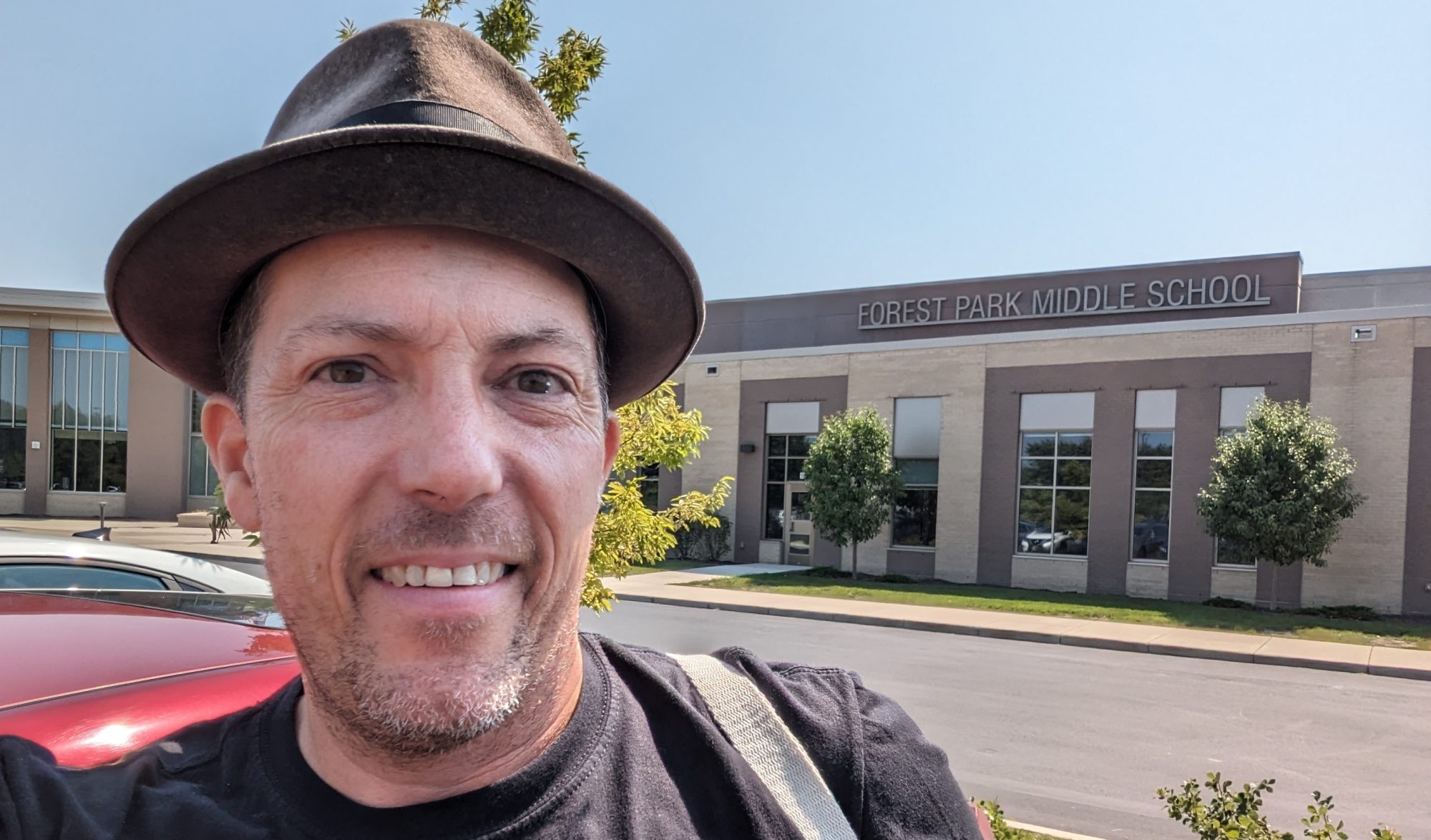
Hey CHUCK… Look CLOSE at your skills and attitude… you CAN do ANYTHING!

“Never tell a young person that anything cannot be done. God may have been waiting centuries for someone ignorant enough of the impossible to do that very thing.” — John Andrew Holmes

Go Puppy – You Can Do IT!

Art Foundations: Grid Drawings and Ratios

How can you use the individual squares to help create interest in the final product? (Student Work).

Goals:

  1. 1.2 Create art that demonstrates an understanding of how your ideas relate to the techniques (colored pencil layering and blending) and process (grid and drawing) you are using.

With one week of drawing for this work, what do you need to do in order to make strong progress in this project? How has your day to day work been helping or hindering your work? Recognize the attitude / effort of the day to day work and how it affects the finished product

Advanced Drawing: Edward Hopper and Portraits Hopper Exhibition at the Whitney AND National Gallery of Art

Edward Hopper, American (1882–1967) Nighthawks, 1942 Friends of American Art Collection, 1942.51 The Art Institute of Chicago Photography © The Art Institute of Chicago (http://www.nga.gov/exhibitions/2007/hopper/hopperinfo-lg.jpg)

Goals:

  1. 1.4 Initiate, define, and solve challenging visual arts problems using skills of evaluation (What’s the imagery? What are you saying about yourself? How are we reading that? Why is it successful?.
  2. Identify the intentions and purposes behind making art.

AP Studio Art: One on One to resolve grades – Of Sailors and Whales /Art and Fear

WOW – What a great image! What’s your image coming along like? Have you listened to the music? (http://cdnimg.visualizeus.com/thumbs/f9/c9/painting,sea,ship,whale,texture,colour-f9c9c79e20a7112c9269778b6f6928ba_h.jpg?ts=93246)

Goals:

  1. 3.1 reflect on how your art differs (from your classmates) and describe how it relates to the BREADTH you have.
  2. 3.3 describe the creation of your images and ideas and how they work with your concentration.

What is the biggest challenge you see in the process of developing and making more than one artwork at a time? What is working to help be productive?

What are the self imposed limits you have?

“Never tell a young person that anything cannot be done. God may have been waiting centuries for someone ignorant enough of the impossible to do that very thing.” — John Andrew Holmes

Remember this. (http://roimediadirect.com/NoLimitsAward/wp-content/uploads/2012/04/no-limits-logo.jpg)

Art Foundations: Color Scheme Drawings in Colored Pencil

Can you see the GRID? (http://farm6.staticflickr.com/5244/5309789988_abfbde9d3b_z.jpg)

Goals:

  1. 4.4 Evaluate and interpret art for its relationship in meanings showing understanding of the work of various art professionals (how different artists make different works).
  2. 6.1 compare aspects of the visual arts with aspects of other disciplines through Mathematical Ratios and Transferring images / blending colors

How do you see the work you are creating now improving or being more successful than the work you have done in the past? Do you REALLY think you are taking the time in drawing (sketchbooks) as being more thought out? Are you using techniques from our class elsewhere in your day-to-day making  of objects?.

Advanced Drawing: Self – Portrait Preliminary Drawings

Where might you want to be located? (http://cdn.dailypainters.com/paintings/self_portrait___magritte__interior_painting_by_k_m_interiors__still_life__0ba270a35bf03ee131073dc704debad5.jpg)

Goals:

  1. Identify the intentions and purposes behind making art.
  2. Create multiple solutions to visual challenges (of your self portrait!)

What was the most challenging way to draw? Why was this most difficult way to go? How OFF were you from the original that you drew from your memory? What is most important about drawing when it comes to observation?

AP Studio Art: Art and Fear / Of Sailors and Whales / Body of Work

One on One discussions with Mr. Korb about the past 6 weeks of works please. Let’s get caught up and share our ideas.

Oh No… a real big fish! (http://www.todayifoundout.com/wp-content/uploads/2011/12/Moby-Dick-3.jpg)

Goals:

  1. 3.1 reflect on how your art differs and describe how it relates to the Breadth you have begun.
  2. 3.3 describe the creation of your images and ideas and how they work with your breadth work.

Review the BREADTH works you have developed at this point and compare your thoughts with your classmates.

When Mr. Korb is Away, the Artists Work REALLY hard!

“Never tell a young person that anything cannot be done. God may have been waiting centuries for someone ignorant enough of the impossible to do that very thing.” — John Andrew Holmes

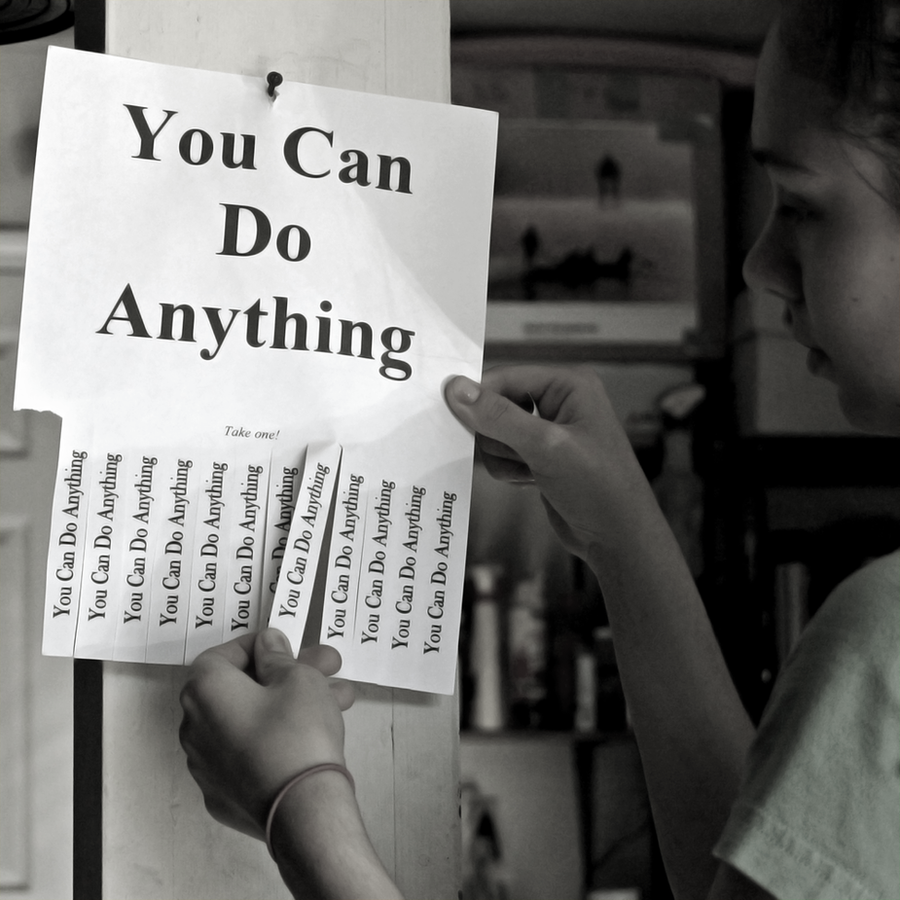
But you CANNOT fly or turn into a ROBOT. (http://fc02.deviantart.net/fs70/i/2010/224/d/1/You_Can_Do_Anything_by_Faceless_Fantasy.png)

Art Foundations: Grids and Math

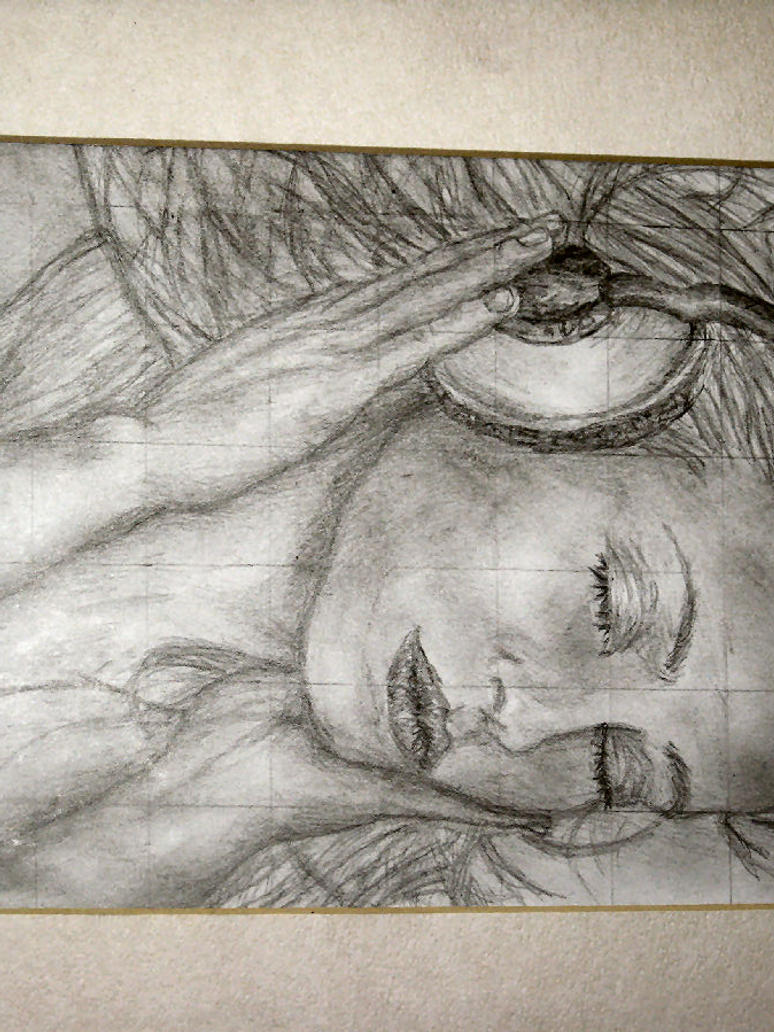
Drawn from a GRID and a PHOTO (http://th00.deviantart.net/fs29/PRE/f/2008/128/d/0/Grid_Drawing___Headphones_by_vampyremuffin.jpg)

Goals:

  1. 1.2 Create art that demonstrates an understanding of how your ideas relate to the techniques (colored pencil layering) and process (grid and drawing) you are using.
  2. 6.1 compare aspects of the visual arts with aspects of other disciplines through Mathematical Ratios and Transferring images

What are the challenges you have been having with this process? What colors have you begun using and how easy / hard has this been for you?. Did you need or offer help from / to a classmate? Collaboration is ESSENTIAL to solving problems.

Advanced Drawing: One more day to practice the FACE!

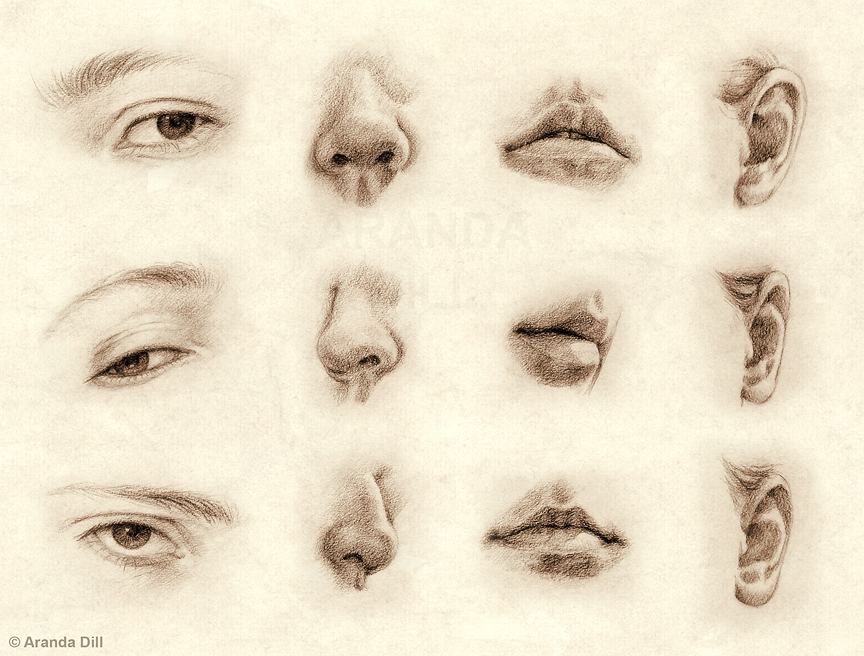
Facial Features… but YOU draw the entire face. Watch and Look… Impress me so we aren’t starting back at individual features. (http://fc03.deviantart.net/fs71/f/2011/340/7/a/facial_features_by_arandadill-d4ib357.jpg)

Goals:

  1. 1.4 Initiate, define, and solve challenging visual arts problems using skills of (1.4.1) analysis (.2) synthesis (.3) evaluation.
  2. (5.1) Identify the intentions and purposes behind making art.

What interests you? What sorts of locations are you comfortable in? What sorts of locations make you uncomfortable? What did you do today that brought the work to a place where you can understand what is going to happen?

AP Studio Art: Art and Fear, Website too…

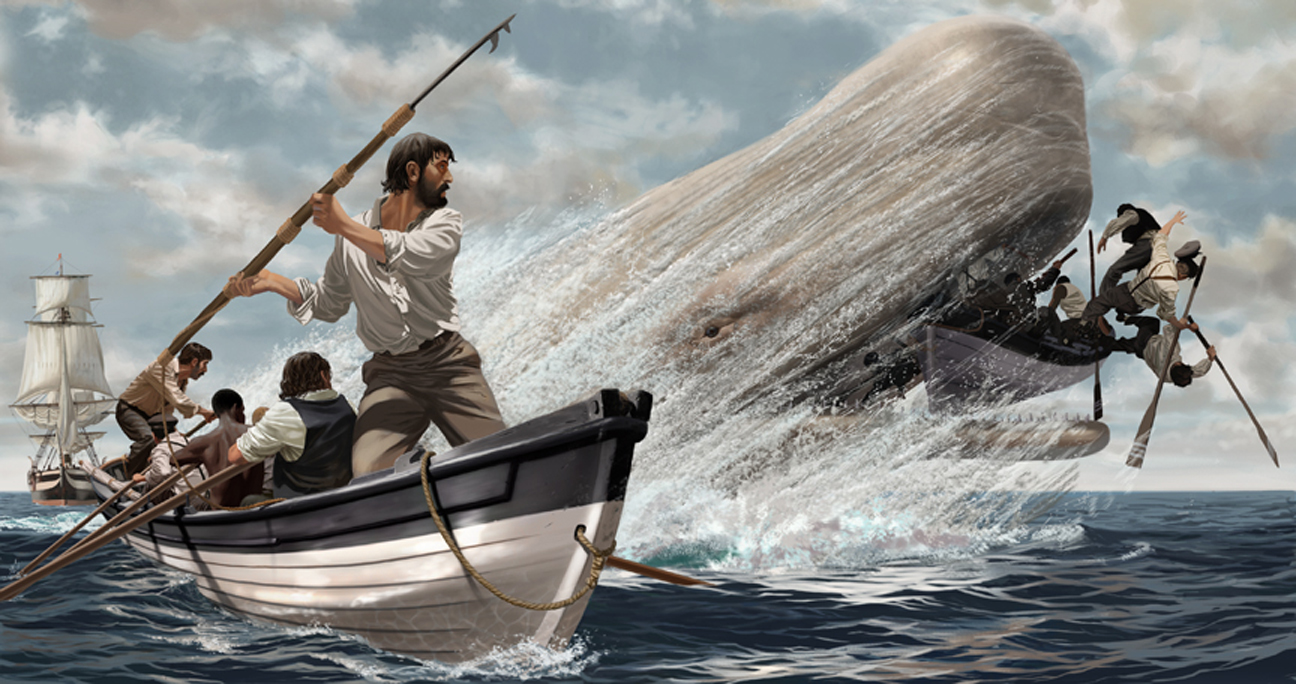
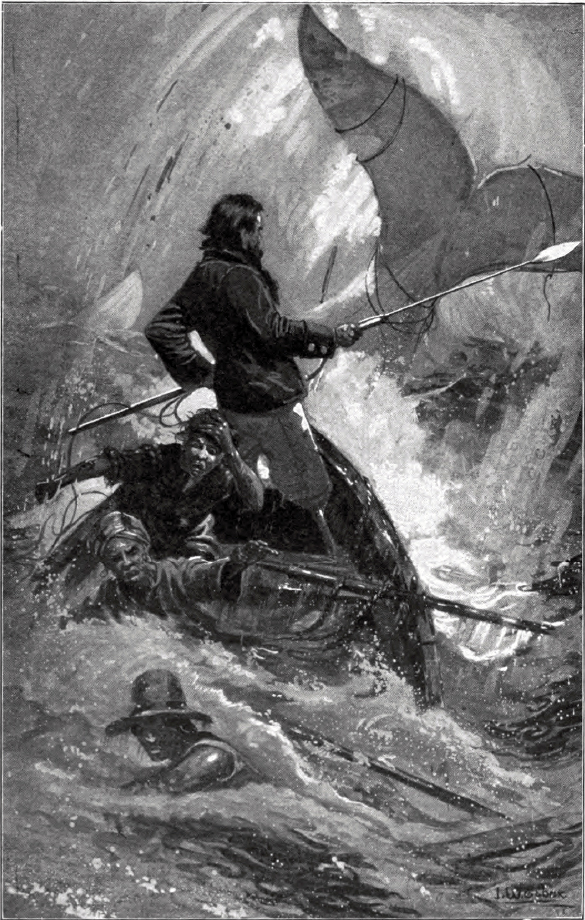
Thar She Blows! (http://upload.wikimedia.org/wikipedia/commons/8/8b/Moby_Dick_final_chase.jpg)

Goals:

  1. 2.6 create multiple solutions to visual challenges that show understanding in relationships between composition and meaning of artwork
  2. 6.1 compare aspects of the visual arts with aspects of other disciplines by being inspired by  music and text.

On your goal sheets…Think about your Art and Fear image and how it is coming. Also please consider the website you have been working on and think about how you are doing. If you need to make changes to your site – make sure you are making the changes. Are you ANY CHAPTERS behind in the Art and Fear Book? Make sure you are up to speed there. Take the last 5 minutes to talk with your neighbors about the meaning of your Art and Fear works – if you are struggling – ASK QUESTIONS and LISTEN to the conversations.

Worry About the Process and NOT About the Finished Product

“When you do nothing, you feel overwhelmed and powerless. But when you get involved, you feel the sense of hope and accomplishment that comes from knowing you are working to make things better.” —Zig Ziglar

What is overwhelming you and why are you still sitting there?

Art Foundations: Color Theory / Schemes / Value

Thanks Jamie: AGAIN for the FIRST TIME! http://www.jaimetreadwell.com/colorwheel.JPG

Goals:

  1. 1.4 Define visual challenges using analysis (what are the colors that we, as painters / drawers use to make all the other colors?)

Review with neighbors the relationships of the colors on the color wheel? QUIZ one another on the names, types and relationships of the colors.

Advanced Drawing: Gesture!

Thanks Jamie! http://www.jaimetreadwell.com/pafa-drawing-figure-02.JPG

Goals:

  1. 1.4 Define, and solve GESTURE DRAWINGS using skills of (1.4.1) analysis (.2) synthesis.
  2. Identify the intentions and purposes behind Gesture Drawing / figure study.

What was the most challenging way to draw? Why was this most difficult way to go? How OFF were you from the original that you drew from your memory? What is most important about drawing when it comes to observation?

AP Studio Art: Art and Fear – Chapters / Collection of Art

How did Matisse come up with this “Pink Nude?” Was it a one and done… oh no mister… it was a PROCESS.

Goals:

  1. Students demonstrate a sound understanding of technology concepts, systems, and operations (how to use and organize your files in Google Drive)
  2. What is a PERSONAL GOAL that you can create for the next 3 days that is big enough to create an umbrella but not too big, and narrow enough to be focused but is not an agenda item. (Look at the NATIONAL STANDARDS for examples…)

How much work have you photographed? How much work have you edited? How can I help you in the computer lab and in this process of creating a respectable website / digital portfolio?

What are you THANKFUL for?

2013 Open Canvas Art Event – Milwaukee WI

“You won’t be happy with more until you’re happy with what you’ve got.” – Viki King (author, writer, speaker)

What are YOU thankful for? Take 30 seconds and write out 3 things you are thankful for.

Art Foundations 2D: Intro to Critiquing, 2 Point Perspective

What are YOU incorporating into your city / neighborhood / interior?

Goals:

  1. (1.2) Create 2 point perspective art that demonstrates how your ideas relate to the media, techniques (VALUE) and processes you use. (P)
  2. (2.3) Create artworks that uses organization and function to solve specific visual challenges.

What was the success in today’s drawing? What was the challenge?  What were the goals we have had over the past couple of weeks that you feel you have accomplished? WHY are you successful or unsuccessful with this artwork?

Advanced Drawing: Drawing and Evaluation

How are you using pastels? How did Degas?

Goals:

  1. 3.3 describe the creation of images and ideas and explain why they are of value
  2. NETS: TONIGHT Use digital media to work collaboratively, including at a distance, to support individual learning (Begin your crit.)

What was the success in today’s first portion of the critique? What did you see when you ANALYZED your work? What was the surprising to you?  What were the goals we have had over the past couple of weeks that you feel you have accomplished? WHY are you successful or unsuccessful with this artwork?

AP Studio Art: Still Life and Concentration (and WEB Design)

So… what are you worried about?

Goals:

  1. 3.1 reflect on how your art differs and describe how it relates to the CONCENTRATION you have begun.
  2. 3.3 describe the creation of your images and ideas and how they work with your concentration.

What did you accomplish today? What do you need to do tomorrow?  Developing Still Life works, concentration work. How can you develop your OWN voice?

“It does not matter how slowly you go as long as you do not stop.” ― Confucius

BREAKING ART NEWS! Francis Bacon Triptych Sells for $148 Million

What does $148 Million Dollars Look Like? This! Click on the painting above to read the BBC Article on this Auction record and see the video. Munch must be SCREAMing in his grave! [This] “File photo shows a journalist looking at Francis Bacon’s paintings ‘Three Studies of Lucian Freud’ (1969) during an exhibition at the Borghese museum in Rome, on September 30, 2009 (AFP/File, Vincenzo Pinto)”

“Power will accomplish much, but perseverance more.”  — William Scott Downey

It is all in how you line things up…

Art Foundations: Two Point Perspective – FINAL PROJECT!

Richard Estes – Painting of a Cityscape… What has your cityscape / neighborhood scape got in it?

CITY SCAPE / NEIGHBORHOOD EXAMPLES: HERE – Under Art Foundations: Neighborhoods / City Scape Link

Broad Museum RIGHT NEXT TO GEHRY’s in LA. Click on image for 3 minute video.

Goals

  1. Evaluate the effectiveness of your artwork.

Review with neighbors the progress of the cityscape and the proper use of 2 point perspective. What are the big challenges you are facing with the buildings?

Advanced Drawing: Hallway Drawings – Oils? I Hope So!

While this is ONE point perspective… how have they used COLOR to RAMP THINGS UP?

Goals

  1. 1.2 create art that demonstrates an understanding of how your ideas relate to the 1.2.1 materials and 1.2.2 techniques

What do you need to do differently for tomorrow to be successful with these materials in the hallways? How did today go?

AP Studio Art: Concentration and ADVENTURES (click THERE for the story)… PHOTOGRAPH? Build your digital portfolio.

AAArghh.. Although he is NOT a very scary pirate… not in the least.

Goals

  1. 1.2 Create works of Visual Art that demonstrate an understanding of how the communication of your ideas relate to the 1.2.1 media, 1.2.2 technique 1.2.3 and process you use.
  2. 2.3 Create artworks that use organizational structures and functions to solve specific visual art problems – How are COMPOSITION and ORGANIZATION holding your work together to COMMUNICATE your message?

Working in class over the past 2 weeks – what have you accomplished – SHARE! What did you accomplish today? What do you need to do tomorrow?

If you are traveling, know your destination and make sure you have a song to sing.

“In not stating the goal to the students, they are like a family going on a trip with Dad in the driver’s seat and him not sharing what the destination is. Dad knows where he’s going, but the rest of the family has no clue.”  Lori Wildeman

Make sure you sing along as you take the road trip! Do your part! Sing loudly! Click the image and join in the singing!

WALLEY WORLD NATIONAL ANTHEM
Lyrics: Bruce Belland John Hughes and Roy Rogosin Music: Bruce Belland and Roy Rogosin
Sung by: Chevy Chase, Beverly D’Angelo, Anthony Michael Hall and Dana Barron

Who’s the moosiest moose we know? Marty Moose! Who’s the star of our favorite show? Marty Moose! M is for Merry – we’re merry, you see; O is for Oh gosh, Oh golly, Oh gee; S is for Super Swell family glee; E is for Everything you want to be. M – A – R – T – Y; M – O – O – S – E. What’s that spell? Marty Moose! Marty Moose! Marty Moose! (Hyuk! That’s me!)

WKCE Today: Classes Run: 3, 1 + homeroom, 24, 5, 6, 7, 8

Art Foundations: Chiaroscuro and the Sphere… Two Point Perspective Interior.

How can you do this with PENCIL?
What is DIFFERENT HERE than what we have been talking about?

Goals:

  1. Create drawings that demonstrates an understanding of how your ideas relate to technique and process of CHIAROSCURO.

Review the process of chiaroscuro with yourself write down some TIPS you may offer to someone else for CHIAROSCURO and the proper use of 2 point perspective.

Advanced Drawing: Oil Pastels and Techniques / Positive and Negative Drawings.

Look over the COLORS and LINES Pierre Bonnard used in his INTERIOR / Exterior drawing. How can you do something similar?

Goals:

  1. 1.2 create art that demonstrates an understanding of how your ideas relate to the 1.2.1 oil pastels and1.2.2 blending / mark making techniques.
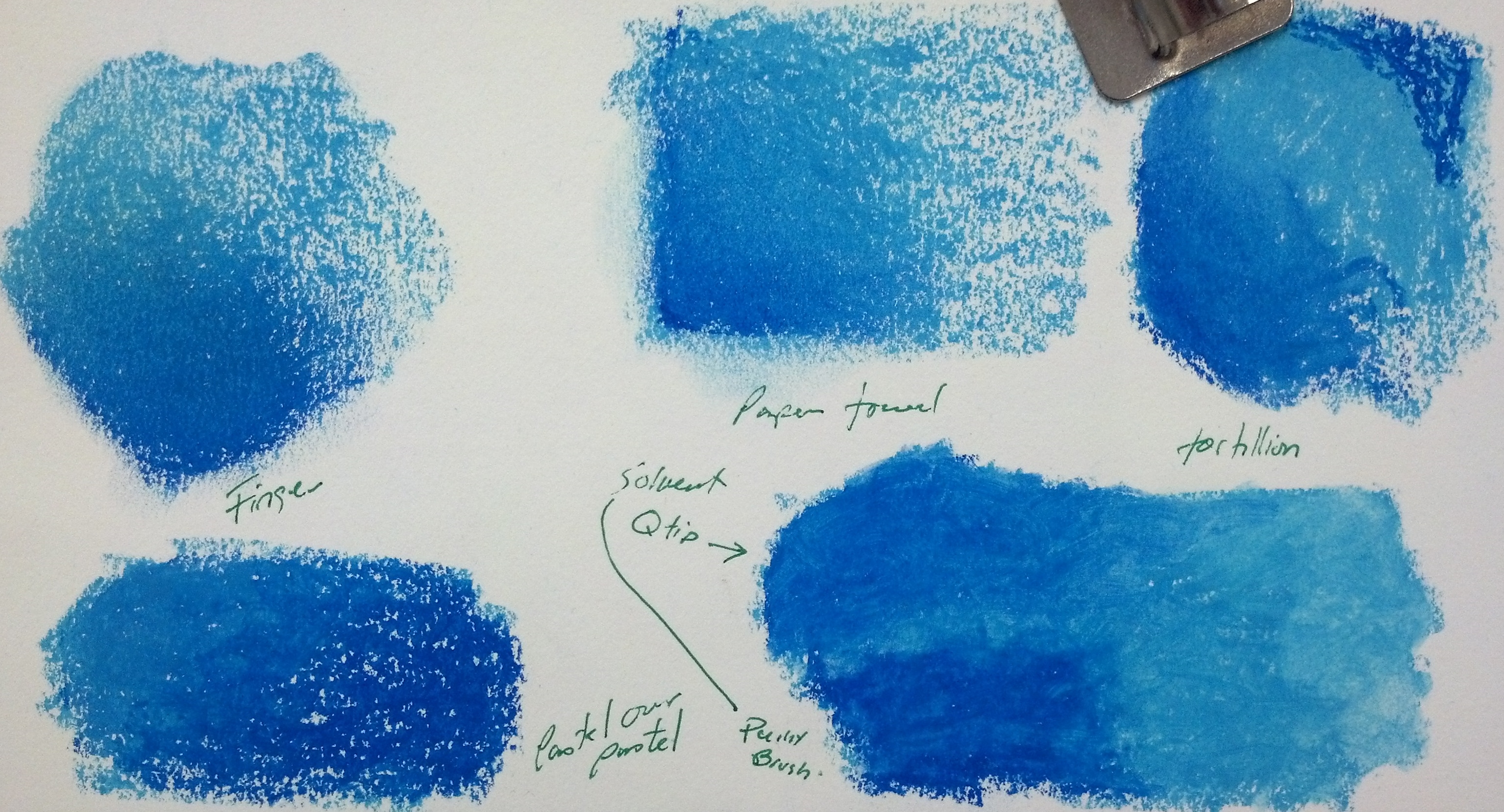
Finger Blend, Paper Towel, Tortillion, Pastel over Pastel, Solvent (with Q-Tip and Brush)

What NEW techniques did you try with oil pastels and how do you feel about the results? What is successful and what is unsuccessful? Write that down. Now… talk to your neighbor about the results.

AP Studio Art: MIAD – Where can an art education take you?

What opportunities does an Art School Offer you?

Goals:

  1. 4.4.3 meanings showing understanding of the work of various art professionals
  2. 6.1 compare aspects of the visual arts with aspects of other disciplines

Thank you to MIAD for coming into the WUHS Art Department to share ideas and direction that the Visual Arts have to offer!

What’s lined up in your sights today? Stay on Target.

CELEBRATE MY RIDE – Help WUHS win a 100,000 grant by VOTING and PLEDGING your Safe Driving Habits: http://www.celebratemydrive.com/

~~~

“Aim higher in case you fall short.”

― Suzanne CollinsCatching Fire

Print this out, paint or color it in, and tell me what your thoughts are about Jasper Johns TARGET works and get a FREE 100% in your sketchbooks – but it has to be well done and well thought out! FRIDAY of NEXT WEEK!

~~~

Art Foundations: 2 Point Perspective Drawing in Class

Can you draw THIS house? I bet not yet…

GOALS:

  1. 1.4 create, and solve 2 Point Perspective HOUSE drawings using 1.4.1 analysis and a friend. (breaking up the subject matter to basic elements)

LIST of things to draw on the paper provided. Make sure your name and hour is on the paper and gets turned intot he instructor at the end of the hour.

  1. Horizon Line just below center.
  2. One cube that is resting on the ground and rises above the horizon.
  3. A door on one side of the building, open so one can see into it.
  4. A window on another side of the building, open so one can see into it.
  5. A peaked roof with an overhang in the front, back, and sides.
  6. A sidewalk that comes out from the door and falls off the page with cracks in the sidewalk to demonstrate the understanding of receding lines and shapes.
  7. A ramp in the sidewalk with a crosswalk that goes into the “street” or another sidewalk that comes out from that ramp.
  8. Telephone poles that recede into space properly.

GENERALIZATION – In your binders, what was the most challenging part of the drawing process today? What do you need to review on your own? We can check your thoughts here with the finished drawings from the day’s work.

~~~

Advanced Drawing: Hallway Drawings – THUMBNAILS

What is COOL about Philip Johnson’s work… architecture? Can you make WUHS this cool?

GOALS:

  1. 2.6 create multiple solutions to visual challenges that show understanding in relationships between composition and meaning of artwork
  2. 1.1 apply media, techniques, and processes of 2 point perspective with 1.1.3 awareness so that your ideas are executed well.

What did you do today that brought the work to a place where you can understand what is going to happen? How can you continue this forward movement Tuesday? Are you using your time wisely in the hall?

~~~

AP Studio Art: Concentration Work Today!

Tony Oursler has created mixed media – video works… Check out his video below – 4 minutes… then work!

GOALS:

  1. 4.4 evaluate and interpret art for relationships in 4.4.1 form 4.4.2 context

What is the CENTRAL IDEA FOR YOUR CONCENTRATION and how the work you are making today is taking you in that direction. After you have written that all down, pair up with someone and ask them to explain their concentration, how today’s work is getting them there, and then share your thoughts with them.

What can you do with the skills you have? Let’s see you DO IT!

“The question for each man is not what he would do if he had the means, time, influence and educational advantages, but what he will do with the things he has.” — Frank Hamilton

And Deep Sea Diving — I love the little fish… http://ffden-2.phys.uaf.edu

~~~

Art Foundations: DRAW the NEGATIVE SPACE you see. Harder than you think.

DRAW THE NEGATIVE SPACE – NOT the positive space… Do you think you can handle it? http://fc08deviantart.net

GOALS:

  1. 1.4 create, define, and solve visual challenges using 1.4.1 analysis (breaking up the artwork / subject matter to basic elements)

What did you find as the most difficult aspect of the creation of the drawing? What was the hardest? What was the easiest? Are you able to see the negative space in the 1 – drawing, 2 – actual object?

~~~

Advanced Drawing: Transparent Objects and Drawing what we see.

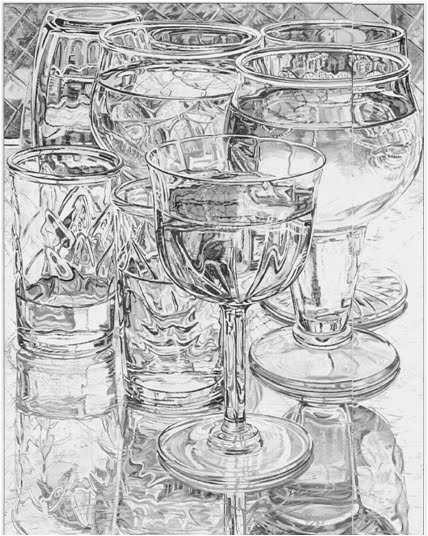
Janet Fish is a GREAT PLACE TO START. Check out the transparency and how the light bends and twists… OBSERVATION! http://www.askart.com

GOALS:

  1. 2.6 Work on creating multiple solutions to solve visual challenges.
  2. 3.1 reflect on how art differs and describe how it relates to history and cultures (how do the objects you are choosing relate to your life and culture? How can reflection and transparency work for you?)

What are you drawn to? What is successful in your composition? What is it about the transparent glass that makes this a challenging or easy subject matter to work with? Share your preliminary work with your neighbor – write the thoughts down.

~~~

AP Studio Art: Research and Investigate the artists you are interested in. Go to the Library, Get an Art History Book. Begin with the letter A.

This is where to start. Not in what you already know. Look through the images from the past to see where the images of NOW are from. http://www.themasterpiececards.com

GOALS:

  1. 5.1 identify the rationale behind making art.
  2. 4.4 evaluate and interpret art for relationships in 4.4.1 form 4.4.2 context

What research and new discoveries in art history have you accomplished today? What is the greatest surprise you have found today?  What are your INITIAL THOUGHTS about the idea of a concentration?

How can we use the NEGATIVE to make the POSITIVE work better?

And here I am HANG GLIDING… I love to use my abilities to really have fun in life. http://www.seekextreme.com

“The question for each man is not what he would do if he had the means, time, influence and educational advantages, but what he will do with the things he has.” — Frank Hamilton

~~~

Art Foundations: Space – Positive and Negative Space in your artwork and in life.

What did the artist focus their attention on? The NEGATIVE SPACE! http://www.drawingandpaintinglessons.com

GOALS:

  1. 1.4.1 analysis (breaking up the artwork / subject matter to basic elements)

What did you find as the most difficult aspect of the creation of the drawing? What was the hardest? What was the easiest? Are you able to see the negative space in the 1 – drawing, 2 – actual object?

~~~

Advanced Drawing: Crit and PENCIL DRAWINGS.

Check out and SEE the GLASSES that Janet Fish Draws and Paints. How do you deal with TRANSPARENCY? http://2.bp.blogspot.com

GOALS:

  1. 2.6 Work on creating multiple solutions to solve visual challenges.

What are you drawn to? What is successful in your composition? What is it about the transparent glass that makes this a challenging or easy subject matter to work with? Share your preliminary work with your neighbor – write the thoughts down and share the challenges with your neighbors.

~~~

AP Studio Art: RESEARCH and begin the ideas for your CONCENTRATION

Vincent Van Gogh spent time LOOKING at and THINKING about the works that he focused his life on… what are you going to do to do the same? http://www.vggallery.com

GOALS:

  1. Research and Information Fluency – Students apply digital tools to gather, evaluate, and use information.
  2. Critical Thinking, Problem Solving, and Decision Making – Students use critical thinking skills to plan and conduct research, manage projects, solve problems, and make informed decisions using appropriate digital tools and resources.

Look over and SHARE your research about the artist that you have begun looking at and also share a bit about what your initial thoughts are regarding the idea of having a concentration.