February 7, 2013 – Thursday

“The achievement of your goal is assured the moment you commit yourself to it.” —Mack R. Douglas

What do our goals mean to you as we go through the process of working today?

~~~

Art Foundations: Pattern and Contour Line Drawings.

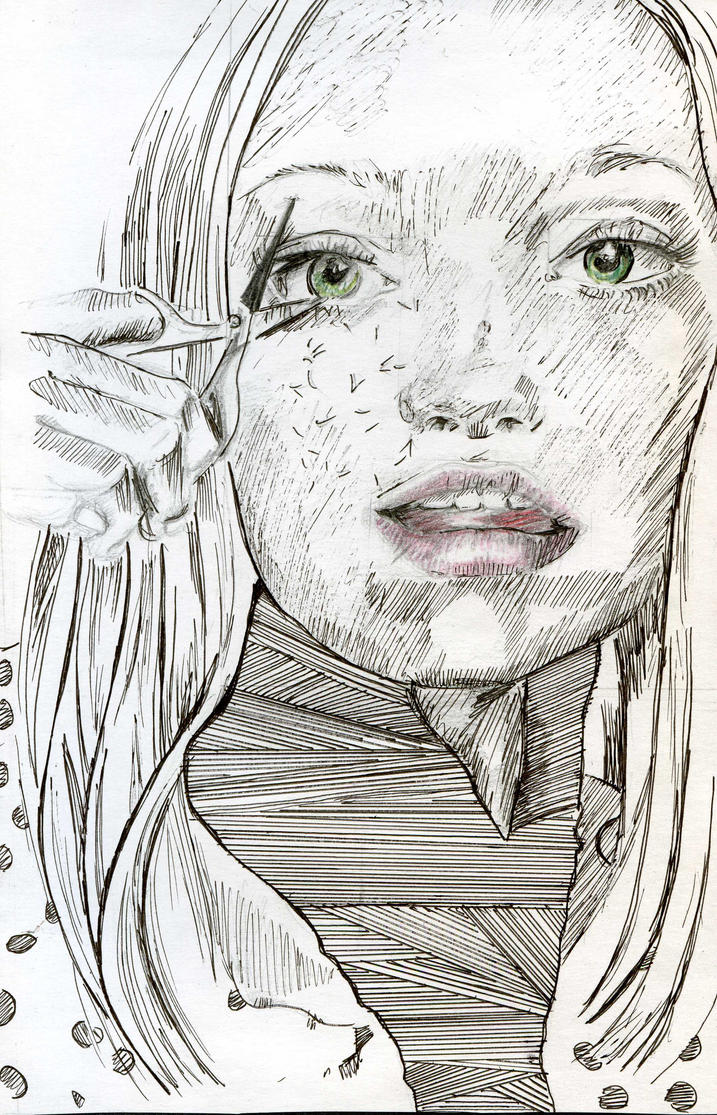
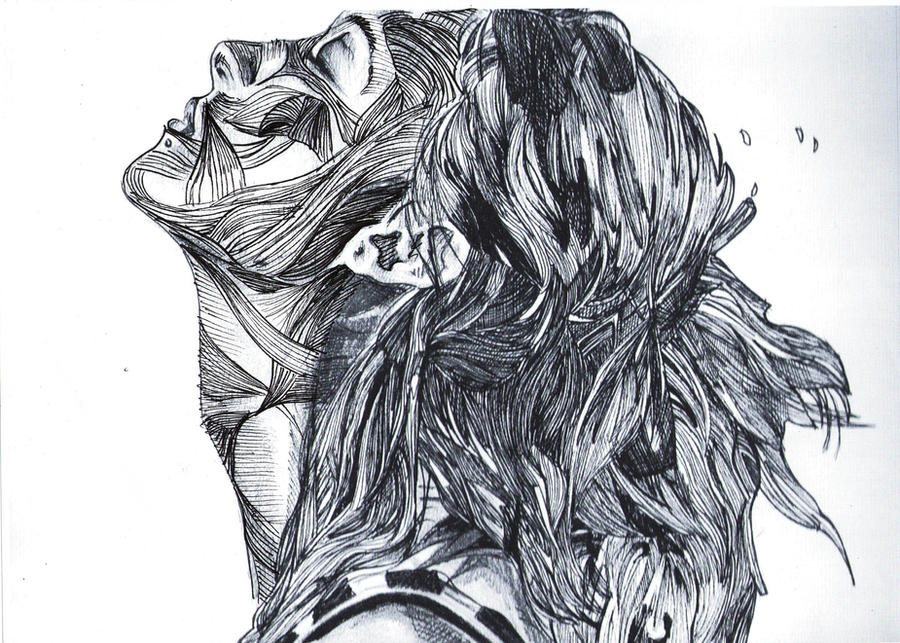
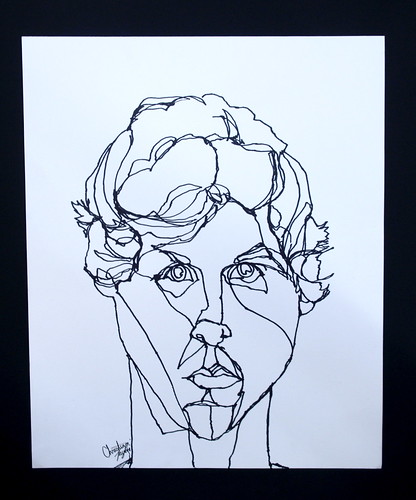
Take a look at the CONTOUR of the face. How did she use CONTOUR lines successfully in this work? What is she doing? Hmmmm.

GOALS:

  1. Work on (1.1.1, 3) applying media and techniques with skill and awareness (of HOW you are using line).

What is the most challenging aspect of the portrait / line? What emotions have you chosen to represent yourself? Why? What variety of lines do you hope to use in the process of creating your self-portraits.


~~~
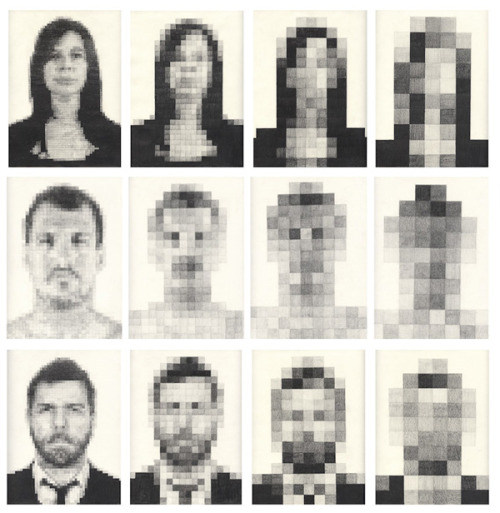
Drawing: Value and Grid drawings. One value per square. No more, no less.

Intense use of the same techniques we are using in class – by a professional making a living off his work. How many squares do you think Chuck Close used in this artwork?

GOALS:

  1. (1.4.1) Create and solve visual problems using analysis of the shape and form of the face.
  2. (1.2.3) Create art that demonstrates an understanding of how your ideas relate to process (grid and value generalization).

What is difficult about the process? Make sure your neighbor is correct in the ratio and the measurements. What squares are successful and what squares are not? What is successful and not successful about your neighbor’s drawing?

~~~
AP Studio: Concentration Ideas. You have to be productive. Be productive.

How are you focused on the images you are making? How are you going to be working today? WORK TODAY!

GOALS: 

  1. (4.2) Describe the purposes and meaning of art within your culture and time.
  2. (4.4.1,2) Evaluate and interpret art for relationships in form and context.

What are your goals for the next work(s) that will show your development?

February 6, 2013 – Wednesday

“Many people fail in life, not for lack of ability or brains or even courage but simply because they have never organized their energies around a goal.”
— Elbert Hubbard  Thanks Paul: GoalHabits.com

~~~

Art Foundations: Pattern, Chapter 8, Contour Line Drawing

Where do you see the use of the CONTOUR line in this drawing?

GOALS:

  1. (1.1.1) Apply art materials (markers and pencils) being aware of your skills.
  2. (1.4) Solve visual challenges using analysis (element of Line).
What TYPE of PATTERN do you see in this? What is the MOTIF?

What is the most challenging aspect of the portrait / line? What emotions have you chosen to represent yourself? Why? What variety of lines do you hope to use in the process of creating your self-portrait?

~~~

Drawing: Value analysis and synthesis – putting the values into the drawing. Grids and Value – Portraits

How do you see GRIDS in the rest of the world?

GOALS:

  1. (1.4.1) Create and solve visual problems using analysis of the shape and form of the face.
  2. (1.2.3) Create art that demonstrates an understanding of how your ideas relate to process (grid and value generalization).

What is difficult about the process? Make sure your neighbor is correct in the ratio and the measurements. What squares are successful and what squares are not? What is successful and not successful about your neighbor’s drawing?

~~~

AP Studio Art: Concentration Plans and BREADTH work.

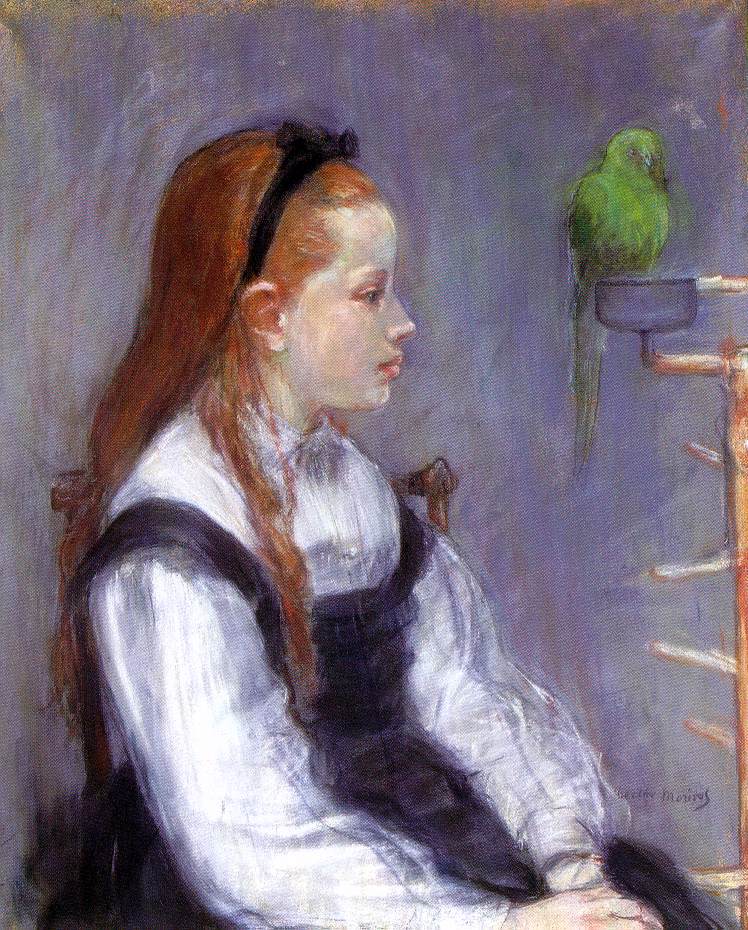
Woman and Child – Berthe Mosisot

GOALS:

  1. (4.2) Describe the purposes and meaning of art within your culture and time.
  2. (4.4.1,2) Evaluate and interpret art for relationships in form and context.

What are you getting out of the process of making all of this art? What do you need to do to add more to the “learning” you get from this process? Are you sitting by and slacking your way through the class? Are you challenging yourself with the work? Are you getting it all done in a timely fashion? If you are not WHY?

February 5, 2013 – Tuesday

“Every child is an artist. The problem is how to remain an artist once he grows up.” – Pablo Picasso

What are you doing with your art that is new and scary? Do not be afraid to EXPERIMENT!

~~~
Art Foundations 2D: Continue to work on PATTERN Chapter (8), Continuous Line Contour Drawings – Sketchbook… 2 Today!
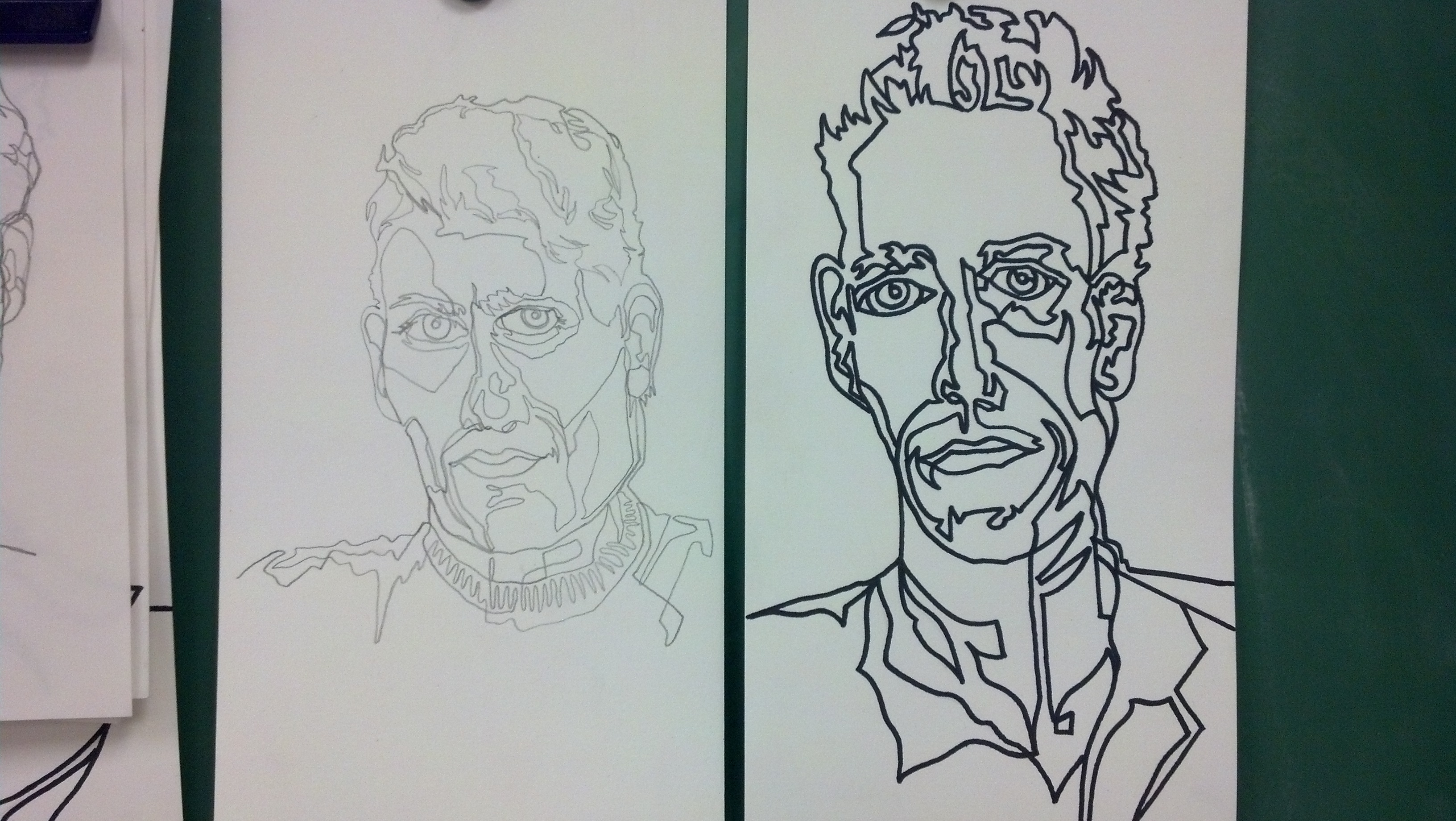
Frank Korb - Contour Line Portrait - 20 minutes
Frank Korb – Contour Line Portrait – 20 minutes
Goals:
  1. (3.3) Know about the creation of images and explain why they are important (contour line).
  2. (1.4) Solve visual challenges using analysis (element of Line).

If you were a type of pattern, what type of pattern would you be? Why?

 ~~~

Drawing: Grid and Value – Work to MATCH the VALUES in one box with the intent of SIMPLIFYING the colors to one level of grey. – THIS IS TOUGH.

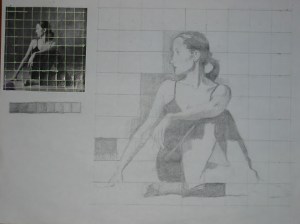
Here is a great example of the potential for the grid and the portrait!

CLOSE up on a CLOSE drawing… LOL

GOALS:

  1. (6.3) Use the process of grids and compare it with other disciplines. (How can OTHER people in OTHER fields use the grid to ORGANIZE or BREAK UP IDEAS AND SPACES?)
  2. 1.4 create, and solve visual challenges using 1.4.1 analysis (breaking up the artwork / subject matter to basic elements).

 What is difficult about the process? Make sure your neighbor is correct in the ratio and the measurements. What squares are successful and what squares are not? What is successful and not successful about your neighbor’s drawing?

~~~

AP Studio Art: Critique – Consider your NEXT BREADTH WORK and your NEXT Concentration! DO NOT PROCRASTINATE!

PARROT – Berthe Morisot – Let’s look at her work all week! What do you notice that you can carry into tomorrow?

GOALS:

  1. (2.1) Form criticism about YOUR ART that accomplish personal or other meanings.
  2. (3.3) Describe the creation of YOUR IMAGES and IDEAS and explain why they are of value (if they are not of value – were they worth doing to begin with?)

What were the biggest impressions you had from the classmate’s works? What were the most difficult things you felt as you presented your work? Conversation between classmates about the 2 questions for your exam.

February 4, 2013 – Monday

So happy to see the NFL supporting the Fine Arts! Go Baltimore (and everyone who supports the arts…).

~~~

Art Foundations: Contour Line Drawings – Self-Portraits, Chapter 8 – Pattern – Sketchbook Experimentation

Can you see how the artist has broken up the face into sections and then defined the planes / direction of the facial parts? Let’s try to figure that out for ourselves.

Goals:

  1. 3.2 Apply subjects, and ideas in art and use skill to solve visual challenges
  2. 1.2 create portraits that demonstrates an understanding of how your ideas relate to the 1.2.2 techniques of CONTOUR Line Drawings
Contour Line 3 - Frank Korb
Contour Line 3 – Frank Korb
Contour Line 1 - Frank Korb
Contour Line 1 – Frank Korb
Contour Line 2 - Frank Korb
Contour Line 2 – Frank Korb

What is the most challenging aspect of the portrait / line? What emotions have you chosen to represent yourself? Why? What variety of lines do you hope to use in the process of creating your self-portrait?

~~~

Drawing: Work on VALUE Scales and Charcoal – Grid Drawings

Chuck Close using ONE VALUE at a time…

Goals:

  1. (6.3) Use the process of grids and compare it with other disciplines.
  2. (3.4) Evaluate and defend the validity of sources for ideas (grid and portrait)

GREAT LINKS:  Treadwill, Ovdiyenko value examples. Subject Matter…

What is difficult about the process? Make sure your neighbor is correct in the ratio and the measurements. What squares are successful and what squares are not?

~~~

AP Studio Art: CRITIQUE and EVALUATE YOUR and OTHERS WORK

What is going well? What is NOT going well? What can you do about it?

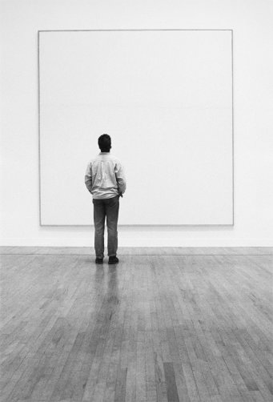
“An empty canvas is a living wonder – far lovelier than certain pictures”
– Wassily Kandinsky

Goals:

  1. (2.1) Form criticism about artworks that accomplish personal or other meanings.
  2. (3.3) describe the creation of images and ideas and explain why they are of value.

What were the biggest impressions you had from the classmate’s works? What were the most difficult things you felt as you presented your work? Conversation between classmates about the 2 questions for your exam. How does this work relate to your concentration?

February 1, 2013 – FRIDAY!

“Quantity over Quality” When it comes to ideas… the more ideas you can come up with, the more opportunities you will be creating for yourself. – Frank Korb

PS… Follow my Blog – share your thoughts… THANKS!

~~~

Art Foundations: Contour Line Drawings – 5 minute drawings of Hands, Shoes, Faces -Practice and Work Day

imacrayon.wordpress.com – This is a FANTASTIC example of the continuous line contour drawing… what else can we do with this? What can we do with YOUR? I’ll show you today.

Goals:

  1. 3.2 apply subjects, symbols, and ideas in art and use skill to solve visual challenges

What is the most challenging aspect of the portrait / line? What lines / emotions have you chosen to represent yourself? Why? What variety of lines do you hope to use in the process of creating your self-portrait?

~~~

Drawing – Let’s grid off the photograph and practice with charcoals!

Chuck Close in all his glory. If you are going to look at a grid drawing – go to the BEST! What materials did Close use? Is it a pencil, a brush? You might be surprised.

Goals:

  1. (3.2) Apply subjects and ideas in art and use skill to solve visual challenge.
  2. (1.4) Create and solve visual challenges using analysis (break the photograph down) and synthesize (put it back together on your drawing paper)

What is difficult about the process? Make sure your neighbor is correct in the ratio and the measurements. What squares are successful and what squares are not?

~~~

AP Studio Art – WHAT ARE YOU DOING? Seriously – what are you doing this weekend to be READY TO CRIT. on MONDAY? We need to be aware of the time that YOU are using and I need to not worry that the job is getting done. NEXT WEEK – PHOTOGRAPH and EDITING in the Computer Lab.

Tony Oursler’s Studio Space – making video for David Bowe’s new video and his website for the unnerving video. The Telegraph – David Bowe’s New Video – Where Are We Now? 

Goals:

  1. RESOLVE (1.2) concentration works that demonstrate how your ideas relate to the materials and techniques that you use. (P)
  2. (1.1) Apply media, technique, and process with skill and confidence

Share with your neighbor the plans and advancements for this and the next piece and what you need to do over the weekend.

January 31, 2013 – Thursday

There is a fine line between hard work, skill, and ‘talent’ Make sure the time you are using is dedicated toward the improvement of your skill and not sitting on your “talents” waiting for them to take you somewhere.

~~~

Art Foundations – Chapter 4: Lesson 2 (wrap up lesson 1), Continuous Line Contour Drawings – Blind Continuous Line Drawings

Continuous Line Contour of the hand… looks easy enough – right? (Actually – it is the left).

Goals:

  1. 5.1 identify the rationale behind making art

What did you take away from the various types and qualities of line and how can you use them in your artwork? What was the most challenging aspect to today’s in class exercises? What was fun? What was NOT fun?

~~~

Drawing  Grids and Math. Use MATH to grid off a large sheet of drawing paper. Use pencil to create the grid. Make photographs of the entire figure or portrait. Discuss the use of the grid in art history (Renaissance to NOW).

Grids and the use of MATH. We are NOT doing cartoons – no worries there.
Here is a great example of the potential for the grid and the portrait!

Goals:

  1. (3.2) Apply subjects and ideas in art and use skill to solve visual challenge.
  2. (1.4) Create and solve visual challenges using analysis (break the photograph down) and synthesize (put it back together)

What is difficult about the process? Make sure your neighbor is correct in the ratio and the measurements. Were you able to properly use the ruler with the math? Inches? Centimeters? How did you GRID the paper off?

~~~

AP Studio Art – Time to work VERY dedicated and THINK about the use of our time as we have been working. Are you using it wisely?

Piet Mondrian in his Studio. How does THIS compare with Francis Bacon’s? Yikes – the differences are staggering.

Goals:

  1. Work on (1.2) concentration works that demonstrate how your ideas relate to the materials and techniques that you use. (P)
  2. (1.1) Apply media, technique, and process with skill and confidence (P).

Where are you flying forward? Where are you stuck? Why do you have ideas on THURSDAY and not a concentration solidly begun? Did your collage really take as long as it has? Share with your neighbor the plans and advancements for this and the next piece.  

January 30, 2013 – Wednesday

All of the works we complete are just stepping stones between your next work. What are you doing with this work that will carry you into the next work and make you create a stronger work? Be aware of what you are doing and how it will make you a better artist?

~~~

Art Foundations: Finish chapter 1 and begin chapter 4. Hands on with line and CONTOUR LINE DRAWING.

GOAL:

  1. (4.2) describe the purpose and meaning of art objects within different cultures, times, and places.
Picasso and his drawing of Igor Stravinsky – LINE!

What were the different types of lines drawings that you worked on today? What are different qualities of lines and what messages can they communicate to an audience? What were your responses to the drawings that we worked on and why? Reflect with your neighbors about the drawings you did in class today and be able to identify the variety of different lines.

~~~

Drawing:  LAST DAY to RESOLVE the still life drawings – 20 minutes. CRITIQUE (Video) of work.

Goals:

  1. (2.1) form criticism about drawings inspired from real objects.
  2. (3.3) describe the creation of drawings and ideas and explain why they are of value.
Critiquing a work of art… let’s get some thoughts on your work.

What are the differences with the three types of Pencils? What do YOU find useful from today’s exercise? What is the ONE THING you are going to carry forward that you have learned from this first in class exercise?

~~~

AP Studio Art: Reflect on the work you are doing. What is working? What wall are you hitting?

Goals

  1. (5.5) Evaluate responses to works of art (from others thoughts).
  2. (2.4) compare different points of view regarding composition and meaning.
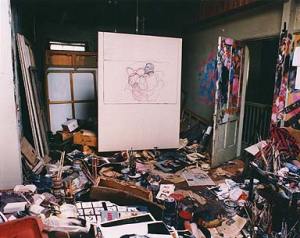
Francis Bacon’s Studio – What a mess? His works are AWESOME and MOVING! Woah!

What bit of advice did you get from your classmates that you will be able to put to use? What bit of advice did you give that might be used elsewhere? What are your goals for the next work(s) that will show your development? 

January 29, 2013 – Tuesday

1st Hour Art Foundations Class – Let’s bring in 5 – 10 cans per person and WIN the breakfast. More importantly – give to the needy!
Lines are EVERYWHERE! Where in life do you ACTUALLY see lines?

Art Foundations: What is Art? end of Chapter 1, Intro to drawing LINES, Self – Evaluation on PBIS Posters

  1. 1.1 apply various mediums with 1.1.3 an awareness so that your ideas are executed well
  2. 1.4 create, define, and solve visual challenges using 1.4.1 analysis (LINE)

What were the challenges you had with the line drawing What was fun about the process? What kinds of lines were you “Drawn” to?

~~~

Notice how Morandi deals with his backgrounds? What have you done to deal with that space? The finished feel of the work has as much to do with the negative space as it does with the positive space. Use your negative space to the best of your ability!

Drawing: Resolve still life drawing. Discuss the use of positive and negative space. Learn about the process of CRITIQUING / Self-Evaluation.

  1. (1.4) Solve visual challenges using shape and value (analysis)  (P)
  2. (1.1) Apply drawing media with awareness so that your ideas are executed well.

Have you improved your drawings skills over the past few days?  What do you feel you will be able to improve on regarding the skills you have currently?

~~~

Jenny Saville in her studio. What are you passionate about when it comes to the making of your art? What messages are important enough for you to invest a career, a lifetime commenting and communicating about?

AP Studio Art: Classroom discussion and critique of the ideas behind your CONCENTRATION and the COLLAGE for your next breadth work.

  1. (5.2) Stand behind the criticism of your art
  2. (1.1) Apply drawing media with awareness so that your ideas are executed well.

What bit of advice did you get from your classmates that you will be able to put to use? What bit of advice did you give that might be used elsewhere?

January 28, 2013 – Monday

Shepard Fairey uses his work to communicate and promote social messages that can help the community.

Art Foundations: Evaluate your PBIS Posters, Introduce Chapter 1 – What is Art, Make Art Using LINE!

  1. (1.4) Define the visual challenges using (1.4.1) analysis of your PBIS Poster (breaking up the artwork / subject matter to basic elements – LINE)
  2. (2.1) form criticism about your PBIS Poster regarding how it works to communicate 2.1.3 communal ideas

How were you able to grade your own work? Was it difficult to give yourself “fair” grades and evaluations? Were you too easy on yourself, too hard on yourself, or just right about your grade? What made you grade yourself one way or the other?

~~~

Piet Mondrian used the objects and spaces around him to create the work he did – even as he developed the “de stijl” he matured into.

Drawing: Continue with your observational drawings. Mid Critique others work and self evaluate your own. Discuss the use of the critiquing process to all the works.

  1. (3.2) Apply ideas in art and use skill to solve visual challenges.
  2. (1.2) Create art that demonstrates relationship between observations and drawing.

What have you learned today about how to push / pull space with value? What have you accomplished with pencil?

~~~

Welcome to Picasso’s Studio. What can you create in the time and space that you have set up for yourself?

AP Studio Art: Work on your concentration work and the breadth work.

  1. (2.1) Form criticism about artworks that accomplish personal or other meanings.
  2. (3.3) describe the creation of images and ideas and explain why they are of value

What do you have to do to resolve the collage and continue to develop your newest concentration work(s)?

January 25, 2013 – Friday!

Parents / Guardians  / Students

This is the INTRODUCTION / WELCOME video for 2nd semester… Enjoy… Subscribe to this blog!

~~~

Art Foundations 2D: PBIS Poster Work, Locker Handout, Paperwork / Student Info / Get to know Mr. Korb

Goals:

  1. (1.4) create, define, and solve visual challenges using (1.4.1) analysis (recognizing the elements in the artwork).
  2. (3.3) describe the creation of images and ideas and explain why they are of value.
Shepard Fairey communicates with his art. What sort of MESSAGE do you think he was trying to communicate? Shepard Fairey “Hope” Poster Court Case – Art in the news.

End of Class: What have you done with the composition (PBIS Poster) that added to your teamwork? What is the most successful aspect of your poster and why? How do you feel the poster successfully explains your PBIS topic? What portion of the poster were you responsible for? What was your partner responsible for? If graded today what grade would you give yourself and why? What have you thought about in regard to the Be statement and how can you be more aware of your behavior?

~~~

Drawing: Still Life Drawing,  Locker Handout, Paperwork / Student Info / Get to know Mr. Korb

  1. (1.2) create art that demonstrates an understanding of how ideas relate to the materials (pencils)
What do you find interesting or challenging about the work that you have seen by Georgio Morandi? Do you feel that it has an important place in the history of art? Why or Why Not?

End of Class: What skills are you demonstrating in your drawing that are surprising you about the skills that you have? Are there techniques that you are demonstrating that you did not think you were capable of? What is it that you hope to gain from this class as it moves forward? What do YOU find useful from this week’s exercise and your understanding of drawing / observation?

~~~

AP Studio Art: Concentration Work and Collage Work – Class Critique of work SO FAR.

  1. Work on (1.2) concentration works that demonstrate how your ideas relate to the materials and techniques that you use.
  2. (1.1) Apply media, technique, and process with skill and confidence
Nam June Paik uses materials that YOU may not consider “fine art materials.” What might you consider trying to use as a material for a work if you have the opportunity to use ANYTHING? Why? What sort of message might you try and communicate with that material? What do you think Paik is trying to communicate with these materials?

End of Class: What do you plan on taking home this weekend to get ahead of the challenge next week will have for you? Share what you have planned regarding your next concentration with a classmate and get two bits of advice / critique from them… offer the same back… respond to the thoughts in your sketchbook next to the drawings.