#PaperMache in the #ArtEd Classroom

WHSoc20 Blog

Click on the image above to follow a STRONG conversation with Teachers, Administrators, and Students about the direction, concerns, solutions, challenges that face everyone in the world of education! Join us on Wednesday nights on Twitter at 8:00CST using the hashtag – #WHSoc20

~~~

“Goals are the fuel in the furnace of achievement.” Brian Tracy

http://sd.keepcalm-o-matic.co.uk/i/keep-calm-and-eat-that-frog-3.png

~~~

Studio Art 360 – Paper Mache – Finish your FORMS in cardboard!

Look what a few cylinders and cardboard can make! Let’s think outside of the classroom! What could WE make? What could YOU make? http://en.espritcabane.com/img/furniture/cardboard-side-table.jpg

Goals:

  • 3.1P: Apply relevant criteria from traditional and contemporary cultural contexts to examine, reflect on, and plan revisions for works of art and design in progress.
  • What changes can you make to the forms as you add the paper mache to them? How will this add or take away from the sculptural form? N: Paper mache project today

What do you need to do to WRAP UP THE BUILDING part of this work?

AP Studio Art: 1 week Magazine Article Assignment, Plants and Flowers
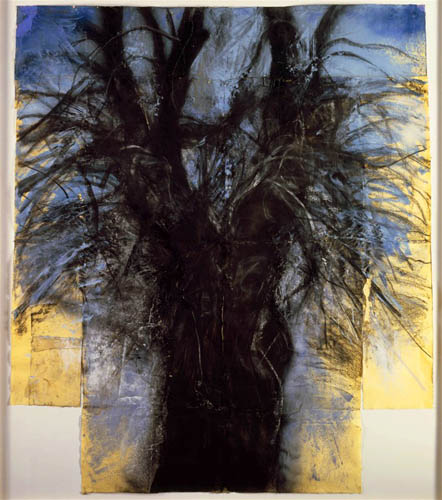
Plants and Trees – Charcoal – Paper – Paint… ttp://www.alancristea.com/collection-41-109-Plants-Andamp%3B-Trees to see more images of the GREAT works.

Goals:

  • 1.2Ad: Choose from a range of materials and methods of traditional and contemporary artistic practices, following or breaking established conventions, to plan the making of multiple works of art and design based on a theme, idea, or concept.
  • Using the PLANT and the image by Jim Dine that I have shown you, what ideas FIRST COME TO YOUR MIND when told you are going to be working on a PLANT BASED drawing? Write out your FIRST THOUGHTS.

What are your first marks on the paper? What are the areas that you are focusing on in the composition? How did you approach this work? (1, 3, 5). Jim Dine – Plants and Trees: http://1.bp.blogspot.com/- AND THEN: Bring up an image from the Alan Cristea Gallery: http://www.alancristea.com/collection-41-109-Plants-Andamp%3B-Trees


Painting: Collage, Critique, Sketch, Research… Sounds like last Friday!

Julie Blazer and another set of techniques… what are YOU using? What are YOU drawn to? http://marciglenn.files.wordpress.com/2013/06/watercolor-techniques-from-julie-balzer.jpg

Goals:

  • As you are working, what are you seeing as an area that you might need to really focus on as you continue.
  • 6.1Ac: Make, explain, and justify connections between artists or artwork and social, cultural, and political history.

How are you relating the ideas of making art to making art about yourself? Do you find this to be easy or difficult – WHY?

REMEMBER! Create a ONE PAGE PAPER (double spaced, 11 or 12 point Times New Roman, Palatino – Serif-ed type font) that discusses the artists and their works. Use ideas about the work as to what drew you to the work, what styles did you like, what techniques do you appreciate? A small history of the artist and personal reflection. How will you use similar ideas in your work as they did in theirs? Here are the artists to research: Winslow Homer, Charles Demuth, Thomas Eakins, Edward Hopper, Dong Kingman, Reginald Marsh, Charles Sheeler, J.M.W. Turner, Thomas Moran, Georgia O’Keefe, James Whistler, or Andrew Wyeth. PAPER IS DUE ON Friday, September 19, 2014.

What did you have for #Breakfast? #Frog?

WHSoc20 Blog

Click on the image above to follow a STRONG conversation with Teachers, Administrators, and Students about the direction, concerns, solutions, challenges that face everyone in the world of education! Join us on Wednesday nights on Twitter at 8:00CST using the hashtag – #WHSoc20

~~~

“Goals are the fuel in the furnace of achievement.” Brian Tracy

http://sd.keepcalm-o-matic.co.uk/i/keep-calm-and-eat-that-frog-3.png

~~~

Studio Art 360 – Paper Mache – Finish your FORMS in cardboard!

What’s your cube look like?

Goals:

  • 1.1P: Use multiple approaches to begin creative endeavors.
  • As you look BACK on the projects, what might you have done differently on the project – if you could go back and try some of these letters / forms again?

Knowing that this was a new approach to making art – sculpture – what has been the most difficult part of the project?

AP Studio Art: 1 week Magazine Article Assignment, CRITIQUE TODAY – Hang works in the HALLWAY Cork Strip!

There are 4 parts to a written critique. What are they? Now we advance in the process as AP Studio Artists and REALLY get into the critique.

Goals:

  • 7.2Ad: Determine the commonalities within a group of artists or visual images attributed to a particular type of art, timeframe, or culture.
  • What are the Four parts to a Written Critique. Critiquing the learning of a skill – We will be creating a Departmentally Designed Rubric for your critiques – Not yet though. 

What did you take away from the critique today? Write down what you have taken from the crit. ON YOUR PRINTED SELF-CRIT.

Painting: Collage, Critique, Sketch, Research… Sounds like last Friday!

What techniques are you using in your painting?

Goals:

  • 6.1Ac: Make, explain, and justify connections between artists or artwork and social, cultural, and political history.
  • Looking at the work you have in front you, what are the aspects that you feel TRULY speak about you – socially, culturally, or historically.

What was the most challenging part of the first bit of the painting?

REMEMBER! Create a ONE PAGE PAPER (double spaced, 11 or 12 point Times New Roman, Palatino – Serif-ed type font) that discusses the artists and their works. Use ideas about the work as to what drew you to the work, what styles did you like, what techniques do you appreciate? A small history of the artist and personal reflection. How will you use similar ideas in your work as they did in theirs? Here are the artists to research: Winslow Homer, Charles Demuth, Thomas Eakins, Edward Hopper, Dong Kingman, Reginald Marsh, Charles Sheeler, J.M.W. Turner, Thomas Moran, Georgia O’Keefe, James Whistler, or Andrew Wyeth. PAPER IS DUE ON Friday, September 19, 2014.

#Friday and you are making #Upcycled, #Individual, and a #Series of #Artworks

 “Art is the concrete representation of our most subtle feelings.” – Agnes Martin, Art In America (p.124, 1996)

~~~

Studio Art 360 – Critique Sketches, Demo Cardboard Constructions, National Visual Arts Standards

Richard Serra and his minimalist sculpture. http://www.moma.org/collection/object.php?object_id=81294 – Let’s take a look at the video!

Goals:

  • 7.1P: Hypothesize ways in which art influences perception and understanding of human experiences.
  • What is ONE things that you might think if you saw a grouping of cylinders, cubes, and pyramids all grouped together?

Last 10 minutes of class. Set out your GOALS PAGE and the CRITIQUE SHEET I gave you. Walk Clockwise and in serpentine fashion (I’ll demonstrate) around the room and take in the work that is in front of you. Like musical chairs, stop when I say stop and make 5 REAL COMMENTS on 5 different classmates work. What is working? What is NOT working? Last 3 minutes… Read your comments – write a BRIEF response to a classmates comments.

AP Studio Art: 1 week Magazine Article Assignment, 1 week concentration work

Elizabeth Peyton – MoMA Collection! Let’s see the body of work you can see this weekend in NYC! http://www.moma.org/collection/browse_results.php?criteria=O%3AAD%3AE%3A8042&page_number=1&template_id=6&sort_order=1

Goals:

  • 2.2Ad: Demonstrate understanding of the importance of balancing freedom and responsibility in the use of images, materials, tools, and equipment in the creation and circulation of creative work.
  • What Freedoms and Responsibilities did you take as you chose the images / ideas you created?

As we look at your body of works, what is it that ties them all together? What is it that you can see as your voice starting to come out?

Painting: Collage, Critique, Sketch, Research…

Let’s go to NYC! Dwight Moore and his paintings can take us there if we can’t all really go… http://www.dwigmore.com/marsh_exhibit.html

Goals:

  • 2.3Ac: Redesign an object, system, place, or design in response to contemporary issues
  • What have you been considering as you have redesigned the images / composition as you’ve planned out your painting?

Look around at the work collages laid out around the room. See if you can figure out what they may be saying about themselves in the art. Write down a brief description of their work on the stick notes I have provided. Refelct on what has been written and then have a conversation about the meaning… Were you right? DO NOT CRITIQUE the work of a classmate that you have been working next to the whole time… SERIOUSLY!

Create a ONE PAGE PAPER (double spaced, 11 or 12 point Times New Roman, Palatino – Serif-ed type font) that discusses the artists and their works. Use ideas about the work as to what drew you to the work, what styles did you like, what techniques do you appreciate? A small history of the artist and personal reflection. How will you use similar ideas in your work as they did in theirs? Here are the artists to research: Winslow Homer, Charles Demuth, Thomas Eakins, Edward Hopper, Dong Kingman, Reginald Marsh, Charles Sheeler, J.M.W. Turner, Thomas Moran, Georgia O’Keefe, James Whistler, or Andrew Wyeth. PAPER IS DUE ON Friday, September 19, 2014.

~~~

Sketchbooks Due:

  • 1st Hour: Tuesday
  • 2nd Hour: Friday
  • 3rd Hour: Thursday
  • 4th Hour: Wednesday
  • 6th Hour: Monday

#Upcycling, #Cardboard, #Inspiration across the #VisualArts

 “Art is the concrete representation of our most subtle feelings.” – Agnes Martin, Art In America (p.124, 1996)

~~~

Studio Art 360 – Critique Sketches, Demo Cardboard Constructions, National Visual Arts Standards


Donald Judd – Let’s look at a bit of a video about minimalism… http://www.moma.org/collection/browse_results.php?object_id=81324

Goals:

  • 7.1P: Hypothesize ways in which art influences perception and understanding of human experiences.
  • What is ONE similarity between your letter and one of the other FORMS you are building or going to build?

What do you think one might interpret from seeing a sculpture (like the one as an example today) that is MINIMAL?

AP Studio Art: 1 week Magazine Article Assignment, 1 week concentration work

Series of works… what’s the same? What is different? How do you tie all your works relate to one another? http://iopblog.org/wp-content/uploads/2009/10/Photo-0003.jpg

Goals:

  • 2.2Ad: Demonstrate understanding of the importance of balancing freedom and responsibility in the use of images, materials, tools, and equipment in the creation and circulation of creative work.
  • As a body / concentration of works, why is what you are making interesting, worthwhile, intriguing?

What can you do to stretch your abilities in the work you are making? Are you too comfortable or do you feel you are pushing yourself? Why?

Painting: Collage, Critique, Sketch, Research…

Dong Kingman’s Watercolors… different than the others.http://www.dongkingman.com/

Goals:

  • 7.2Ac: Evaluate the effectiveness of an image or images to influence ideas, feelings, and behaviors of specific audiences.
  • What is the story you are telling with your work? What is the audience going to learn about you through this art?

What watercolor techniques with are you struggling with?

Create a ONE PAGE PAPER (double spaced, 11 or 12 point Times New Roman, Palatino – Serif-ed type font) that discusses the artists and their works. Use ideas about the work as to what drew you to the work, what styles did you like, what techniques do you appreciate? A small history of the artist and personal reflection. How will you use similar ideas in your work as they did in theirs? Here are the artists to research: Winslow Homer, Charles Demuth, Thomas Eakins, Edward Hopper, Dong Kingman, Reginald Marsh, Charles Sheeler, J.M.W. Turner, Thomas Moran, Georgia O’Keefe, James Whistler, or Andrew Wyeth. PAPER IS DUE ON Friday, September 19, 2014.

~~~

Sketchbooks Due:

  • 1st Hour: Tuesday
  • 2nd Hour: Friday
  • 3rd Hour: Thursday
  • 4th Hour: Wednesday
  • 6th Hour: Monday

#Minimalism to explain #Subtleties in #Art

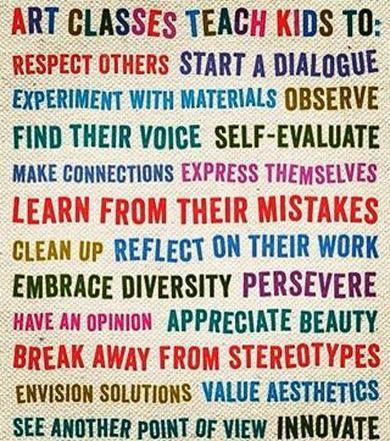
Art Classes Teach
What are you learning in your art class? What do you WANT to learn?

 “Art is the concrete representation of our most subtle feelings.” – Agnes Martin, Art In America (p.124, 1996)

~~~

Follow along with the http://WHSoc20.WordPress.com 30 Day Blog Challenge – Mr. Korb’s Online discussion group.

~~~

Studio Art 360 – Critique Sketches, Demo Cardboard Constructions, National Visual Arts Standards

Tony Smith, 1964 – Minimalist Sculpture! http://www.moma.org/collection/browse_results.php?object_id=81267 – Click Here to visit the Museum of Modern Art and see more about his work!

Goals:

  • 2.2P: Explain how traditional and non-traditional materials may impact human health and the environment and demonstrate safe handling of materials, tools, and equipment.
  • What can you use from the process we went through YESTERDAY to continue to create a CUBE, CYLINDER, and a PYRAMID?

Do you want to work on ALL of them at the same time or are you going to finish one and then move onto the next?  Cube, Cylinder, Pyramid… as well as the letter.

What was the most difficult part of the building today for YOU? How can you use those challenges to develop your skills?

AP Studio Art: 1 week Magazine Article Assignment, 1 week concentration work

What parts of WATERCOLOR do you struggle with? http://www.fountainstudio.com/images/tips/br-drag.jpg

Goals:

  • G: 2.2Ad: Demonstrate understanding of the importance of balancing freedom and responsibility in the use of images, materials, tools, and equipment in the creation and circulation of creative work.
  • What are you most comfortable with? Pencil, Charcoal, Pastel, or Paint? Why?

What NEW materials have you used today? How are the LARGER ideas of the project coming along? What do you need to be doing tomorrow to make STRONG headway? (1, 3, 5

Painting: Collage, Critique, Sketch, Research…

Thomas Moran – WHAT? How great is this? http://www.denverartmuseum.org/exhibitions/thomas-moran-s-yellowstone-project-nation

Goals:

  • G: 2.3Ac: Redesign an object, system, place, or design in response to contemporary issues
  • How has the gathering of images HELPED or CHALLENGED you in the creation of a composition visually and / or telling a story – about yourself?

What does your composition say about you? How might others read the images you have gathered and assembled?

Create a ONE PAGE PAPER (double spaced, 11 or 12 point Times New Roman, Palatino – Serif-ed type font) that discusses the artists and their works. Use ideas about the work as to what drew you to the work, what styles did you like, what techniques do you appreciate? A small history of the artist and personal reflection. How will you use similar ideas in your work as they did in theirs? Here are the artists to research: Winslow Homer, Charles Demuth, Thomas Eakins, Edward Hopper, Dong Kingman, Reginald Marsh, Charles Sheeler, J.M.W. Turner, Thomas Moran, Georgia O’Keefe, James Whistler, or Andrew Wyeth. PAPER IS DUE ON MONDAY, September 15, 2014.

~~~

Sketchbooks Due:

  • 1st Hour: Tuesday
  • 2nd Hour: Friday
  • 3rd Hour: Thursday
  • 4th Hour: Wednesday
  • 6th Hour: Monday

#Process over #Product – Art is NOT about the FINAL PRODUCT

Art Classes Teach
What are you learning in your art class? What do you WANT to learn?

 “Art is the concrete representation of our most subtle feelings.” – Anges Martin, Art In America (p.124, 1996)

~~~

Follow along with the http://WHSoc20.WordPress.com 30 Day Blog Challenge – Mr. Korb’s Online discussion group.

~~~

Studio Art 360 – Critique Sketches, Demo Cardboard Constructions, National Visual Arts Standards

Ok – Now that the F’s are becoming A’s – How do you make it a 3D form rather than a flat shape? http://www.superiorlabels.com/images/black_whiteclipart/monograms/capital_letters/grey/4063266.jpg

Goals:

  • 10.1P: Document the process of developing ideas from early stages to fully elaborated ideas.
  • What is the difference in the shape and form? There are a FEW OTHER terms we are going to cover in the book – terms that help up TALK about art. Let’s focus on Shape and Form today.

How much of your letter did you get done? One shape? two shapes? Gluing / Taping sides? What helped you get work done? What got in your way?

AP Studio Art: 1 week Magazine Article Assignment, 1 week concentration work

How are you using OR NOT USING pastels? http://www.artistsnetwork.com/wp-content/uploads/2011/03/64-uart-paper.jpg

Goals:

  • 2.2Ad: Demonstrate understanding of the importance of balancing freedom and responsibility in the use of images, materials, tools, and equipment in the creation and circulation of creative work.
  • What materials are you NOT using yet? Make sure that in the body of work you are making (about 1 object) you try things you are not comfortable with.

What mediums are you afraid of using. If not afraid – haven’t used because you are not used in the past?

Painting: Collage, Critique, Sketch, Research…

Charles Demuth – Different than ANDREW WYETH – What style are YOU going to use? http://www.tfaoi.com/newsm1/n1m327.htm

GOALS:

  • 2.1Ac: Through experimentation, practice, and persistence, demonstrate acquisition of skills and knowledge in a chosen art form.
  • What did TAPING the paper down to the board help with last week? How will THIS NEW APPROACH to Stretching watercolor paper help?

What did you get done today? Be VERY specific in the tasks you accomplished.Collage? Built?

Create a ONE PAGE PAPER (double spaced, 11 or 12 point Times New Roman, Palatino – Serif-ed type font) that discusses the artists and their works. Use ideas about the work as to what drew you to the work, what styles did you like, what techniques do you appreciate? A small history of the artist and personal reflection. How will you use similar ideas in your work as they did in theirs? Here are the artists to research: Winslow Homer, Charles Demuth, Thomas Eakins, Edward Hopper, Dong Kingman, Reginald Marsh, Charles Sheeler, J.M.W. Turner, Thomas Moran, Georgia O’Keefe, James Whistler, or Andrew Wyeth. PAPER IS DUE ON MONDAY, September 15, 2014.

~~~

Sketchbooks Due:

  • 1st Hour: Tuesday
  • 2nd Hour: Friday
  • 3rd Hour: Thursday
  • 4th Hour: Wednesday
  • 6th Hour: Monday

#NVAS – How do you THINK about the #VISUAL ARTS

Art Classes Teach
What are you learning in your art class? What do you WANT to learn?

 “Art is the concrete representation of our most subtle feelings.” – Anges Martin, Art In America (p.124, 1996)

~~~

Follow along with the http://WHSoc20.WordPress.com 30 Day Blog Challenge – Mr. Korb’s Online discussion group.

~~~

Sketchbooks Due:

  • 1st Hour: Tuesday
  • 2nd Hour: Friday
  • 3rd Hour: Thursday
  • 4th Hour: Wednesday
  • 6th Hour: Monday

~~~

Studio Art 360 – Critique Sketches, Demo Cardboard Constructions, National Visual Arts Standards

Hope you do not EARN THIS grade – Not a chance if you continue to FOCUS on the GOALS!

Goals:

  • 10.1P: Document the process of developing ideas from early stages to fully elaborated ideas.
  • What is the difference between shape and form? Please be descriptive in your definition.

What do you envision as the biggest challenge with your letter? If you see this as the problem… how do you feel you might be able to solve that challenge?

AP Studio Art: 1 week Magazine Article Assignment, 1 week concentration work

What marks and materials are you using? This is CHARCOAL. How can you try this if you aren’t already. We will look at a variety of materials this week…

Goals:

  • 2.1Ad: Experiment, plan, and make multiple works of art and design that explore a personally meaningful theme, idea, or concept.
  • Four parts to this week’s project. What are you most comfortable with? Pencil, Charcoal, Pastel, or Paint? Why?

What materials have you used today? How are the projects coming along?

Painting: Collage, Critique, Sketch, Research…

Winslow Homer – a MASTER of the WATERCOLOR!http://www.metmuseum.org/toah/works-of-art/10.228.1

GOALS:

  • 2.1Ac: Through experimentation, practice, and persistence, demonstrate acquisition of skills and knowledge in a chosen art form.
  • What challenges did you have with the watercolors last week when it came to OBSERVATION of the REAL WORLD around you.

What are 5 images you gathered today that say something about you?

Here are the artists to research: Winslow Homer, Charles Demuth, Thomas Eakins, Edward Hopper, Dong Kingman, Reginald Marsh, Charles Sheeler, J.M.W. Turner, Thomas Moran, Georgia O’Keefe, James Whistler, or Andrew Wyeth


First Week of School #DONE. CONGRATULATIONS!

“Unless you have a definite, precise, clearly set goals, you are not going to realize the maximum potential that lies within you.” — Zig Ziglar 

Welcome back to school! This is going to be a GREAT year and I am VERY excited to be back. I hope that all of you are too. There are a few things that we do in the art classroom that will happen everyday – Goal Setting (based on the National Visual Arts Standards), Work, and Reflection. This will all become second nature as the semester rolls along and I ask you to trust that what we do in class at the beginning and end of the class will help you in the middle portion of class as well as with the final artwork that we create. PLEASE subcribe to this website AND add your name to the TEXTING feature of REMIND – School Texting Services.

TEXTING with REMIND from Mr. Korb!

2014 – 15 Sign up for the REMOND TEXTING service for each of your classes…

  • Studio Art 360 (formerly Art Foundations): Text @14start360 to (262) 757-7491
  • Painting: Text @14painting to (262) 757-7491
  • AP Studio Art: Text @14APStudio to (262) 757-7491

~~~

Studio Art 360: Syllabus, Sketchbooks, and Artmaking

BIO of Robert Indiana: http://robertindiana.com/biography/

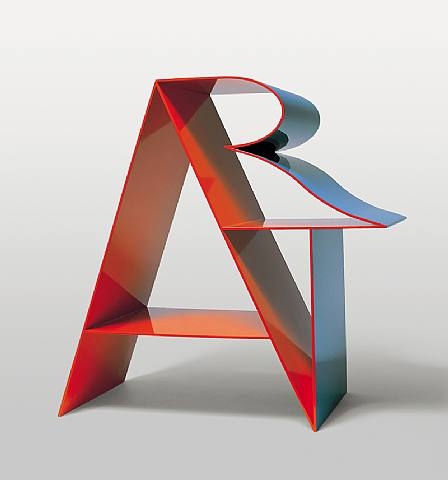
A LOT of HOPE! What are you thinking about as you look at YOUR letters? https://rosenbaumcontemporary.com/imgs/exhibitions/Robert-Indiana-Exhibit-2.jpg

GOALS:

  • 2.1P: Engage in making a work of art or design without having a preconceived plan.
  • What are you doing in your composition to FULLY ACTIVATE the background? Shapes, Texture, Color, Lines, Circles? Allow yourself to EXPERIMENT!

What is the strongest part of your artwork that you created this week? Use the ART TERMS you know.  

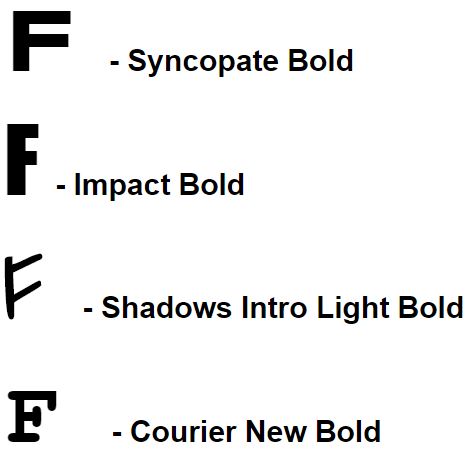
ASSIGNMENT for MONDAY: Look through your FONTS on your home computer or school computer and PRINT OUT 4 VERY different types of letters using the first letter of your FIRST or LAST name. TAPE THESE into your sketchbook. 72 Point Font at LEAST and label them – EXAMPLE BELOW! You will choose ONE of these to draw and then SCULPT! When you have chosen the font and letter you are happiest with, print it out as large as you can on a single sheet of paper – we will use this as a tracing for the final product.

Text Examples KORB StArt360 Sculpture Ideas

~~~

AP Studio Art: Introductions, Expectations, and Art Making – ON YOUR OWN!

CUPCAKES and YUMMY SUGAR! What ELSE draws you into this work? http://latimesblogs.latimes.com/.a/6a00d8341c630a53ef014e8679da33970d-pi

Goals:

  • 1.2Ad: Choose from a range of materials and methods of traditional and contemporary artistic practices, following or breaking established conventions, to plan the making of multiple works of art and design based on a theme, idea, or concept.
  • What makes your artwork based on a single object interesting or worthwhile? Why THIS object or idea?

What challenges do you have when you are working on more than one composition at a time? What is easy about the use of a common theme?

~~~

Painting: Introductions, Expectations, and Watercolors

James Turner Bio: http://www.biography.com/people/jmw-turner-40806

Where is that Castle? Look carefully at how LITTLE paint Turner includes in the background – the FOCAL point! http://www.tate.org.uk/art/images/work/D/D02/D02344_10.jpg

GOALS:

  • 1.2Ad: Choose from a range of materials and methods of traditional and contemporary artistic practices, following or breaking established conventions, to plan the making of multiple works of art and design based on a theme, idea, or concept. 
  • What color schemes, techniques are you using to UNIFY the work as you develop it?

Describe the biggest successes and failures you have had with this first painting. What skills did you use that you remember from the earlier classes in art? Use BIG ART TERMS as you critique this work?


#Art and #Goals, #Success and #Failure… how are you doing?

“Unless you have a definite, precise, clearly set goals, you are not going to realize the maximum potential that lies within you.” — Zig Ziglar 

Welcome back to school! This is going to be a GREAT year and I am VERY excited to be back. I hope that all of you are too. There are a few things that we do in the art classroom that will happen everyday – Goal Setting (based on the National Visual Arts Standards), Work, and Reflection. This will all become second nature as the semester rolls along and I ask you to trust that what we do in class at the beginning and end of the class will help you in the middle portion of class as well as with the final artwork that we create. PLEASE subcribe to this website AND add your name to the TEXTING feature of REMIND – School Texting Services.

TEXTING with REMIND from Mr. Korb!

2014 – 15 Sign up for the REMOND TEXTING service for each of your classes…

  • Studio Art 360 (formerly Art Foundations): Text @14start360 to (262) 757-7491
  • Painting: Text @14painting to (262) 757-7491
  • AP Studio Art: Text @14APStudio to (262) 757-7491

~~~

Studio Art 360: Introductions, Syllabus, Sketchbooks, and Artmaking

How are you using the idea of TEXT in your Artwork? http://uploads2.wikiart.org/images/robert-indiana/art-1977.jpg

BIO of Robert Indiana: http://robertindiana.com/biography/
image

GOALS:

  • 2.1P: Engage in making a work of art or design without having a preconceived plan.
  • Q: What materials did you use yesterday that you have used in the past? What materials can you TRY to use today that you have NOT USED in the past. 

What is ONE question that you still have about the course, department, or me?

~~~

AP Studio Art: Introductions, Expectations, and Art Making – ON YOUR OWN!

YUM! What’s that… I forgot your doughnuts? http://ashleerubinstein.files.wordpress.com/2013/04/p1020041.jpg

Goals:

  • Choose from a range of materials and methods of traditional and contemporary artistic practices, following or breaking established conventions, to plan the making of multiple works of art and design based on a theme, idea, or concept.
  • Q:   Previous repetition of single object in drawings? What are topics / images that you frequently go to in your collection of imagery?

What new materials are you exploring? What techniques are you attempting that are new to you?

~~~

Painting: Introductions, Expectations, and Watercolors

What’s happening with YOUR painting that is similar or different than Turner’s? “Norham Castle on the River Tweed” http://www.tate.org.uk/art/images/work/D/D18/D18148_9.jpg – TATE MODERN

James Turner Bio: http://www.biography.com/people/jmw-turner-40806

GOALS:

  • Choose from a range of materials – Watercolors – and methods of traditional and contemporary artistic practices to plan works of art and design.
  • Q: Are there aspects of painting that you are hoping to develop? What do you really hope to learn / experience in the making of the watercolors?

What two things did you struggle with today in your painting (or paintings)? AT THIS MOMENT?

#Goals and #Introductions to #ART!

“Unless you have a definite, precise, clearly set goals, you are not going to realize the maximum potential that lies within you.” — Zig Ziglar 

How can you look at and use SMART GOALS? Thanks to http://transformfxfitness.com/2013/04/goal-setting/ for the image!

~~~

Welcome back to school! This is going to be a GREAT year and I am VERY excited to be back. I hope that all of you are too. There are a few things that we do in the art classroom that will happen everyday – Goal Setting (based on the National Visual Arts Standards), Work, and Reflection. This will all become second nature as the semester rolls along and I ask you to trust that what we do in class at the beginning and end of the class will help you in the middle portion of class as well as with the final artwork that we create. PLEASE subcribe to this website AND add your name to the TEXTING feature of REMIND – School Texting Services.

TEXTING from Mr. Korb!

2014 – 15 Sign up for the REMOND TEXTING service for each of your classes…

  • Studio Art 360 (formerly Art Foundations): Text @14start360 to (262) 757-7491
  • Painting: Text @14painting to (262) 757-7491
  • AP Studio Art: Text @14APStudio to (262) 757-7491

Let’s take a quick walk around the website and see where valuable information, syllabi, assignments, and other information is. Feel free to explore this on your own too.
~~~

AP Studio Art: Introductions, Expectations, and Art Making – ON YOUR OWN!

Yum – I do love me some cakes! What is it YOU love (and can draw / paint / etc…) (© Wayne Thiebaud / Licensed by VAGA, New York, NY)

Goals:

  • Choose from a range of materials and methods of traditional and contemporary artistic practices, following or breaking established conventions, to plan the making of multiple works of art and design based on a theme, idea, or concept.
  • Q:  What is your understanding of AP Art? How do you plan on using your skills to make the best you can? Talk to your classmates about this – write this in your GOALS folder.

Art From OBSERVATION – What interested you about the images you went out to draw? What is the interesting – worthwhile object(s) and how do you relate to it? Wayne Thiebauld: Cakes:

~~~

Painting: Introductions, Expectations, and Watercolors

Turner “Norham Castle at Sunrise,” TATE MODERN – UK: http://www.tate.org.uk/art/images/work/N/N01/N01981_9.jpg

James Turner Bio: http://www.biography.com/people/jmw-turner-40806

GOALS:

  • Choose from a range of materials – Watercolors – and methods of traditional and contemporary artistic practices to plan works of art and design.
  • Q: What made it challenging to put that first mark on your paper? Unless you had no problems – then what was it that gives you confidence in painting?

What three things did you succeed with today in  your painting?

~~~

Studio Art 360: Introductions, Expectations, and Artmaking

How does Robert Indiana use the EVERYDAY to create art that might make one stop and consider the ideas? http://whitecubediaries.files.wordpress.com/2013/02/3923768734_6b16394256_z.jpg

BIO of Robert Indiana: http://robertindiana.com/biography/

GOALS:

  • 2.1P: Engage in making a work of art or design without having a preconceived plan.
  • Q: What was the biggest challenge or success you came across as you developed your ideas yesterday? 

What are 2 skills you have already that are going to make your experiences in Studio Art 360 easier or more successful?