2.1Ad: Experiment, plan, and make multiple works of art and design that explore a personally meaningful theme, idea, or concept.
Considering the ideas you are developing… how are you trying to tie the art works together? I am REALLY Emphasizing the unifying approach here…
Imagine yourself in front of the AP BOARD… how would you, in 30 seconds, defend your body of work so far?
MONDAY – CHAPTER 2 in Art and Fear Responses DUE on the BLOG.
Painting – Mid Crit TODAY! FINAL Crit. Wednesday – Friday of NEXT WEEK!
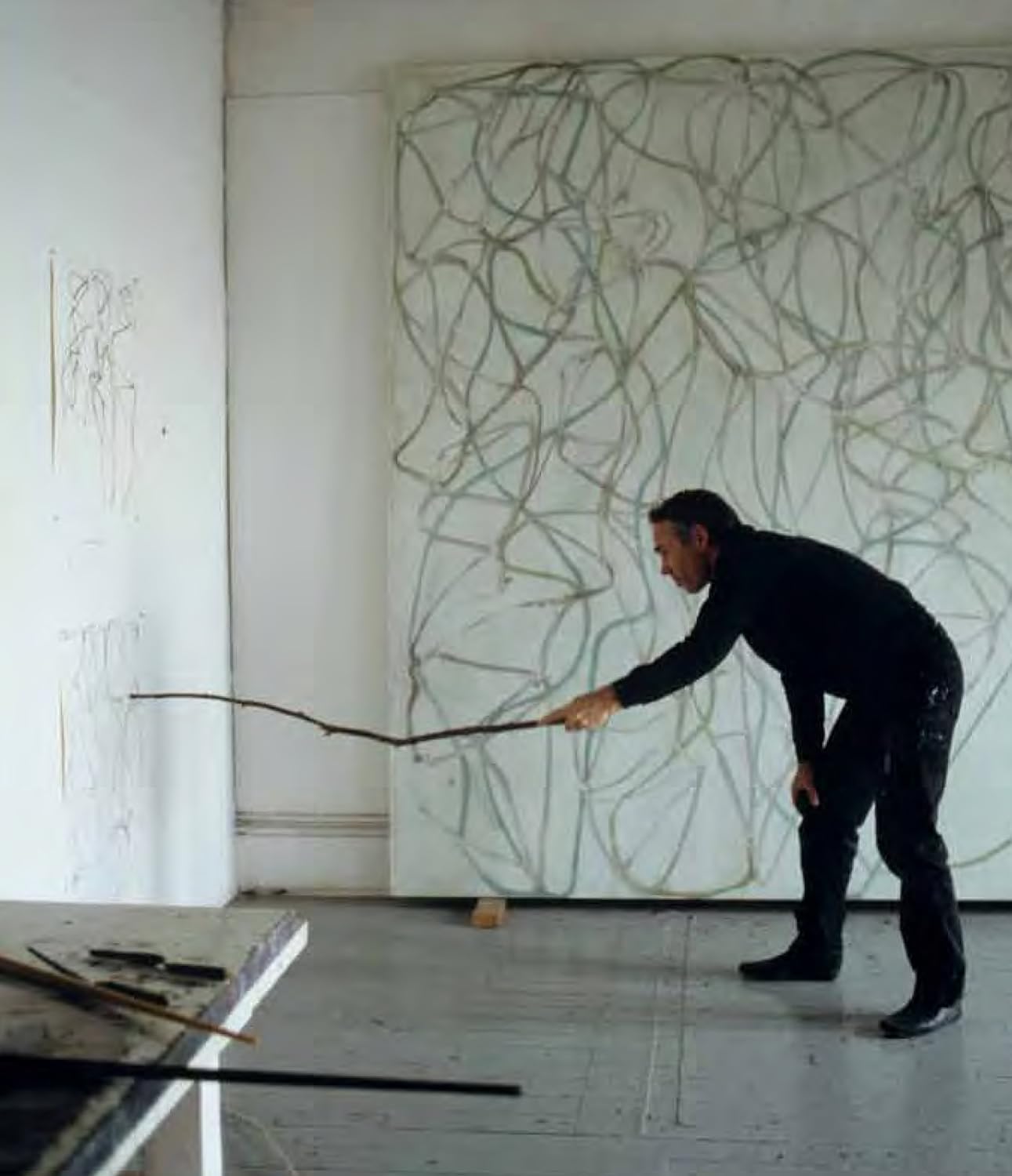
Sean Scully in the Studio TALKING about the work! CRIT!
Goals:
3.1Ac: Engage in constructive critique with peers, then reflect on, re-engage, revise, and refine works of art and design in response to personal artistic vision.
MID-CRIT – What do you HOPE to see / learn / take away from the experience today?
Well… what did you take away from the critique today? Did you see anything in your classmates work that you can put into your own work?
G: 1.1P: Use multiple approaches to begin creative endeavors.
How do you feel using MULTIPLE APPROACHES to the creative process helped you or challenged you in coming up with your compositions?
Do you feel going through a PROCESS is a STRONG way to begin an artwork (or anything else) or simply a waste of time – you have a “just do it” sort of approach. Explain your answer.
Painting – CANVAS CONSTRUCTION!Color Schemes and the RESOLUTION of the ABSTRACT Composition!
2.1Ac: Through experimentation, practice, and persistence, demonstrate acquisition of skills and knowledge in a chosen art form.
Consider the layering and transparency of the images / colors… what does this visually do for you, the painter? What does it do visually for the audience?
As you look back on the construction of the canvas, what are especially happy about as you built your own?
1.2Ad: Choose from a range of materials and methods of traditional and contemporary artistic practices, following or breaking established conventions, to plan the making of multiple works of art and design based on a theme, idea, or concept.
Have you DISCOVERED ANYTHING new about your ideas for your concentration today, this week, as you have been working. I’ve had MANY great conversations with each almost each of you… what do you take away from them?
What are your questions about making your statement ONLINE? Do you have an idea how to access your ONLINE portion of the website?
1.2P: Shape an artistic investigation of an aspect of present-day life using a contemporary practice of art or design.
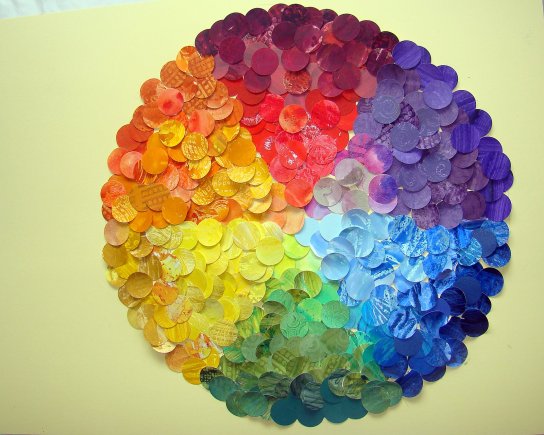
Review with your neighbor the relationships of color on the color wheel What are the PRIMARY Colors, SECONDARY colors, and TERTIARY Colors? WRITE THEM DOWN!
Review with neighbors the relationships of the colors on the color wheel? QUIZ one another on the names, types and relationships of the colors. What were the most CHALLENGING COLORS for you to mix? Which were the easiest to work with?
ASSIGNMENT FOR FRIDAY – Bring in a COUPLE of COLOR ADVERTISEMENT that demonstrates a specific use of COLOR SCHEMES and is of a PRODUCT that YOU FIND IMPORTANT IN YOUR LIFE! Like THIS or THIS
Painting – Color Schemes and the RESOLUTION of the ABSTRACT Compostion
Are you able to see any TREE or Landscape in this work? I believe that MODRIAN was still referencing the REAL to come up with the ABSTRACT. http://www.theartstory.org/
Goals:
1.2Ac: Choose from a range of materials and methods of traditional and contemporary artistic practices to plan works of art and design.
Does the use of LINE become the DOMINANT element in your artwork or are you seeing other elements as coming to the forefront of the composition?
What color scheme have you begun to think about? Why? how does it DESCRIBE YOUR feelings toward the SIMPLIFICATION of the SPACE / SURROUNDINGS?
AP Studio Art – Level 6 Drawing – Are you UP TO IT?
3.1Ad: Reflect on, re-engage, revise, and refine works of art or design considering relevant traditional and contemporary criteria as well as personal artistic vision.
Positive and Negative Space. Line Quality. Shape and Form. Unity. Emphasis. What are the ELEMENTS / PRINCIPLES that you are seeing develop in the work? What are the Conceptual ideas about the use of objects to create an intriguing work?
After 3 days of SOLID work – After seeing a 6 (5) on the AP Rubric and reading about what it takes to “score” that high… what is ONE thing you have learned about yourself / the process / the ideas of making successful work that REVOLVE around DRAWING / 2D Design Criteria?
Waterford Union High School’s Parent Teacher Conferences were Thursday and Friday and the NEW ART GALLERY had its first REAL gallery opening! Well, the doors were open as the parents and students walked through the front door for conferences. TONIGHT however the gallery will be staffed and visitors will be visiting. The Third Annual River’s Edge Art Walk is underway Friday night from 5 – 9pm in Historic Downtown Waterford, WI. 27 (or so) artists will be sharing their inspired works with the community of Southeastern WI. Come and join us all and see the hard work the student artists of Waterford Union High School (as well as the art teachers – your’s truly included) have brought together.
Frank Korb, Mixed Media – Thai-Italiana Restaurant
Lisa Dukowitz, Photography – Marty’s Banquet Hall
Brett Roberts, Ceramics – Riverside Chiropractic
Waterford High School Students – Waterford High School Gallery (Door #1)
For More Information visit Absolutely Waterford’s Website – HERE
“The question for each man is not what he would do if he had the means, time, influence and educational advantages, but what he will do with the things he has.” — Frank Hamilton
~~~
Studio Art 360 – FORMS and DRAWING – 2 Days to Go!
10.1P: Document the process of developing ideas from early stages to fully elaborated ideas.
Look back at your THUMBNAIL drawings… Which type of composition did you choose to use? What are TWO things that have changed about your composition from the THUMBNAIL STAGE.
Looking at the THUMBNAIL again and the DRAWING – What positive changes or negative changes have come from the process of drawing?
~~~
Painting and AP Studio Art– Critique – LAST DAY? HURRY!
Charles V Distributing Awards to the Artists at the Close of the Salon of 1824 François-Joseph Heim – Salon Style Exhibition – Definition HERE!
Goals:
PAINTING – 4.2Ac: Analyze, select, and critique personal artwork for a collection or portfolio presentation.
AP Studio Art – 4.2Ad: Critique, justify, and present choices in the process of analyzing, selecting, curating, and presenting artwork for a specific exhibit or event.
What ways do you feel we should display the groupings of artworks we have in front of us? Considering BOTH classes, the GALLERY SPACE, and the display boards.
What problems do you see or did you see in the process of hanging the show? How can we work through this better? Suggestions to make this an easier process?
WHAT A DAY! Today we celebrated and shared with a portion of our school community that is just as important as the teaching staff – the parents (who am I kidding? MORE important). My high school has about 1,100 students and today we almost added an additional 400 or so additional people in and around our building. The addition of just those few bodies really filled the space fast. I commented to a parent about how truly crowded it felt.
We started the day with a generous breakfast, quick comments by our NHS President, Superintendent, and Principal. A word of thanks for the continual support of the student body, a positive plug for being one of 9 districts in the state of Wisconsin that truly excelled on the state report card, a few rules of the day, and then a “good luck” wish for the parents as they hit the halls for a taste of the classes their children experience. What started out 14 years ago with about 80 parents (and kids praying hard the night prior that their parents would forget about the invitation) has grown to a HUGE turnout (and kids proud to be toting their folks around the building – showing off to them the level of hard work they have to go through on a daily basis in the building. The challenges that await the parents are VASTLY different for the majority of them as they enter a high school with higher expectations, deeper challenges, and more rigorous classes than they had when they wore the hat of the student.
Daughter and Mom working on the watercolors – sharing ideas and experiences.
My classes operated with a slight change from the ordinary. My introduction to the class took a few minutes more than usual. Other than that, it was get out and WORK, just like normal. I was so happy to see parents getting their hands into the art making experience. Questions were asked, challenges were met, stories were shared, and I truly saw learning and bonding happen (maybe bonding because of the paper mache – but I think a stronger bond than a 55% glue to 45% water mixture will ever have). I was fortunate enough to even have my mom come in and share the day. She challenged her hands at watercolors in the first period with a continuous line drawing I made up for her.
While I could not get out of my classroom to get a feel for the day, I was truly impressed with the enthusiasm, encouragement, problem solving, and FUN the parents were having with their kids. I only wish I could do this with my daughter at her school. This opportunity gave me the chance to introduce myself to the parents, explain the process I go through with their kids each and every day of the school year, and rationale for that process. Having the other support system in the same room is a wonderful plus in the day. I feel a little bad for the children whose parents were not able to join them for the day, for whatever reason. Hopefully the conversation about parent’s day will make it to the kitchen table for them. I look forward to the feedback from the parents who were in my classroom as to how their experience was and how I might be able to help their children out as the year progresses.
7.1P: Hypothesize ways in which art influences perception and understanding of human experiences.
When you see the forms in a finished state, how do you see it as relating to your experience as a person – as part of the art making experience? How could you see it as a moving you forward in the art making experiences? What can you learn and practice with and from these forms?
What was your biggest success over these past two weeks working on the sculptural forms? What are 2 criteria you would set up for yourself as a GRADING criteria? How would you EVALUATE YOURSELF in completing these criteria? a – F and WHY?
10.1Ad: Synthesize knowledge of social, cultural, historical, and personal life with art-making approaches to create meaningful works of art or design.
Working on the plants all week – look carefully and think about HOW ARE YOU GOING TO MOVE FORWARD WITH THE IMAGE? Do you have a PERSONAL STORY you could express WITH the work? Maybe not immediately recognizable, but through symbolism?
Do you find meaning in your work? Do you find something interesting in the plants? What is challenging you? Why’d you do what you did? Elements / Principles you are REALLY thinking about?
2.1Ac: Through experimentation, practice, and persistence, demonstrate acquisition of skills and knowledge in a chosen art form.
What would you say are some NEW SKILLS you have developed in the beginning of the painting process? Layering / Glazing? Wet on Wet Graded Washes? Observational Drawing? Collage Techniques? GRIT and Persistence?
What are the STRONGEST aspects of your work this week? What do you see as being ONE challenge you need to REALLY focus on next week?
REMEMBER! Create a ONE PAGE PAPER – DUE TOMORROW!(TYPED! double spaced, 11 or 12 point Times New Roman, Palatino – Serif-ed type font) that discusses the artists and their works. Use ideas about the work as to what drew you to the work, what styles did you like, what techniques do you appreciate? A small history of the artist and personal reflection. How will you use similar ideas in your work as they did in theirs? Here are the artists to research: Winslow Homer, Charles Demuth, Thomas Eakins, Edward Hopper, Dong Kingman, Reginald Marsh, Charles Sheeler, J.M.W. Turner, Thomas Moran, Georgia O’Keefe, James Whistler, or Andrew Wyeth. PAPER IS DUE ON Friday, September 19, 2014.
2.2Ad: Demonstrate understanding of the importance of balancing freedom and responsibility in the use of images, materials, tools, and equipment in the creation and circulation of creative work.
As a body / concentration of works, why is what you are making interesting, worthwhile, intriguing?
What can you do to stretch your abilities in the work you are making? Are you too comfortable or do you feel you are pushing yourself? Why?
7.2Ac: Evaluate the effectiveness of an image or images to influence ideas, feelings, and behaviors of specific audiences.
What is the story you are telling with your work? What is the audience going to learn about you through this art?
What watercolor techniques with are you struggling with?
Create a ONE PAGE PAPER(double spaced, 11 or 12 point Times New Roman, Palatino – Serif-ed type font) that discusses the artists and their works. Use ideas about the work as to what drew you to the work, what styles did you like, what techniques do you appreciate? A small history of the artist and personal reflection. How will you use similar ideas in your work as they did in theirs? Here are the artists to research: Winslow Homer, Charles Demuth, Thomas Eakins, Edward Hopper, Dong Kingman, Reginald Marsh, Charles Sheeler, J.M.W. Turner, Thomas Moran, Georgia O’Keefe, James Whistler, or Andrew Wyeth. PAPER IS DUE ON Friday, September 19, 2014.
“Unless you have a definite, precise, clearly set goals, you are not going to realize the maximum potential that lies within you.” — Zig Ziglar
~~~
Welcome back to school! This is going to be a GREAT year and I am VERY excited to be back. I hope that all of you are too. There are a few things that we do in the art classroom that will happen everyday – Goal Setting (based on the National Visual Arts Standards), Work, and Reflection. This will all become second nature as the semester rolls along and I ask you to trust that what we do in class at the beginning and end of the class will help you in the middle portion of class as well as with the final artwork that we create. Enough said! Let’s get to it!
TEXTING from Mr. Korb!
2014 – 15 Sign up for the REMOND TEXTING service for each of your classes…
Studio Art 360 (formerly Art Foundations): Text @14start360 to (262) 757-7491
Painting: Text @14painting to (262) 757-7491
AP Studio Art: Text @14APStudio to(262) 757-7491
~~~
AP Studio Art: Introductions, Expectations, and Art Making – ON YOUR OWN!
Choose from a range of materials and methods of traditional and contemporary artistic practices, following or breaking established conventions, to plan the making of multiple works of art and design based on a theme, idea, or concept.
Q: What is your understanding of AP Art? How do you plan on using your skills to make the best you can? Talk to your classmates about this – write this in your GOALS folder.
Art From OBSERVATION – What interested you about the images you went out to draw? What is the interesting – worthwhile object(s) and how do you relate to it? Wayne Thiebauld: Cakes:
~~~
Painting: Introductions, Expectations, and Watercolors
2.1P: Engage in making a work of art or design without having a preconceived plan.
Q: How do you draw something in 3 dimensions? What are different techniques you know? Sit with your neighbor and BEGIN with a box, a cylinder, a pyramid, and the first letter of your first or last name.
What are 3 things you hope to take away from this semester in this room, this class?