April 24, 2013 – Wednesday – Already?

Are you a leader? How do you demonstrate your leadership abilities?

“You never truly lead anybody until you learn to serve, and you never truly learn to serve until you learn there’s something so much greater than yourself.”

~~~

Art Foundations: Color Scheme readings and Color Scheme Notecards… that’s it…

GOALS:

  1. 1.4 Define color schemes using analysis (what are the colors that we, as painters / drawers use to make all the other colors?)

While you made your color schemes… which of these cause you the most challenge to understand? Why do you think that artists choose various color schemes to create their artwork? What would your favorite color scheme be (if you had to have one)?

~~~

Drawing: SnapChat… You made portraits yesterday… today we are going to look at them and then get them printed out. Tomorrow – we begin with pastel drawing – experimentation first.

LL Cool J.

GOALS:

  1. Research and Information Fluency – Students apply digital tools to gather, evaluate, and use information.
  2. (5.1) Identify the intentions and purposes behind making art. (D)

What was it that made you choose the image you did for our pastel drawing? What emotions / feelings do you hope that you are able to communicate with the drawing? What do you know about the Fauvists? What is the importance of using TECHNOLOGY in a responsible fashion? I know that technology like Snap Chat can be used inappropriately… make wise, responsible choices.

~~~

AP Studio Art: Ok guys and gals – you have been great this week – so far… Biggest concerns?

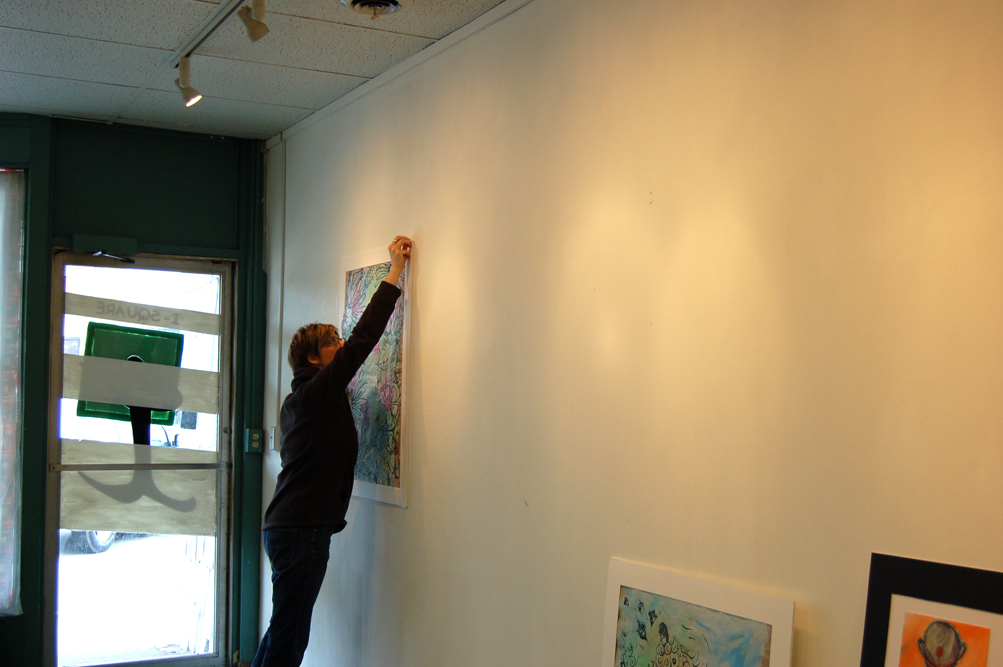
When are we going to hang your show in New York? Let’s keep the presentation and representation in mind as you work and prepare to present!

GOALS:

  1. Work on Quality Mounting of artworks.
  2. 3.3 Describe the creation of images and ideas and explain why they are value.

What did you get done? If I go to your login page… what will I see? How is that statement? May 7 – 6th hour is coming up REALLY FAST. We will BE DONE WITH THE ENTIRE PRESENTATION AND PORTFOLIO BEFORE THAT TIME! Nobody goes into that weekend without being done…

April 23, 2013 – Tuesday

“You never truly lead anybody until you learn to serve, and you never truly learn to serve until you learn there’s something so much greater than yourself.” What is the last thing you did to help someone out with their greater good in mind? What have you recently done to to mover yourself forward as a leader?

~~~

Art Foundations: WE are working with COLOR today. Color wheel, mixing up of colors, using colored paints and colored pencils… let’s get making art.

What seems “not quite right” with this color wheel?

GOALS:

  1. 1.4 Define visual challenges using analysis (what are the colors that we, as painters / drawers use to make all the other colors?) How do we label them?

Review with neighbors the relationships of the colors on the color wheel? QUIZ one another on the names, types and relationships of the colors.

~~~

Drawing: Oh the faces you have! I really hope you can make a face and have some fun! Grab a MIRROR and let’s draw a BASIC head – NO INSTRUCTIONS… YET.

BASIC – remember that!

GOALS:

  1. 1.4 Initiate, define, and solve challenging visual arts problems using skills of (1.4.1) analysis (.2) synthesis (.3) evaluation. (P).
  2. Research and Information Fluency – Students apply digital tools to gather, evaluate, and use information.

What was the most challenging way to draw? Why was this most difficult way to go? How OFF were you from the original that you drew from your memory? What is most important about drawing when it comes to observation?

~~~

AP Studio Art: Alright guys and gals… what have you accomplished since yesterday? What do you need to do? What can Mr. Korb help you with? What can you do to help another?

Hi Billy… are you all prepared?

GOALS:

  1. Work on Quality Mounting of artworks. 3.3
  2. Describe the creation of images and ideas and explain why they are value.

Once again… what have you accomplished today? Take a look and a read on your works and the statements… what have you got?

~~~

STUDY HALL: Who are your HEROES? What HEROIC deeds have you seen? Have you ever gone ABOVE and BEYOND the call of duty to help someone else out who was in need of your assistance?

Who are your real life heroes?
GOALS:

  1. Have a 95% work time on current work so that it is done and ON TIME.
  2. Continue to work on back assignments so that your grades can be brought up to passing (or better than they are currently).

What have you accomplished today? What is it that you need to finish so that you are up to speed in one of your classes? LOOK AT YOUR GRADE SHEETS from yesterday.

April 6, 2013 – Saturday – The ABC’s of Art 2013

The Newest ABC of the Arts: A – Z
By: Frank Korb

Frank Korb

Frank Korb

In 2002 and again in 2007, John Tusa of The Guardian wrote the ABC’s of what was facing the world of the arts and how to deal with them. Inspired by his ABC’s, these are my 26 thoughts on the importance of support of the arts in school systems and communities across the country / world.

~~~

A is for Assessment – One’s self and the evaluation of others needs for evaluation and assessment of hard and dedicated work is essential in a well rounded and successful art education. With a focus on the learning of technique and terms as well as a space that allows for REAL exhibition – knowing that the work will earn a space on the white wall of the gallery – gives more credence to the learning and assessment of that learning.

B is for Business – The operations of what it takes to be an artist and to deal with a gallery (space) becomes a needed aspect of courses  taught and give the students an understanding (or at least exposure) to the marketing, hanging, organizing, business end of being a professional artist. When the first show is up, opened, appreciated and critiques, and finally taken down, the learning of the hard work of being an artist in the truest sense of the job, is finally understood.

C is for Collaboration – Working with individuals from the arts community, gaining ideas and insights from professionals, and developing ideas together are skills and tools that are often looked for in professionals entering the working world. the gallery space would give students, faculty, and the community these opportunities to work together to reinforce the importance of the Arts in our growing community and culture.

D is for Development – Art making, speaking, and critiquing skills are abilities that are important aspects of the student’s education that need to be honed and developed. Art in the schools and community, and a space to share those artworks and skills allow for skills to be developed and delivered in an honorable and respectable way, thus  allowing for artistic pride in one’s work to be reinforced.

E is for Education – The lessons and skills learned in the making of art are enhanced through the lessons and skills developed through the exhibition of art as the artist keeps the goals of presentation, conversation, and appreciation in mind as the work is created.

F is for Fine Art – The final product (but for the artist not the most important part of the art – that would be process) that the hard and dedicated work an artist strives to produce and be recognized for.

G is for Goals – It is all about setting them, working towards them, and then reflecting upon them as they are completed (or not completed). The presentation and conversation allows for the “wall” to be the Goal for the learning and a place for reflecting upon the ideas of whether or not those goals were accomplished in the process. What is it that we hope to learn from the process of making art? Is is only about the manipulation of a medium on a ground? Is it only about the plasticity of a clay or metal? Is it just the digital images put into the computer and reproduced through the printer? NO! The objectives are larger than the simple “art making” and revolve around History, Aesthetics, and Art Criticism.

H is for Holistic – It starts with concepts to practice, then practice to presentation, presentation to conversation, conversation to appreciation. The appreciation on a gallery wall is the final space that artists work long and hard to achieve recognition (one more step would be to the hands and walls of the arts patron – but that is another story).

I is for Importance – The importance of the visual arts is often overlooked, yet when walls need decorating, fliers need printing, shirts need designing, sets need painting, the visual artists are the ones that are called upon. Image the walls of a household, office, classroom without the visuals – how sterile and unimportant would that space be (think of a prison cell… maybe I have offered up too much information – Just Kidding.)?

J is for Juxtaposition – The side by side comparison of professional artists, the community artists, and the student artists is essential to the community of artists and learners. The professional, weekend warrior, and the student learning what it is to work in and be around art may not always be attained by those in the arts BUT it is essential to the arts. The Artist, the Critic, the Historian, the Consumer… Art does not get made in a vacuum and is essential to all those involved.

K is for Kindred Spirits – The closeness of a group of artists (professionals and students alike) who are making work, discovering skills and abilities, solving problems and coming up with new and inventive solutions, and then showing work together with a sense of pride… this is something desperately needed in our world – here is an opportunity to promote that spirit of unity. Start an art group with your friends and have pizza while talking about the art you make.

L is for Lifelong Learning – What does it take to be an artist? This is a question that many colleges and universities fail to provide a solid answer for. Opportunities abound as one learns what it is to juggle the time, management, resources, artworks, and all the other things that are part of a successful artist (professional and students alike).

M is for Mediums – So often students are afraid of the learn the basics of handling a medium, yet tend to be amazed at what a completed artwork in an unfamiliar (or all too familiar) medium is. Through the use of the visual arts, high quality and resolved ideas,  images, experiments, mediums, topics, sizes, colors… you name it… are experienced in a way that allows the risk of failure to be superseded by the potential of new success.

N is for New – New ideas and opportunities  that individuals come up with allow for a different approach for problem solving and discoveries of the self that other ways of thinking may not be able to provide.

O is for Opportunities – The arts offer the students so many opportunities to create and work their minds in different ways that other areas of academia do not. Studio spaces, drawing tables, sketchbooks, empty canvases, open minds, supportive communities and families offer that opportunity.

P is for Professionalism – As a high school teacher (and former high school student) it is one thing to move a pushpin display board around the cafeteria and pin artwork to it in hopes that it gets looked at and appreciated (and not touched and smeared up by other students). It is another thing altogether to give the work by our quality students a place to be appreciated in a space that allows the viewer to step back and see the hard fought efforts on display is a safe and protected space. Many people (students, myself as a high school student and even at the college level) are often too intimidated to even venture into an art gallery if they stumbled upon one. While a critique can often be a good destination for artwork, a gallery IS the destination for artwork (MoMA will be calling soon enough) while a pushpin display board is a destination for a mid-critique… maybe.

Q is for Quiet – Reflection is always a wonderful and necessary skill to develop as one thinks about the skills that have been mastered and the skills that need refining. The arts, and a place to properly view the visual arts, allow for that necessary practice of self-reflection and contemplation to occur. As artists work through the process of making art, the sense of reflection (and feedback from those involved and interested in the work) is essential to that process of making art.

R is for Reflection – See above (Quiet). If the above is not convincing enough, try Socrates out for size with”The unexamined life is not worth living.”

S is for Society – Art has defined, redefined, reflected, and changed society since the beginning of humankind. The arts challenge our perceptions and help us see the world in new and creative ways (Sixteen Trend: Their Profound Impact on Pur Future, p 170). From the cave paintings at Lascaux, where the artists painted their ceremony and day to day activities to the Renaissance artists where Leonardo Da Vinci and Michelangelo di Lodovico Buonarroti Simoni defined what it was to create perfection and question the status quo. Pablo Picasso and his , the visual representation of the horror, bloodshed, and devastation of the small Basque Country village of Guernica during the Spanish Civil War.  Society of the past would not be known without the arts and the society of today requires the same.

T is for Teamwork – By working together, students, faculty, community members can create exhibitions,  build collections, and develop relationships, “conceive of ideas, products, services, performances and pathways to peace and understanding. The arts can help us find common ground (170)”. They can build the skills to really understand what it’s like to work as a team and come up with extraordinary results.

U is for Unity – Artists (and the rest of us who may not be artists – me excluded as I am one… whatever that means) have a need for the a sense of belonging. While the sharing of a personal body of work is one way to create a sense of unity among the artworks, the gathering of artists, whether it be at a local coffee shop, gallery, or museum, (or family room over pizza and beverages once a month – Thanks Ted) is essential in the development of a strong body of work and connection.

V is for Variety – Artists offer so much more than what they tend to get credit for when it comes to the work they produce and the individuals they are. The diversity of works that the artists create is only outdone by the diversity of actual artists themselves that are out int he community. The use of UNITY (see above) is something that helps bring them all together to share their ideas and breakthroughs in the future of the arts.

W is for Wanting – There is something that everybody wants. Whether it be love, community, understanding, attention, conversation, or something else entirely. The visual arts offer these and more tho those who are interested enough in the investigation and risks that are involved. Go ahead… make a mistake, try something new, forge a path ahead that nobody else has had the courage to do as of yet. The visual arts DARE you!

X is for eXtraordinary – The use of eXtraordinary here is because the level of education that the visual arts offer to the community is just that, extraordinary. The images and thoughts that are offered, the levels of skill that are developed, the levels and expectations of visual understanding and thought set in front of the audience (and maker alike) are high. Hopefully just high enough that reaching for them is within the grasp of everyone. The end result is if those challenges are actually reached for and grasped by those that they are put in front of.

Y is for Youth – The kids are the future and we, the mature artists, are there for them. The youth of our community is challenged by what it is to make art, to appreciate art, and to learn from art. Why we, as artists, are all here is to help them know about the importance of the arts in their developmental opportunities toward acquiring the knowledge, skills and experiences to become successful and responsible adults.

Z is for Zackenstil – While this zig-zag style of art (created in the 13th-century) was used in sculpture, painting, stained glass and manuscript illumination (and is reputedly an offshoot of the angularly-draped clothing one sees on human figures in Byzantine art) helps to demonstrate the wide variety of approaches to making art. The arts elevate the ideas of learning and through the academics as well as lifelong learning of our community and world. The arts brings the rest of out existence to a new and higher level.
April 1, 2013 – Monday – April Fools Day…

I am on Spring Break – I hope you enjoy the next week or so without me.

Don’t forget to set some Spring Time Goals of your own… or just take it easy for a bit (there is a goal in itself).

Art Foundations… here is the link to the cityscape in the event you are drawing at home…

Frank

March 30 – Saturday – ABC’s of Art 2013

The Newest ABC of the Arts: X, Y and Z
By: Frank Korb

Frank Korb

Frank Korb

In 2002 and again in 2007, John Tusa of The Guardian wrote the ABC’s of what was facing the world of the arts and how to deal with them. Inspired by his ABC’s, these are my 26 thoughts on the importance of support of the arts in school systems and communities across the country / world.

~~~

W is for Wanting – There is something that everybody wants. Whether it be love, community, understanding, attention, conversation, or something else entirely. The visual arts offer these and more tho those who are interested enough in the investigation and risks that are involved. Go ahead… make a mistake, try something new, forge a path ahead that nobody else has had the courage to do as of yet. The visual arts DARE you!

X is for eXtraordinary – The use of eXtraordinary here is because the level of education that the visual arts offer to the community is just that, extraordinary. The images and thoughts that are offered, the levels of skill that are developed, the levels and expectations of visual understanding and thought set in front of the audience (and maker alike) are high. Hopefully just high enough that reaching for them is within the grasp of everyone. The end result is if those challenges are actually reached for and grasped by those that they are put in front of.

Y is for Youth – The kids are the future and we, the mature artists, are there for them. The youth of our community is challenged by what it is to make art, to appreciate art, and to learn from art. Why we, as artists, are all here is to help them know about the importance of the arts in their developmental opportunities toward acquiring the knowledge, skills and experiences to become successful and responsible adults.

Z is for Zackenstil – While this zig-zag style of art (created in the 13th-century) was used in sculpture, painting, stained glass and manuscript illumination (and is reputedly an offshoot of the angularly-draped clothing one sees on human figures in Byzantine art) helps to demonstrate the wide variety of approaches to making art. The arts elevate the ideas of learning and through the academics as well as lifelong learning of our community and world. The arts brings the rest of out existence to a new and higher level.

~~~

NEXT WEEK: A – Z One More Time!

Please follow me via e-mail, like me on Facebook, Follow me on Twitter, and share me around to the world! Thanks!

Frank

March 28, 2013 – Thursday – SPRING BREAK BEGINS TOMORROW!

“You can’t hit a target you cannot see and you cannot see a target you do not have.” — Zig Ziglar

Did you hit the target you are set up for yourself this week? If you missed… there is still time.

~~~

Art Foundations: Continue working on the cityscape. What advances have you made in the drawing?

GOALS:

  1. 3.1 reflect on how art differs and describe how it relates to your culture.
  2. 1.1 apply media, techniques, and processes with 1.1.3 an awareness so that your ideas are executed well

Click for INSTRUCTIONS LINK HERE

Share the process of the drawings – WHAT is it about your classmates composition that you enjoy and WHY. Share the drawings with one another at the end of the class and make important notes on the side of their cityscape drawings SO THAT they can use those ideas later to improve or write about their drawings.

What is ONE positive thing you can tell your neighbor about the work they are creating? Go ahead – tell them…

~~~

Drawing: Last day to work on the composition. This is DUE when you walk in the door on Monday after break. The PAPER is NOT… : ).

Where did we start?

GOALS:

  1. 1.1 apply media, techniques, and processes with 1.1.3 an awareness so that your ideas are executed well
  2. 2.3 create artworks that solve visual challenges

Share the process of the drawings – WHAT is it about their composition they enjoy and WHY. Share the drawings with one another at the end of the class and make important notes in your classmates sketchbook SO THAT they can use those ideas later to improve or write about their drawings.

What is ONE positive thing you can tell your neighbor about the work they are creating? Go ahead – tell them…

~~~

AP Studio Art: Last day to work on work IN class… what are you taking home? What is the progress of your online work and uploads?

GOALS:

  1. 3.2 apply subjects, symbols, and ideas in art and use skill to solve visual challenges
  2. 1.1 apply media, techniques, and processes with 1.1.3 an awareness so that your ideas are executed well

Which works are you most proud of and why? What is working with the pieces that you would choose as your “quality” works? Why do the other ones NOT work?

What is ONE positive thing you can tell your neighbor about the work they are creating? Go ahead – tell them…

March 27, 2013 – Wednesday

“You can’t hit a target you cannot see and you cannot see a target you do not have.” — Zig Ziglar

What is the target you are setting up for yourself this week?

~~~

Art Foundations: Continue on the 2 Point Perspective Drawings. Save the Chiaroscuro for AFTER Spring Break… Let’s get the basics done first.

What is your city going to look like?

GOALS:

  1. 1.2create art that demonstrates an understanding of how your ideas relate to 1.2.3 and processes you use.
  2. 3.1 reflect on how art differs and describe how it relates to your culture.

Click for INSTRUCTIONS LINK HERE

Review with your neighbors the non-linear as well as the Rules of Thumb about 2 Point perspective. What are you were successful with and where you need help?

~~~

Drawing: Let’s get back to the drawing of the figure and the piece of paper.

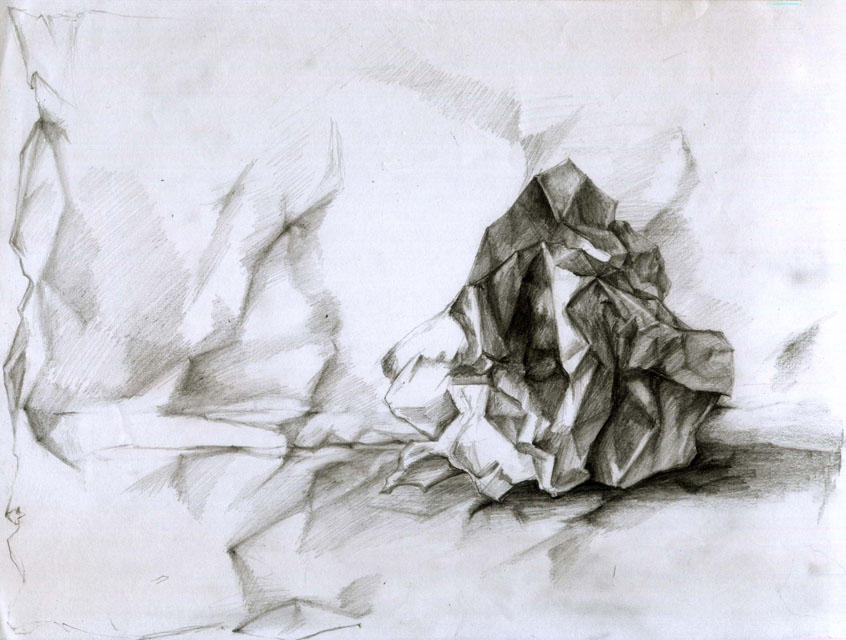
Look at the VALUES and TEXTURES! What?! For REAL? This is great. How are you doing? Last 2 days in class…

GOALS:

  1. 2.2 Evaluate the effectiveness of your artwork (1.2)
  2. Create art that demonstrates an understanding of how your ideas relate to materials, techniques and process.

What are your thoughts about the idea of the composition / paper bag as subject matter? WRITE THAT IN YOUR GOAL SHEETS. Why do you feel this is worthy / unworthy / simple / complicated?

~~~

AP Studio Art: Work on your concentration works… 3 due the week AFTER we get back from break.

How does your home studio look as the week of break is coming upon us? Are you ready?

GOALS:

  1. 4.4 evaluate and interpret your art for relationships in 4.4.1 form 4.4.2 context and 4.4.3 meanings showing understanding of the work of various art professionals* (How do you think you stack up?).

How does your art compare with the work of “professionals” and how can you work to create a better understanding of your approach / intent / ideas?).

March 26, 2013 – Tuesday

“You can’t hit a target you cannot see and you cannot see a target you do not have.” — Zig Ziglar

What is the target you are setting up for yourself this week?

~~~

Art Foundations: Chiaroscuro – SPHERE… How’s your shading going? Clean it up and make it PERFECT!

Remeber this image? How are you doing to create a city?

GOALS:

  1. 5.1 identify the rationale behind making art
  2. 3.5 Evaluate and defend the manner in which subject matter, symbols, and images are used.

Click for INSTRUCTIONS LINK HERE

What is working well for you now? Where are you struggling with the ideas of VALUE and SHADING? How can you use this in the cityscape to help the drawing?

What is ONE positive thing you are proud of regarding the work you have accomplished today? Tell yourself in your goals.

~~~

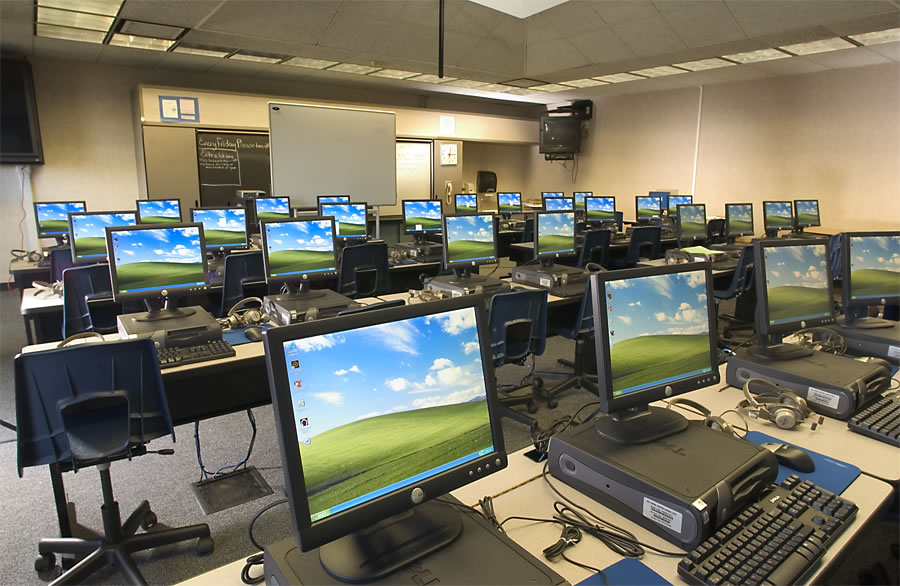
Drawing: Day 2 in the computer lab. Let’s continue to talk about and think about the role of and the use of the personal evaluation and refelction…

GOALS:

  1. 3.5 Evaluate and defend the manner in which subject matter, symbols, and images are used. (D)
  2. Research and Information Fluency – Students apply digital tools to gather, evaluate, and use information.

What was the success in today’s self-evaluation and the use of the GOOGLE DRIVE?

~~~

AP Studio Art: Let’s WORK on the CONCENTRATION with a sense of EFFORT and URGENCY!\

GOALS:

  1. 2.2 PEER-evaluate the effectiveness of artworks
  2. 3.5 Evaluate and defend the manner in which subject matter, symbols, and images are used. (D)

What are you walking away from knowing about your work regarding TODAY’s efforts? What strings do you have untied at the end of the day? What questions will you need to look at tomorrow and answer to help you advance?

March 25, 2013 – Monday

“You can’t hit a target you cannot see and you cannot see a target you do not have.” — Zig Ziglar

What is the target you are setting up for yourself this week?

Jasper Johns has hit the target with his “Target.” What is your’s?

~~~

Art Foundations: Chairoscuro Worksheet today… That’s it! Oh, and one summative worksheet… yes… that’s it… oh wait, one more thing… GOALS SHEET INFORMATION…

What do you see? What do you recognize? What is the challenge you see? Where would you struggle?

GOALS:

  1. (1.2.2 and 3) Create 2 point perspective drawings that demonstrate an understanding of how your ideas relate to technique and process (P).
  2. (5.1) Identify the intentions and purposes in creating 2 point perspective / values / taking an ART CLASS in general – (3rd Quarter Review Sheet).

Review with neighbors the progress of the chiaroscuro and the proper use of 2 point perspective. What are the big challenges you are facing with the buildings?

~~~

Drawing: Let’s look into the ideas of 21st Century technology… how are you learning about the use of it? How can what WE do help in your other aspects of life / school? GOALS SHEET INFORMATION…

I wonder what we are doing today? Make sure you have your drawing and a ruler.

GOALS:

  1. 3.5 Evaluate and defend the manner in which subject matter, symbols, and images are used.
  2. Research and Information Fluency – Students apply digital tools to gather, evaluate, and use information.

What was the success in today’s self-evaluation and the use of the GOOGLE DRIVE?

~~~

AP Studio Art: What is a challenge with the CRITIQUES? Where is it you struggle with when it comes to talking? Let’s share the ideas. GOALS are going to become a part of the weekly grades… how can you earn more and more points for staying focused? I’ll let you know.


GOALS:

2.2 PEER-evaluate the effectiveness of artworks

What were the biggest impressions you had from the classmate’s works? What were the most difficult things you felt as you presented your work? Conversation between classmates about the 2 questions for your exam. How does this work relate to your concentration?

March 23, 2013 – Saturday – ABC’s Art 2013

The Newest ABC of the Arts: U and V
By: Frank Korb

Frank Korb

Frank Korb

In 2002 and again in 2007, John Tusa of The Guardian wrote the ABC’s of what was facing the world of the arts and how to deal with them. Inspired by his ABC’s, these are my 26 thoughts on the importance of support of the arts in school systems and communities across the country / world.

~~~

U is for Unity – Artists (and the rest of us who may not be artists – me excluded as I am one… whatever that means) have a need for the a sense of belonging. While the sharing of a personal body of work is one way to create a sense of unity among the artworks, the gathering of artists, whether it be at a local coffee shop, gallery, or museum, (or family room over pizza and beverages once a month – Thanks Ted) is essential in the development of a strong body of work and connection.

V is for Variety – Artists offer so much more than what they tend to get credit for when it comes to the work they produce and the individuals they are. The diversity of works that the artists create is only outdone by the diversity of actual artists themselves that are out int he community. The use of UNITY (see above) is something that helps bring them all together to share their ideas and breakthroughs in the future of the arts.

~~~

NEXT WEEK: W, X, Y, and Z

Please follow me via e-mail, like me on Facebook, Follow me on Twitter, and share me around to the world! Thanks!

Frank