#HolyCow – 1 1/2 Days left before #Break, but whose counting?

Drawing: Blind Continuous Line Drawings – OR – Timed OBSERVATION and DRAWING

1.2Ac: Choose from a range of materials and methods of traditional and contemporary artistic practices to plan works of art and design.

What struggles do you have when it comes to drawing with pencils to begin with? What struggles do you think you might have when drawing them without being able to lift your pencil? How about your sense of OBSERVATION and LOOKING CAREFULLY? What are your biggest struggles?
b9c514cd519b8ca9ac2ea5af36f7883c
OBSERVATION: Time to LOOK at the objects and DRAW them after we look. https://i.pinimg.com/originals/b9/c5/14/b9c514cd519b8ca9ac2ea5af36f7883c.jpg

In the end, what was the biggest challenge / success you had today in the studio?

Studio Art 360: Paint for another day my artists.

7.1Ac: Recognize and describe personal aesthetic and empathetic responses to the natural world and constructed environments.

What are two things you think the PROCESS is going to do to help you in the creation of this artwork? How is this going to be a skill that can help you in the future with OTHER ideas and assignments (in or out of art)?

What is it that you especially enjoy about the image you are creating in your painting? How do the ideas and colors RELATE to you?

AP Studio Art: Looking at sketches tomorrow – What are your ideas?

4.2Ad: Critique, justify, and present choices in the process of analyzing, selecting, curating, and presenting artwork for a specific exhibit or event.

Best part of yesterday? Plans for today? How’s it coming?

How are you moving forward in the process of developing a series of works based on someone else’s work? How are you keeping the images the SAME and how are you changing the idea?
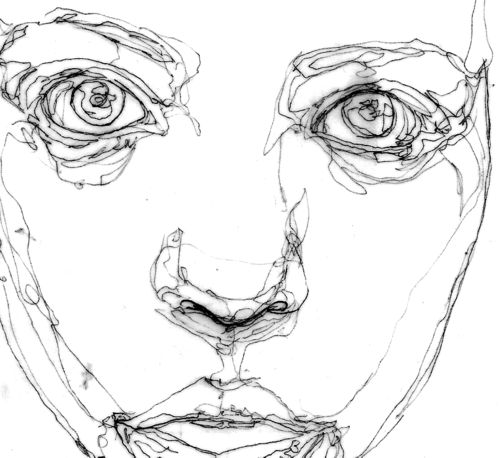
#Wednesday and 2 1/2 Days to go…

#20 “Clear sight makes clear art.” Observation lies at the heart of the art process. Whether your art derives from mimicking nature or extrapolating a mental construct, your powers of observation are critical. Unless you can see what lies before you, you cannot describe it. Train yourself to eliminate preconceptions and received understandings when observing anything. Try to see what is before you, not what you think you see or want to see.  Kit White 101 Things to Learn in Art School

Drawing: Mark making and the Pencil (crits. for those who missed it yesterday)

1.2Ac: Choose from a range of materials and methods of traditional and contemporary artistic practices to plan works of art and design.

What struggles do you have when it comes to drawing with pencils to begin with? What struggles do you think you might have when drawing them without being able to lift your pencil?

e83af84f67c970756dcd50b8aea8084c
Lines – How can we use LINE to make art – MOvement TOO! https://s-media-cache-ak0.pinimg.com/736x/e8/3a/f8/e83af84f67c970756dcd50b8aea8084c.jpg

In the end, what was the biggest challenge / success you had today in the studio

Studio Art 360: Painting – yes – more of this

7.1Ac: Recognize and describe personal aesthetic and empathetic responses to the natural world and constructed environment.

how much of your painting have you got covered? What GOALS do you have for the painting today? DO NOT RUSH – Keep an EYE on the LINES and EDGES.

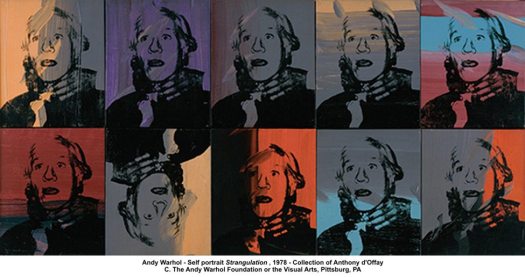
Andy Warhol and HIMSELF: http://artknowledgenews.com/files2009b/Andy_Warhol_Strangulation.jpg

Thick and Thin – How are the colors covering the canvas / lines / underdrawing of the the painting?

AP Studio Art: Concentration and the Website – Get to it!

4.2Ad: Critique, justify, and present choices in the process of analyzing, selecting, curating, and presenting artwork for a specific exhibit or event.

Best part of yesterday? Plans for today? How’s it coming?

ap-art-4-728
CONCENTRATION of an AP Student – SCORE 6 https://image.slidesharecdn.com/apart-100513113841-phpapp01/95/ap-art-4-728.jpg?cb=1273750789

How are you moving forward in the process of developing a series of works based on someone else’s work? How are you keeping the images the SAME and how are you changing the idea?

4 1/2 Days Left – Ok – Let’s Make #ART

#20 “Clear sight makes clear art.” Observation lies at the heart of the art process. Whether your art derives from mimicking nature or extrapolating a mental construct, your powers of observation are critical. Unless you can see what lies before you, you cannot describe it. Train yourself to eliminate preconceptions and received understandings when observing anything. Try to see what is before you, not what you think you see or want to see.  Kit White 101 Things to Learn in Art School

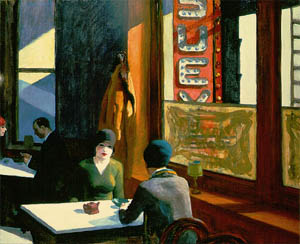
Edward Hopper Chop Suey: Fair use, https://en.wikipedia.org/w/index.php?curid=9254357

Drawing: CRIT!

3.1Ac: Engage in constructive critique with peers, then reflect on, re-engage, revise, and refine works of art and design in response to personal artistic vision.

Looking at the still life in front of you, what is the one aspect of it that you are most pleased with? Why are you so pleased with how you handled the materials and composition? What do you need to TOUCH UP TODAY! Crit Tomorrow!

cal_tp_crit_360
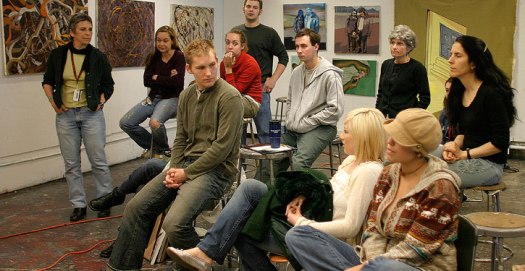
Time To Critique: http://www.artic.edu/sites/default/files/styles/slideshow_scale/public/cal_TP_crit_360.png?itok=AhqbYJZS

What was it that you took away from today’s critique? How did you contribute to the success of the conversation?

Studio Art 360: Paint – Let’s get this thing done this week!

7.1Ac: Recognize and describe personal aesthetic and empathetic responses to the natural world and constructed environments.

What colors are you going to be using in this portrait? What IS your color scheme and what colors are you going to be using? This is important to know as you begin – PLANNING is essential here!

marilyn36
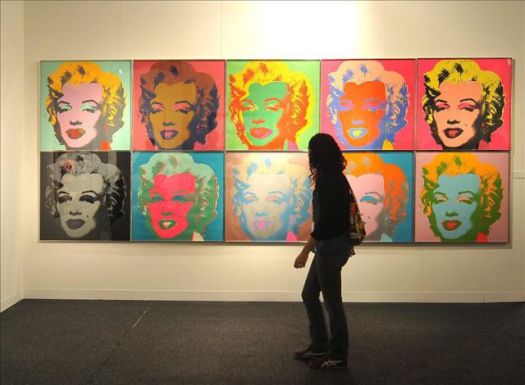
Andy Warhol and Marilyn: http://www.georgetownframeshoppe.com/media/catalog/product/cache/1/image/9df78eab33525d08d6e5fb8d27136e95/m/a/marilyn36.jpg

What are your thoughts about this as the work is developing as a work of art? This is the VERY BEGINNING of the process – how do you feel about the work? 3 ideas please.

AP Studio Art: Let’s INDIVIDUALLY LOOK at your pages.

2.1Ad: Experiment, plan, and make multiple works of art and design that explore a personally meaningful theme, idea, or concept.

What have your previous works of art been this year and how have you been planning the NEW and Important ideas out for your work based on the work of the residents of Waterford Senior Living? HOW DOES INSPIRATION FROM OTHERS WORK HELP or CHALLENGE YOU?

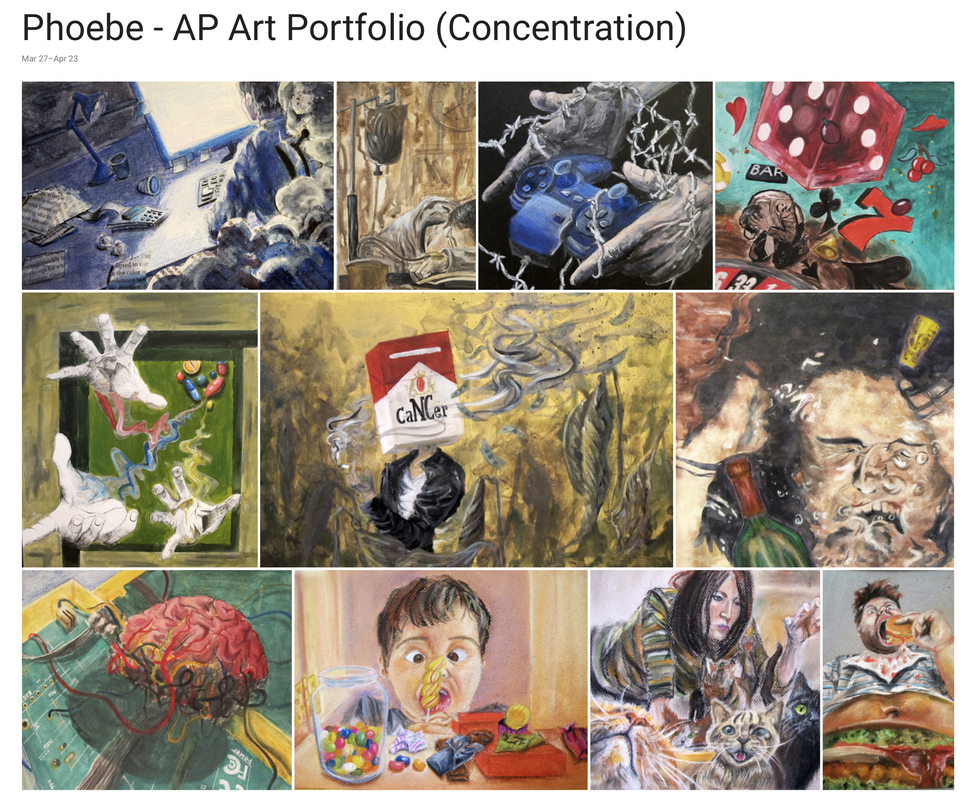
phoebe-concentration_1_orig
Strong Student AP Concentration Work: http://www.ichenartacademy.com/uploads/9/1/6/7/9167260/phoebe-concentration_1_orig.png

What ideas have you come up with? What materials are you using that help you to challenge yourself? How does it fit into your current body of work?  How does it REACH OUT into NEW IDEAS? Strong Student Work:

Thursday is a #GoodDay to #MakeArt in the #Studio

If you don’t like change, you’ll like irrelevance even less” General Eric Shinseki

Drawing: 2 Days Left

2.1Ac: Through experimentation, practice, and persistence, demonstrate acquisition of skills and knowledge in a chosen art form.

How did the critique from LAST WEEK FRIDAY help you see your work in a new way? What are you doing to FULLY ACTIVATE THE BACKGROUND?

f62f5b81138be08b46c4167c35d7fdd7-fred-leveon-bell
Cherries – Fred Bell: https://i.pinimg.com/236x/f6/2f/5b/f62f5b81138be08b46c4167c35d7fdd7–fred-leveon-bell.jpg

What do you WANT to do to tie these works together? YOUR VOICE? Is it coming through?

Studio Art 360: Paint (and finish the glaze)

7.1Ac: Recognize and describe personal aesthetic and empathetic responses to the natural world and constructed environments.

What colors are you THINKING about using in this portrait? What will your color scheme be and what colors are you going to be using?

4745013w-640x640x80
Warhol and the Portrait of Marilyn: http://www.que.es/archivos/201208/4745013w-640x640x80.jpg

What struggles are you having with this drawing / beginning of the painting so far? This is DUE at the end of NEXT week. DO NOT RUSH.

AP Studio Art: Computer Work? Photography? Website? Finish the Concentration from LAST WEEK?

Research and Information Fluency – Students apply digital tools to gather, evaluate, and use information.

How have you been able to use the NEW skills you’ve developed this year and create a STRONG BODY of CONCENTRATION works? How are you being interested in the CONCENTRATION work that you are creating? How do you see your works as a whole as you are photographing and uploading your images?

3455854_slideshow
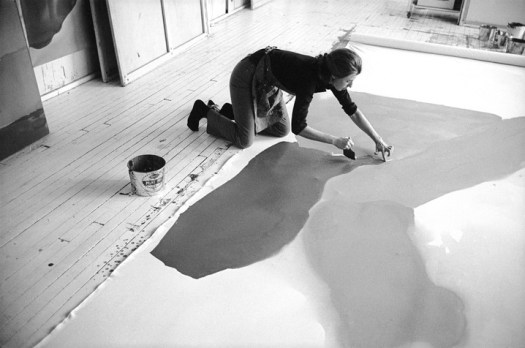
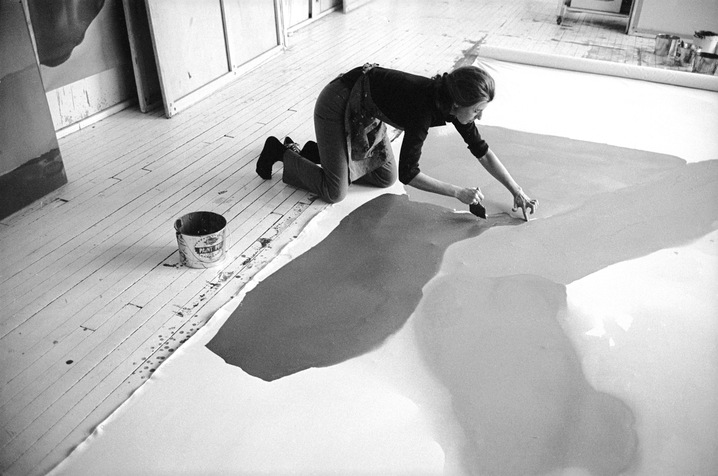
Helen Frankenthaller: http://www.raneytown.com/wp-content/uploads/2012/01/3455854_slideshow.jpeg

Knowing that you are working on your concentration works and STRONG IDEAS with SKILL Building ideas, how are you advancing the ideas of the ARTIST’S JOB? (Or would you like to draw / make JUST TO MAKE ART TO CHALLENGE YOURSELF)?

#LateStart #Wednesday – HALF THE TIME – TWICE THE WORK

If you don’t like change, you’ll like irrelevance even less” General Eric Shinseki

Drawing: WORK for a HALF HOUR – WORK!

2.1Ac: Through experimentation, practice, and persistence, demonstrate acquisition of skills and knowledge in a chosen art form.

Final Crit MONDAY – What skills are you looking to develop?

a161050a5a3643b8599ba3abe031c239-fred-tomatoes
FRED BELL tomatoes: https://i.pinimg.com/236x/a1/61/05/a161050a5a3643b8599ba3abe031c239–fred-tomatoes.jpg

What feedback did you take away from Friday’s MID CRIT that you see being put to use today? Critique?

Studio Art 360: Glaze and DIP Glaze too. Portraits! Color Schemes.

1.2P: Shape an artistic investigation of an aspect of present-day life using a contemporary practice of art or design.

What struggles did you have in the glazing of your work yesterday? How can you avoid that today?

large_screen_shot_2015-09-01_at_9-03-11_pm
Dipping for the final coat of glaze – CLEAR coat and COLORED Coats: https://s3.amazonaws.com/amacobrent/projects/images/169/large_Screen_Shot_2015-09-01_at_9.03.11_PM.png?1441155817

How do you feel about the sculpture / artwork as you have now finished glazing it? What do you hope to do with it when you get it back in a week?

AP Studio Art: Work and Work and WORK some more!

Research and Information Fluency – Students apply digital tools to gather, evaluate, and use information.

Looking at the AP Rubric and Standards – how are you using traditional (or better) BREAKING contemporary art making practices? Please give 2 specifics.

keith-haring-via-artreport-com
Keith Haring (He’s Coming Up in the near future with Scholastic Arts). https://d2jv9003bew7ag.cloudfront.net/uploads/Keith-Haring-via-artreport-com.jpg

While we HAVE NOT EMPHASIZED this… How much work have you photographed, edited, and uploaded to the computer?  How can I help you?


#Friday? #What! Yes… It is Friday.

“Nobody tells this to people who are beginners, I wish someone told me. All of us who do creative work, we get into it because we have good taste. But there is this gap. For the first couple years you make stuff, it’s just not that good…” Ira Glass


Drawing: Mid Critique

3.1Ac: Engage in constructive critique with peers, then reflect on, re-engage, revise, and refine works of art and design in response to personal artistic vision.

What are 3 things you would like to hear about your work that you feel would help you with your drawing(s).

Get your handbooks and turn to p23. As the artist:

  1. Speak about your objects and why you chose them.
  2. Speak about 2 challenges you are having currently and WHY you are struggling.
  3. Speak about 2 successes that are new to you in this drawing series.

Listen to each person and write down, in full sentences, the comments they make about your work. As a critic:

  1. Speak about the areas of their work that are successful and WHY you see it as a success.
  2. Speak about the an area of their work that you see is in need of attention and HOW they might be able to overcome the issue or WHY you feel there is a struggle in the work.

painting_critique

Crit. G: What are 3 things that you took away from the critique today? Write it out as to help yourself move forward.


Studio Art 360:

3.1P: Apply relevant criteria from traditional and contemporary cultural contexts to examine, reflect on, and plan revisions for works of art and design in progress.

What are the biggest challenges that you see facing you today in the process of enlarging the photographs? Are you about ready to begin the painting process?

chuck-close-working1

What challenges did you face today in the gridding out of the portrait? Are you ready to begin the painting part of the process?

20171207_103835.jpg


AP Studio Art: Monday – CRITIQUE / Helen Frankenthaller / Photography this coming week.

2.1Ad: Experiment, plan, and make multiple works of art and design that explore a personally meaningful theme, idea, or concept.

Thinking about the work that you are doing… what are the visual skills that you feels you are developing? how has this year been beneficial to you so far?


What is the ONE SKILL that you feel would be worth your time to continue to FOCUS and CONCENTRATE on? CRITIQUE on MONDAY! Richard Estes Working:

Korb’s #Absence is Your Gain – Lots of #Art #WorkTime in the #Studio

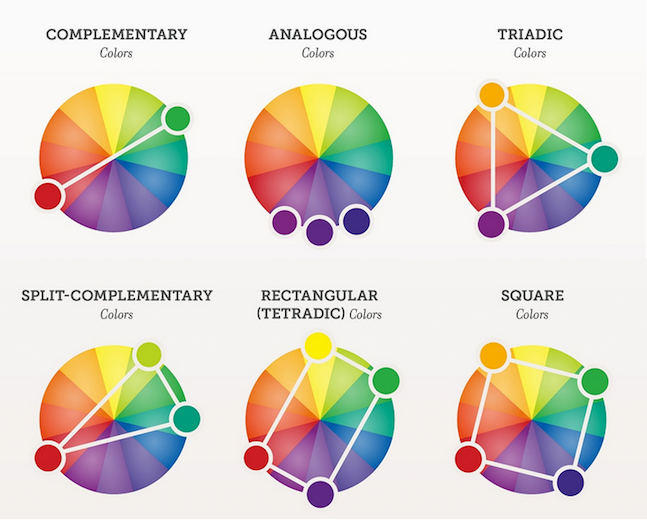
52 Every color has an opposite, called a complement. Complementary colors sit opposite one another in the color wheel. Additionally, all colors are affected by the presence of other colors. Even the smallest presence of a complement will enhance the intensity of a color when it is present in the same visual field. The presence of red, for instance, will cause the retina to “seek” green in the other colors present, hereby enhancing all parts of the green spectrum. If you wish to intensify a color in a composition, place some of its complement nearby. This applies to all media. The effective use of color is one of the greatest tools at an artist’s disposal. Kit White 101 Things to Learn in Art School


Drawing: Colored Pencils and the Still Life – Time to START with this.

2.1Ac: Through experimentation, practice, and persistence, demonstrate acquisition of skills and knowledge in a chosen art form.

How is the work developing? REMEMBER – Wednesday of NEXT WEEK as a MID-CRIT! N: Mark making and process over product. Emphasize the ideas of the mark making and observation.

CLICK ON THE IMAGES BELOW to show the 2 different stages of the process. DRAW LIGHTLY when you begin and SKETCH IT OUT!

Progress? 3 points of progress please. 3 pieces of fruit


Studio Art 360: Paints – CLEAN UP AFTER YOURSELF!

1.2P: Shape an artistic investigation of an aspect of present-day life using a contemporary practice of art or design.

Review with your neighbor the relationships of color on the color wheel.

20171130_114235.jpg

Review with neighbors the relationships of the colors on the color wheel? QUIZ one another on the names, types and relationships of the colors.


AP Studio Art: Concentrate – Website – 3 images and 2 Questions, 1 Sketchbook and 1 Scholastic Art Magazine Article – DUE MONDAY

3.1P: Apply relevant criteria from traditional and contemporary cultural contexts to examine, reflect on, and plan revisions for works of art and design in progress.

What are you planning on doing TODAY to set yourself up for a productive WEEKEND? What is your body of work centered on? Drawing? 2D Design? How do you see this in your first three artworks?

van-gogh-painting
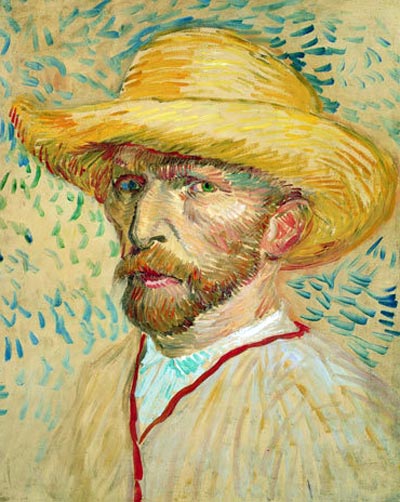
Portrait of Vincent Van Gogh: Self Portrait: http://www.clevelandseniors.com/images/funny/art-thief/van-gogh-painting.jpg https://en.wikipedia.org/wiki/List_of_works_by_Vincent_van_Gogh

What did you accomplish today? What do you need to do tomorrow? How can you develop your OWN voice? What does the BREADTH work do to help you find that VOICE in your concentration? EXIT TICKET – Sticky Note – What is the Central Idea behind your concentration of work. 5 hours of AP Studio Art this week in class – are you putting in 5 hours outside of class? REALLY WORKING? No? You need to be.

Wednesday is HUMP day and ART MAKING day too

52 Every color has an opposite, called a complement. Complementary colors sit opposite one another in the color wheel. Additionally, all colors are affected by the presence of other colors. Even the smallest presence of a complement will enhance the intensity of a color when it is present in the same visual field. The presence of red, for instance, will cause the retina to “seek” green in the other colors present, hereby enhancing all parts of the green spectrum. If you wish to intensify a color in a composition, place some of its complement nearby. This applies to all media. The effective use of color is one of the greatest tools at an artist’s disposal.

Kit White 101 Things to Learn in Art School


Drawing: Begin the DRAWING and with COLORED PENCILS

2.1Ac: Through experimentation, practice, and persistence, demonstrate acquisition of skills and knowledge in a chosen art form.

3rd day with the ideas of developing compositions – What skills are you looking to develop? We start by prepping a board with watercolor. Let it DRY. Begin to practice on the illustration board.

3382bquiet2btomatoes
Fred Bell Bowl of Fruit: https://2.bp.blogspot.com/-8VwIQejhtF0/WZTXbWMeejI/AAAAAAAAF5I/9dqXDGFnpkwX3R8R9U-6EyBzCY7Mg6oKwCK4BGAYYCw/s1600/338%2BQUIET%2BTOMATOES.jpg

What feedback would you offer and like to get about your work?


Studio Art 360: Sketchbooks and FUN!

What STRUGGLES do you have with OBSERVATION? How about VALUE?

Cut out the head, glue it to the sketchbook page, and then give it to a friend. Using the photograph that has been glued down – resolve the rest of the picture with a friend. Let them begin the background and encourage them to DISREGARD to what was in the original background. HAVE FUN with this.

Check out Mica Angela Hendrick’s website – see what her and her daughter can come up with. http://goo.gl/Xiihh1

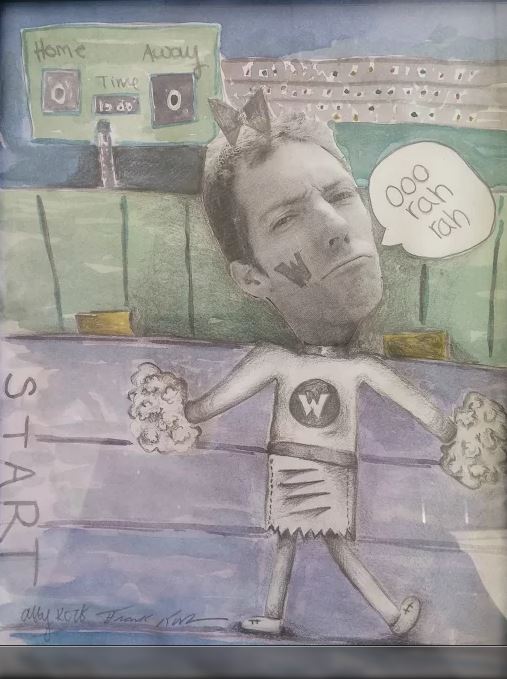
oooo-rah-rah-korb


Studio Art 360: Concentration and Conversations – How’s the Sketchbook working FOR you?

1.2Ad: Choose from a range of materials and methods of traditional and contemporary artistic practices, following or breaking established conventions, to plan the making of multiple works of art and design based on a theme, idea, or concept.

What are 3 things you have learned, researched, inquired about your ideas for your concentration so far this week?. I’ve had MANY great conversations with each almost each of you… what do you take away from them?

Alexander Clader's Circus: http://whitney.org/image_columns/0002/4353/alexandercalderinstallview1_600_1200.jpg?1369062947
Alexander Clader’s Circus: http://whitney.org/image_columns/0002/4353/alexandercalderinstallview1_600_1200.jpg?1369062947

What are your questions about making your statement ONLINE? Do you have an idea how to access your ONLINE portion of the website? :

#WelcomeBack – Next time it is #WinterBreak

Placeholder

52 Every color has an opposite, called a complement. Complementary colors sit opposite one another in the color wheel. Additionally, all colors are affected by the presence of other colors. Even the smallest presence of a complement will enhance the intensity of a color when it is present in the same visual field. The presence of red, for instance, will cause the retina to “seek” green in the other colors present, hereby enhancing all parts of the green spectrum. If you wish to intensify a color in a composition, place some of its complement nearby. This applies to all media. The effective use of color is one of the greatest tools at an artist’s disposal. Kit White 101 Things to Learn in Art School.

Computer Screen Shot Photoshop


Drawing: Still Life and HOMEWORK – Do you have your objects? Thumbnails and Color study with colored pencils

2.1Ac: Through experimentation, practice, and persistence, demonstrate acquisition of skills and knowledge in a chosen art form.

What do you see creating a series of drawings can do for a artist that a single drawing would not allow the artist to do?

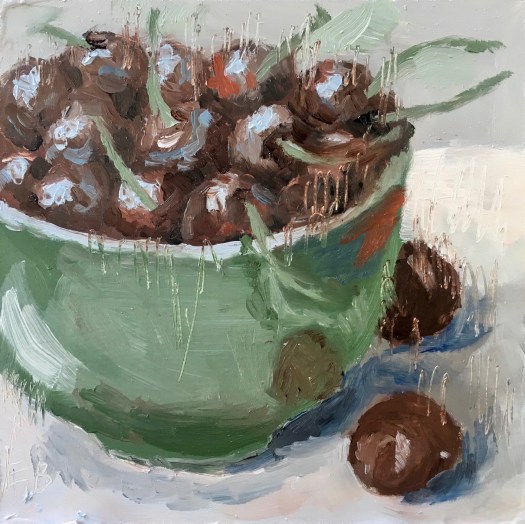
2352bbowl2bof2bcherries
Fred Bell – Bowl of Cherries: https://1.bp.blogspot.com/-gwurEG7CCEY/WYs5022iiMI/AAAAAAAAF4o/2G57iBkc81QOTGCTJKiA8-MPZ6SiHJJVQCLcBGAs/s1600/235%2BBowl%2Bof%2Bcherries.jpg

As you look at your THUMBNAILS and the numerous drawings you have begun, what are the strengths that you are seeing as you move forward? Contrast? Value? Observation?


Studio Art 360: Color and POP Art – coming up!

7.1P: Hypothesize ways in which art influences perception and understanding of human experiences.

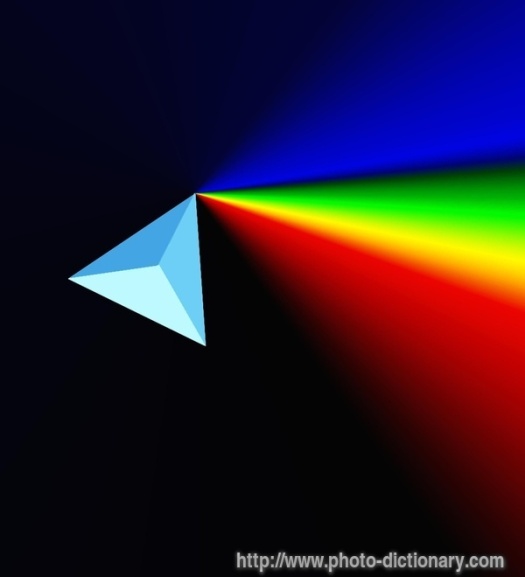
Where do you see color? How does the color on TV get blended together? How does color in a magazine get blended together? Optical color?

PRISM and Color Mixing http://www.photo-dictionary.com/photofiles/list/699/1110prism.jpg

What are the three types of colors on the color wheel? What can you NOT mix? How do you mix Orange, etc…


AP Studio Art: The WEBSITE and your first 3 concentration works

NETS: Use digital media and environments to communicate and work collaboratively

What is the central idea behind your concentration?  NOTE: We are 1 week off in the concentration / syllabus – we will try to make up for it over the next few weeks / Christmas Break.

draft-37f379f1-8e24-426d-bd51-410c8d3e5823
Alice Need: the DeVegh Twins: https://dg19s6hp6ufoh.cloudfront.net/pictures/612993934/large/draft-37f379f1-8e24-426d-bd51-410c8d3e5823.jpeg?1462237640

Share with your AP Classmates the work you have accomplished up to this point. One on One

#Thanksgiving is coming up! Gobble Gobble Gobble!

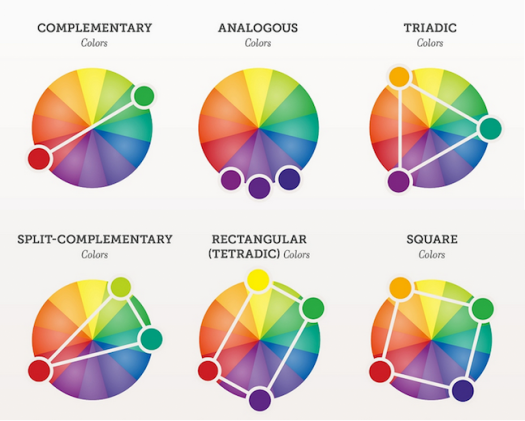
51: Learn the basic principles of color. There are three primary colors: red, blue, and yellow. They are the building blocks of all other colors. The secondary colors are violet (blue and red), green (blue and yellow), and orange (red and yellow). They are composed by the equal mixture of two primaries. All other colors are referred to as tertiary, because they are mixtures of a primary and a secondary color. Kit White 101 Things to Learn in Art School

Color Schemes: https://oss.adm.ntu.edu.sg/lzhang041/wp-content/uploads/sites/423/2015/10/color_schemes.png

Drawing: CRITIQUE DAY! Clip and Pin your work to the boards in the front of the room!

3.1Ac: Engage in constructive critique with peers, then reflect on, re-engage, revise, and refine works of art and design in response to personal artistic vision.

What do you feel about talking aloud when it comes to other’s works? What are your thoughts about why you may be apprehensive or confident when discussing other individual’s work?

art-school-crit
Art School Critique: http://escapingartist.com/wp-content/uploads/2012/07/Art-School-Crit.jpg

What were 3 things that you took away from today’s critique?


Studio Art 360: Cleaning Day – Tomorrow SKETCHBOOK TUESDAY!

2.2P: Explain how traditional and non-traditional materials may impact human health and the environment and demonstrate safe handling of materials, tools, and equipment.

Today is a day to CLEAN the Studio. What do you feel are important reasons for having to take care of the space we are working is as artists. Have a conversation and write down (p21) the top three things you and your group came up with and WHY.

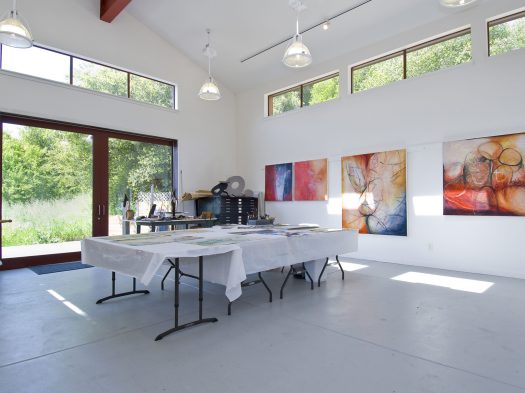
art_studio_4
Clean Studio: https://images.butlerarmsden.com/Portola-Art-Studio/_desktopImage/Art_Studio_4.jpg

How do you feel the room looks? What makes you feel accomplished as you look back at the good you have done for others?


AP Studio Art: Alice Neel / Judy Chicago and CONCENTRATION Over Break.

2.1Ad: Experiment, plan, and make multiple works of art and design that explore a personally meaningful theme, idea, or concept.

With three works due MONDAY, do you feel that the 2+ weeks was TOO MUCH TIME? We need to continue working at a quick pace… lots to do yet…

1956135_orig
Judy Chicago Dinner Party: https://womenandmediaspring2014.files.wordpress.com/2014/04/1956135_orig.jpg

What is the ONE THREAD that your AP READER might see as they look at the 3 works you have (or are working on) that will tie things together