http://isucceesbook – What skills can you use that will help you conquer your mountain?
“The question for each man is not what he would do if he had the means, time, influence and educational advantages, but what he will do with the things he has.” — Frank Hamilton
~~~
Art Foundations: Resolve the mixed media self portrait / pattern. Self Evaluation!\
GOALS:
2.1 form criticism about artworks that work to accomplish 2.1.2 personal goals.
6.3 use the principles and techniques of art with those from other discipline
Regarding your background… what are you really happy with? What are the areas that need work? What would you do differently if you had the opportunity to rework some aspects of the work?
~~~
Advanced Drawing: The critiques start today – Review Critique ideas – 3 page handout! Oral Crit HERE
http://escapingartist.com – What are you going to add to the crit? What are you going to take a way?
GOALS:
(3.3) describe the creation of images and ideas and explain why they are of value Orally participate in the discussion of your classmates drawing.
(4.3) compare relationships in visual art in terms of (4.3.2) aesthetics (1, 2, 3, 5)
hat did you take away from the critique today? Write down what you have taken from the crit.
5.3 describe meanings of artworks by analyzing 5.3.1 techniques. (1, 2, 3, 5)
What did you take away from the critique today? Write down what you have taken from the crit. ON YOUR PRINTED SELF-CRIT. (1, 3, 5). What notes are you taking?
Cheerleader Korb – Ready to Cheer!I’ve got spirit! Yes I do! I’ve got spirit! How ’bout YOU?
“We’ve gotten to the point where we think the camera can capture anything at all.” “Well, it can’t really. The camera can’t compete with painting at all. The paintings are much more vivid about the place than photographs are.” – David Hockney, “Modern Painters, “
David Hockney, on his latest inspiration – Yorkshire, Into the Woods,” by: Marina Cashdan, April 2010, p. 66.
Let us go to the studio and PAINT!
~~~
Art Foundations – Draw in Continuous Line, Painting Patterns with Watercolor, Assemble Final Artworks
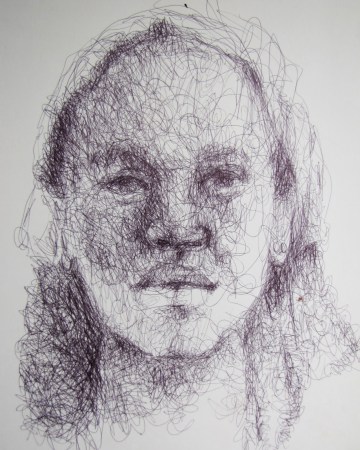
Check out how this artist used VALUE through the use of line. How are YOU doing the same?
GOALS:
(5.3) Describe meaning of artwork by analyzing use of contour line and pattern.
(3.2) apply ideas in art to solve visual challenges.
What types of lines are you in favor of using? Where do you find it easiest to use the idea of contour line to represent the face / form? What sorts of pattern do you think you would like to recreate with the use of WATERCOLOR to represent YOU? Share with your classmates.
~~~
Advanced Drawing: Final day to work on PAPER BAG MANNEQUIN drawing – Take it home to finish if you need to.
Last day to check your values and artwork… how’s it gone?
GOALS:
1.4 RESOLVE and DEFEND the visual challenges you set up using 1.4.2. synthesis (assembling the various parts that build up the up the artwork / subject matter from its basic elements).
What was your plan for the paper bag / mannequin drawing that you began two weeks ago? Did you meet of exceed that goal? Did you fall short? What did you learn and what can you take away and use in the next work?
~~~
AP Studio Art: CRITIQUE – What do you need to say about your work? What can you say? What were you TRYING to say? Do you want some help? Check HERE.
WHAT DO I HAVE TO SAY ABOUT MY WORK?
GOALS:
(3.3) describe the creation of images and ideas and explain why they are of value Orally participate in the discussion of your classmates drawing.
(4.3) compare relationships in visual art in terms of (4.3.2) aesthetics
What did you take away from the critique today? Write down what you have taken from the crit.
“What difference does it make whether you’re looking at a photograph or looking at a still life in front of you? You still have to look.”
– Chuck Close
~~~
Do any of you have cowboy boots, women’s size 10, that my daughter could borrow for Wednesday? I’d need them Tuesday and will return them Thursday. Thanks.
~~~
Advanced Drawing: Continue to work on the Paper Bag / Figure Drawing?
Bags… How’s the Dark? How’s the light? how’s the composition?and… what are you doing to incorporate your figure?
GOALS:
1.1 apply media, techniques, and processes with 1.1.1 skill 1.1.2 confidence 1.1.3 and awareness so that your ideas are executed well
1.2 create art that demonstrates an understanding of how your ideas relate to the 1.2.1 materials 1.2.2 techniques 1.2.3 and processes you use
What did you take away from the drawing today? What are you succeeding with?
~~~
Art Foundations: Portrait, Chapter 1: Lesson 3…
What types of Lines did this artist use in her Self-Portrait? Talk to your neighbors about it.
GOALS:
(1.2) Create art that demonstrates an understanding of how your ideas relate to the technique of contour line.
(1.4.1) Create and solve visual problems using analysis of the shape and form of the face.
What was the most fun part of dealing with contours? If you were to describe yourself in terms of lines, what lines would you use? Where are you successful in the contour drawings? Share the images with your classmates and discuss the success and failures.
~~~
AP Studio Art: Plant Drawings and self evaluation and Jim Dine – Self-Portrait on the Wall Video
Questions to Consider for Online / Digital Self-Evaluation: CLICK HERE
“Goals are the fuel in the furnace of achievement.” Brian Tracy, Eat that Frog
Good Luck Eating THIS frog in the morning… YUCK!
~~~
Advanced Drawing: Drawing Paper – Figure and Paper Bag Drawing – Relationships and Meaning – HOW ARE GOING BIGGER?!
What element do you think is emphasized in this drawing? Tell your neighbor.
1.2 create art that demonstrates an understanding of how your ideas relate to the 1.2.1 materials
1.3 communicate ideas clearly
Talk to your neighbor / partner about the meaning behind your work. What SKILLS are you hoping to develop in this drawing? What MESSAGE are you hoping to communicate through this work?
~~~
Continuous Line Contour Portraits… Extra Credit!
Continuous Line Contour Portraits… Extra Credit!
Continuous Line Contour Portraits… Extra Credit!
Continuous Line Contour Portraits… Extra Credit!
Art Foundations: Contour Line Drawings and Chapter 1
PATTERN – CHAPTER 7 – What type of pattern describes YOU?
Work on (1.1.1, 3) applying media and techniques with skill and awareness (of HOW you are using line).
(2.2) Evaluate the effectiveness of how line is working to define your portrait.
What types of lines are you using? Where do you find it easiest to use the idea of line / contour to represent the face / form? What is the most challenging portion of the face to successfully create? Share with your classmates.
Inspired by the workings of Jim Dine… http://createthreesixty5.com/ is a blog by an art student who KNOWS what it is to be inspired by nature (and other artists).
2.2 evaluate the effectiveness of artworks.
5.3 describe meanings of artworks by analyzing 5.3.1 techniques.
Do you find meaning in your work? Do you find something interesting in the plants? What is challenging you?
(1.2) Create art that demonstrates an understanding of how your ideas relate to the (1.2.2) techniques (how will you use this in your portfolio?) (D).
(5.1) Identify the rationale behind making art (small concentration drawings) (P)
How do you see the work you are CURRENTLY making as COLLEGE FRESHMEN level? How do you see CHALLENGING yourself with such a limiting object? What can you do to make ME want to look at the drawing / artwork for more than 3 seconds?
Once again, but with a moving twist, I offer a brief glimpse of the works currently on display (and for sale) at Cafe LuLu in the Bay View neighborhood of Milwaukee, WI. When you happen to be in the neighborhood – please stop in and take a look. My family and I had a great lunch there and this is a short video of the works. Please, stop in and check out the works, have a GREAT MEAL, and contact me when you are interested in the works. Also… mark your calendars for September 27 when the ENTIRE BAY VIEW Neighborhood opens their artistic doors to celebrate the artwork, artists, art galleries, and art spaces that Bay View, Milwaukee has to offer. I will be at Café LuLu to talk and chat… I hope to see you, and all your friends, there!
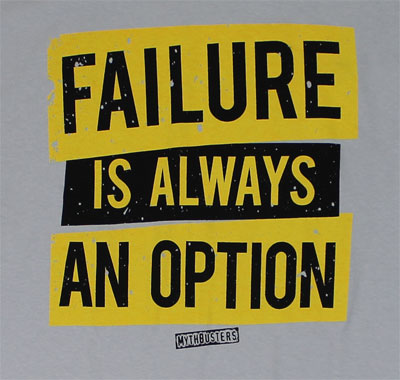
“If you’re not failing every now and again, it’s a sign you’re not doing anything very innovative.”
– Woody Allen
~~~
On Saturday morning, while in South Africa, and through the wonders of modern technology via Google Hangouts and YouTube, First Lady Michelle Obama joined a large group of international students, teachers, and community leaders and discussed the importance of education to move education and learning forward. One of the threads that was strung throughout the conversation was the potential of failure in the process of learning. This is an aspect that it seems current educators, administrators, students, and parents are often missing as an important aspect of the process in learning. As a parent, I miss the important aspect of failure because the failures directly affect the grades that are brought home. As a teacher, failure is an important part of my student’s learning experience and is highly encourages as it does NOT affect the grades (directly) that are taken home. PROCESS!
Taking risks and failing are an essential aspect of the world of the arts. In the great scheme of things though, the audience the artist creates for has little concern of the mistakes and process that the artist went through to get to the final product. The same can be said of the process that students go through in the learning of the materials that they are challenged with in the academics. There is a process my kids go through in the visual arts classes: Preliminary ideas (thumbnail sketches). These are the initial ideas. Great ideas, awful ideas, as well as ideas that may sprout legs and carry the artist to different places. The preliminary ideas get a lot of discussion and conversation between students and then, from that conversation, the next stage… rough drawing. Generally, even in a class like PAINTING, the drawing process comes long before the final product. There is a composition that needs to be thought through, a set of challenges that must be visually resolved before the final art work is begun. How can an idea be roughed out in another subject? In the working world? In a job or career?
From the rough drawings, the final product is then developed. Through the final drawing there is still the suggestion, the encouragement for risk taking, experimentation, failure, and then resolution. It is very important that the students, the artists challenge the ideas they come up with and take the risks that are in front of them. The second part of a final grade in the visual arts classes includes a small portion on EXPERIMENTATION. The encouragement to try something, fail, try something else, fail, try something else, until something is resolved is a key component in the process. Even when the final product is resolved and in the museum, gallery, or more importantly for the artist, the collector’s home, the imperfections are what make the artwork what it is. The slight misses, the “False Starts,” the problems that may be continued into the next work… the unresolved issues and questions that make art so interesting.
In a sketchbook note from the early 1960’s, Jasper Johns wrote, “Take an object, do something to it. Do something else to it.” A sketchbook is the perfect place to experiment and take risks. In the 1960’s, just after the AbEx movement of the 1950’s, popular culture and images was a risk, and a banal object, like a target, was truly a risk.
So… all that said… how are you taking risks? how are you challenging the status quo? How are you being a positive deviant in your environment, leading the way to innovation and positive change? What are you doing to an object? What else are you doing to it? What else are you doing to it? When have you finally got something?
What was the single greatest accomplishment for you over the past semester?
“I feel my understanding of what makes art has developed further. I am more open minded.” 2013 WUHS Art Student – Art Foundations
~~~
If we write our dreams and goals down, we dramatically increase our odds of realization. If we share them with others, they become potent and alive.”―Kristin Armstrong
Write out those dreams… then share your dreams with others. ~~~
The arts teach children to make good judgments about qualitative relationships. Unlike much of the curriculum in which correct answers and rules prevail, in the arts, it is judgment rather than rules that prevail.
The arts teach children that problems can have more than one solution and that questions can have more than one answer.
The arts celebrate multiple perspectives. One of their large lessons is that there are many ways to see and interpret the world.
The arts teach children that in complex forms of problem solving purposes are seldom fixed, but change with circumstance and opportunity. Learning in the arts requires the ability and a willingness to surrender to the unanticipated possibilities of the work as it unfolds.
The arts make vivid the fact that neither words in their literal form nor numbers exhaust what we can know. The limits of our language do not define the limits of our cognition.
The arts teach students that small differences can have large effects. The arts traffic in subtleties.
The arts teach students to think through and within a material. All art forms employ some means through which images become real.
The arts help children learn to say what cannot be said. When children are invited to disclose what a work of art helps them feel, they must reach into their poetic capacities to find the words that will do the job.
The arts enable us to have experience we can have from no other source and through such experience to discover the range and variety of what we are capable of feeling.
The arts’ position in the school curriculum symbolizes to the young what adults believe is important.
Eisner, E. (2002). The Arts and the Creation of Mind, In Chapter 4, What the Arts Teach and How It Shows. (pp. 70-92). Yale University Press. Available from NAEA Publications. NAEA grants reprint permission for this excerpt from Ten Lessons with proper acknowledgment of its source and NAEA.
If we write our dreams and goals down, we dramatically increase our odds of realization. If we share them with others, they become potent and alive.”―Kristin Armstrong
Write out those dreams… then share your dreams with others.
The arts teach children to make good judgments about qualitative relationships. Unlike much of the curriculum in which correct answers and rules prevail, in the arts, it is judgment rather than rules that prevail.
The arts teach children that problems can have more than one solution and that questions can have more than one answer.
The arts celebrate multiple perspectives. One of their large lessons is that there are many ways to see and interpret the world.
The arts teach children that in complex forms of problem solving purposes are seldom fixed, but change with circumstance and opportunity. Learning in the arts requires the ability and a willingness to surrender to the unanticipated possibilities of the work as it unfolds.
The arts make vivid the fact that neither words in their literal form nor numbers exhaust what we can know. The limits of our language do not define the limits of our cognition.
The arts teach students that small differences can have large effects. The arts traffic in subtleties.
The arts teach students to think through and within a material. All art forms employ some means through which images become real.
The arts help children learn to say what cannot be said. When children are invited to disclose what a work of art helps them feel, they must reach into their poetic capacities to find the words that will do the job.
The arts enable us to have experience we can have from no other source and through such experience to discover the range and variety of what we are capable of feeling.
The arts’ position in the school curriculum symbolizes to the young what adults believe is important.
Eisner, E. (2002). The Arts and the Creation of Mind, In Chapter 4, What the Arts Teach and How It Shows. (pp. 70-92). Yale University Press. Available from NAEA Publications. NAEA grants reprint permission for this excerpt from Ten Lessons with proper acknowledgment of its source and NAEA.
If we write our dreams and goals down, we dramatically increase our odds of realization. If we share them with others, they become potent and alive.”―Kristin Armstrong
Write out those dreams… then share your dreams with others.
~~~
10 Lessons the Arts Teach Children
The arts teach children to make good judgments about qualitative relationships. Unlike much of the curriculum in which correct answers and rules prevail, in the arts, it is judgment rather than rules that prevail.
The arts teach children that problems can have more than one solution and that questions can have more than one answer.
The arts celebrate multiple perspectives. One of their large lessons is that there are many ways to see and interpret the world.
The arts teach children that in complex forms of problem solving purposes are seldom fixed, but change with circumstance and opportunity. Learning in the arts requires the ability and a willingness to surrender to the unanticipated possibilities of the work as it unfolds.
The arts make vivid the fact that neither words in their literal form nor numbers exhaust what we can know. The limits of our language do not define the limits of our cognition.
The arts teach students that small differences can have large effects. The arts traffic in subtleties.
The arts teach students to think through and within a material. All art forms employ some means through which images become real.
The arts help children learn to say what cannot be said. When children are invited to disclose what a work of art helps them feel, they must reach into their poetic capacities to find the words that will do the job.
The arts enable us to have experience we can have from no other source and through such experience to discover the range and variety of what we are capable of feeling.
The arts’ position in the school curriculum symbolizes to the young what adults believe is important.
Eisner, E. (2002). The Arts and the Creation of Mind, In Chapter 4, What the Arts Teach and How It Shows. (pp. 70-92). Yale University Press. Available from NAEA Publications. NAEA grants reprint permission for this excerpt from Ten Lessons with proper acknowledgment of its source and NAEA.
~~~
Art Foundations: EXAM Review today. 4″ x 6″ Notecard. Textbook. Lecture. Pair / Share… what else do you need?
What can you remember about this past year? What are the essential aspects that you feel you are missing? Can you name anything that you feel will be needed?
GOALS:
Standard #1: Understanding and applying media, techniques, and processes.
Standard #2: Using knowledge of principles and functions.
Standard #3: Choosing and evaluating a range of subject matter, symbols, and ideas.
Standard #4: Understanding the visual arts in relation to art history and cultures.
Standard #5: Reflecting upon and assessing the characteristics and merits of the visual arts.
Standard #6: Making connections between visual arts and other disciplines.
What do you remember and have down pat? What elements / principles / theories are you struggling with? What do you need to make SURE you have on the 4″ x 6″ note card (one side)?
~~~
Drawing: Computer time in the lab – let’s get the COLLABORATIVE work done – AFTER WE CLEAN and ORGANIZE our stuff.
GOAL:
Communication and Collaboration – Students use digital media and environments to communicate and work collaboratively, including at a distance, to support individual learning and to the learning of others.
What do you think about your images? how has this been different than paper… other drawings… ideas in your understanding of art?
~~~
AP Studio Art: Computer Lab… Collaborative work. Clean Studio. Thanks.
How’s the collaboration going? How’s your work?
GOALS:
Communication and Collaboration – Students use digital media and environments to communicate and work collaboratively, including at a distance, to support individual learning and to the learning of others.
What has been the best / worst part of the year? How might you suggest changes take place for the following year? Bring these ideas to the exam day.







 Art With Korb