“The question for each man is not what he would do if he had the means, time, influence and educational advantages, but what he will do with the things he has.” — Frank Hamilton
Studio Art 360 – FORMS and DRAWING – Shadows and CHIAROSCURO
4.2Ad: Critique, justify, and present choices in the process of analyzing, selecting, curating, and presenting artwork for a specific exhibit or event.
As an individual, what do you still struggle with about the idea of a Critique?
What is one thing you added to or took away from the critique this past week?
1.1P: Use multiple approaches to begin creative endeavors.
Looking at the DRAWING in front of you… what ONE aspect of the drawing are you going to REALLY FOCUS ON today?
This is the third day of working on these drawings… where do you see yourself having a HIGHLIGHT in the drawing? Where do you see the CORE of the SHADOW? Where are the Midtones (lights and shadows)?
Painting and AP Studio Art – Critique – LAST DAY? HURRY!
AP Studio Art – 4.2Ad: Critique, justify, and present choices in the process of analyzing, selecting, curating, and presenting artwork for a specific exhibit or event.
Painting –3.1Ac: Engage in constructive critique with peers, then reflect on, re-engage, revise, and refine works of art and design in response to personal artistic vision.
Last Day of the Crit? Hope so… Of all the works you have seen so far, what has been the most successful aspect to that work? Be specific and thoughtful. OR Of the works you have seen what has been the weakest aspect of the work – BE SPECIFIC AND THOUGHTFUL!
What are you going to carry forward into your next work? If not the work the approach you take / habits / techniques / attitude?
What artwork, of all the artworks you saw, were you happiest with? WHY! Give specific reasons!
Click on the image above to follow a STRONG conversation with Teachers, Administrators, and Students about the direction, concerns, solutions, challenges that face everyone in the world of education! Join us on Wednesday nights on Twitter at 8:00CST using the hashtag – #WHSoc20
Studio Art 360 – Paper Mache – Finish your FORMS in cardboard!
What’s your cube look like?
Goals:
1.1P: Use multiple approaches to begin creative endeavors.
As you look BACK on the projects, what might you have done differently on the project – if you could go back and try some of these letters / forms again?
Knowing that this was a new approach to making art – sculpture – what has been the most difficult part of the project?
There are 4 parts to a written critique. What are they? Now we advance in the process as AP Studio Artists and REALLY get into the critique.
Goals:
7.2Ad: Determine the commonalities within a group of artists or visual images attributed to a particular type of art, timeframe, or culture.
What are the Four parts to a Written Critique. Critiquing the learning of a skill – We will be creating a Departmentally Designed Rubric for your critiques – Not yet though.
What did you take away from the critique today? Write down what you have taken from the crit. ON YOUR PRINTED SELF-CRIT.
Painting: Collage, Critique, Sketch, Research… Sounds like last Friday!
What techniques are you using in your painting?
Goals:
6.1Ac: Make, explain, and justify connections between artists or artwork and social, cultural, and political history.
Looking at the work you have in front you, what are the aspects that you feel TRULY speak about you – socially, culturally, or historically.
What was the most challenging part of the first bit of the painting?
REMEMBER! Create a ONE PAGE PAPER(double spaced, 11 or 12 point Times New Roman, Palatino – Serif-ed type font) that discusses the artists and their works. Use ideas about the work as to what drew you to the work, what styles did you like, what techniques do you appreciate? A small history of the artist and personal reflection. How will you use similar ideas in your work as they did in theirs? Here are the artists to research: Winslow Homer, Charles Demuth, Thomas Eakins, Edward Hopper, Dong Kingman, Reginald Marsh, Charles Sheeler, J.M.W. Turner, Thomas Moran, Georgia O’Keefe, James Whistler, or Andrew Wyeth. PAPER IS DUE ON Friday, September 19, 2014.
“Talent may get someone off the starting blocks faster, but without a sense of direction or a goal to strive for, it won’t count for much.” – David Bayles and Ted Orland
3.1 reflect on how your portraits and graffiti art differs and describe how it relates to your personal history and personal culture.
One more day to work. What do you need to look at tomorrow and think about – fix, change, clean up? WRITE THAT DOWN and make sure you deal with that first thing tomorrow!
1.4 create, define, and solve visual challenges using 1.4.1 analysis (breaking up the artwork / subject matter to basic elements), 1.4.2 synthesis (put all the parts of a work together to form a whole), 1.4.3 evaluation [critique] (formative and summative reflections about your artwork) – How are you using this project as a GROUP effort / COLLABORATIVE work to communicate BIGGER ideas than individual CONCENTRATION projects from your AP Work.
What happened today? Write down your best thoughts from today’s collaboration.
The painting class of 2008 – 2009 took the challenge of creating a series of works that documented their high school and challenged their understanding of how to use oil paints, mediums, power tools, and the very challenging linear perspective as they composed their images. BEginning with a long walk and conversation about composition, the artists came up with their favorite angles of the building and developed their own ideas for the image as they were faced with the challenge of their school as the subject matter. From photography and thumbnail sketches, teamwork and construction of the canvases, the artists created a wide variety of compositions using all the different skills and techniques they had in their art toolbox. Thanks to the following artists for their hard and dedicated work creating a strong and successful body of work. Each one of them created a unique and individual viewpoint of the building that gave them so many memories and skills to last a lifetime. Thank you Waterford Union High School artists.
As a note to all the artists I have the opportunity to work with when it is NOT Spring Break… I will be in the building from about 8 – Noon on Monday, April 21 hanging artwork. If you are interested in coming in to work, help, or simply gather supplies for the rest of the vacation (because there is a lot to do when we all get back) come on in and find me. I should be in the art room or in the hall between the atrium and the cafeteria. Have a GREAT SPRING BREAK!
“Talent may get someone off the starting blocks faster, but without a sense of direction or a goal to strive for, it won’t count for much.” – David Bayles and Ted Orland
WHAT ARE YOU DOING WELL with the application of your ACRYLIC PAINT – Give yourself that thought today! PAINT OUT AND WORK!
What is the most successful aspect of your painting? What is the least successful part of the painting? Stop and think – explain your feelings so you can look back on this when we come back.
Know about solving visual challenges (making art) using analysis (breaking the work into its parts).
How are you going to work on the ideas behind the portrait over the break? What FAMOUS images come to mind when you think of ART HISTORY? You are going to use ideas from Art History in the final work… What worries do you have?
AP Studio Art: Log In and Log On… AP is WAITING to hear from you!
WHAT? Look at the WORK here! WOW!
Goals:
3.2 apply subjects, symbols, and ideas in art and use skill to solve visual challenges – WHAT ARE YOUR CHALLENGES?
Which works are you most proud of and why? What is working with the pieces that you would choose as your “quality” works? Why do the other ones NOT work? What do you have to do over break?
“Talent may get someone off the starting blocks faster, but without a sense of direction or a goal to strive for, it won’t count for much.” – David Bayles and Ted Orland
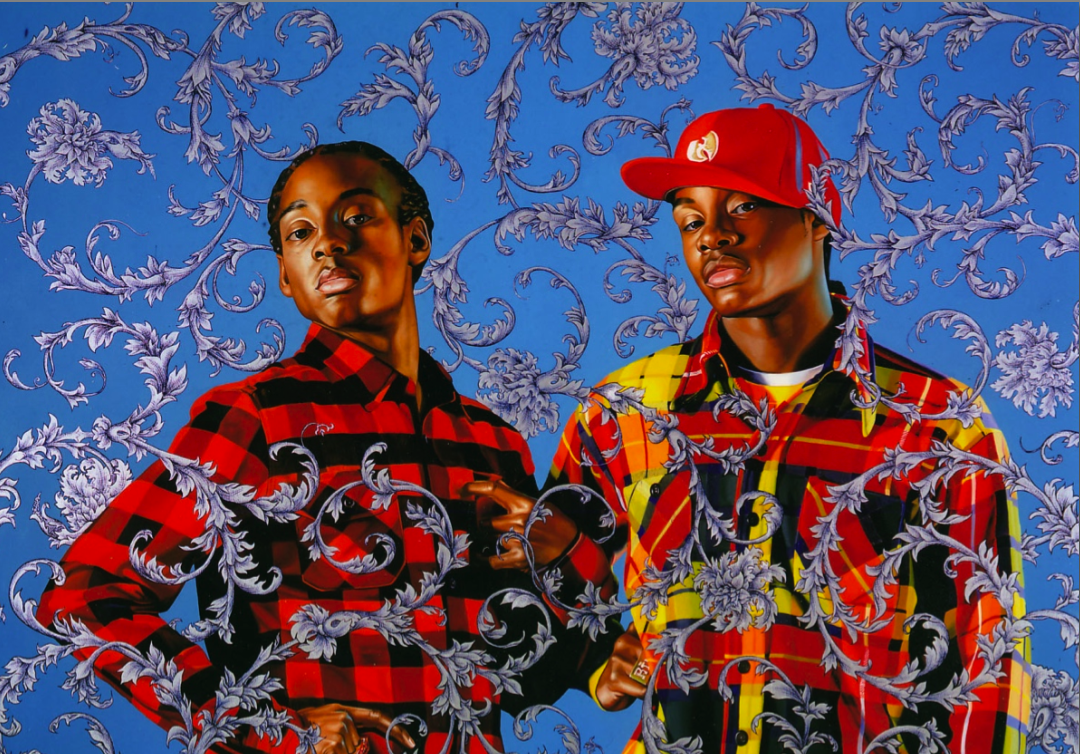
Kahine Wiley – Interview Magazine Article… Research HIP HOP and Graffiti! How can you use a name, tag, slogan in your composition in the style of graffiti to add to the BACKGROUND?
Goals:
Identify the intentions and purposes behind making art.
4.4 evaluate and interpret your art for relationships in 4.4.1 form 4.4.2 context. 3.2 apply subjects, symbols, and ideas in art and use skill to solve visual challenges.
How does your art compare with the work of “professionals” and how can you work to create a better understanding of your approach / intent / ideas?)
“Talent may get someone off the starting blocks faster, but without a sense of direction or a goal to strive for, it won’t count for much.” – David Bayles and Ted Orland
Apply acrylic paint focusing on mixing techniques, and processes (one shape at a time) with an 1.1.3 awareness so that your ideas (modifying the image to one specific color scheme) are executed well.
What is the most difficult part to mixing colors with the acrylic paints? What do you feel makes it the most challenging / frightening medium for some? What are you enjoying about this process?
Create multiple solutions to your CONCENTRATION visual challenges and apply media, techniques, and processes with skill confidence and awareness so that your ideas are executed well.
What were the biggest impressions you had from the classmate’s works? What were the most difficult things you felt as you presented your work? Conversation between classmates about the 2 questions for your exam. How does this work relate to your concentration?
“Talent may get someone off the starting blocks faster, but without a sense of direction or a goal to strive for, it won’t count for much.” – David Bayles and Ted Orland
Apply acrylic paint using the mixing techniques, and processes (one shape at a time with an 1.1.3 awareness so that your ideas (modifying the image to one specific color scheme) are executed well .
What is FUN about the use of acrylic paints? If you are NOT painting yet… what do you need to finish up so you can begin painting tomorrow? How can you use this in other classes, other aspects of your life?
1.4 Initiate, define, and solve challenging visual arts problems using skills of (1.4.1) analysis (.2) synthesis (.3) evaluation. (P).
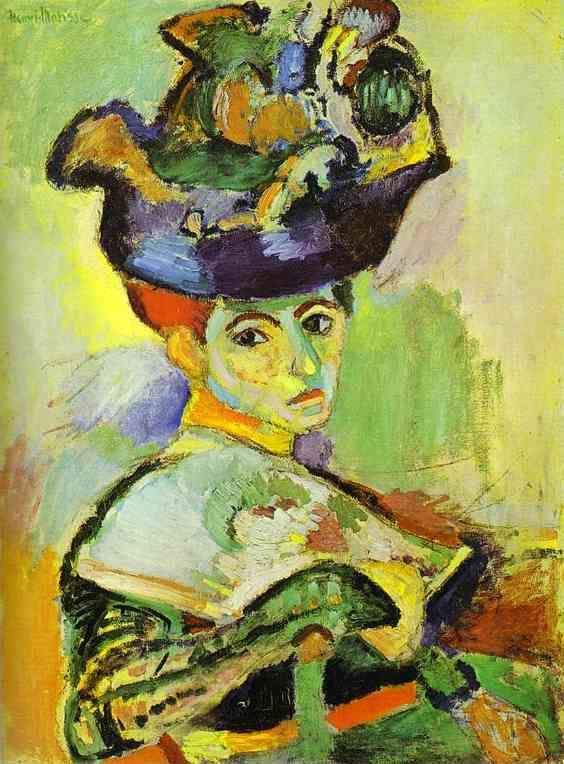
Research and Information Fluency – Students apply digital tools to gather, evaluate, and use information. – Get out there and visit a bit about Henri Matisse!
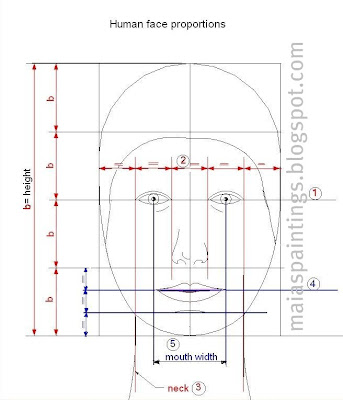
What was the most challenging way to draw? Why was this most difficult way to go? How OFF were you from the original that you drew from your memory? What is most important about drawing when it comes to observation? Facial Proportions




 Art With Korb