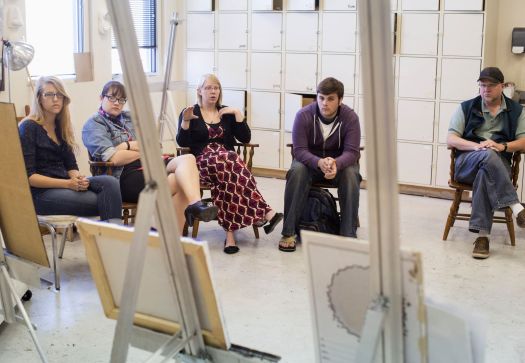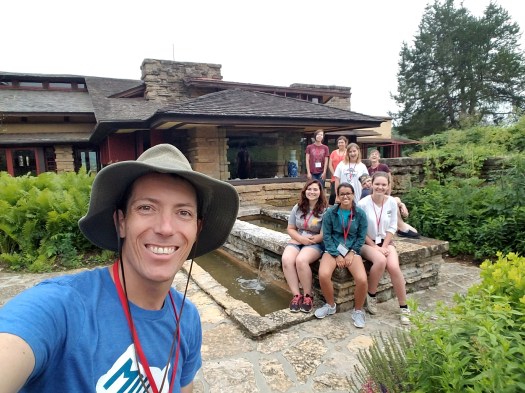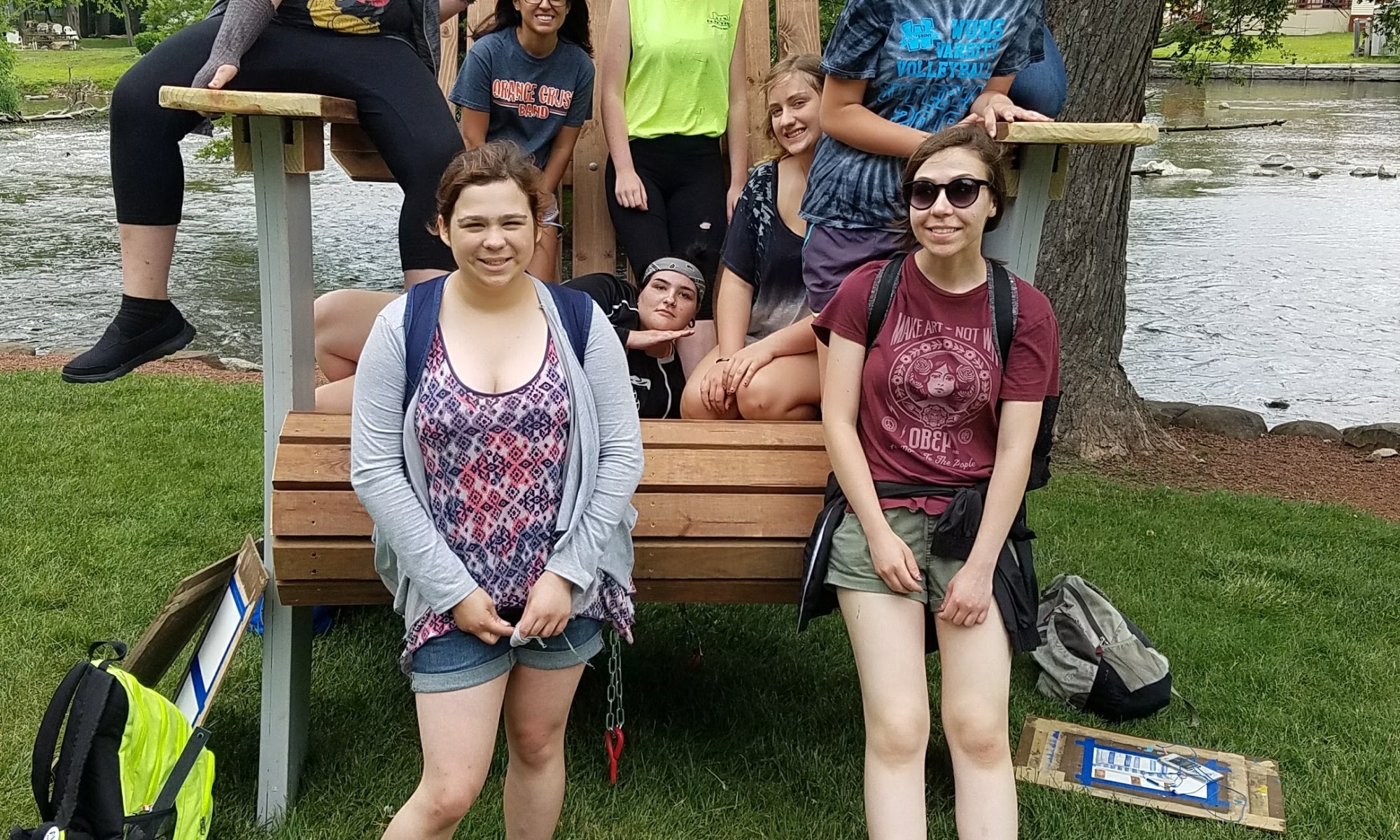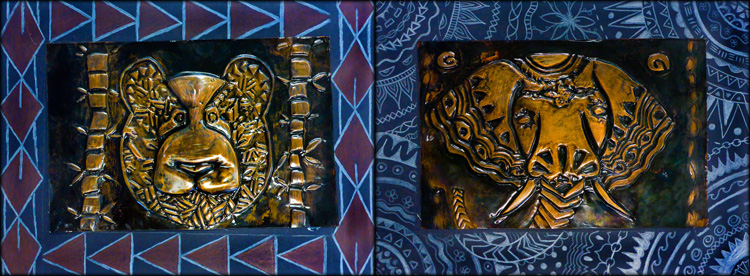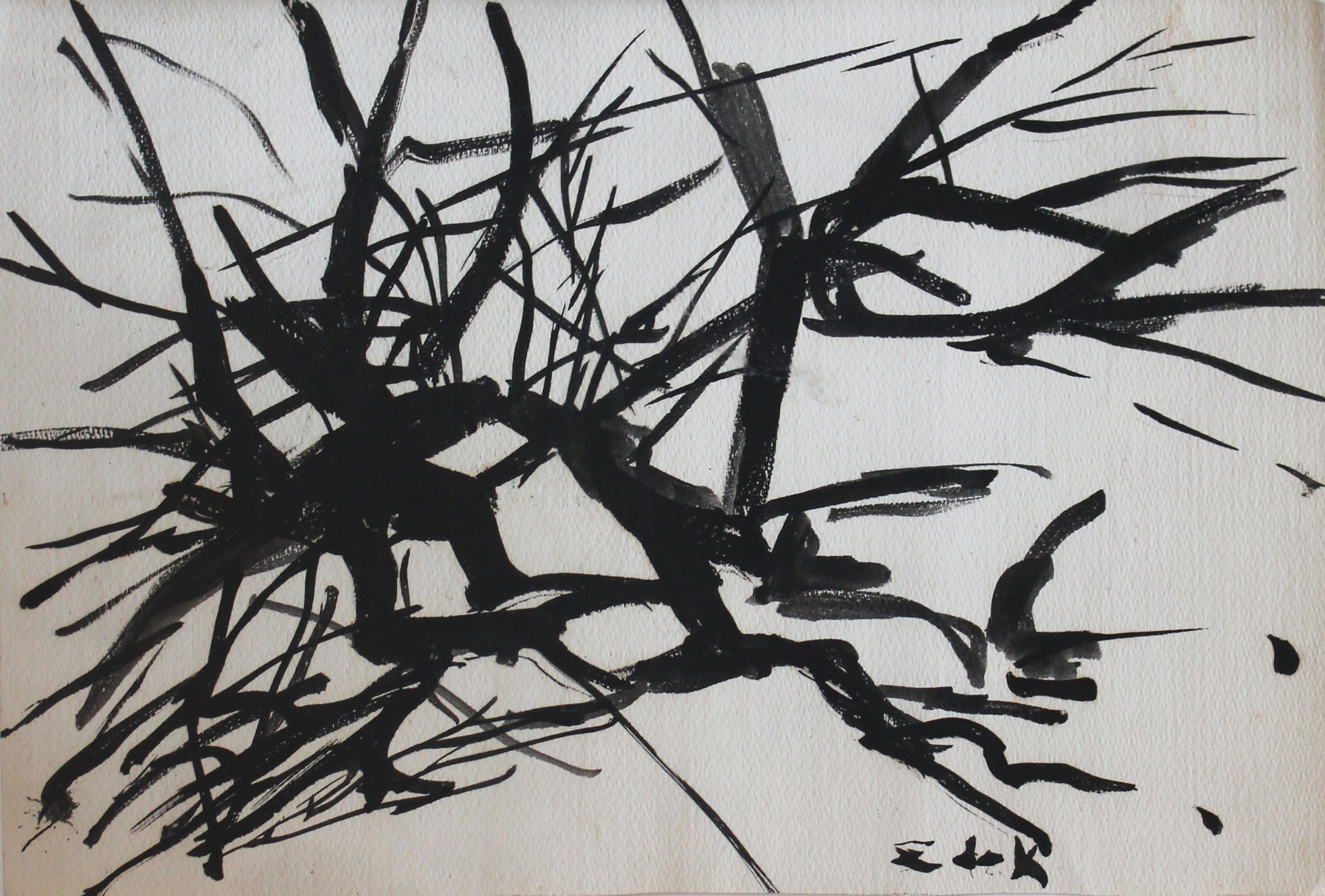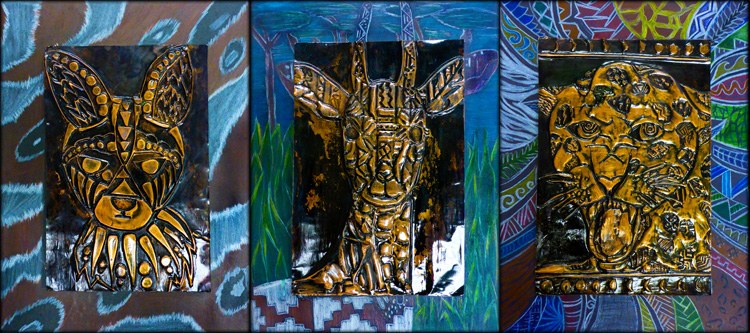
This has been, and continues to be, a very productive summer for the artists of Waterford, WI. Artists that I have had the opportunity to work with are the Plein Air Art from the Waterford Union High School Artists and the Waterford Seven – clients of Connie Lelivelt and my 3rd year of work with them. For those of you who are not able to get out to see the Plein Air works of art in the WUHS Art Gallery – I have submitted a short video (à la manière de James Kalm) for your perusing.
“Never tell a young person that anything cannot be done. God may have been waiting centuries for someone ignorant enough of the impossible to do that very thing.” — John Andrew Holmes
2.1Ac: Through experimentation, practice, and persistence, demonstrate acquisition of skills and knowledge in a chosen art form.
What TWO things do you want to accomplish today? These works are small enough to take home and work on. The color schemes and materials are easy enough to work on in and out of class. How are you going to make this one of the most interesting works you have completed?
Reflection: How have you advanced? What is ONE SPECIFIC ASPECT of your drawing that demonstrates your accomplishment?
3.1P: Apply relevant criteria from traditional and contemporary cultural contexts to examine, reflect on, and plan revisions for works of art and design in progress.
Looking at your color wheel and all you’ve got done… what are your biggest challenges with color blending and painting with acrylics? 3 ideas NOW!
Reflection: Tomorrow we begin on the portrait, what do you need to do to finish the transfer? The painting process will take 2 weeks – GET READY for tomorrow!
4.2Ad: Critique, justify, and present choices in the process of analyzing, selecting, curating, and presenting artwork for a specific exhibit or event.
Best part of yesterday? Plans for today? how’s it coming?
Reflection: How are you moving forward in the process of developing a series of works based on someone else’s work? How are you keeping the images the SAME and how are you changing the ideas?
4.2Ad: Critique, justify, and present choices in the process of analyzing, selecting, curating, and presenting artwork for a specific exhibit or event.
Best part of yesterday? Plans for today? how’s it coming?
G: 1.1Ac: Individually or collaboratively formulate new creative problems based on student’s existing artwork.
This is it folks – last day – Every square inch needs pastel. What’s holding you back? What has propelled you forward in the process? Alex von Jawlensky:
TOMORROW! We are going to 1) make photographs of the work we have RIGHT NOW and 2) go to the COMPUTER LAB (Laptops). Fill out the Google Form http://goo.gl/forms/3q3rPakz8m and then 3) insert images from today into the GOOGLE DOCUMENT.
Reflection: Are you taking pastels home? Where are you going to work on the drawing? What has been the HARDEST PART of the drawing?
2.1Ad: Experiment, plan, and make multiple works of art and design that explore a personally meaningful theme, idea, or concept.
Now that we are done with the AP Testing – time to move forward. Looking over the past year and the development of the works you created… what 2 skills did you develop and put into your Art Toolbox over the course of the year?
Reflection: What FOUR works have you chosen for the AP / SENIOR Exhibition? Have you been able to get your works mounted yet? What do you need to demonstrate to others to help them along in the process?
1.2Ad: Choose from a range of materials and methods of traditional and contemporary artistic practices, following or breaking established conventions, to plan the making of multiple works of art and design based on a theme, idea, or concept.
What do you have to do to complete today? What did you accomplish YESTERDAY that makes you pleased with your work and effort?
Reflection: What did you accomplish today in your work? Please take the time to write out three things that you are pleased with OR that you are struggling with – these should be things that you can or could share with Mr. Korb or your classmates.
10 Things CREATIVE people do – Have you ever wondered why some people are more creative than others? Did you ever wish that you had more of that particular gene? The good news is that research shows that happiness and creativity are not only related, they can be developed. Here are 10 ways to jumpstart your creativity, starting now:
1. Listen In: Listen to your intuition and capture your new ideas. Whether from your morning shower, nighttime dreams, when running, in the car, or in nature, keep an idea notebook and jot it down.
2. Mind Your Mindset: When you start something new, you can either choose to put yourself down and succumb to the inner critic (fixed mindset) or enjoy the process of creation (growth mindset).
3.1Ac: Engage in constructive critique with peers, then reflect on, re-engage, revise, and refine works of art and design in response to personal artistic vision.
One day and a WEEKEND away from the Crit – REVIEW YOUR GOALS from last Thursday and Write out 1 thing that you found beneficial from taking a step back and TALKING about your art.
Reflection: WRITE CRITIQUE and BE DONE! We Reflected A LOT!
10.1P: Document the process of developing ideas from early stages to fully elaborated ideas.
What is one thing that is the SAME about using SHAPE in an artwork and using FORM in an artwork? What is one thing that is DIFFERENT? Write this out and then SHARE this idea with your studio mates at your table.
Reflection: How much of your letter did you get done? One shape? Two shapes? Gluing / Taping sides?
2.2Ad: Demonstrate understanding of the importance of balancing freedom and responsibility in the use of images, materials, tools, and equipment in the creation and circulation of creative work.
Get together for 10 minutes and talk with one another about the ideas of your concentration work. We have been away from it for about 4+ weeks and you might be a bit rusty regarding what it is all about. While you talk with one another – write out the thoughts you come up with regarding your ideas and the progress of the artworks.
Reflection: As you look back on the bast 2.5 quarters of work, what are 3 of your biggest impressions from your studio-mate’s works?
3.1Ac: Engage in constructive critique with peers, then reflect on, re-engage, revise, and refine works of art and design in response to personal artistic vision.
One day and a WEEKEND away from the Crit – REVIEW YOUR GOALS from last Thursday and Write out 1 thing that you found beneficial from taking a step back and TALKING about your art.
Reflection: WRITE CRITIQUE and BE DONE! We Reflected A LOT!
3.1Ad: Reflect on, re-engage, revise, and refine works of art or design considering relevant traditional and contemporary criteria as well as personal artistic vision.
Set up your work in front of the class – let’s take a look and see what is happening – Write down 2 struggles that you see in YOUR work that others may be able to help with.
Reflection / Evaluation: What do you REALLY need to remember from today’s mid crit so that you are CONFIDENT to finish this painting by Wednesday of next . week? Will you need paints to take home?
Studio Art 360: Collage and Texture – Romare Bearden
Reflection / Evaluation: How do you feel your composition successfully uses the GOLDEN MEAN and imagery to explain the ideas of your social topic? EXPLAIN your answers.
AP Studio Art: Figure Drawing Critique – OPEN CANVAS CALENDAR!
Hereis the AP Studio Art Portfolio Example Pages too
3.1P: Apply relevant criteria from traditional and contemporary cultural contexts to examine, reflect on, and plan revisions for works of art and design in progress.
What are you focusing on with your work? How are you solving the problems of this and next weeks 3 artworks?
Reflection / Evaluation: What did you accomplish today? What do you need to do this weekend in order to develop a beginning of an concentration? It is NOT about the medium… it is the message.
3.1Ad: Reflect on, re-engage, revise, and refine works of art or design considering relevant traditional and contemporary criteria as well as personal artistic vision.
What were the similarities and differences in your ideas and Kandinsky’s?
Reflection / Evaluation: How does your art compare with the work of “professionals” and how can you work to create a better understanding of your approach / intent / ideas?
.3.1Ac: Engage in constructive critique with peers, then reflect on, re-engage, revise, and refine works of art and design in response to personal artistic vision.
What was helpful about 1) seeing your work from a distance and 2) hearing what others thought about the work you created?
Reflection / Evaluation: What are two things you took away from the critique today – whether it be about YOUR work or about another person’s work, written, heard, or observed?
Studio Art 360: Value and DRAWING – ONE WEEK OFF of SKETCHBOOK!
Reflection / Evaluation: Of ALL the value scale drawings you created today, which one are you happiest with? WHY? What are TWO things you see as being developed successfully?
3.1Ad: Reflect on, re-engage, revise, and refine works of art or design considering relevant traditional and contemporary criteria as well as personal artistic vision.
Take a FEW MOMENTS and think about the work you have in front of you – your work. Like yesterday – think about and then write a brief self critique about your work, using the art terms on page 29 in the handbook. Work and try to resolve the images for Friday’s Critique.
1.2Ac: Choose from a range of materials and methods of traditional and contemporary artistic practices to plan works of art and design.
What ONE bit of theory has stuck with you as we have talked about the works and ideas of Wassily Kandinsky? Are there any ideas that you feel you can use about his ideas on color and shape in your work as it is developed?
Reflection / Evaluation: What NEW ideas do you have about COLOR and Shape in the art you are creating now that we have had some conversation and learning about the ideas of Wassily Kandinsky?
2.1P: Engage in making a work of art or design without having a preconceived plan.
What was the biggest challenge you found as you began coming up with ideas and drawing your cube, cylinder, or pyramid yesterday?
Reflection / Evaluation: What are 2 skills you have already that are going to make your experiences in Studio Art 360 easier?
AP Studio Art: Bag of Ideas?
Goals:
1.2Ad: Choose from a range of materials and methods of traditional and contemporary artistic practices, following or breaking established conventions, to plan the making of multiple works of art and design based on a theme, idea, or concept.
Where / when in your past have you used the ideas of the repetition of single object in a SERIES of drawings, paintings, artworks… something else?
Reflection / Evaluation: g been successful in TODAY’s beginnings of a CONCENTRATION?
Assignment ONLINE – Google Document – SHARE WITH ME at fkorb@waterforduhs.k12.wi.us! DUE ON MONDAY. CLICK HERE FOR A GOOD EXAMPLE. READ THE BRIEF BLOG POST! Where do you see yourself artistically now, where in 5 Years?
Drawing: Observation and Pencils?
Boxes, Objects, COMPOSITION!
Goals:
2.1Ac: Through experimentation, practice, and persistence, demonstrate acquisition of skills and knowledge in a chosen art form.
Most young artists work with their FIRST idea and that’s it. What might the benefit be to begin with MORE ideas? When you sketch in your sketchbooks / artworks… where do you mostly get your ideas from? How do you define OBSERVATION?
Reflection / Evaluation: What skills do you hope to develop this year in Drawing? What do you feel you will be able to improve on regarding the skills you have currently?
Please take some time and SUBSCRIBE or FOLLOW this website (look to the right of this screen). You will get up to date information about this class and all that we are doing during the day – WAY AHEAD OF CLASS TIME! Woo Hoo! If you are NOT in my class… THANK YOU for visiting!
What is Art?
“Art is the concrete representation of our most subtle feelings.” Anges Martin, Art In America (p.124, 1996)
2.1P: Engage in making a work of art or design without having a preconceived plan.
How do you draw something in 3 dimensions? What are different techniques you know? Sit with your neighbor and BEGIN with a box, a cylinder, a pyramid, and the first letter of your first or last name. NO OBSERVATION – Talk about and visually demonstrate the ideas in your GOALS PAGE!
Reflection / Evaluation:
What are 3 things you hope to learn in this room? END OF CLASS – Stand up – Think about what you are hoping to learn – in ONE WORD (and you cannot repeat another person’s comment) Your name and then your word. That’s it. Speak it out loud.
1.2Ad: Choose from a range of materials and methods of traditional and contemporary artistic practices, following or breaking established conventions, to plan the making of multiple works of art and design based on a theme, idea, or concept.
What is your understanding of AP Art? How do you plan on using your skills to make the best you can? Talk to your classmates about this – write this in your GOALS folder.
Reflection / Evaluation:
Art From OBSERVATION – What are / were you able to create from the materials in your bag of ideas? This is what you will use to create a small body of works this week… Drawing / Painting / Photography / Sculpture / Whatever? What is the interesting – worthwhile object(s) and how do you relate to it? 5 different artworks – all from the same focus / visual starting point.