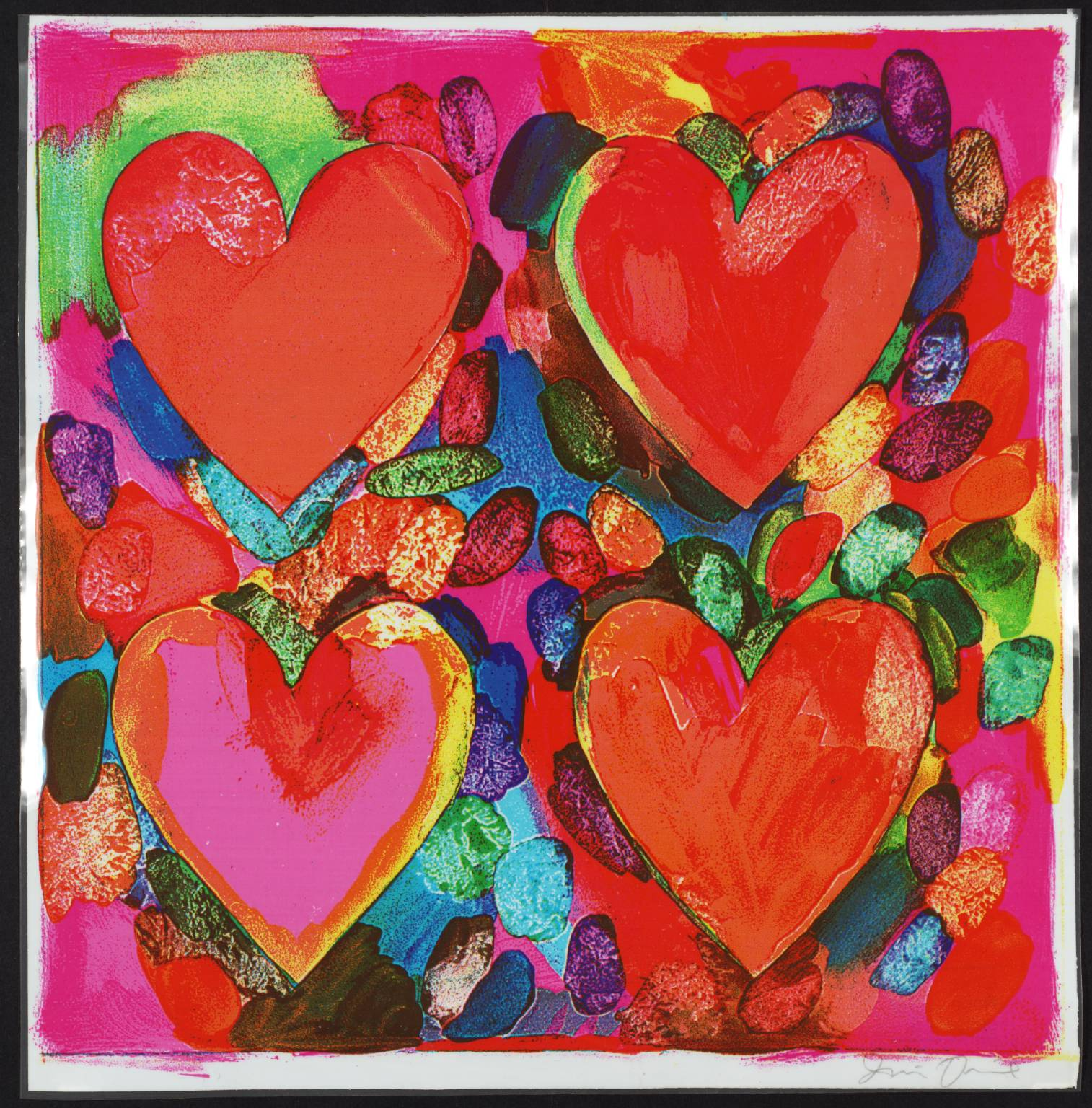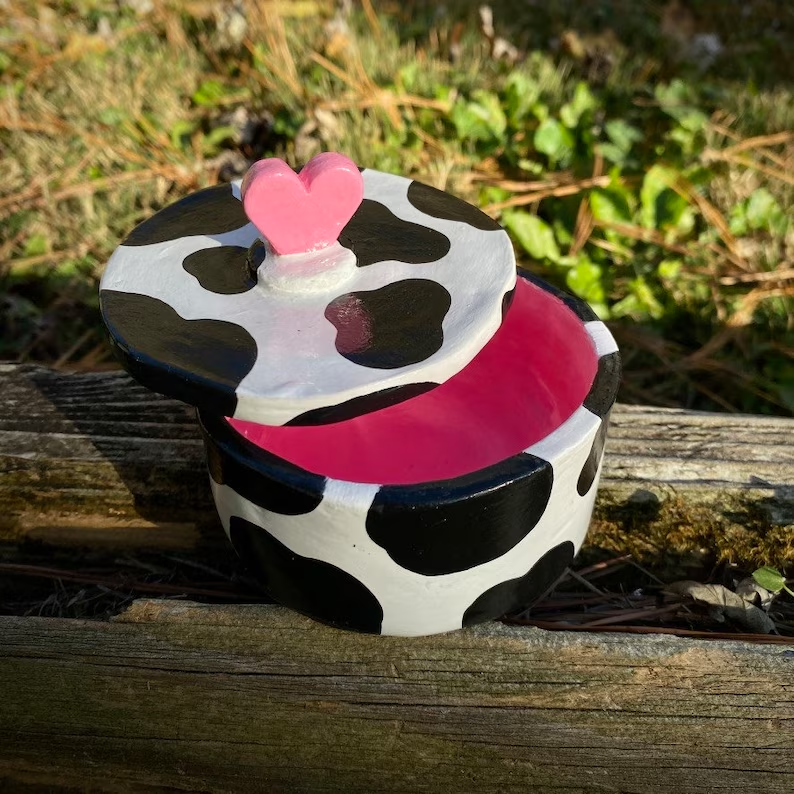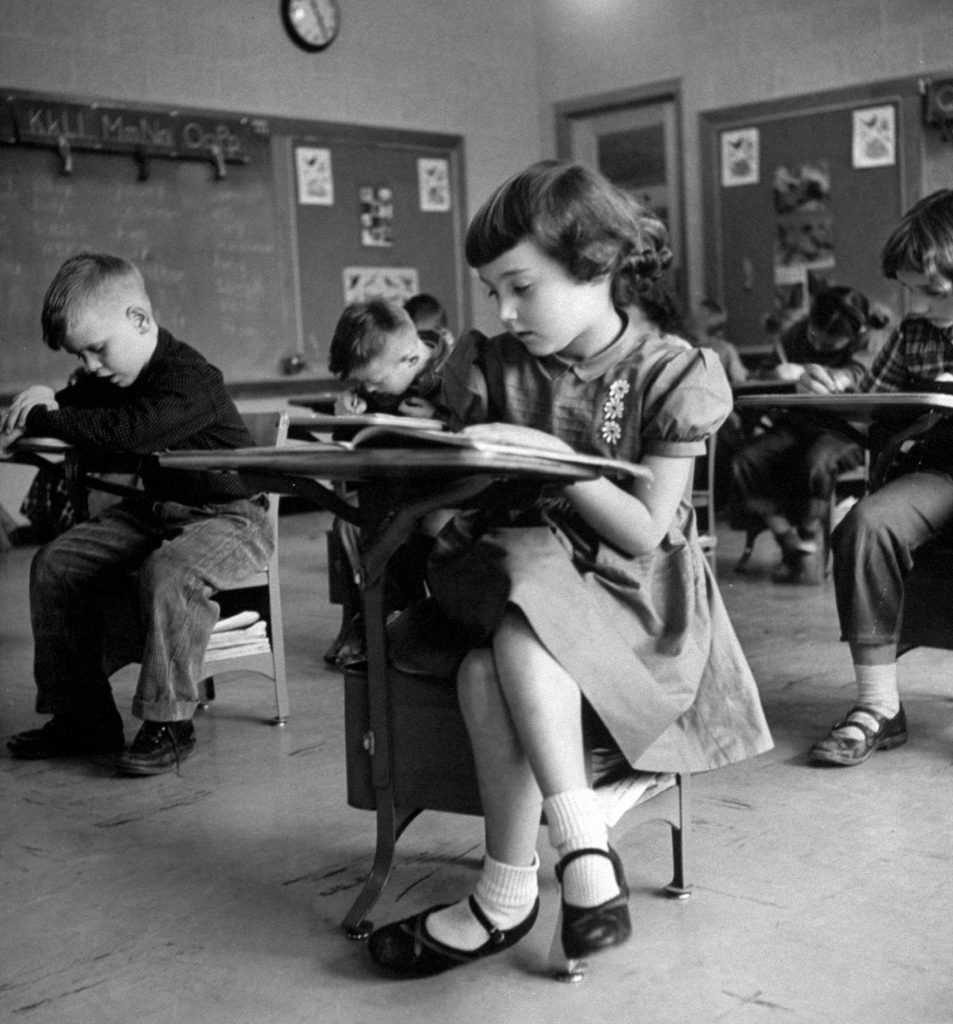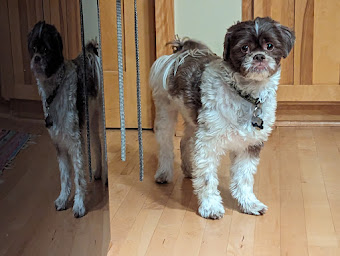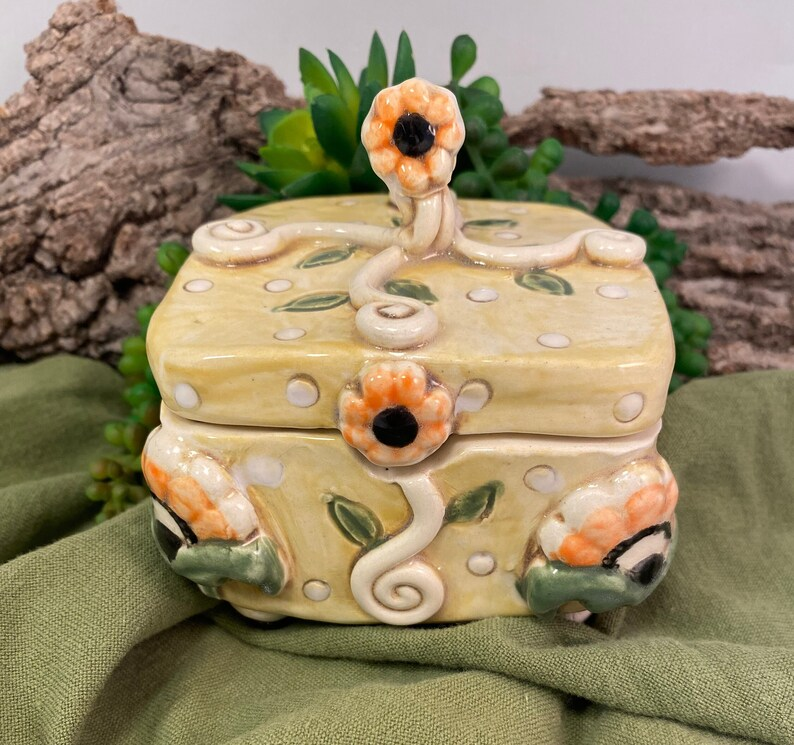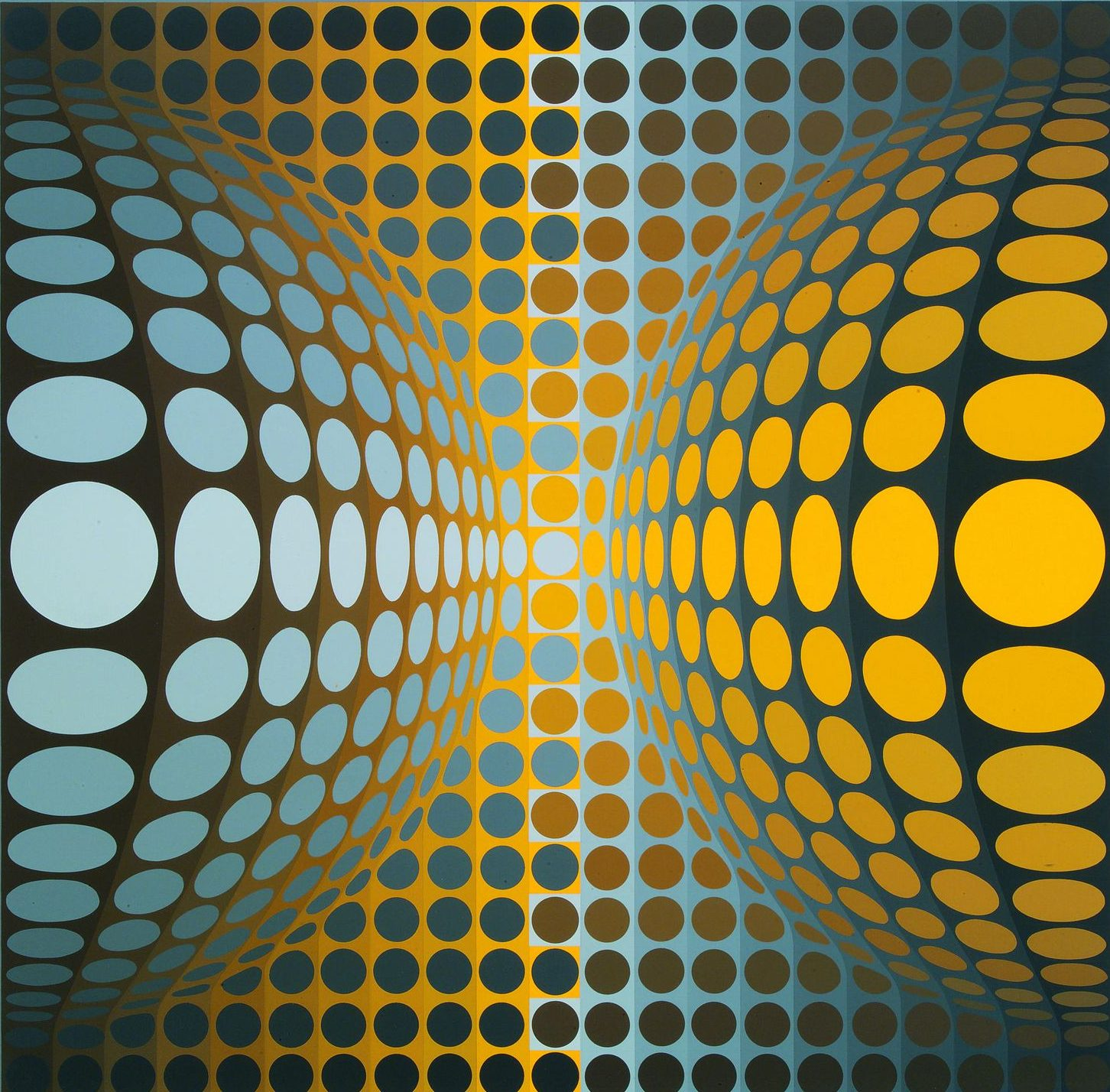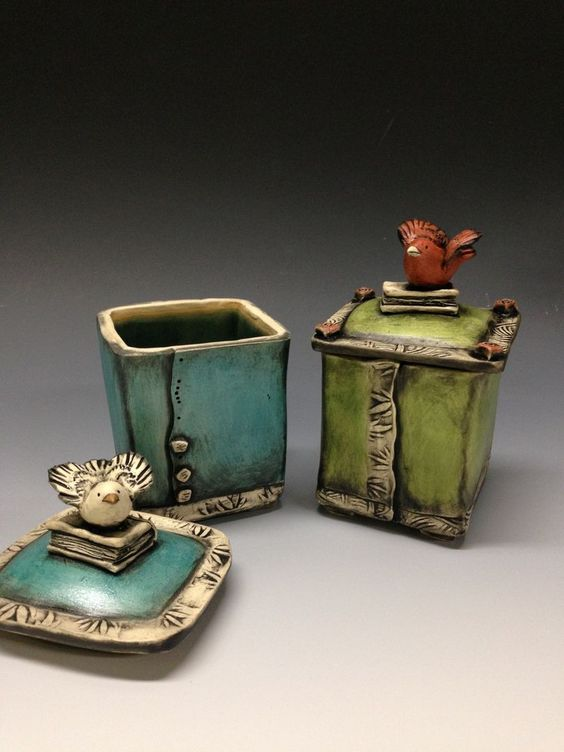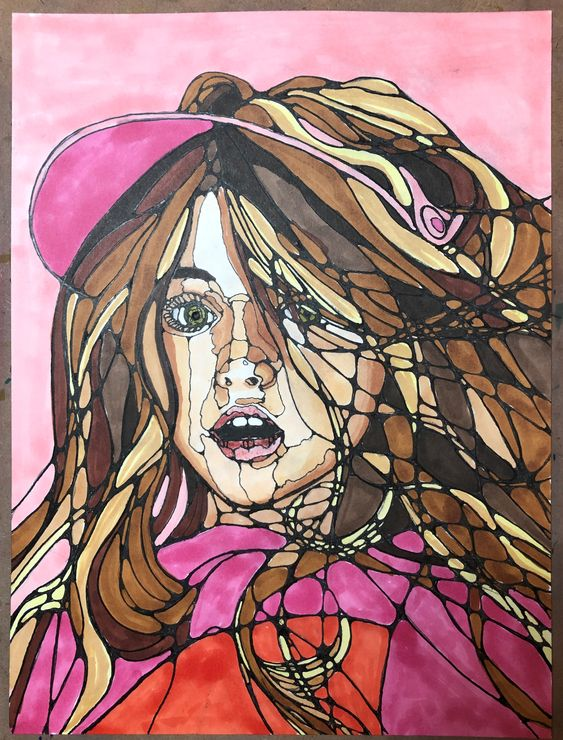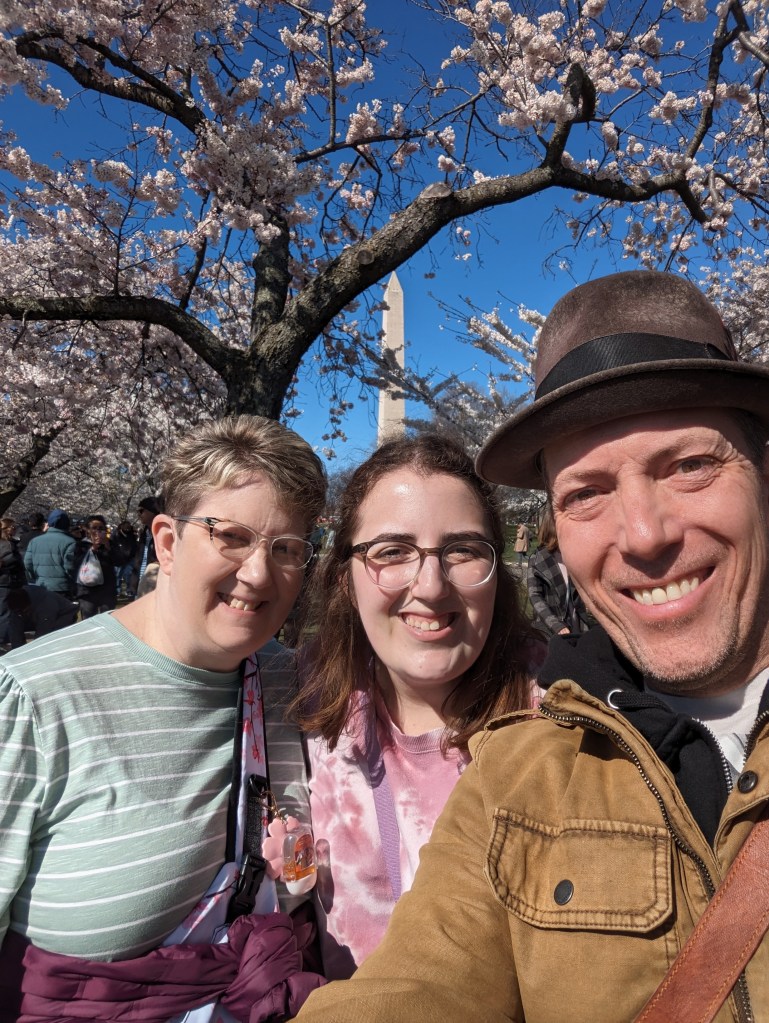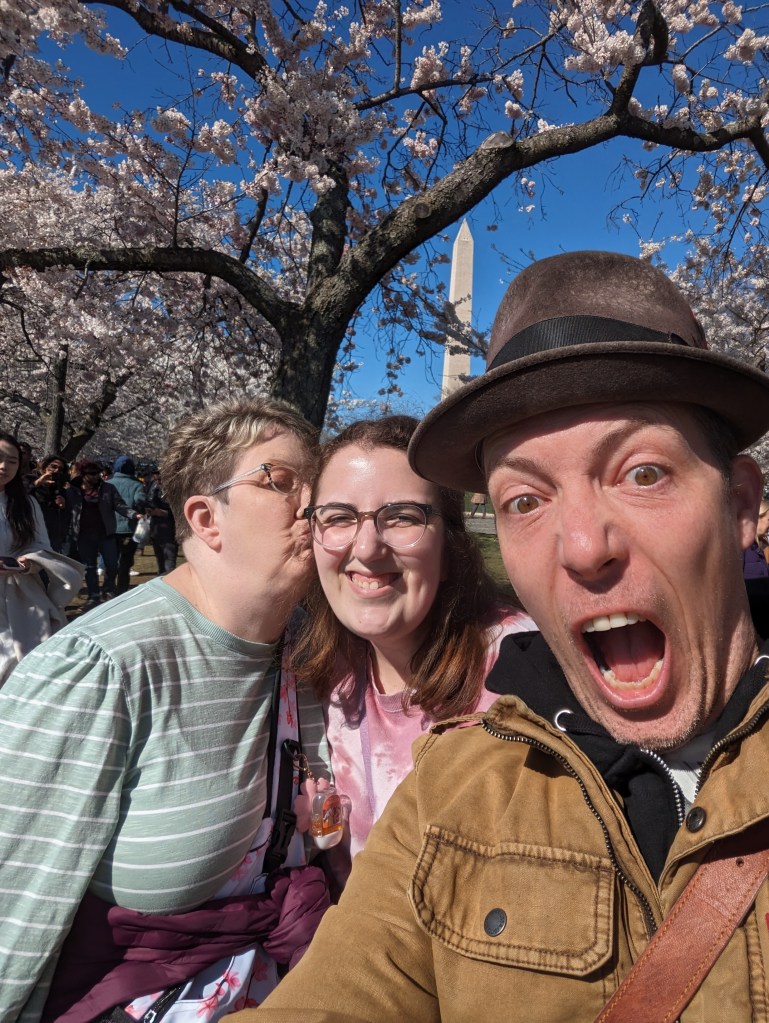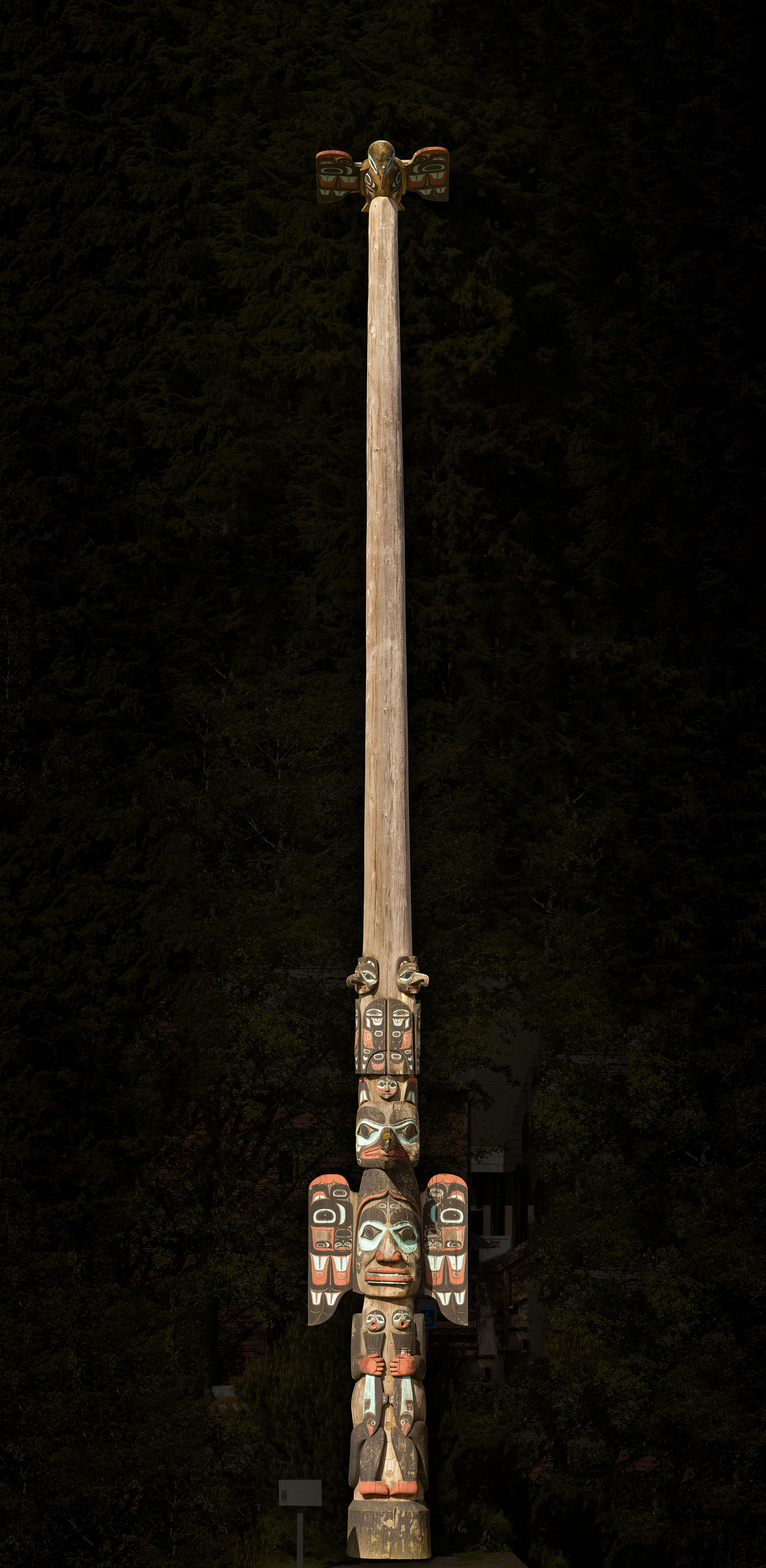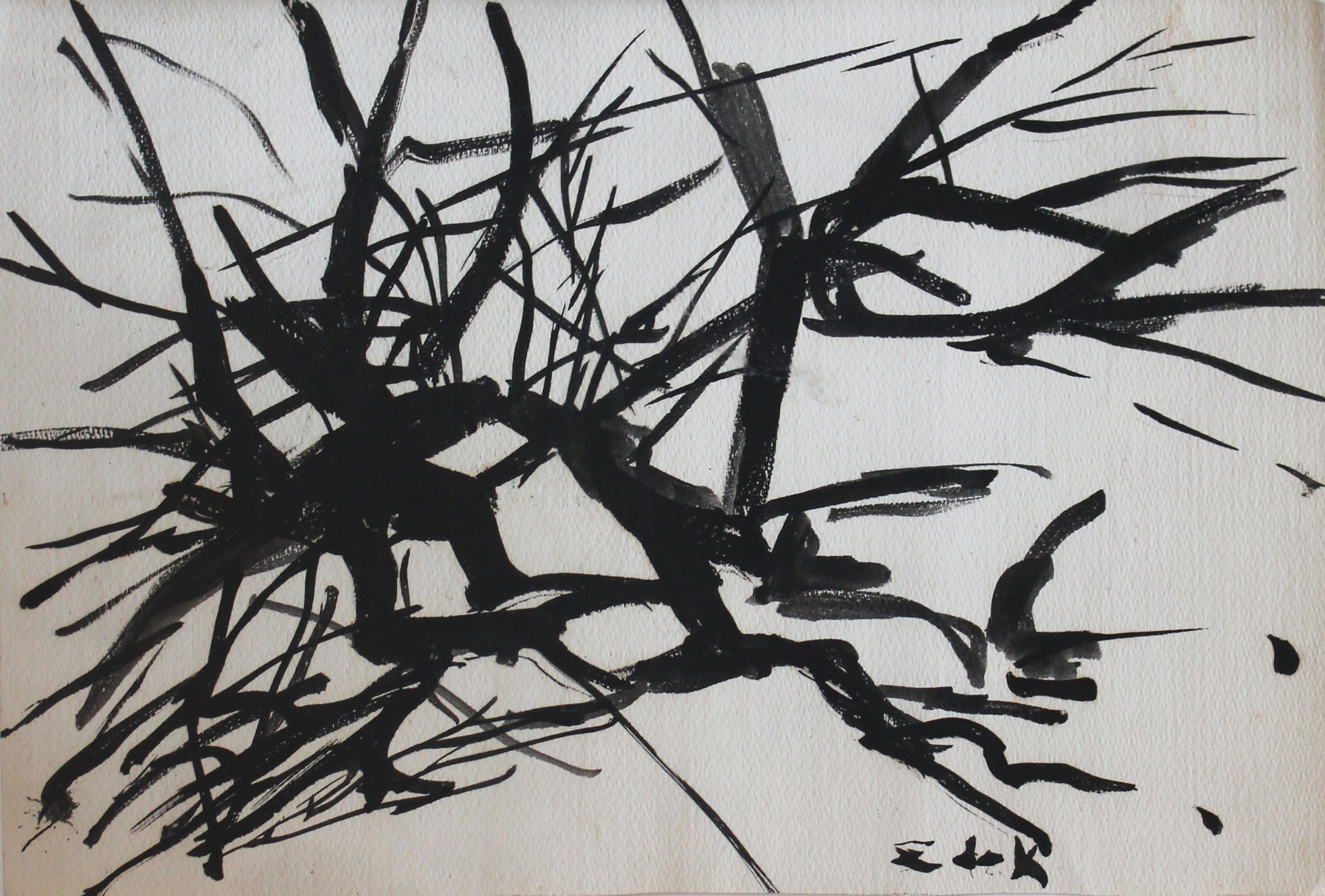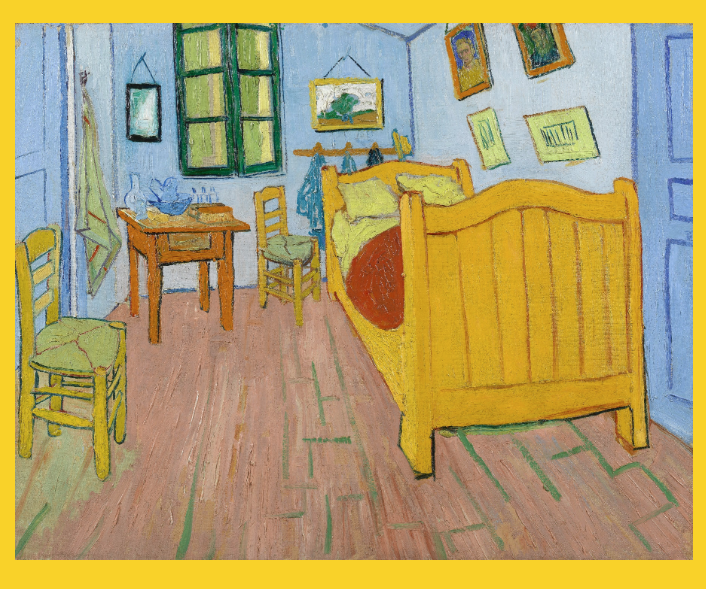
What a wonderful first week in (out of) studio. You artists did a wonderful job. Here are some images to reflect back on the week with. Take it easy (no… go out and make more art). Thank you to all the parents and guardians who have supported and encouraged our artists to make art over the summer!
The TALIESIN Field Trip is THURSDAY. We leave at 7:30AM. I hope you all get your monies and permission slips in MONDAY. They need a final count and so do I. Forms are below:
Happy Graduation to ALL the 2017 WUHS Graduates. I was fortunate enough to be the school photographer on Sunday and these are a sampling of the fun and excitement that was had. 4 years (13 years) goes by SO fast. Enjoy each and every day. Enjoy your accomplishments, it is a beautiful day so… Go Make Some Art!
These drawings were created by the Advanced Drawing class with two stipulations, they needed to base their drawing on a sense of observation and they needed to use 50 sheets of paper. The rest was up to them. Our artists chose from a wide range of topics and ideas – all personal to them. Using direct observation, symbolism, and abstraction, our artists have created a wide variety of images all at various skill levels and approaches for you to enjoy.
Joslin Stern’s ““And she can laugh!” he said with wrath” from the 50 Sheets of Paper Assignment. Advanced Drawing – 2017.
Making Space: Women Artists and Postwar Abstraction / MoMA Live…
Just to give a bit of art history and importance / social context of women in art history…
Drawing: Kandinsky Critique
3.1Ad: Reflect on, re-engage, revise, and refine works of art or design considering relevant traditional and contemporary criteria as well as personal artistic vision.
What were the similarities and differences in your ideas and Kandinsky’s?
7.1Ac: Recognize and describe personal aesthetic and empathetic responses to the natural world and constructed environments.
What is the emotional feeling that you are showing in your photograph / selfie? From all the color schemes, what color scheme best fits you?
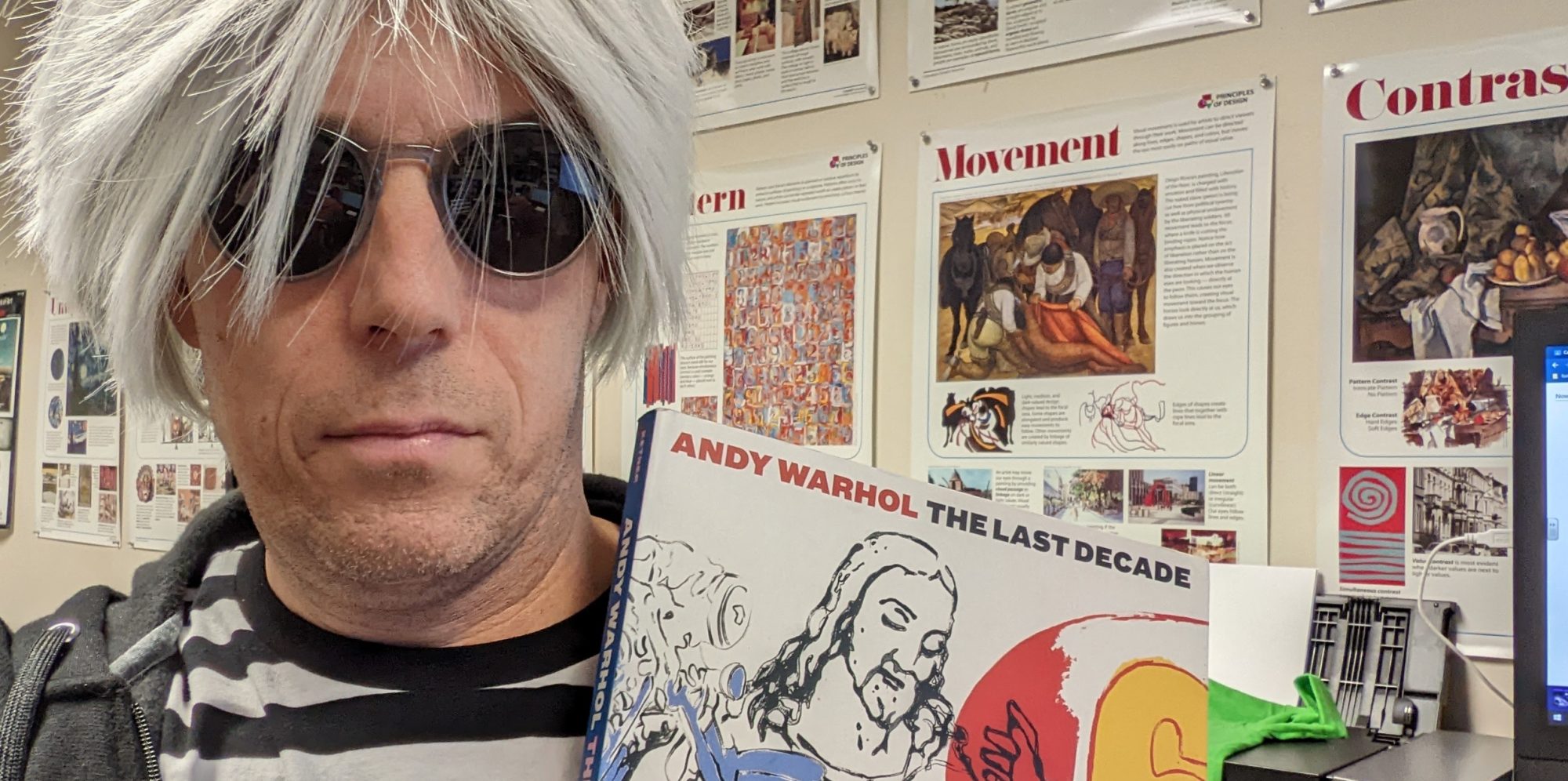
Moving into the world of POP art! http://assets.yellowtrace.com.au/wp-content/uploads/2013/05/Brillo-Box-foam-ottomans-by-Fab.com-and-The-Andy-Warhol-Foundation-Photo-by-Nick-Hughes-for-Yellowtrace-02.jpg
What 3 challenges do you see in the process of gridding the work out?
Remember our Sketches from Yesterday? Here are a few websites for you to enjoy from the artists Stephen Shanabrook and Veronika Georgieva.
How does your drawing look in your own eyes? What did the process of ERASING the image in the beginning do for you?
AP Studio Art – YOUR BODY OF WORK!
1.2Ad: Choose from a range of materials and methods of traditional and contemporary artistic practices, following or breaking established conventions, to plan the making of multiple works of art and design based on a theme, idea, or concept.
What are 3 things you have learned, researched, inquired about your ideas for your concentration so far this week? I’ve had MANY great conversations with each almost each of you… what do you take away from them?
Welcome to the 2017 SE WI Youth Art Month portion of the State Closing Reception. The final awards ceremony was held at the Capitol Building in Madison WI on March 31. This was a fantastic way to celebrate the final day of a fantastic month long celebration of the Youth in the Visual Arts. Thank you to all the artists, parents and guardians, family, teachers, school administrators and boards for celebrating and supporting the visual arts. Congratulations to all the young artists who participated.
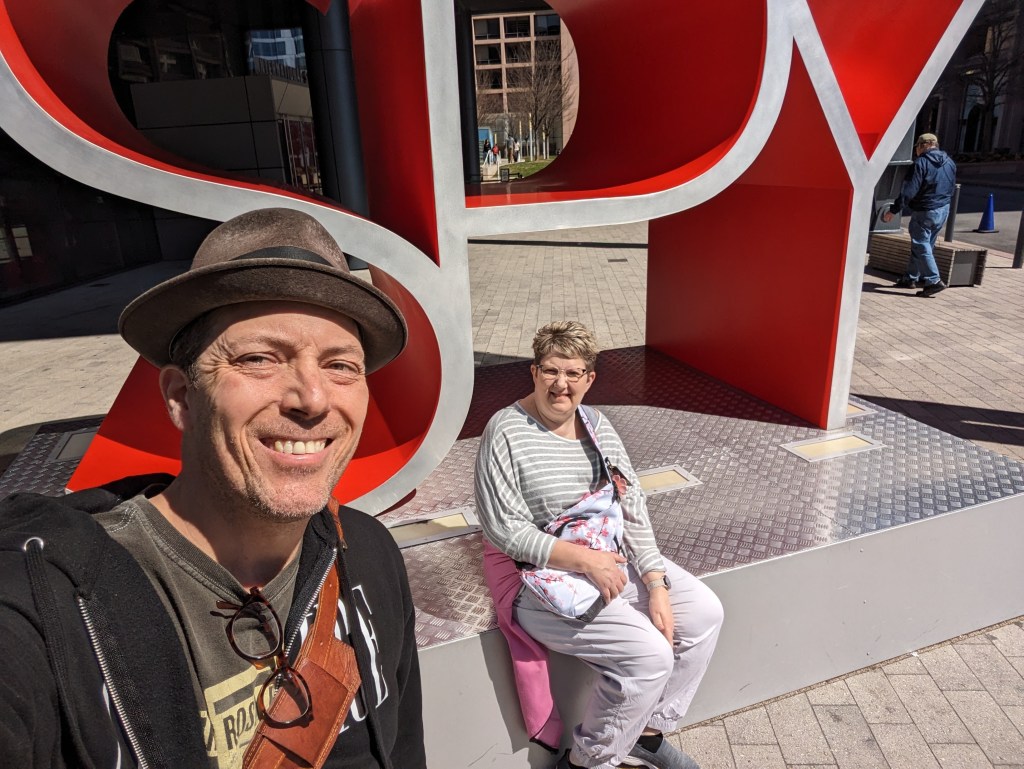

… and the SE WI Regional YAM Show at the Sharon Lynne Wilson Center for the Arts.
“Perseverance is failing nineteen times and succeeding the twentieth.” — Julie Andrews
Drawing: Soft Pastels
1.2Ac: Choose from a range of materials and methods of traditional and contemporary artistic practices to plan works of art and design.
Of the shapes we are using, which one is STRONG and why? Which shape describes a passive quality? Why? Are you using Impression, Improvisation, or Composition? What about the use of shapes? Melodic or Symphonic?
Blending ANALOGOUS colors with and without finger blending
Blending COMPLEMENTS with and without finger blending
Straight and Curved lines with the TIPS and with the SIDES of the pastels
Filling large areas with a color and then doing smaller details over the top with another DIFFERENT color
Blending with CIRCULAR marks as well as BACK AND FORTH marks
Using PAPER as a masking tool
Adding a WHITE HIGHLIGHT over a darker colored surface
Working UPRIGHT on an easel versus on the FLAT on a table top
Cleaning your pastels with paper towel
Experiment on your own – use your initial images of SKETCHING for the VISUAL experiment inspiration
CLEANING with SPRAY and a CLOTH RAG – that’s not an exercise but a technique that will clean a lot faster than paper towel
Studio Art 360: Character Mugs
1.2P: Shape an artistic investigation of an aspect of present-day life using a contemporary practice of art or design.
What was your FAVORITE or LEAST FAVORITE part of working with clay. Please tell me WHY you LOVE or DON’T LOVE using this Clay. Please be specific.
Face Jars at the Milwaukee Art Museum
What was the most challenging part of working with ceramics / clay as you created your mug? What are three things that working with this material challenged you with?
DUE END OF CLASS TODAY.
Advanced Drawing: Figure Drawing and the GESTURE
2.1Ad: Experiment, plan, and make multiple works of art and design that explore a personally meaningful theme, idea, or concept.
Look at the series of works from yesterday… how have you begun to see the figure differently? Are you thinking about the the FORM in a different fashion than you had earlier?
What did taking an entire minute away from your drawings do for you? Harder? Easier? What did you have to do DIFFERENTLY?
AP Studio Art: WORK on CONCENTRATION
Reflect: Learning to think and talk with others about an aspect of one’s work or working process, and learning to judge one’s own work and working process and the work of others.
What response do you have regarding your studio mate’s works – really – that can help them see things that they might not see – things that might help them continue to learn from their own works and marks? Take 5 minutes and walk around – take a look – make some thoughts for MONDAY (the extended deadline).
Brayden – This group of Photos is for YOU.
Paper Sculptures at the Milwaukee Art Museum
WHAT’s the Assignment? If you need another 1, 2, or 3 concentration works – this is your assignment (one at the minimum). You will have your WEBSITE updated with 12 concentration works – PERIOD. You will rework your statements and answers to the AP Questions… ALL DUE on APRIL 3 for CRITIQUE & PRESENTATION.
Robert Henri: “Advice about your paintings is difficult. As I said before, I cannot interest myself in whether they will pass juries or not. More paintings have been spoiled during the process of their making, through such considerations, than the judgements of juries are worth.”
Drawing: Books and Oil Pastels – WRAP IT UP!
3.1Ac: Engage in constructive critique with peers, then reflect on, re-engage, revise, and refine works of art and design in response to personal artistic vision.
What do you feel about talking aloud when it comes to other’s works? What are your thoughts about why you may be apprehensive or confident when discussing other individual’s work?
What were 3 things that you took away from today’s critique?
Studio Art 360: Pencils and Observation
2.1P: Engage in making a work of art or design without having a preconceived plan.
Form and Value: Using what you remember about form from our earlier drawings of 2 point perspective cubes, cylinders, and pyramids? Using the objects that has been set out in front of you and spend the hour working on drawing it to scale (1:1). Look at all the shadows, reflections, highlights and darks. Practice LOOKING. It is all about the eye! N: DEMO AGAIN – Sighting in and Searching for lines. DO NOT ERASE.
Challenges and struggles? Are you going to take it home and REFINE it?
Advanced Drawing: Fast Food – Time to RESOLVE THIS
2.1Ac: Through experimentation, practice, and persistence, demonstrate acquisition of skills and knowledge in a chosen art form. A: As you look back on this drawing – what is the ONE AREA you are uncertain about in the work?
1.1 Ad: Visualize and hypothesize to generate plans for ideas and directions for creating art and design that can affect social change.
What are you doing outside of the studio time to make sure you are staying on top of your work? What have you done to PUSH yourself in the process of making your art stronger, more successful? A LEVEL 6?
What are 3 challenges or successes you had with your first few thumbnail drawings about the STACK of BOOKS – Huge in the center of the room? THINK COMPOSITION.
Studio Art 360: Lines and Sol LeWitt
2.1P: Engage in making a work of art or design without having a preconceived plan.
What kinds of lines do YOU see in this series of drawings?
STICKY NOTES… What are 3 things you hope to learn in this room? END OF CLASS – Stand up – Think about what you are hoping to learn – in ONE WORD (and you cannot repeat another person’s comment) Your name and then your word. Sol LeWitt: Line Drawings in Pencil: Assignment Handout LINK: https://goo.gl/nZo3qY
Advanced Drawing
2.1P: Engage in making a work of art or design without having a preconceived plan.
What are a FEW THINGS that visually stand out to you from this artwork by Janet Fish? List 3 please.
What are 3 things you hope to learn in this Class? END OF CLASS – Stand up in a circle – Think about what you are hoping to learn – in ONE WORD (and you cannot repeat another person’s comment) Your name and then your word. That’s it. Speak it out loud.
ASSIGNMENT FOR WEDNESDAY – Fast Food Bags and Packaging for first still life drawing.
AP Studio Art: Hands and Still Life – Photography – Let’s CRIT first!
4.2Ad: Critique, justify, and present choices in the process of analyzing, selecting, curating, and presenting artwork for a specific exhibit or event.
What is ONE THING you really want to explain about the work you have created regarding the Art and Fear Chapter you chose. Write this out so you have a starting place to talk when you explain your work.
What 2 things are you most pleased with regarding the works you see / made out Art and Fear? ASSIGNMENT – Symbolism and BREADTH – You need to bring in a couple of still life objects that can easily be held in your hand (which will be photographed and then printed) to practice the ideas of observation. What have you got that you can bring in that helps to really tell about yourself, your interests, your passions? The practice of the still life – observation – is a skill that readers (AP and the rest of the art viewing world) recognize as important to the building of the skills of an artist. How can you demonstrate those skills? Many drawings? One Drawing? How can you use the time to really build your BREADTH?
With all the challenges that come across in life, there are times where God sends his angles out to remind me that things are good. I know that with the flooding in Louisiana, the earthquake in Italy, wars, poverty, hunger, nonacceptance, and all the other challenges that life offers, my disappointments are trivial. Thank you to all those who reached out to me yesterday (August 23, 2016) with words of love, comfort, and reminders that “My hour has not yet come.”
Thank you to those I do not mention… and a NAME DROP to these great individuals whose desire to continue to make the world a better and more beautiful place. Thank you to Danyelle, Mike, Jacob, Russell, Brandon, Colton, and especially the Queen of “No Fun” Connie. The cards you sent are a wonderful reminder that the challenges I face are worth it because I can work with and get to know the great individuals I do in my life.
Arts Educators! Here is my day to day handbook that is going to press tomorrow – I hope. The new and updated 2016 – 17 Interactive Handbook for the Arts (I already see a typo on the cover – title change before too long). I am looking forward to a new approach to the day to day activities – although QUESTIONS and IDEAS are always going to be a part of the working process of the studio. I look forward to hearing thoughts and ideas about the ideas I’ve come up with, use in the studio, embed in the minds of the artists, and share from others thoughts. Special thanks to Dan Gross for the printing efforts – I am printing it at 8.5″ x 5.5″ and folding it in half with a saddle stitch in the middle – looks great! This handbook has, surprisingly, taken me the best part of the summer to get reworked and I am, at this point, please with what it looks like. http:goo.gl/ekrZ48 is the link to the shared folder – enjoy!