Start with this Google Form. When you are done with that an email will be sent to you. Open the email and read the instructions on the Google Document that is attached. This will take you to the Google Folder to copy your artwork from AND the Google Slide that we are all sharing that you will add your artwork and information to. If you have any questions – CONTACT ME!
AP Studio Art: Online is in need of WORK!
Make sure that you are staying on top of the necessary online aspects of your portfolio.
Biggest struggle / success for today? Write it out and the WHY!
Studio Art 360: COLOR THEORY – Let’s Talk Schemes.
1.2P: Shape an artistic investigation of an aspect of present-day life using a contemporary practice of art or design.
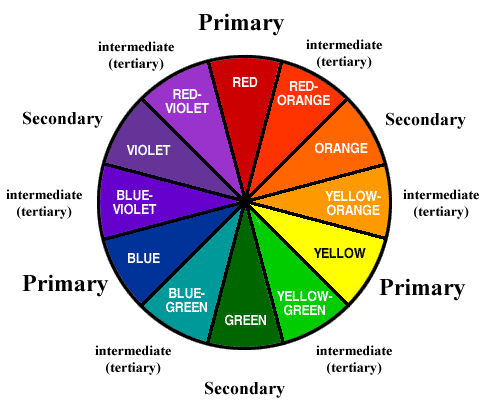
Review with your neighbor the relationships of color on the color wheel.
Review with neighbors the relationships of the colors on the color wheel? QUIZ one another on the names, types and relationships of the colors
Advanced Drawing: The Pelvis and Proportions
2.1Ad: Experiment, plan, and make multiple works of art and design that explore a personally meaningful theme, idea, or concept.
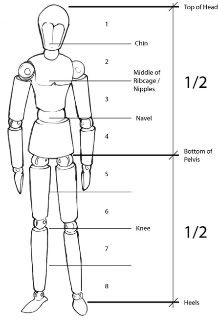
How can you use another part of the body to help you determine the height and width of the pelvic area as you are drawing the human form? Where and how will you use measurements to help?
When you look at the form of the figure today, how have you succeeded with the drawing of the form? What techniques / approaches have you used?
AP Studio Art: Let’s Keep Talking
Reflect: Learning to think and talk with others about an aspect of one’s work or working process, and learning to judge one’s own work and working process and the work of others.
We began yesterday with a few presentations – you are now on your own. Take the period to do your presentations with one another – One of you will keep track of comments / suggestions / another will keep track of time. This is all on you – real AP Level conversations that are FOCUSED and ATTENTIVE to the tasks at hand. GO!
“Perseverance is failing nineteen times and succeeding the twentieth.” — Julie Andrews
Drawing: Kandinsky DEVELOPMENT and PLANNING
1.2Ac: Choose from a range of materials and methods of traditional and contemporary artistic practices to plan works of art and design.
How do you relate the sounds and movement in your choice of music to the image that you are creating in your sketchbook? Tomorrow we begin on the larger sheets of paper. Work out the ideas in colored pencil / watercolors.
What NEW ideas might you have had about COLOR and SHAPE in the art you were creating?
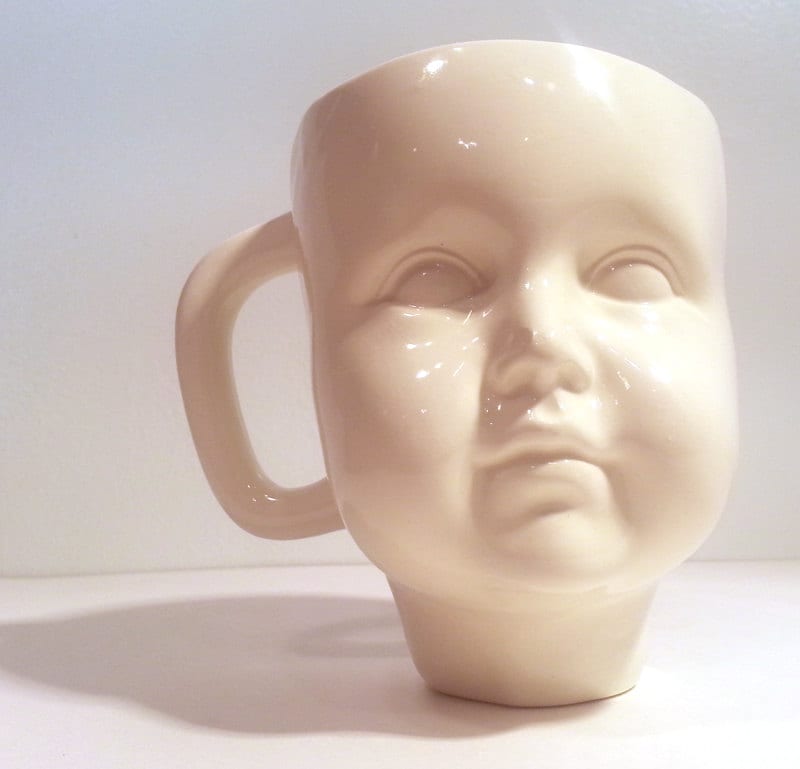
Studio Art 360: Character Mugs
1.2P: Shape an artistic investigation of an aspect of present-day life using a contemporary practice of art or design. A: How will you use the experience of working in 3D change the way you work in 2D in the future?
If you could do something in the beginning differently, what are the three things you might change? Why?
DUE END OF CLASS ON THURSDAY.
Advanced Drawing: Figure Drawing
2.1Ad: Experiment, plan, and make multiple works of art and design that explore a personally meaningful theme, idea, or concept. A: Looking at yesterday’s mannequin drawings – What did you struggle with in the process, in the final product?
What is most important about drawing when it comes to observation and proportions?
AP Studio Art: WORK
WHAT’s the Assignment? If you need another 1, 2, or 3 concentration works – this is your assignment (one at the minimum). You will have your WEBSITE updated with 12 concentration works – PERIOD. You will rework your statements and answers to the AP Questions… ALL DUE on MARCH 30 for CRITIQUE & PRESENTATION.
2.1Ad: Experiment, plan, and make multiple works of art and design that explore a personally meaningful theme, idea, or concept.
To HELP YOU FULLY UNDERSTAND YOUR current concentration, what is the common thread that is chasing through all of your work? What do you SEE? What is the MEANING? Why is this work IMPORTANT? How are you growing in your work?
#69 Color is not Neutral It has an emotional component. Certain colors have specific associations and induce certain responses. Learn what they are. When you use color, try to determine and understand the accompanying emotional response and how to use it effectively. Color has a visceral impact. – Kit White 101 Things to Learn in Art School.
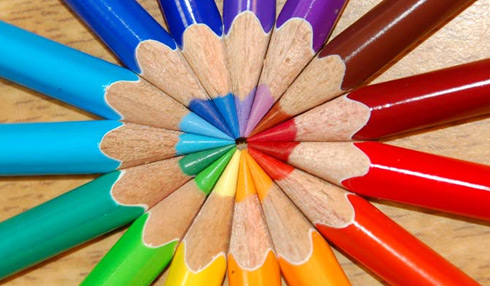
Studio Art 360: Color Wheel and Schemes!
Permission slips are due Monday. If you’re interested, or need a new one, let me know. I will be accepting people until Friday.
What are the PRIMARY colors in the color wheel? What are the SECONDARY colors in the color wheel? How do you MIX the secondary colors? STICKY NOTE QUIZ!
Review with your neighbors the relationships of the colors on the color wheel? QUIZ one another on the names, types and relationships of the colors.
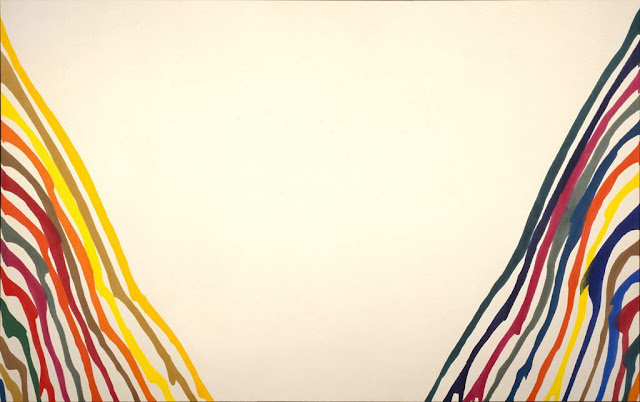
PAINTING: Hallways and Abstraction
How does this work relate to the space / feelings about the space or yourself? What can you do with the VISUAL ARTS that the written or spoken word cannot? Have you begun or finished the written critique? Have you reflected and edited the critique? DUE WHEN YOU WALK IN TOMORROW! Bring in a snack to eat during the CRIT!
How does your art compare with the work of “professionals” and how can you work to create a better understanding of your approach / intent / ideas?)
AP Studio Art: Concentration
How have you been able to use the NEW skills you’ve developed this year and create a STRONG BODY of CONCENTRATION works? How are you being interested in the CONCENTRATION work that you are creating?
Knowing that you are working on your concentration works and STRONG IDEAS with SKILL Building ideas, how are you advancing the ideas of the ARTIST’S JOB? (Or would you like to draw / make JUST TO MAKE ART TO CHALLENGE YOURSELF)?
What is the CENTRAL IDEA behind your concentration? Remember that you need to have a common thread / common theme / CENTRAL IDEA that ties your works together.
ASSIGNMENT PART 2: 3 concentration works. DUE NOVEMBER 21.
Art has no boundaries except those imposed by the needs of the maker. Boundaries are a form of definition, nothing more. They are a way to create a hierarchy of concerns, interests and priorities. Boundaries change all the time. That is part of what art does. By defining an area of interest or by stating a new priority, art allows us to create new definitions of ourselves and the context in which we operate. To blur a boundary is to confuse the definition. To move a boundary is to make a new definition. Kit White 101 Things I Learned in Art School
P. 28 in the HANDBOOK too! Let’s talk about inspiration.
Studio Art 360: CLAY and Cups and Figures and Animals
What challenges did you have in getting started last week on with the clay? REQUIREMENTS FOR THIS ARTWORK: Subtractive, Additive, and Manipulation to the clay. These techniques are REQUIRED in the FINAL Sculpture.
What was the largest success you have in today’s work? Take a look at the rest of the classes work BEFORE we clean up. PAUSE 10 minutes before the end of class.
PAINTING: Hallways and Abstraction
Consider the layering and transparency of the images / colors… what does this visually do for you, the painter? What does it do visually for the audience?
As you look back on the development of your composition, what are especially satisfied about? What are 3 things that you feel are successful compositionally?
Drawing: Kandinsky and YOU!
Looking at your classmates work – what’s the BEST Thing you see? Write it out – name and all – then at SOME POINT TODAY – go and tell them.
With three works due WEDNESDAY (Thursday Really) – do you feel that the 2+ weeks was TOO MUCH TIME? We need to continue working at a quicker pace… lots to do yet…
What is the ONE THREAD that your AP READER might see as they look at the 3 works you have (or are working on) that will tie things together?
HEREis the link to the RUBRIC. – Still Being Built… Ready for Monday (I HOPE)
Beginning on the FIRST set of 3 works… What is the CENTRAL IDEA behind your concentration? Remember that you need to have a common thread / common theme / CENTRAL IDEA that ties your works together. Work on THIS with me – let’s explore our ideas!
ASSIGNMENT PART 1: 3 concentration works. DUE NOVEMBER 7.
Assignment Part 2: 50 Images – All On You Own. Due on NOVEMBER 6, 2016 at 11:59PM. You need to use the school based Google Drive: LINK HERE
#13 Each generation gets to reinvent art in its own image. Because art is an act of description, it is inevitable that what it describes will reflect every generation’s bias of the moment. It is not a strict reflection of a time but an interpretation rendered in a language that is always in a state of transformation. Kit White 101 Things I Learned in Art School
Studio Art 360: A bit of still life and a bit of reflection.
Space: Using all of the knowledge you have gained from the first batch of sketches, create a drawing that emphasizes the idea of space, depth, form, perhaps perspective. Consider your understanding of Line, Shape, Form, Texture, and Color to complete this assignment.
Take a LONG HARD LOOK at your composition. What is happening with the FIGURE? The GROUND? The POSITIVE SPACE? The NEGATIVE SPACE? TOMORROW is the last day… Critique, Mount, and Hand Them In happens tomorrow – last 15 – 20 minutes is NOT DRAWING TIME. Keep that in Mind as we move through today.
How have you worked today on the ideas of the positive and negative space? What are you doing to RESOLVE the image for tomorrow?
PAINTING: Watercolor CRITIQUE
As an individual, what do you think you are going to struggle with the most in today’s (and tomorrow – and maybe Wednesday’s) Critique.
What do you struggle with when drawing hallways, perspective FROM REAL LIFE? think about the rules of perspective that you may have learned in Art Foundations class… SHARE WHAT YOU REMEMBER ABOUT THE RULES?
What challenges did you have with the hallways? What perspective challenged you more that others?
Drawing: Kandinsky and YOU!
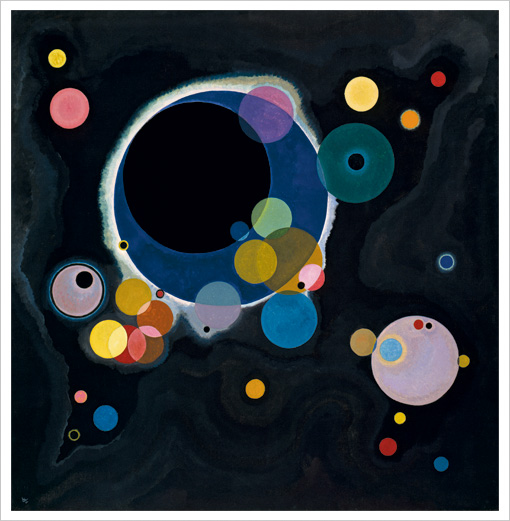
What ONE bit of theory has stuck with you as we have talked about the works and ideas of Wassily Kandinsky? Can you use any of his ideas on color and shape in your work as it is developed?
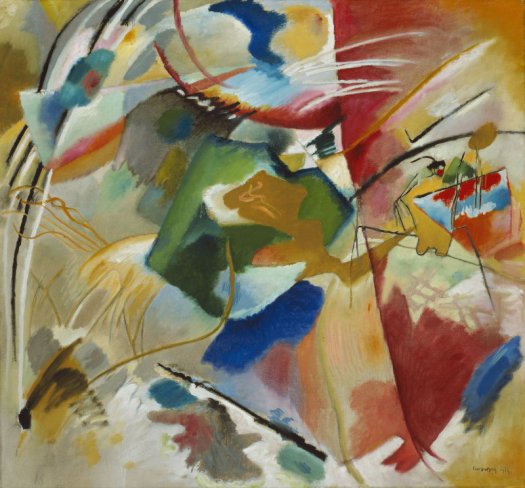
Vasily Kandinsky French, born Russia, 1866–1944 Painting with Green Center, 1913
What NEW ideas do you have about COLOR and Shape in the art you are creating now that we have had some conversation and learning about the ideas of Wassily Kandinsky?
AP Studio Art: Rubrics – 3 of them…
What is the biggest (or two) Element / Principle you might be using in your work this week? Explain in SPECIFICS – Use your individual pieces to explain
Beginning on the FIRST set of 3 works… What is the CENTRAL IDEA behind your concentration? Remember that you need to have a common thread / common theme / CENTRAL IDEA that ties your works together. Work on THIS with me – let’s explore our ideas!
ASSIGNMENT PART 1: 3 concentration works. DUE NOVEMBER 7.
Assignment Part 2: 200 Images – All On You Own. Due on NOVEMBER 6, 2016 at 11:59PM. You need to use the school based Google Drive: LINK HERE
Of the works, skills, information you wrote about earlier in the week (above) write out a timeline for the next 5 days that will allow you to really work out the changes, skills, mastery so that you can (by mid-week next week) turn in the changes for a stronger demonstration of the learned skills. (All late and missing work will be DUE on the FIRST DAY OF SCHOOL NEXT WEEK.)
Art is the product of process.“Whether conceptual, experimental, emotional, or formal, the process you develop yields the image you produce. The materials you choose, the methods of production, and the sources of the images should all reflect the interests that command your attention. The process does not stop with each work completed. It is ongoing. The cumulative result of that process is a body of work.” Kit White 101 Things I Learned in Art School
Studio Art 360: Still Life = Quiet and Focused Drawing
Look back at Monday’s drawings and the beginning of the process, what are some of the challenges that you are facing when it comes to drawing from observation?
With a lot to accomplish in two weeks and little input from me… how are you going to manage your time effectively? Website can be done on own time. Sketching / making art – own time / study hall / before / after school…
Art is the product of process.“Whether conceptual, experimental, emotional, or formal, the process you develop yields the image you produce. The materials you choose, the methods of production, and the sources of the images should all reflect the interests that command your attention. The process does not stop with each work completed. It is ongoing. The cumulative result of that process is a body of work.” Kit White 101 Things I Learned in Art School
Studio Art 360: Sketchbook Assignment and EXAMPLES
FIVE weeks into sketchbooks – what are you accomplishing with the TOOLS of drawing that you have struggled on in the previous sketches – or what are you doing better in this week’s class work that you can put into your sketchbook assignment?
Tell me about your thoughts regarding ABSTRACTIONS and UNITY as we looked at this?
Extra Credit – Watch this video and write up a one paragraph (12 sentence) statement about your response, reaction, interest, curiosity about Gary Petersen’s Artwork. Speak specifically about some of his works -mention it BY NAME and the TIME in the video I can find it. List the Why’s and Becauses regarding why you respond to it the way you do. A well written statement will be worth a week’s sketchbook as A’s – one extra set of A’s in your grades for taking the time to Understand (Arts) Community: Learning to interact as an artist with other artists (i.e., in classrooms, in local arts organizations, and across the art field) and within the broader society. Arts is in parenthesis here as it can easily be switched with other disciplines, like science or history.
Painting: Personal Reflection and Meaning – and PAINT!
How do you feel that working with WATERCOLORS might take you to the next medium of Acrylic? Based on PAST EXPERIENCES… what similarities do you see being part of the process?
What shapes did you struggle to find? What ideas did you find as you listened to the music?
AP Studio Art: Concentration and YOU!
How do you plan on moving forward with your body of work – REVIEW THE IDEAS in the AP HANDOUT about CONCENTRATIONS – SLIDE SHOW from AP CONFERENCE. 5 thumbnails THREE FINAL WORKS in TWO WEEKS. One work a day – Never the same work two days in row. ALVERNO NOTES – Talk about the ideas of how works are developed E and E…
What is your FIRST inclination of your CONCENTRATION going to be about? SHARE YOUR IDEAS with your neighbor and MAKE A NOTE in your head as to where you are.
7.1Ac: Recognize and describe personal aesthetic and empathetic responses to the natural world and constructed environments.
Look at YESTERDAY’s beginning goal… write down what you wrote YESTERDAY and ELABORATE on your idea.
THEN… STICKY NOTE TIME: Looking at your classmates work – what’s the BEST Thing you see? Write it out – name and all – then at SOME POINT TODAY – go and tell them.
Reflection:
What does reflecting on a daily basis about this (or other artworks) do for YOU? NOT FOR ME, but for you? Give 3 ideas you will carry forward in your Artist Habits.
How does your art compare with the work of “professionals” and how can you work to create a better understanding of your approach / intent / ideas?)
9.1P: Establish relevant criteria in order to evaluate a work of art or collection of works.
Look at YESTERDAY’s beginning goal… write down what you wrote YESTERDAY and ELABORATE on your idea.
Looking at the forms you created – what is the STRONGEST / MOST SUCCESSFUL aspect of these four objects? What is the WEAKEST / LEAST SUCCESSFUL aspect of these four objects?
Reflection:
What does reflecting on a daily basis about this (or other artworks) do for YOU? NOT FOR ME, but for you? Give 3 ideas you will carry forward in your Artist Habits.
What form was the most challenging for you to create with the DRAWING or the CARDBOARD? Why do you feel that was the biggest challenge? Use the ART TERMS that you know (Form, Shape, Effort, Execution…). How can you use the IDEAS, TECHNIQUES, PROCESS that we went through in ART CLASS in another part of your life / school?
Critical Thinking, Problem Solving, and Decision Making (Students use critical thinking skills to plan and conduct research, manage projects, solve problems, and make informed decisions using appropriate digital tools and resources.)
Look at YESTERDAY’s beginning goal… write down what you wrote YESTERDAY and ELABORATE on your idea.
What images have you made photographs of so far? What images have you yet to make photographs of? Why is this taking you so long? What issues are you having?
Reflection: What was the problem that you had today with the editing of the images? Can you do this on your own? Do you need help in the process of making the needed updates to your website? Questions? WHAT? Plan on beginning a NEW CONCENTRATION next week. ALSO begin to look through some BREADTH possibilities from PAST CLASSES… Should we do a couple of BREADTH WORKS instead on MONDAY?
6.1Ac: Make, explain, and justify connections between artists or artwork and social, cultural, and political history.
Look at YESTERDAY’s beginning goal… write down what you wrote YESTERDAY and ELABORATE on your idea.
What pages are you using to satisfy the 50 pages? What is your imagery? Why are you using what you are using? WHAT IS THE MESSAGE / RATIONALE / PERSONAL / SOCIETAL meaning you are working to COMMUNICATE?
Reflection: What does reflecting on a daily basis about this (or other artworks) do for YOU? NOT FOR ME, but for you? Give 3 ideas you will carry forward in your Artist Habits.
7.1Ac: Recognize and describe personal aesthetic and empathetic responses to the natural world and constructed environments.
What techniques are working for you in this work? How will you talk about the the struggles and successes you are having?
Reflection: As you worked today, what are the major successes you found in your approach to the oil pastels today? How do you see this as being a drawing that can help you understand compositional relationships?
10.1P: Document the process of developing ideas from early stages to fully elaborated.
These forms may not be your MASTERPIECE of all time, but they did require focus, work, and attention to detail. Looking at ALL the FORMS you created, how you assembled the work, how you wrapped it up with color choices… explain 3 things that you feel were important about what you learned in the ease or difficulty about creating a work of art? TOMORROW WE ARE CRITIQUING! Make sure you are FOCUSED TODAY!
Reflection: If you are NOT done with the paper mache forms, what could you / should you have done over that past 2 weeks to make sure you DID get them finished by the end of the period? How do you see that you are going to be ready for the critique tomorrow?
2.1Ad: Experiment, plan, and make multiple works of art and design that explore a personally meaningful theme, idea, or concept.
To HELP YOU FULLY UNDERSTAND YOUR current concentration, what is the common thread that is chasing through all of your work? What do you SEE? What is the MEANING? Why is this work IMPORTANT?
Reflection: Thinking about the critiques from earlier this week, what are you in need of doing to make these end of the concentration works the best? We still have TONS of time to POLISH our concentrations… what else do you do?
7. Stretch & Explore: Learning to reach beyond one’s capacities, to explore playfully without a preconceived plan, and to embrace the opportunity to learn from mistakes.
TWO MORE DAYS this week… What are two things you are planning on doing TODAY to get a good deal of work done today? EXPLAIN IN DETAIL how you are working OBSERVATION into this drawing?
Reflection: Think about the conversation from Monday… what are THREE THINGS you heard about OTHER artists works that 1) Stuck with you and 2) are beneficial to you about your work?
























 Art With Korb