Concentrate… Really Concentrate… What can YOU work on for 9 months and stay interested in?

Thank You READERS! Please share my site around to your friends in education and all of your other friends too. Subscribe and SHARE! Cheerios! – Frank

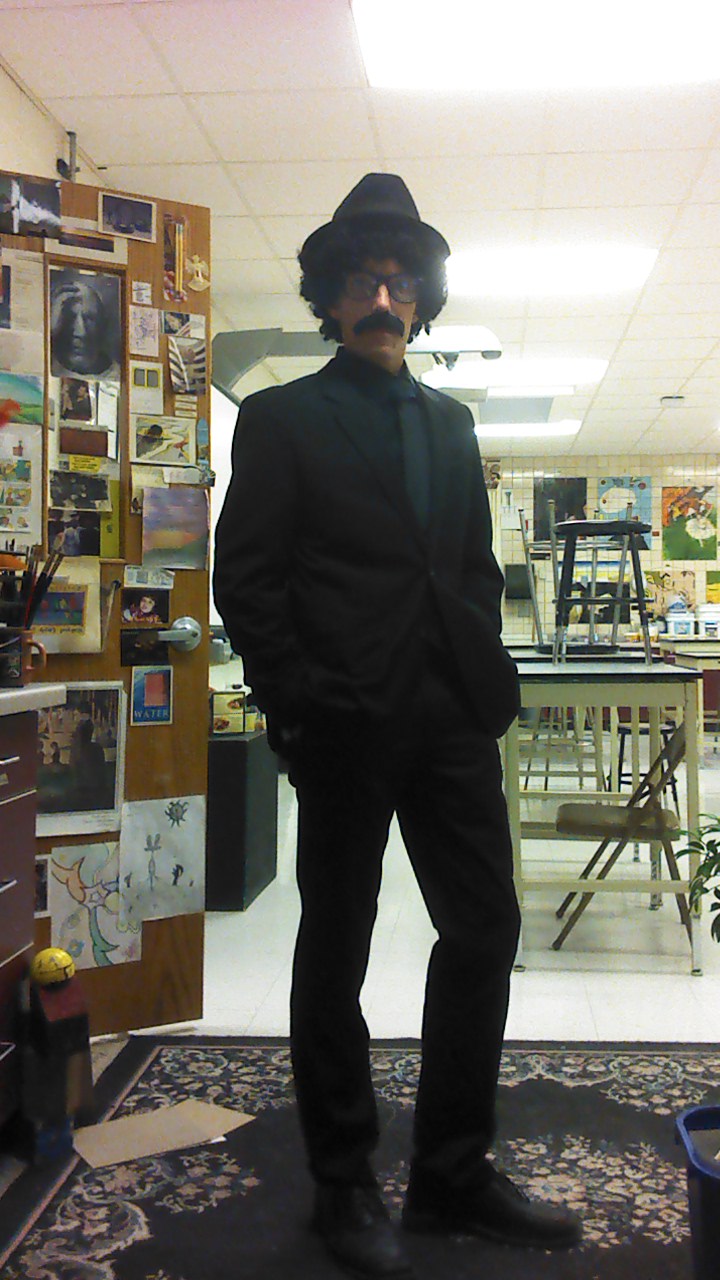
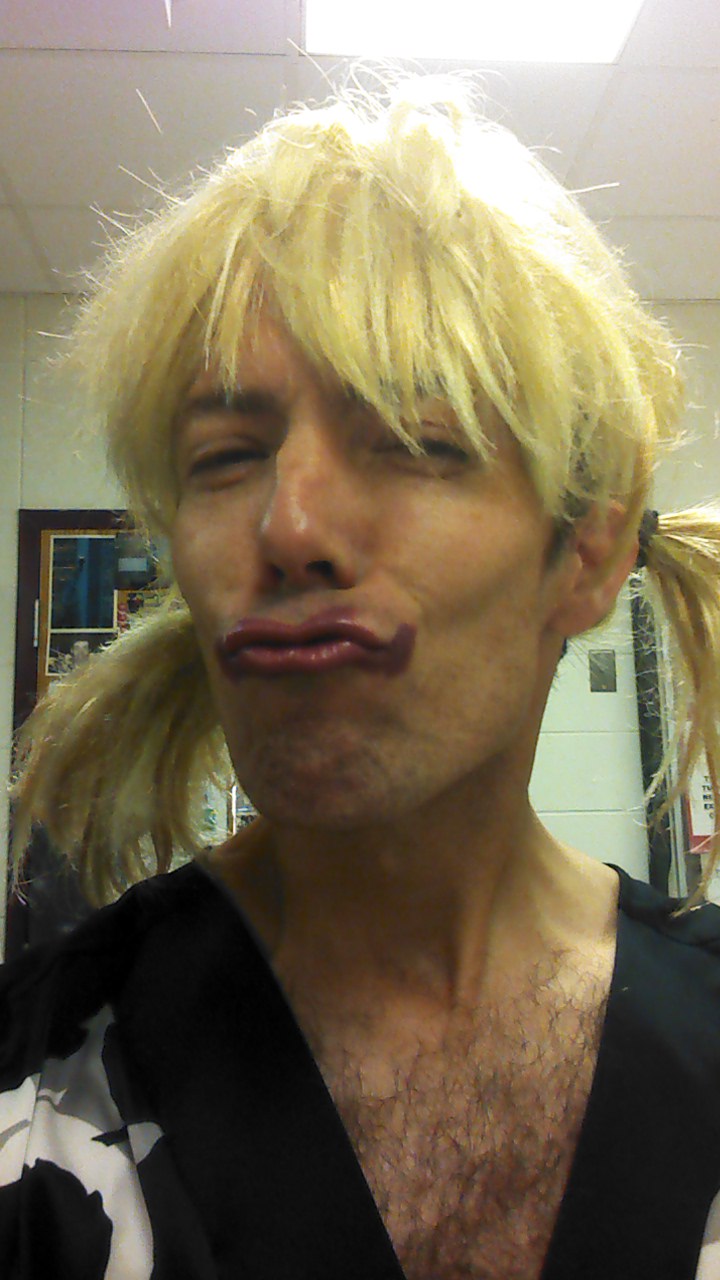
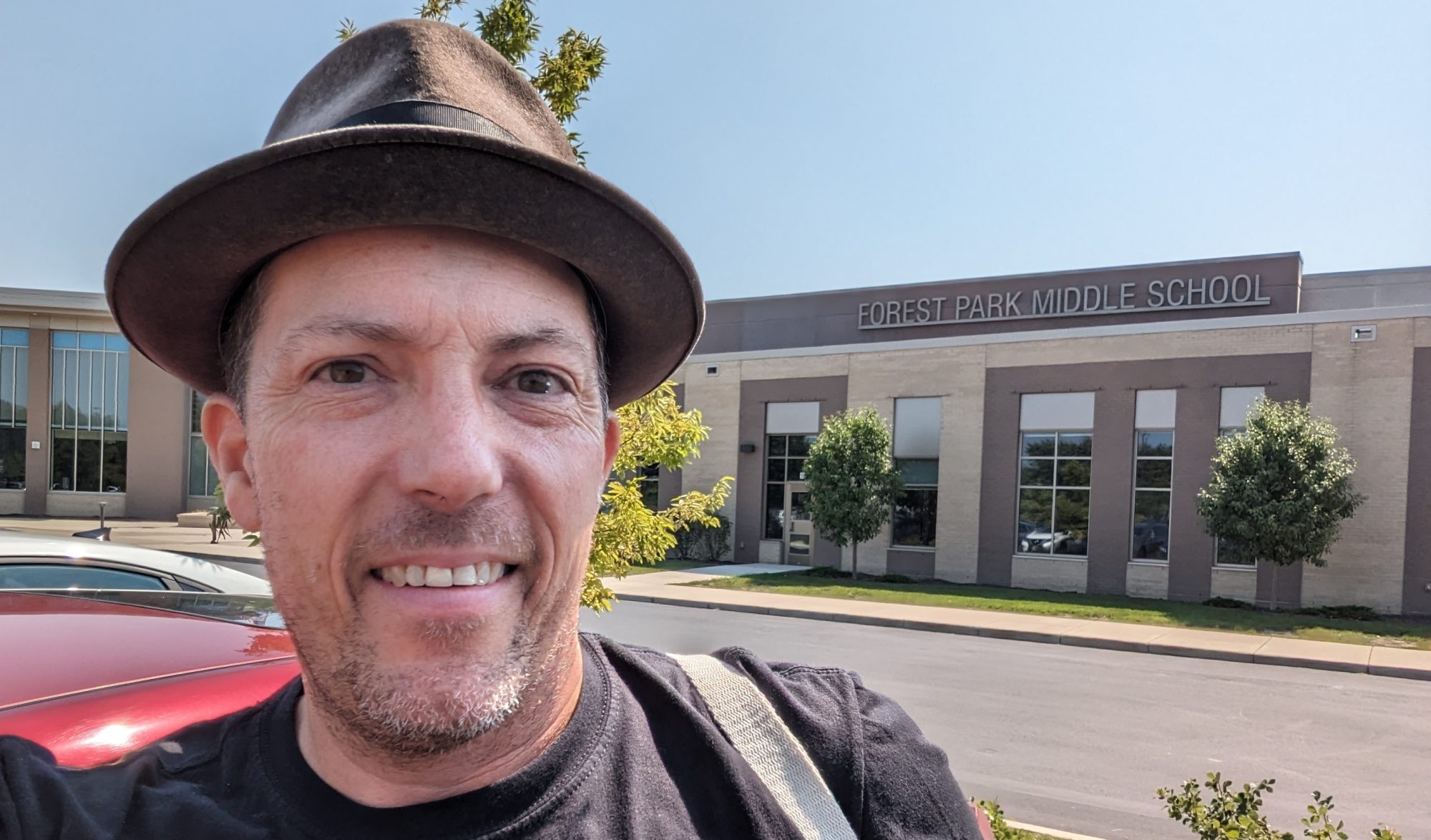
Who is that in Mr. Korb's room today?
Who is that in Mr. Korb’s room today?
Have you seen Mr. Korb around anywhere?

~~~

“We’ve gotten to the point where we think the camera can capture anything at all.” “Well, it can’t really. The camera can’t compete with painting at all. The paintings are much more vivid about the place than photographs are.” – David Hockney, “Modern Painters, “

David Hockney, on his latest inspiration – Yorkshire, Into the Woods,” by: Marina Cashdan, April 2010, p. 66.

Could you paint in nature, in a suit, with a pocket square AND a scarf? I bet I could! I would LOVE to get out and paint like that!

~~~

Art Foundations: Drawing and Painting – This is SERIOUS now. Let’s get to it!

How has this artist used LINE and CONTOUR? Is there success in the drawing? Do you see areas for improvement?
And then there was ME!


GOALS:

  1. (1.2) Create art that demonstrates an understanding of how your ideas relate to the technique of contour line.
  2. 4.4 evaluate and interpret art for relationships in 4.4.1 form and 4.4.3 meanings (What message are you communicating through your art?).

What is the most challenging aspect of the watercolors for the day? What emotions have you chosen to represent yourself? Why?

~~~

Advanced Drawing: Drawing, last two days

Tales from the Crit – Let’s get talking!

GOALS:

  1. 5.1 identify the rationale behind making art.
  2. 4.4 evaluate and interpret art for relationships in 4.4.1 form 4.4.2 context.

DEADLINE extended: What have you accomplished today? What is the greatest accomplishment you have made today?  What is your plan for tomorrow? How are you going to RESOLVE it for MONDAY and be ready for a successful Critique?

~~~

AP Studio Art: Critique: NY Times Article HERE

Did you drink your Vitamin C this morning? After looking through this portfolio… you may need some extra.

GOALS:

  1. 5.1 identify the rationale behind making art.
  2. 4.4 evaluate and interpret art for relationships in 4.4.1 form 4.4.2 context.

What have you accomplished with this work? What was the greatest accomplishment you have made in this work?  What are 10 things in your life that you are VERY Interested in? Ideas for your concentration – Take a look HERE. Concentration PAGES HERE from the Acorn Book.

What’s your FEAR about Art? “Talent?” Ha! TRICK QUESTION! No such thing as “TALENT”

Welcome to GREEN DAY (Color day that is...)
Welcome to GREEN DAY (Color day that is…)

“We’ve gotten to the point where we think the camera can capture anything at all.” “Well, it can’t really. The camera can’t compete with painting at all. The paintings are much more vivid about the place than photographs are.” – David Hockney, “Modern Painters, “

David Hockney, on his latest inspiration – Yorkshire, Into the Woods,” by: Marina Cashdan, April 2010, p. 66.

Not outside, but check out David Hockney’s painting! Great Studio Space!

~~~

Art Foundations: Portrait Drawing AND Pattern Painting – PAIR SHARE YOUR PATTERNS AND YOUR DRAWINGS… Tell the story!

While this is NOT a continuous line portrait – check out the way the artist used the line to fill in the negative spaces. This is one way that we will be using line to help fill the space.

GOAL: BEFORE YOU WRITE THIS DOWN WITH NO THOUGHT… WHAT DO THEY MEAN TO YOU?

  1. (1.1.1) Apply art materials (markers, pencils, watercolors) being aware of your skills.
  2. (1.4) Solve visual challenges using synthesis (element of Line and putting the drawing together, shape and color with pattern).

What is the most challenging aspect of the portrait / pattern painting? What emotions have you chosen to represent yourself through the painting and the drawing? Why and HOW? Be Thoughtful and WRITE A STRONG ANSWER!

~~~

Advanced Drawing: Computer Lab to talk about the critique and take a day away from the drawing.

Chuck Close works being discussed. How would YOU talk about an artwork if you were asked to discuss it?

GOAL: BEFORE YOU WRITE THIS DOWN WITH NO THOUGHT… WHAT DO THEY MEAN TO YOU? WRITE IT OUT SO IT MAKES SENSE.

  1.  2) Use digital media and environments to communicate and work collaboratively, including at a distance, to support individual learning and to the learning of others.
  2. 3) Apply digital tools to gather, evaluate, and use information.

How has the process of observation and the “simple” objects challenged you in the creation of the compositions here? Considering the idea that this basic topic has “been done before” what have you done to take it up a notch, make it more impressive, stronger than what you may have done in the past? 

~~~

AP Studio Art: Photographs and WEB PAGE Design. ART AND FEAR BLOG!

What is your FEAR in ART? We are going to read ART and FEAR to get over some of your fears about being an artist and dealing with the arts.

GOAL: BEFORE YOU WRITE THIS DOWN WITH NO THOUGHT… WHAT DO THEY MEAN TO YOU?

  1. 5.3 describe meanings of artworks by analyzing 5.3.2 how they relate to history and culture (Art and Fear Readings)

What is the main point that you took away from David Bayles and Ted Orland’s Chapter 1 in “ART and FEAR”? We are going to use the ART and FEAR blog to have a REAL STRONG conversation about what it is to be an artist. I WISH I HAD THIS BOOK IN HIGH SCHOOL AND IN COLLEGE. A lot of this is ABOVE YOU and WILL BE for some time… read it – reread it – and do that again. I will be setting out deadlines online for the chapter responses.


Crazy… That’s How It Goes… Millions of People, they come and they go.

IMG_20131001_074207_247 IMG_20131001_074232_568

~~~

“We’ve gotten to the point where we think the camera can capture anything at all.” “Well, it can’t really. The camera can’t compete with painting at all. The paintings are much more vivid about the place than photographs are.” – David Hockney, “Modern Painters, “

David Hockney, on his latest inspiration – Yorkshire, Into the Woods,” by: Marina Cashdan, April 2010, p. 66.

~~~

Art Foundations: Continuous Line Contour Drawings / Watercolor Paintings

What is the MOTIF? What is the PATTERN?

GOALS:

  1. (1.2) Create art that demonstrates an understanding of how your ideas relate to the technique of watercolor painting.
  2. (1.4.1) Create and solve visual problems using motifs and pattern.

OK… What pattern have you chosen to represent yourself? How does it represent you? What are the aspects of it that you feel BEST represent you?

~~~

Advanced Drawing: Final Day to DRAW on your mannequin and paper bag drawings. WORK IT!

Value – Depth – Highlights and Shadow!!! MAKE IT WORK!
Foreshortening… have you had to use this technique? How are your observational skills?

GOALS:

  1. 2.3 RESOLVE artworks that solve visual challenges.

What did you work on to REALLY improve your skills in drawing?

~~~

AP Studio Art: Last day to work on your plant drawing.

Even the children OBSERVE and EXPERIMENT with their plant / flower drawings. How are you experimenting – DISCUSS this with your classmates…

GOALS:

  1. 1.1 RESOLVE media, techniques, and processes with (1.1.3) an awareness so that your ideas are executed well.
  2. 1.4.3 evaluation which includes the summative (final)  reflections about your art work.

What have you learned about the process / techniques you chose to work with in this drawing?

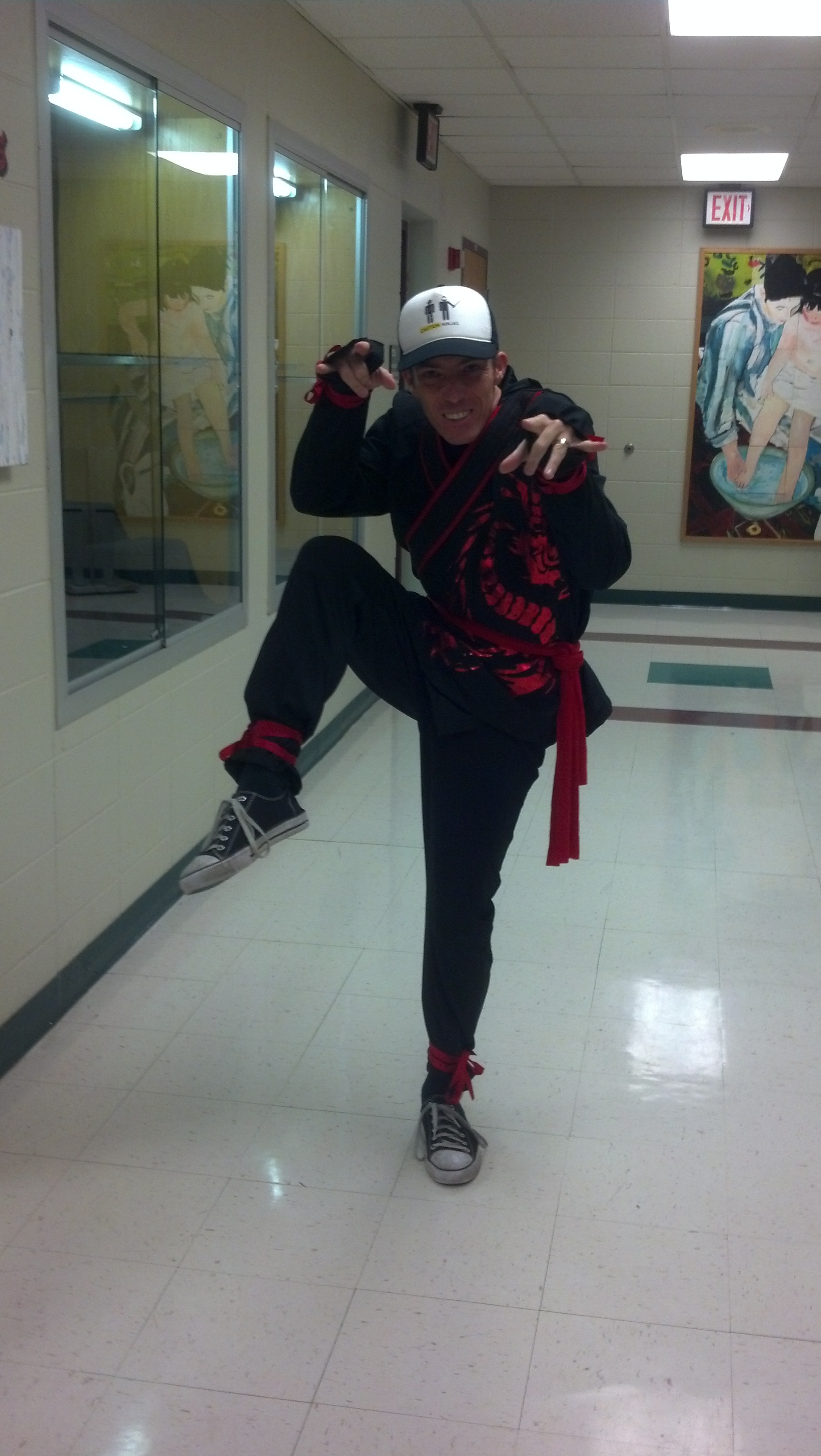
Everybody was Kung-Fu Fighting! Ninja Day at WUHS!

King-Fu Frank!
King-Fu Frank!

~~~

Painting from DIRECT OBSERVATION! David Hockney demonstrates the skills behind it all!

“We’ve gotten to the point where we think the camera can capture anything at all.” “Well, it can’t really. The camera can’t compete with painting at all. The paintings are much more vivid about the place than photographs are.” – David Hockney, “Modern Painters, “

David Hockney, on his latest inspiration – Yorkshire, Into the Woods,” by: Marina Cashdan, April 2010, p. 66.

~~~

Art Foundations: Pattern in the background and Portraits in the foreground.

What patterns did Henri Matisse use? What patterns are you considering?

GOALS:

  1. 3.5 Reflect and evaluate how (3.5.2) symbols (your choice in pattern) are used in art.
  2. 4.4 evaluate and interpret art for relationships in 4.4.2 context.

What is your favorite type of pattern? If you were to describe yourself with a pattern or sense of rhythm, which would best describe you?

~~~

Advanced Drawing: Final 2 days on the drawing of the paper bag and figure drawing.

What values are you working with? What are you struggling with? Succeeding?

GOALS:

  1. 1.1 apply media, techniques, and processes with 1.1.1 skill 1.1.2 confidence 1.1.3 and awareness so that your ideas are executed well.

What did you take away from the drawing today? What are you succeeding with?

~~~

AP Studio Art: Final days of plant drawing.

Korb Magazine Article: https://docs.google.com/open?id=0B89E3WNWaCjUQUlxeVRZWWZUeGs – We are going to develop this idea into an ONLINE Portfolio – WEB PAGE – This is coming up FAST… be ready to insert images and develop an ONLINE Presence. Not today… but soon.

What does this plant drawing have that your’s does not?

GOALS:

  1. 1.1 apply media, techniques, and processes with (1.1.3) an awareness so that your ideas are executed well.

With only two days left, what are the biggest problems that you have had to overcome in this work? Think about it… where did you start and where are you now? What GAINS have you made? Where have you fallen down?

Circle Square Circle Square Circle Square… Are you an Alternating Pattern?

LOOK DEEPLY INTO MY EYE! What are you LOOKING at? What are you Seeing?

“What difference does it make whether you’re looking at a photograph or looking at a still life in front of you? You still have to look.”

– Chuck Close

~~~

“In order to do the best you can at something, all the resources you have at that moment are the ones that will get you there.”— Frank Korb 

~~~

Art Foundations: Watercolor Techniques to wrap your skills up! What else can can you do?

LINK TO WATERCOLOR DEMONSTRATION VIDEOS HERE

Pattern is happening here. What mood / emotion do you feel or take away from this painting?

GOALS:

  1. (1.2) Create art that demonstrates an understanding of how your ideas relate to the technique of Watercolor Paint  line.
  2. (3.2) apply watercolors  art to solve visual challenges (pattern and line).

From all that we have done… pattern, watercolor techniques, continuous line contour drawing… you are going to create a self portrait. What typr of pattern do you feel you’d like to use? What colors might you use with the patterns? What sort of emotions do you think you will be expressing with your self portrait? Write out a 5 sentence paragraph in your REFLECTION section of today’s goals sheet.

~~~

Advanced Drawing: Critique informal… hang em’ up QUICKLY!

Where’s the mannequin, plant and paper bag? What is the strongest ELEMENT and how did the artist use the PRINCIPLES to compose this image?

GOALS:

  1. 5.3 describe meanings of artworks by analyzing 5.3.1 techniques
  2. 1.1 apply media, techniques, and processes with 1.1.1 skill 1.1.2 confidence 1.1.3 and awareness so that your ideas are executed well.

In your binder… What have been the techniques that you are developing in this drawing? What other skills are you using to compose a successful work? Write a 7 sentence statement in your weekly reflection portion of today’s goals sheet.

~~~

AP Studio Art: Plant Drawings… Jim Dine…

Notice how Dine ACTIVATED his BACKGROUND? How are you doing the same?

GOALS:

  1. 5.3 describe meanings of artworks by analyzing 5.3.1 techniques.

In your GOALS PAGE SUMMARY section, sit and look over your work from the week. I have lectured VERY LITTLE. WE have worked A LOT. What are your overall thoughts about the drawing you have begun? What emotions MIGHT a viewer take away from this? If you were trying to communicate a message with the work, what message was that? What struggles are you having? What successes are you having? Write out a 10 sentence statement about this weeks work. 2 days next week to work… then onto the next work.

Keep your eyes open! You never know what you might see.

What do you SEE? What do YOU see? WHAT do you see?

“What difference does it make whether you’re looking at a photograph or looking at a still life in front of you? You still have to look.”

– Chuck Close

~~~

Art Foundations: Watercolor Experiments

What is YOUR pattern?

GOALS:

  1. (5.3) Describe meaning of artwork by analyzing watercolor technique.
  2. (3.2) Apply ideas in art to solve visual challenges and create meaning.

Which of the watercolor techniques are you especially interested in trying a bit more? What about it is interesting to you?

~~~

Advanced Drawing: Work on your paper bag / mannequin drawings.

GOALS:

  1. 4.3 compare relationships in visual art in terms of 4.3.2 aesthetics 4.3.3 and culture as it relates to your own art.
  2. 4.4 evaluate and interpret art for relationships in 4.4.1 form.

How does your drawing relate to your ideas / your cultures / YOU in 2013? Your place in society is important and you need to make your mark in the world… in the arts.

~~~

AP Studio Art: Plant and Flower Drawings – Are you BREAKING THE RECTANGLE?

What’s the final destination for your drawings? Pace Gallery?

GOALS:

  1. 2.2 evaluate the effectiveness of artworks.
  2. 5.3 describe meanings of artworks by analyzing 5.3.1 techniques.

How are you TRULY challenging yourself? Biggest ISSUES today to learn from? Biggest successes to learn from?

If you were to describe yourself as a pattern, what pattern would you be?

Keep your eyes open and begin to SEE and PERCEIVE the world around you! How do you see the elements and principles that happen in the world around you?

“What difference does it make whether you’re looking at a photograph or looking at a still life in front of you? You still have to look.”

– Chuck Close!

~~~

Art Foundations: PATTERN and WATERCOLOR experiments! Woo Hoo!

What is the pattern that you see in this painting? What is the motif?

GOALS:

  1. (5.3) Describe meaning of artwork by analyzing technique through watercolors.
    1. How can you create a sense of MEANING through the use of your watercolor technique?
  2. (3.2) Apply watercolors to solve visual challenges.
    1. What was CHALLENGING about your use of Watercolor Paints? What do you remember from when you last used them?

~~~

Advanced Drawing: Paper Bag / Mannequin Drawings.

How can you compare the strengths of this drawing with the strengths of YOUR drawing?

GOALS:

  1. 2.4 compare different points of view regarding composition and meaning in artwork
    1. What are you being CHALLENGED WITH in this drawing? 
  2. 2.5 defend personal evaluations
    1. What did you ADD to your classmates critique? How can your words help them see the positive and areas for improvement?

~~~

AP Studio Art: Mid Critique – What’s happening in your drawing?

What has Dine done to deal with the background? What are YOU doing to deal with the background?

GOALS:

  1. 1.1 apply media, techniques, and processes with (1.1.3) an awareness so that your ideas are executed well.
    1. What NEW techniques are YOU using in this artwork and is it working visually for you?
  2. (2.2) evaluate the effectiveness of artworks
    1. What difficulties are you having? What have you done to try and solve those challenge?

I got rhythm, I got music, I got my art class, who could ask for anything more?

“What difference does it make whether you’re looking at a photograph or looking at a still life in front of you? You still have to look.”

– Chuck Close!

Regardless of WHAT you are drawing or what you are looking at… make sure that you keep looking!

~~~

Advanced Drawing: Let’s continue working on the drawings. Give yourself a bit of time to THINK about what you are doing.


How are you combining the visuals that you have chosen into one strong and moving artwork?

GOALS:

  1. 2.4 compare different points of view regarding composition and meaning in artwork
  2. 2.5 defend personal evaluations

What has been your most successful are of this drawing today?

~~~

Art Foundations: Pattern – Chapter 8. Let’s draw out some variations and versions of patterns that we see.


GOALS:

  1. (5.3) Describe meaning of artwork by analyzing technique and use of line AND pattern.
  2. (3.2) apply patterns and line to solve visual challenges.

What kinds of Pattern are you drawn to? What is your favorite type of pattern?

~~~

AP Studio Art: Plant Drawings – How are things going? Jim Dine – Self-Portrait on the WallVideo!

How are you using COLOR or Value to tie it all together?

GOALS:

  1. 1.1 apply media, techniques, and processes with (1.1.3) an awareness so that your ideas are executed well.
  2. (2.3) create artworks that solve visual challenges and (2.2) evaluate the effectiveness of artworks.

What materials have you used today? How are you using COLOR or VALUE or WHAT ELSE to tie it all together?

What would the future you say to your current self? Let’s listen to Chuck Close!

“What difference does it make whether you’re looking at a photograph or looking at a still life in front of you? You still have to look.”

– Chuck Close

~~~

Do any of you have cowboy boots, women’s size 10, that my daughter could borrow for Wednesday? I’d need them Tuesday and will return them Thursday. Thanks.

~~~

Advanced Drawing: Continue to work on the Paper Bag / Figure Drawing?

Bags… How’s the Dark? How’s the light? how’s the composition?
and… what are you doing to incorporate your figure?

GOALS:

  1. 1.1 apply media, techniques, and processes with 1.1.1 skill 1.1.2 confidence 1.1.3 and awareness so that your ideas are executed well

  2. 1.2 create art that demonstrates an understanding of how your ideas relate to the 1.2.1 materials 1.2.2 techniques 1.2.3 and processes you use

What did you take away from the drawing today? What are you succeeding with?

~~~

Art Foundations: Portrait, Chapter 1: Lesson 3…

What types of Lines did this artist use in her Self-Portrait? Talk to your neighbors about it.

GOALS:

  1. (1.2) Create art that demonstrates an understanding of how your ideas relate to the technique of contour line.
  2. (1.4.1) Create and solve visual problems using analysis of the shape and form of the face.

What was the most fun part of dealing with contours? If you were to describe yourself in terms of lines, what lines would you use? Where are you successful in the contour drawings? Share the images with your classmates and discuss the success and failures.

~~~

AP Studio Art: Plant Drawings and self evaluation and Jim Dine – Self-Portrait on the Wall Video

Questions to Consider for Online / Digital Self-Evaluation: CLICK HERE

MAGAZINE ARTICLE Example: Korb Magazine Article

GOALS:

  1. 1.1 apply media, techniques, and processes with (1.1.3) an awareness so that your ideas are executed well.
  2. 3.3 describe the creation of images and ideas and explain why they are of value

What materials have you used today? How are the projects coming along? What do you need to be doing tomorrow to make STRONG headway?

Parents… have you eaten YOUR frog yet this morning?

Goals are the fuel in the furnace of achievement.” Brian Tracy, Eat that Frog

Good Luck Eating THIS frog in the morning… YUCK!

~~~

Advanced Drawing: Drawing Paper – Figure and Paper Bag Drawing – Relationships and Meaning – HOW ARE GOING BIGGER?!

What element do you think is emphasized in this drawing? Tell your neighbor.
  1. 1.2 create art that demonstrates an understanding of how your ideas relate to the 1.2.1 materials
  2. 1.3 communicate ideas clearly

Talk to your neighbor / partner about the meaning behind your work. What SKILLS are you hoping to develop in this drawing? What MESSAGE are you hoping to communicate through this work?

~~~

Art Foundations: Contour Line Drawings and Chapter 1

PATTERN – CHAPTER 7 – What type of pattern describes YOU?
  1. Work on (1.1.1, 3) applying media and techniques with skill and awareness (of HOW you are using line).
  2. (2.2) Evaluate the effectiveness of how line is working to define your portrait.

What types of lines are you using? Where do you find it easiest to use the idea of line / contour to represent the face / form? What is the most challenging portion of the face to successfully create? Share with your classmates.

~~~

AP STUDIO ART: PLANTS and JIM DINE – PACE Gallery Press Release –  PACE GALLERY SITE

Inspired by the workings of Jim Dine… http://createthreesixty5.com/ is a blog by an art student who KNOWS what it is to be inspired by nature (and other artists).
  1. 2.2 evaluate the effectiveness of artworks.
  2. 5.3 describe meanings of artworks by analyzing 5.3.1 techniques.

Do you find meaning in your work? Do you find something interesting in the plants? What is challenging you?