The Art Student (and the lessons you can learn)

“I am interested in art as a means of living a life; not as a means of making a living.” ― Robert Henri

What a great day at the Milwaukee Art Museum. It has been FAR too long. Oh to get back into the looking at the visual arts (and a lot of it at that). I was very happy to have changed my approach and began with the European Art from the Baroque era and worked my way forward. Of course, I ended in the Bradley Collection with a look at the Alex Katz painting of “Sunny” but… it wouldn’t be a trip to MAM if I didn’t end there.

As an art teacher, I look to Robert Henri as one of THE art teachers to look up to. Color Theory, Art Theory, Aesthetics, History, Art Making… if one knows me, the ideas behind the art are as (if not more) important than the final product itself. Here you go… and if you are an art student, her you are…

10 Things the Arts Teach Students

1. The arts teach children to make good judgments about qualitative relationships.
Unlike much of the curriculum in which correct answers and rules prevail, in the arts, it
is judgment rather than rules that prevail.

2. The arts teach children that problems can have more than one solution
and that questions can have more than one answer.

3. The arts celebrate multiple perspectives.
One of their large lessons is that there are many ways to see and interpret the world.

4. The arts teach children that in complex forms of problem solving
purposes are seldom fixed, but change with circumstance and opportunity.
Learning in the arts requires the ability and a willingness to surrender to the unanticipated possibilities of the work as it unfolds.

5. The arts make vivid the fact that neither words in their literal form nor numbers exhaust what we can know. The limits of our language do not define the limits of our cognition.

6. The arts teach students that small differences can have large effects.
The arts traffic in subtleties.

7. The arts teach students to think through and within a material.
All art forms employ some means through which images become real.

8. The arts help children learn to say what cannot be said.
When children are invited to disclose what a work of art helps them feel, they must reach into their poetic capacities to find the words that will do the job.

9. The arts enable us to have experience we can have from no other source
and through such experience to discover the range and variety of what we are capable of feeling.

10. The arts’ position in the school curriculum symbolizes to the young
what adults believe is important.

A long time coming… Thanks Painting Class 2008 – 2009

Waterford Union High School in Oil Painting class of 2008 – 2009

The painting class of 2008 – 2009 took the challenge of creating a series of works that documented their high school and challenged their understanding of how to use oil paints, mediums, power tools, and the very challenging linear perspective as they composed their images. BEginning with a long walk and conversation about composition, the artists came up with their favorite angles of the building and developed their own ideas for the image as they were faced with the challenge of their school as the subject matter. From photography and thumbnail sketches, teamwork and construction of the canvases, the artists created a wide variety of compositions using all the different skills and techniques they had in their art toolbox. Thanks to the following artists for their hard and dedicated work creating a strong and successful body of work. Each one of them created a unique and individual viewpoint of the building that gave them so many memories and skills to last a lifetime. Thank you Waterford Union High School artists.

  • T.E.
  • Erica
  • Daja Braatz
  • Steve Rudan
  • Cameron Robinson
  • Amandine Gerus
  • Brittany Canfield
  • Megan Barker
  • Bina Olafsdaughter
  • Alexandra Jones
  • Mike Bink
  • Maryann Little

Spring Break, but no break from ART!

January 21, 2013 - Monday - 2nd Semester WELCOME!

Happy Monday – Welcome to Spring Break!

As a note to all the artists I have the opportunity to work with when it is NOT Spring Break… I will be in the building from about 8 – Noon on Monday, April 21 hanging artwork. If you are interested in coming in to work, help, or simply gather supplies for the rest of the vacation (because there is a lot to do when we all get back) come on in and find me. I should be in the art room or in the hall between the atrium and the cafeteria. Have a GREAT SPRING BREAK!

Mr. Korb

Hello Janie and everyone at the ASCD conference!

69th Annual ASCD Conference Attendees (and Janie) – Welcome to my DAY to DAY Goals Website!

Take a tour, have a look, follow me, and see how I effectively use technology as a tool for interaction, content, resources, collaboration and communications tool in my classroom. If you would like to contact me – you can e-mail me at fjkorb@gmail.com. Enjoy!

GOALS:

  1. Know about how one teacher uses technology in the classroom as a tool for interaction, engagement, content, and a resource for students, parents, and the world!
  2. Know about the benefits and positive aspects GANAG and all its components have added to one teacher’s ability to be more effective instructor and planner for my students (and the world)!

Take a minute and discuss with your neighbors about any questions about the how I use technology in my classroom? How are you effectively using technology as a learning tool, interactive tool, tool of engagement in your classroom? What else might you try out? Did you get my e-mail address for questions you might have? How about my website address?

Week ONE is DONE. What have you taken so far?

If you can’t fly then run, if you can’t run then walk, if you can’t walk then crawl, but whatever you do you have to keep moving forward.” ― Martin Luther King Jr.

Art Foundations: Paint / Line / Draw / Collage

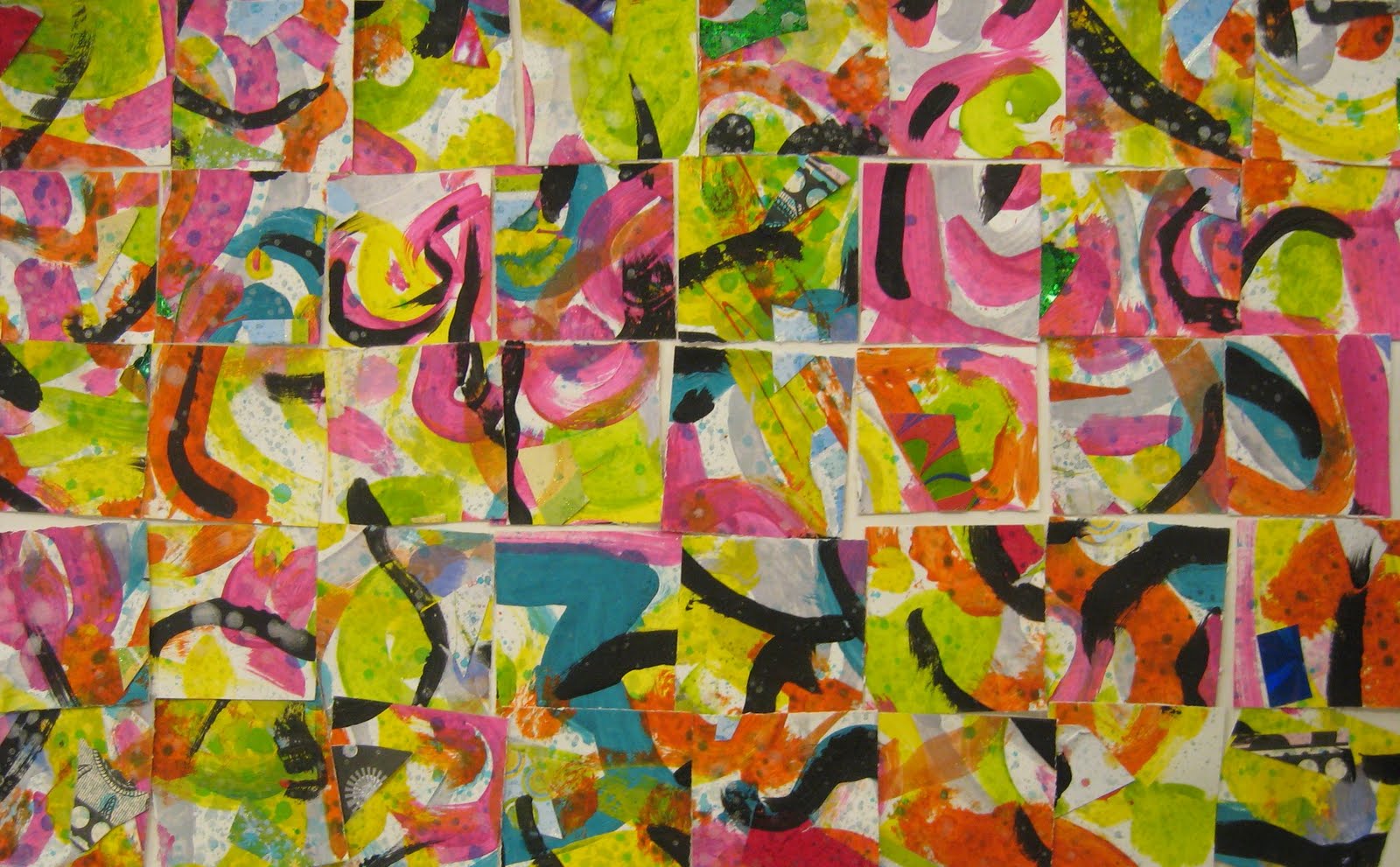
Collage and Art – We are going to be making some incredible art that, hopefully, says something about YOU! http://www.incredibleart.org/lessons/middle/images/Linda-cutpainting2.jpg

GOALS:

  1. Know about applying MARKER, CRAYON, WATERCOLOR by being AWARE of techniques, and processes so that your ideas are executed well.

What was challenging about the process? What did you enjoy about this work? What have you enjoyed (or been frustrated with) this week? FEEDBACK!

Drawing and AP Studio Art: SCAD – Presenter – HEAR ABOUT ART OPTIONS

Going to Art School? How about SCAD? http://i0.wp.com/www.psyop.tv/wp-content/uploads/2013/02/SCAD.jpg

GOALS:

  1. 4.3 compare relationships in visual art in terms of 4.3.1 history, 4.3.2 aesthetics, 4.3.3 and culture as it relates to your own art
  2. 4.4 evaluate and interpret art for relationships in 4.4.1 form, 4.4.2 context, 4.4.3 meanings showing understanding of the work of various art professionals*

What are your QUESTIONS about SCAD or OTHER art schools? Monies? Courses? Experiences? Come on… what are your QUESTIONS?

Can you handle the ABSTRACT world of the arts?

“If you can’t fly then run, if you can’t run then walk, if you can’t walk then crawl, but whatever you do you have to keep moving forward.” ― Martin Luther King Jr.

Art Foundations: Ch 1 & Ch 4 – Non-Objective Line Drawings

Non-Objective Art – Lines and REARRANGING the ideas – Collage. https://artwithkorb.com/wp-content/uploads/2014/01/eb586-633.jpg

GOALS:

  1. (4.2) describe the meaning of NON-OBJECTIVE art objects within YOUR culture and time.

What were the different kinds and variations of  lines you drew with today? What qualities of lines did you use and what messages do you think they communicate to an audience? What were your responses to the drawings that we worked on and why? Reflect with your neighbors about the drawings you did in class today and be able to identify the variety of different lines

Drawing: Value Scales and Still Life – Pencil / Value Grids

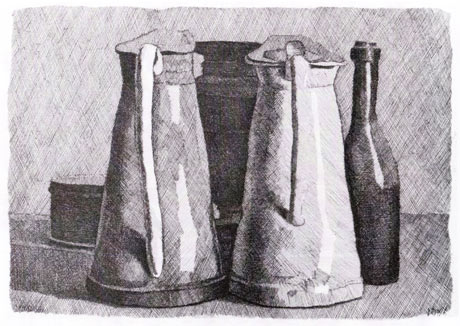
Morandi and the CLOSED Composition – Crosshatching? Yes. http://static.guim.co.uk/sys-images/Observer/Pix/pictures/2013/1/10/1357823154138/morandi-still-life-five-o-023.jpg

GOALS:

  1. (1.2) create art that demonstrates an understanding of how ideas about VALUE and CHIAROSCURO relate to the variety of pencils.

What are the differences with the three types of Pencils? What do YOU find useful from today’s exercise?

AP  Studio Art: Concentration – SET UP Artworks in Cafe!


OH NO – Watch out Captain Ahab! http://gcaptain.com/wp-content/uploads/2012/05/whale-bellyflops-on-yacht.jpg
  1. 2.1 ALLOW criticism to be formed about artworks that work to accomplish 2.1.2 personal, 2.1.3 communal, 2.1.4 or other meanings (Let’s set up your exhibit with your statements and nametags.)
  2. (1.1) Apply media, technique, and process with skill and confidence (P)

As we get to the end of the week – Share with your neighbor the plans and advancements for this and the next piece. What sort of story do you think others might be reading in your work?

Focused Goals – Keep Working and Stay on Task.

Special Thanks to the Teachers at St. Andrew’s School in Boca Raton, Florida. I had a great time speaking with you all. If I can help out in any way… please feel free to contact me! Frank

~~~

“An average person with average talent, ambition and education, can outstrip the most brilliant genius in our society, if that person has clear, focused goals.” – Brian Tracy

5 Days of Class… then EXAMS… let’s stay FOCUSED folks! http://mavericksquared.com/www/wordpress-content/uploads/2012/08/set-goal.jpg

Advanced Drawing: Portraits – Continue to work

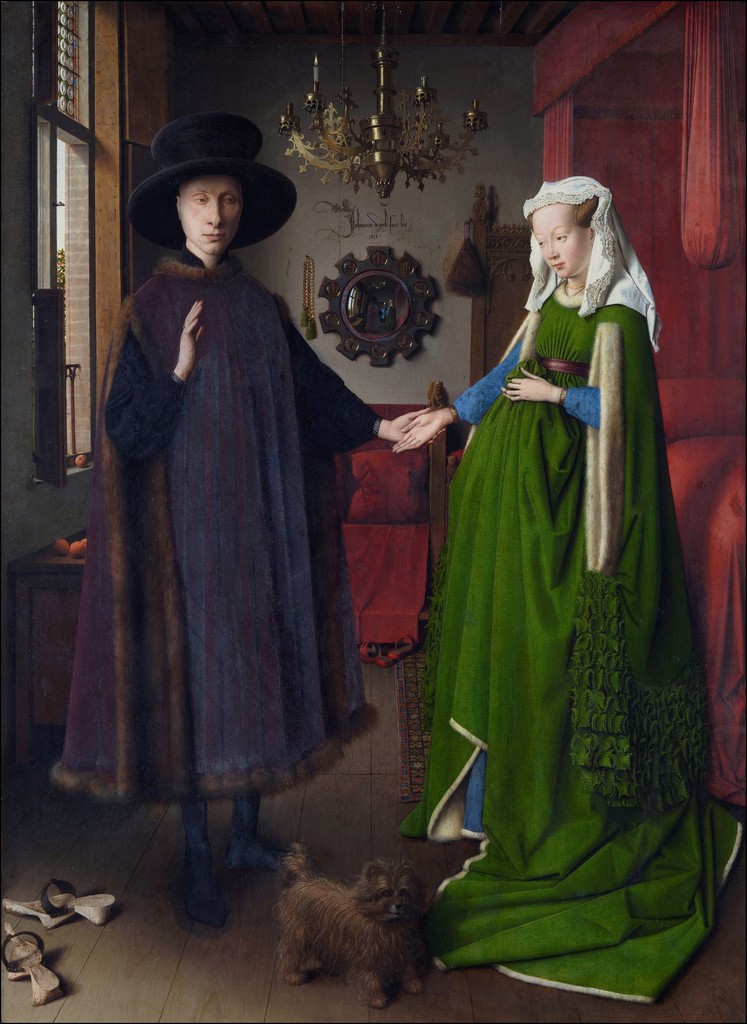
Jan van Eyke – Arnolfini Wedding – interior / Exterior – Even the PAINTER is in the painting… https://artwithkorb.com/wp-content/uploads/2011/11/jan-van-eyck-arnolfini2bportraity2bdes2bdonateurs.jpg

Goals:

  1. (2.3) Create artworks that use organization and function to solve specific visual challenges.
  2. (5.1) Identify the intentions and purposes behind making art. (D)

What has been the most challenging thing for you so far? How do you feel about the progress of your work so far? What do you need to do in order to finish? This will take us up to EXAM DAY… Rubric is DUE on exam day – critique will be the exam.

Art Foundations: Color Wheel and Color Mixing with Acrylic Paint

Color Wheel and Texture – What do you remember about color mixing? Talk to your neighbor about HOW to mix, paint, clean… etc… http://integritypromos.com/site/custom_apparel_files/Color-Wheel—Transparent.png

Goals:

  1. 1.1 apply acrylic paint, color mixing techniques, and painting processes with 1.1.1 skill, 1.1.2 confidence, 1.1.3 and awareness so that your ideas of the color wheel are executed well
  2. 1.2 create painting techniques (grattage and decalcomania that demonstrates an understanding of how your ideas relate to the 1.2.1 materials, 1.2.2 techniques, 1.2.3 and processes you use.

“The Golden Age of Abstraction” ARTnews, April 2013:

What color did you find as very difficult to make? What color was easy (and not RY or B)?

AP Studio Art: Concentration Work and “Of Sailors and Whales” – DUE TODAY

What is a concentration? Frank Juarez is a Sheboygan artist – here’s his site! Enjoy! http://frankjuarezpaintings.com/

Goals:

  1. 1.2 create art that demonstrates an understanding of how your ideas relate to the 1.2.1 materials 1.2.2 techniques 1.2.3 and processes you use
  2. 3.3 describe the creation of images and ideas and explain why they are of value

What are the works that need work? What are you doing with the time you are in here? Should I be writing you passes for your study halls? If I am, should I continue?