#Week8 – #Painting, #Canvas, #Concentration, and #POPArt – A lot to cover!

Aim higher in case you fall short.” ― Suzanne Collins, Catching Fire

Jasper Johns – Can you hit THIS target? NOPE! BIO HERE: http://www.moma.org/collection/object.php?object_id=78393

~~~

Studio Art 360 – Color Schemes and POP Art

Picasso’s “The Old Guitarist” What is it all about? http://www.artic.edu/collections/conservation/revealing-picasso-conservation-project/pablo-picasso-and-blue-period

Goals:

  • G: 3.1P: Apply relevant criteria from traditional and contemporary cultural contexts to examine, reflect on, and plan revisions for works of art and design in progress.
  • What are the 8 color schemes that we studied last week? Can you worte all 8 down without looking at your notes?

QUIZ on the names, types and relationships of the colors. Open up to page 17… READY… HERE COME THE QUESTIONS… Identify the following types of COLOR SCHEMES…

Painting – Color Schemes and the RESOLUTION of the ABSTRACT Compostion

What are the similarities you see in your work and Richard Diebenkorn’s? http://www.sfmoma.org/images/artwork/large/72.59_01_b02.jpg BIO: http://www.theartstory.org/artist-diebenkorn-richard.htm

Goals:

  • 3.1P: Apply relevant criteria from traditional and contemporary cultural contexts to examine, reflect on, and plan revisions for works of art and design in progress.
  • What is the color scheme you have chosen for you composition? Please explain WHY you are headed that direction and THEN explain it to a classmate.

What is the ONE big challenge you will have in the process of building a canvas? What are TWO strengths in the planning of your painting?

AP Studio Art – Level 6 CRITIQUE – Are you UP TO IT?

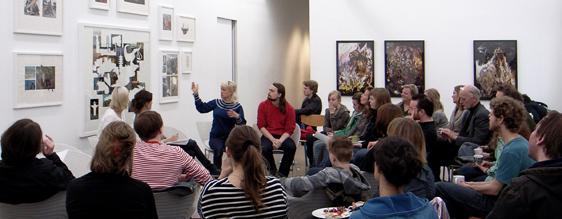
What have you got to say about the work in front of you? Positive and Constructive. Do NOT be afraid to be critical… http://gfx.0047.org/images/event/Artist_Talk_2.jpg

GOALS:

  • 3.1P: Apply relevant criteria from traditional and contemporary cultural contexts to examine, reflect on, and plan revisions for works of art and design in progress.
  • What has previous discussion of your work tended to be? Negative right? Discuss the challenges that one might face when posed with the potential of a critique.

What did you take away from the critique today and Friday? Write down what you have taken from the crit.
How good are YOU looking today? How good are you LOOKING today?

“Nothing in life that’s worth anything is easy.” – Barack Obama, SOTU 2014

Art Foundations: Line / Contour Line PORTRAITS

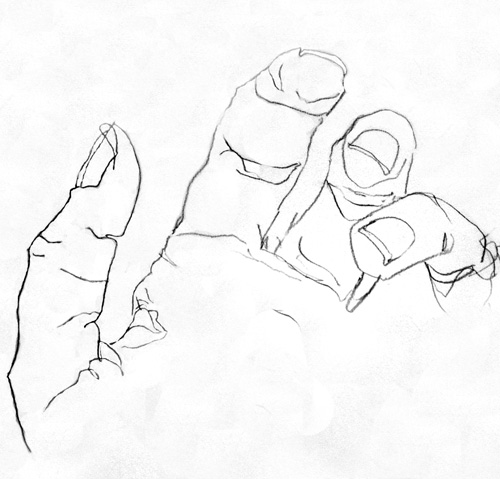
Hands can be REALLY hard – make it more enjoyable, less stressful… Let’s give it a try shall we? https://artwithkorb.com/wp-content/uploads/2014/01/663df-6a01053560de5d970b017c3648d275970b-300wi.jpg

https://lh5.googleusercontent.com/ybQLOQj4jYFpccYL_Ij3xCrpBBe1bCP1yhVP5sXRhaslFh1gnGNsNPGWOE5EPqLZGbvZQo9c5uRzT4sX6pg2GXDMTaarYNtLjhATXAj-ApGM%3Ds600

Goals:

  1. Apply ideas of Observation in art and use skill to solve visual challenges of Continuous Line Contour Drawings
  2. Create Portraits that demonstrates an understanding of how your ideas relate to the 1.2.2 TECHNIQUES of CONTOUR Line Drawings

What is the most challenging aspect of the hand drawing / line? What emotions have you chosen to represent yourself? Why? What variety of lines do you hope to use in the process of creating your self-portrait?

Drawing: Still Life – SELF / GROUP Mid Crit! Things to look at before talking / writing about art – CLICK HERE

Let’s line up the critics… “tell me about your art…” http://abiggerworldyet.files.wordpress.com/2010/07/20100610_art_560x375.jpg Begin at 18:20

Goals:

  1. (2.1) form criticism (Mid Critique) about Still Life Drawings inspired from Classroom Still Life.
  2. (3.3) describe the creation of OBSERVATIONAL drawings and ideas and explain why they are of value.

What are the differences you are finding with the various types of pencils? What do YOU find useful from today’s exercise in the CRIT?

AP Studio Art: WORK – Next Week – COMPUTER LAB – Upload!

Everything tastes better with Bacon… even Francis Bacon. https://artwithkorb.com/wp-content/uploads/2012/02/art-bacon.jpg

Goals:

  1. What GOALS do you have for yourself? Really? What are your objectives?
  2. Solve visual challenges on the CONCENTRATION works for MONDAY

What bit of advice did you get from your classmates as they walked through the class today? What can you put to use? What bit of advice did you give that might be used elsewhere? What are your goals for the next work(s) that will show your development?  

Elements are the building blocks of art. What are you focused on? Line? Space? Value?

“Nothing in life that’s worth anything is easy.” – President Barack Obama, SOTU 2014

Art Foundations: Line, Unity, Abstract Expressionism, Non-Objective Art – Process

How has Pablo Picasso used line to create this image of Igor Stravinsky? What kinds of line did he use? http://bdcentral.files.wordpress.com/2008/12/picasso_s_stravinsky1.jpg

GOALS:

  1. (4.2) describe the purpose and meaning of art objects within different cultures, times, and places. (Non Objective… what are we  / you trying to accomplish? What is the point of this first project?)

How has the use of the BLACK ACRYLIC paint UNIFIED your work? What techniques did you try? What types of lines STILL Stand out?

Drawing: Still Life, Thumbnail and Composition

Georgio Morandi and his compositions… what are you doing in your drawing to make this an interesting in your composition? https://artwithkorb.com/wp-content/uploads/2013/01/gm1.jpg

GOALS:

  1. (1.4) Solve visual challenges using shape and value (analysis) to successfully execute your still life.
  2. (1.1) Apply DRAWING PENCILS with awareness so that your ideas are executed well.

What have you done to really figure out the composition? How have you filled in the space? What makes the space interesting? 

AP Studio Art: Concentration – DUE MONDAY!

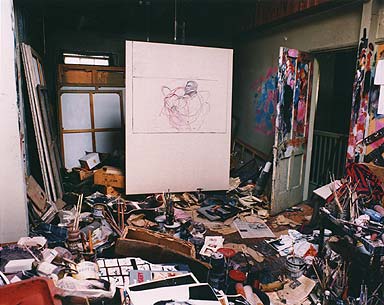
Jenny Saville in her studio space. how are you working more than one art piece at a time? http://mrsawyersopus.files.wordpress.com/2011/01/jenny-saville-brewer-street-studio-22.jpg

GOALS:

  1. Solve visual challenges on the CONCENTRATION works for Friday.

What is happening in your work? What is working in your art? Where are you struggling?

“Nothing in life that’s worth anything is easy.” President Barack Obama, SOTU 2104

“Nothing in life that’s worth anything is easy.”

U.S. Army Ranger Sgt. First Class Cory Remsburg gets a standing ovation as he is escorted to his seat before U.S. President Barack Obama delivers his State of the Union speech. Read more: http://www.businessinsider.com/cory-remsburg-honored-during-state-of-the-union-2014-1#ixzz2rku11le2

President Barack Obama quotes Army Ranger Sgt. First Class Cory Remsburg in his State of the Union address, January 28, 2014. The quote is in honor of Remsburg as he continues to fight to recover after a roadside bomb nearly killed him in Afghanistan.

Art Foundations: Draw the lines – PAINT! NON-Objective – Process

What is similar to your initial ideas? What is different? What does it all mean? Visit the site to learn more: http://virtualtours.uws.edu.au/uwsartgallery/SomeoneHasToDrawTheLine

Goals:

  1. 1.1 apply media, techniques, and processes with 1.1.3 an awareness so that your ideas are executed well
  2. 1.4 create, define, and solve visual challenges using 1.4.1 analysis (LINE)

What were the challenges you had with the line drawing What was fun about the process? What kinds of lines were you “Drawn” to?

Drawing: Still Life Thumbnails, Composition Success, Value Scale.

Let’s read a bit about Georgio Morandi – Why he did what he did… what he was good at and why… where he got his inspiration… Thanks MoMA! http://www.moma.org/collection/artist.ph

Goals:

  1. (3.2) Apply ideas (thumbnails)  in art and use skill to solve Compositional  challenges.
  2. (1.2) Create art that demonstrates relationship between Chiaroscuro and pencil.

What have you learned today about how to push / pull space with value? What have you accomplished with pencil? What is SUCCESSFUL?

AP Studio Art: Critique at the MID Point in your work! Sketches from Friday too…

Picasso and HIS studio – THE master at work… well… in his studio at the very least. http://thefortuno.com/wp-content/uploads/2009/02/pablo_picasso.jpg

Goals:

  1. (2.1) GROUP critique about artworks that accomplish personal meanings (What are you TALKING about in your work?).
  2. (3.3) Describe the creation of images and ideas and explain why they are of value.

What were the biggest impressions you had from the classmate’s works? What were the most difficult things you felt as you presented your work? Conversation between classmates about the 2 questions for your exam. How does this work relate to your concentration?

While the teacher is away, the children will WORK EVEN HARDER!

I am so sorry that I cannot be with you today. I have important meetings all day. This is your opportunity to be REALLY focused on the tasks at hand (and maybe earn cookies for FRIDAY!

REMEMBER“Art is the concrete representation of our most subtle feelings.” Agnes Martin

~~~

Advanced Drawing:

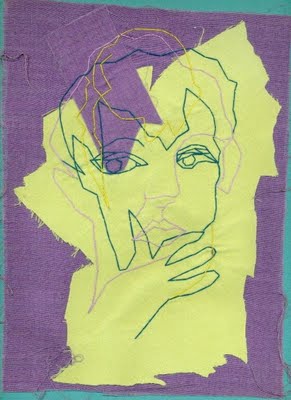
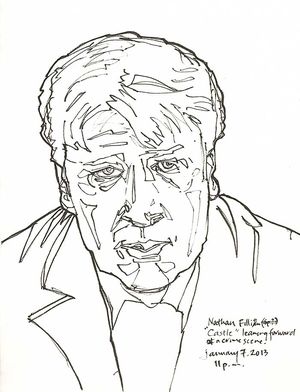
What materials dod this artist use to make this continuous line portrait?

GOALS:

  1. 2.2 evaluate the effectiveness of artworks

What did you see in your neighbor’s drawings that were successful / needed work?

~~~

Art Foundations:

What types of LINE did Pablo Picasso use in this drawing?

GOALS:

  1. 1.3 communicate ideas clearly (how are you communicating your PBIS message?)
  2. 2.3 create artworks that solve visual challenges (what techniques, style, approach are you taking with your poster design?)

What were the different types of lines drawings that you worked on today? What are different kinds of lines and what sorts of messages can they communicate to an audience? Talk about all 5 types with your neighbor and write down which type of line you think best describes you and WHY

~~~

AP Studio Art:

What is the same about these works? What is different?

GOALS:

  1. 1.1 apply media, techniques, and processes with (1.1.3) an awareness so that your ideas are executed well.

What materials have you challenged yourself with today? What are you struggling with? What are you succeeding with? Share your thoughts with a NEW neighbor… not the same person you go to usually.

February 5, 2013 – Tuesday

“Every child is an artist. The problem is how to remain an artist once he grows up.” – Pablo Picasso

What are you doing with your art that is new and scary? Do not be afraid to EXPERIMENT!

~~~
Art Foundations 2D: Continue to work on PATTERN Chapter (8), Continuous Line Contour Drawings – Sketchbook… 2 Today!
Frank Korb - Contour Line Portrait - 20 minutes
Frank Korb – Contour Line Portrait – 20 minutes
Goals:
  1. (3.3) Know about the creation of images and explain why they are important (contour line).
  2. (1.4) Solve visual challenges using analysis (element of Line).

If you were a type of pattern, what type of pattern would you be? Why?

 ~~~

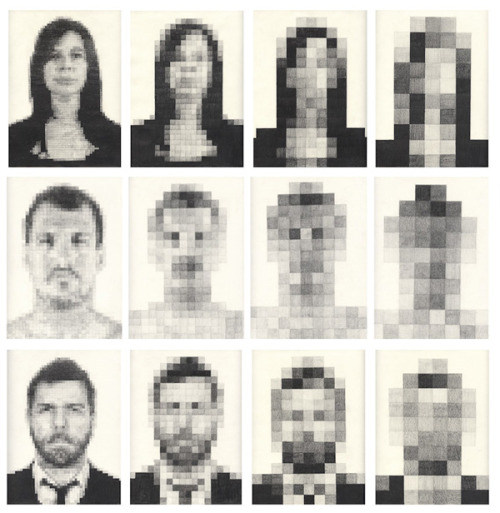
Drawing: Grid and Value – Work to MATCH the VALUES in one box with the intent of SIMPLIFYING the colors to one level of grey. – THIS IS TOUGH.

Here is a great example of the potential for the grid and the portrait!

CLOSE up on a CLOSE drawing… LOL

GOALS:

  1. (6.3) Use the process of grids and compare it with other disciplines. (How can OTHER people in OTHER fields use the grid to ORGANIZE or BREAK UP IDEAS AND SPACES?)
  2. 1.4 create, and solve visual challenges using 1.4.1 analysis (breaking up the artwork / subject matter to basic elements).

 What is difficult about the process? Make sure your neighbor is correct in the ratio and the measurements. What squares are successful and what squares are not? What is successful and not successful about your neighbor’s drawing?

~~~

AP Studio Art: Critique – Consider your NEXT BREADTH WORK and your NEXT Concentration! DO NOT PROCRASTINATE!

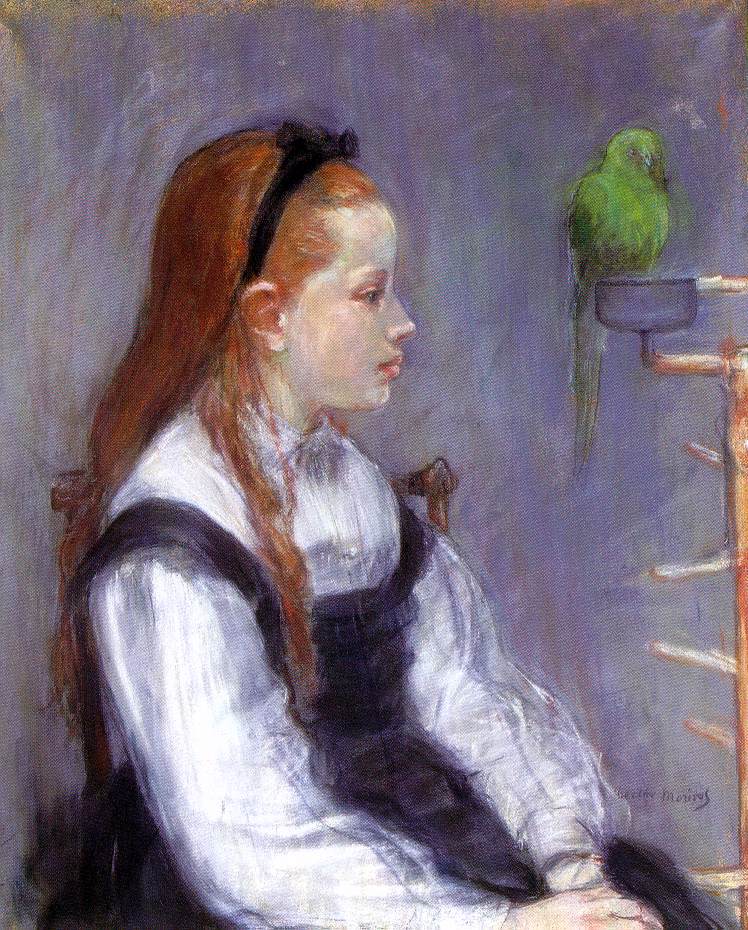
PARROT – Berthe Morisot – Let’s look at her work all week! What do you notice that you can carry into tomorrow?

GOALS:

  1. (2.1) Form criticism about YOUR ART that accomplish personal or other meanings.
  2. (3.3) Describe the creation of YOUR IMAGES and IDEAS and explain why they are of value (if they are not of value – were they worth doing to begin with?)

What were the biggest impressions you had from the classmate’s works? What were the most difficult things you felt as you presented your work? Conversation between classmates about the 2 questions for your exam.