While I could go on and on about the arts and why they matter… I will let the American for the Arts Action Fund do it in their own words. This is straight from their website: http://www.artsactionfund.org/pages/why
~~~
But first: #BeTheARTbeat on twitter and social media present a quick little video by artists from around the country (me included – see if you can find me)… TWEET AND RT – SHARE ON FACEBOOK, WHEREVER YOU SOCIALIZE… LET’S MAKE SURE THE ARTS ARE SUPPORTED WHEN THE WE NEED THEM THE MOST!
Simply put, the arts are essential to the proper functioning of our society. The arts continue to demonstrate their ability to provide categorical evidence of their impact on social issues that concern virtually every facet of American society. The arts are especially important for our children. Students with an arts rich education:
Have better grade point averages
Score better on standardized tests in reading and math
Have lower dropout rates
Funding for arts education programs in schools is being cut back or eliminated. Many arts organizations have had to make drastic reductions in hours, and offer fewer productions each season.
The work of the Arts Action Fund helps reverse these trends. The Arts Action Fund is the only national organization that mobilizes Americans in the fight for arts funding and arts education. We’re building a nationwide army of citizen activists who will help guarantee that arts-friendly public policies are adopted at the federal, state, and local levels. Add your voice!
Donate to the Arts Action Fund
Help the Arts Action Fund advance the arts and arts education in your community and across the country.
Become a Member Annual membership is free. Join the movement to advance the arts and arts education in your community and across the country.
Support Pro-Arts Representatives
Review the Congressional Arts Report Card which grades all current Members of Congress on their support for the arts.
Tell a friend Spread the word and share what you’ve found with your friends. You can even customize the message, if you’d like.
Contact Your Legislator
Two minutes! That’s all it takes to tell Congress to support the arts and arts education.
Goals Pages… Binders… Interactive Notebooks… Call it what you like, this is the general look of them this year.
I recently received an e-mail regarding the effective use of my Interactive Notebooks (Binders, Goals Pages… whatever the students may want to call them) in my upper level art classes. I am a true believer in setting goals. While my goals for this years Marathon Training never materialized in my calendar (ugh) I firmly believe that the use of the interactive notebook and the written goal is essential in the classroom environment. The use of the interactive notebook is great because it keeps every day in the kids art class in reach and ready for reflection and self-evaluation. Here are some of my thoughts from that recent e-mail (Thanks Sue-anne, you got me thinking!) The below has been edited for length (you’d never guess though).
“Dear Sue-anne,
It is wonderful to hear from you again and I am happy to put my brain back to use as I think about the use of the interactive notebook, goals, Marzano’s 9 and the school year that is coming upon me quickly.
“Question: “Do you think the format of the left and right side for student notes and teacher notes is essential?”
Short Answer: No
Long Answer: When it really comes to left side / right side of the pages for art design and idea / conceptual development, I have never considered left / right in a sketchbook (interactive notebook) that as something to put into practice. I look at my own sketchbook and think about how I plan my works and the organization is never in that fashion. The ONLY thing I teach and emphasize about the use of the sketchbook page is that only one side of each piece of paper is to be drawn on, marked up, written on in the event that something incredible happens. If the other side of the piece of paper is marked up, both sides will suffer in the end. I do not think that there is a need for the left / right side in this case. As a matter of fact and practice on my end, I do not use that format in any of the classes I teach.
When it comes to the interactive notebook, I use a 3 ring binder that is printed and assembled for the kids each and every day. This binder is the same for all of my classes. The differences are that I include, as the year progresses, supplementary lecture notes / note taking / chapter worksheets for different classes.
When it comes to the student to student feedback, we will often open the sketchbooks (or lay the artworks out) and the students will have about 10 – 15 minutes to walk around the room and write about their responses (positive or negative – no names – yet something substantial that they feel would be of benefit to them) to help the ideas flow, recognize something that the artist didn’t see, help develop the ideas further… I will also walk around and try my hardest to write an idea / though down for each kid. When it comes to teacher notes, I may make a notation or two in the sketchbook itself, but my feedback is generally spoken. I will be using, for my records and formative / summative evaluating, a class roster to carry with me so that, when I make a comment to the kid, I can keep track of who I have spoken to and the general ideas I have shared and then, in the end, if the thoughts were heard and dealt with.
Our daily goals are designed by looking at the US National Visual Arts Standards and the National Educational Technology Standards and then editing them to that days particular task at hand. I have changed the way I have used and written the goals over time and I have also made certain that the GOALS are not the ACTIVITIES for the day. I do list the activities on my daily website and that is more-so for the kids who are missing from class, but they are separated from the overarching goals. By doing it this way, the kids have a larger picture of the particulars that we are going to be working on for that day / period / hour and their minds are activated, turned on to the activity at hand.
The link I have to the National Standards and Technology Standards are even more simplified (unpacked) because the original ones were full of teacher speak that made them harder for the kids to understand… this is easier and the kids can get their heads around it better. In addition to the physical writing of the goals, every day (one or two… no more than that and they may be repeated for a number of days – they still get written down – interacted with) I am going to be encouraging the kids to read the goal I have posted and then rewrite it in their own words so that it makes more sense to them when they reflect later on.
At the END of the hour we take a moment to look back at the goal from the day or the activity of the day and reflect / write our response to the prompt I come up with. “What was the most successful thing that you accomplished with your pastels today?” or “What about the soft pastels gave you the most trouble?” Sometimes they will write their reflections down in their goals pages, sometimes it will be a face to face with their neighbor as I walk around and listen to the conversation, sometimes I will give them a moment to talk or write and then I will call on them for out loud responses or I may give them sticky-notes (post-it notes) and they have to write a response and stick it to the chalkboard before they leave.
I GANAG all of my classes (have for a few years now) and find that it works. It isn’t always the kids favorite thing to do, but they know what to expect and they know how each day begins and end with me. It is a lot of work in the first year or two, but as time has gone by, it has become easier for me and more effective for the kids. Here is a brief (10 minutes or so) look at the beginning and end of my class from a couple of years ago… GANAG Style.
All my best,
Frank”
Congratulations if you got through it all… here is a cookie for you. Comments, questions, thoughts are ALWAYS Welcomed.
In a great video by Dr. Tony Wagner (Twitter: @DrTonyWagner), he describes the Seven Skills that are essential to the graduates of today. The unfortunate thing is… most courses do not offer these skills because, so it seems, most classes are so content driven, there is no room for the other skills that need to be taught.
Collaboration across networks and leading by influence
Agility and adaptability
Initiative and entrepreneurialism
Effective oral and written communication
Accessing and analyzing information
Curiosity and imagination
As I consider the Arts Curriculum that I teach, with Goals and Objectives based on the National Visual Arts Standards, the Seven Skills that are “Must Have’s” are touched on and dealt with on a regular basis. Maybe not each skill every day, but as I look at particular assignments / artworks, one may see the connections that are dealt with to emphasize the seven skills (and one may look at Marzano’s Instructional Strategies [my notes on the book: Classroom Instruction that Works] to see if and how they all tie together). I am in a fortunate position where the elements and principles of art are simply a foundation for the creation of artwork and tie together and build upon one another from the very first class to the highest level of an AP course. Line is Line is Line… Value is Value is Value… Balance is Balance is Balance… and the artists just get more adept at using them throughout the years.
Skills and tools like Critical Thinking: looking at the assignment, challenge at hand and coming up with multiple successful solutions to the same challenge; Collaboration: sharing ideas and critiques – both through writing and orally; Being Agile and Adaptable: enough to solve problems with resources at hand; Taking Initiative: to be self driven artists (some struggle with this – some are pro’s); Effective Oral and Written Communication: Critiquing, again the written and oral – both self, teacher based, and peer to peer – soon parent to child to teacher; Accessing and Analyzing Information: taking the historical and contemporary ideas and tying the artistic challenge into their own artwork. Making sure that the artwork they create speaks about their important place in history; and finally Curiosity and Imagination: Making successful and challenging art – Duh? These are ALL parts of each and every artwork (sans the Art Foundations on EACH of the projects – there are the elements and principles one has to get through… but give it time).
Aboveis Dr. Tony Wagner’s Video and Belowis his Power Point Presentation… Definitely worth the look. Thank you Edutopia and Dr. Tony Wagner.
“I Will Fill It With Splendid Gifts,” 2013, Art*Bar.
Once a year, I get the opportunity to create a temporary artwork at the Art*Bar in Milwaukee, WI. The Art*Bar is exactly what it sounds like, a Bar that has no wall advertising for the adult beverages that it serves, but rather walls full of real, live, legitimate Art (with a capital A). To see MORE of my art and the PURCHASE MORE of my art (nudge nudge…) please visit frankkorb.com and get in tough with me through my e-mail there.
After September 11, 2001 occurred, and the world was still reeling from the shock, “Don Krause, then 42, took the event as a personal wake-up call and sought out a place to cultivate his Riverwest dream, to create a unique tavern. “I never told anyone what I was working on and I didn’t know when it was going to open,” says Krause. “I had never done anything like it before.” All he knew was how to create a good atmosphere, developed from his eight years as an interior designer at Ethan Allen.” (Putz, http://urbanmilwaukee.com/2013/05/27/taverns-artbar-is-a-painters-paradise/). Thank heavens Krause had this vision and was able to follow through with it. (As a side note: Please visit the a fore mentioned article / link about the Art*Bar. It is amazing how SMALL the world is. Nastasia Putz was a one semester student of mine YEARS ago and has now made her marks in the world of journalism. It is funny how people circle in and out of one’s life. Thanks for the conversation Nastasia – great article!)
10 years fast forward (and 10 paintings of my own at the Art*Bar) we arrive at July 7, 2013. Ok, the math doesn’t work out quite right, but the Art*Bar has been around for 10 years now… Walking into the space, I arrive with a start and see that the traditional scaffolding that usually holds the artist for the evening above the 3′ x 5′ canvas above the door is missing. This happened to me last year also, but it was just that the scaffolding had been forgotten about. This year… the scaffolding is gone and the canvas is propped up on a table awaiting the new ideas of the arriving artist.
Previous work by Jason Roberts (I think… sorry Jason).
The idea behind the “One Week Painting” that I have created and planned on creating is such an ingenious idea of temporary art, I have carried it into (or rather just outside of) my high school classroom. For one small amount of time (8 hours) a painting is created and then hangs for one week. After that week, another artist comes in and reworks, incorporates, or completely obliterates the previous weeks work and a NEW work is presented for the week. This happens for 51 weeks and then the final week a PARTY is held for the 51 artists who took part. Slide show of all the year’s paintings is projected, prints of the works are hanging on the large metal / magnet wall, and Don’s favorite 10 are printed / frames and hanging in the prominent place around the bar. I have had the fortune to be a “favorite” twice in my 9 previous year… maybe 3 times… I’ll have to check my CV.
“Controversial Backdrop Sought” from 2012 at the Art*Bar.
Not entirely certain as to the direction I was planning on going, I prepared with some supplies of recycled drop papers, coffee filters, and my faith in the Bible pages I base most of my artworks over. I stepped into the establishment with supplies in hand, my trusty buckets and milk crates of paints, ready to attack, or at least gently work the painting from the previous week into my thoughts for the current week. The 6 hours I needed on July 7 were full of “What do I do NOW,” “How to solve that issue,” and “I think this is going to work, I have got it.” Here is the process of the 6 hours of making a “One Week Painting” at the Art*Bar.
The original painting I came upon.
My first thoughts and preliminary notions for the artwork.
The first grid has been laid in and the rest is still up in the air.
Continuing with the process…
The center column is laid in and as are the Bible pages.
The lower portion has been whitewashed – ready for paint!
Beginning with yellow and Gesso at the top.
Blues come into play next.
Red is next in the color choices… are you seeing a relationship in the use of colors?
Partway through the process…
Details and pure colors are being added.
GREAT Detail… Idea for future smaller work I think.
Detail.
Detail.
Another detail.
From the side… I love the new layout…
The entire area – great crowd!
The palette I put up last year is still getting used! I have made my mark!
The final art work “I Will Fill It With Splendid Gifts” July 7, 2013 – the Art*Bar.
Detail of NEW work over mine…
The lines have stayed in place… YEAH!
It was great to see the collaged materials still in place.
Great texture… great colors new artist!
Here it is… the new painting over my last week painting.
“When in the Course of human events, it becomes necessary for one people to dissolve the political bands which have connected them with another, and to assume among the powers of the earth, the separate and equal station to which the Laws of Nature and of Nature’s God entitle them, a decent respect to the opinions of mankind requires that they should declare the causes which impel them to the separation.”
“People are capable, at any time in their lives, of doing what they dream of.” —Paulo Coelho
With the annual 4th of July parade behind us and 4th of July barbecues and get together’s in front of us, I take this brief moment to wish you and your’s a Happy, Safe, and Memorable 4th of July.
Independence was declared 237 years ago, something brave and new to the time as kings, princes, and emperors ruled and the revolutionaries were certain this was not the way to live. From that point forward, the United States of America has grown as a leader in the world as peace bringers, supporters of the democratic way of life, and example of standing strong in times of strife.
Please take a moment to remember all those who have given the greatest gift of all, their lives, in defending and protecting this great country of ours and all that the United States Flag stands for. While we may not agree with all of the policies and ideas, wars and struggles that we, as a country are in involved in at this point in history, it is important to remember the ideas that formed this country not so long ago.
To my Dad Paul and my Grandpa Ralph and Frank, for my wife’s Grandpa Ray and her Uncle Larry. For all the strong men and women who have stepped up and given of themselves. Thank you.
Happy 4th of July America. To all the rest of the world searching and seeking the same rights and privileges we sometimes take for granted, keep persevering, searching, and fighting for that right of freedom that being human should allow.
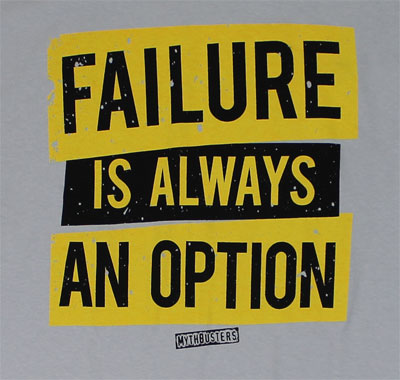
“If you’re not failing every now and again, it’s a sign you’re not doing anything very innovative.”
– Woody Allen
~~~
On Saturday morning, while in South Africa, and through the wonders of modern technology via Google Hangouts and YouTube, First Lady Michelle Obama joined a large group of international students, teachers, and community leaders and discussed the importance of education to move education and learning forward. One of the threads that was strung throughout the conversation was the potential of failure in the process of learning. This is an aspect that it seems current educators, administrators, students, and parents are often missing as an important aspect of the process in learning. As a parent, I miss the important aspect of failure because the failures directly affect the grades that are brought home. As a teacher, failure is an important part of my student’s learning experience and is highly encourages as it does NOT affect the grades (directly) that are taken home. PROCESS!
Taking risks and failing are an essential aspect of the world of the arts. In the great scheme of things though, the audience the artist creates for has little concern of the mistakes and process that the artist went through to get to the final product. The same can be said of the process that students go through in the learning of the materials that they are challenged with in the academics. There is a process my kids go through in the visual arts classes: Preliminary ideas (thumbnail sketches). These are the initial ideas. Great ideas, awful ideas, as well as ideas that may sprout legs and carry the artist to different places. The preliminary ideas get a lot of discussion and conversation between students and then, from that conversation, the next stage… rough drawing. Generally, even in a class like PAINTING, the drawing process comes long before the final product. There is a composition that needs to be thought through, a set of challenges that must be visually resolved before the final art work is begun. How can an idea be roughed out in another subject? In the working world? In a job or career?
From the rough drawings, the final product is then developed. Through the final drawing there is still the suggestion, the encouragement for risk taking, experimentation, failure, and then resolution. It is very important that the students, the artists challenge the ideas they come up with and take the risks that are in front of them. The second part of a final grade in the visual arts classes includes a small portion on EXPERIMENTATION. The encouragement to try something, fail, try something else, fail, try something else, until something is resolved is a key component in the process. Even when the final product is resolved and in the museum, gallery, or more importantly for the artist, the collector’s home, the imperfections are what make the artwork what it is. The slight misses, the “False Starts,” the problems that may be continued into the next work… the unresolved issues and questions that make art so interesting.
In a sketchbook note from the early 1960’s, Jasper Johns wrote, “Take an object, do something to it. Do something else to it.” A sketchbook is the perfect place to experiment and take risks. In the 1960’s, just after the AbEx movement of the 1950’s, popular culture and images was a risk, and a banal object, like a target, was truly a risk.
So… all that said… how are you taking risks? how are you challenging the status quo? How are you being a positive deviant in your environment, leading the way to innovation and positive change? What are you doing to an object? What else are you doing to it? What else are you doing to it? When have you finally got something?
Well oh well… the risk was taken and the edits have been made. Switching the look of something that I have been working on for 3 years was a difficult thing to do, but I felt it needed some updates.
Please let me know your thoughts about the new look of the page. I have cleaned up the PAGES portion (now at the top of the window) and grouped a few together. I am still thinking about more changes to the sidebar… remove my beautiful face, switch places with this badge and that image among other things.
Always looking for FEEDBACK – it is the hinge that holds all learning and change together (thanks Janie – stole that one).
For your viewing pleasure – a new artwork… it is “Untitled” as of yet and is also not quite finished… Enjoy!
I apologize for missing the Thursday morning post. It is funny how the days are different when the daily planning for classes has been set a side and the larger picture of learning comes back into focus for me. I am not sure if anyone else in any other industry (if one can think of education as an industry) has experienced that… anyway.
~~~
As a BEFORE – I share today’s work in my studio with you. I THINK I have a show coming up in July… I’ll keep you posted, and it was good to get back to work.
“Untitled” as of yet. I have been neglecting my work for some time… good to be back at it.
~~~
Technology in the classroom was my big presentation at last weeks InterActiv Learning Conference 2013 in Whitewater, WI. My largest concern with the use of today’s technology is the misuse of it. Having had an opportunity to listen to a new Freshman in High School (not mine… well, my kid, but not my district) discuss the use (or in some conversations that stand out – misuse) of important resources such as YouTube and Google it struck me that the conversation of how we use technology in the classroom as a learning TOOL and not as “bells and whistles” to entertain or simply to “connect” with the kids was important.
Technology and Interaction in the Classroom (link to my Google Presentation is HERE) was the presentation I had at the conference and I really wish I had heard Michael Wesch’s 201o Presentation at the University of Denver prior to my presentation. The good news (maybe for me) is that I am working in the direction he speaks about in his lecture (link to his presentation is HERE). To keep this brief (and give you a chance to watch his presentation) I feel the most important part of his lecture was to emphasize that the INFORMATION out there is NOT SCARCE and the student of today has all the access to it, in their pocket! The important thing to keep in mind, and this is a brain shift for all in education (kids, parents, teachers, administrators, school board members… everyone), is that the teachers need to help the kids learn HOW to use the technology to be self directed learners. The kids sure know how to entertain themselves with the internet… but strong learners of Web 2.0 tools they are not.
How can we, as teachers, use the tools that are out there to help the kids LEARN how to LEARN? How do we demonstrate the tricks of the trace, the skills that are essential in the process of learning so that the students we have the privileged to work with, can become more independent learners? One of the tricks of using the technology (information really) that is out there is to make sure we are teaching them how to CONNECT to it and not to simply learn it all for the test. This also ties into the thoughts of Noah Chomsky (HERE for a YouTube video Presented at the Learning Without Frontiers Conference – Jan 25th 2012- London) that the TEST is not a very good demonstration of the knowledge the kids have. Yes, maybe for the day and a few weeks later, but then – POOF – that is gone. How can we, as concerned educators and leaders, help the learners make sure that the information we provide them with connects to the world they are living in? The tools are there, and they will be using them for as long as they live. How can we connect the tools, the information that is available, and the techniques to gather, toss aside, sort, filter, and use that information is through demonstration by example, teaching and reteaching, and reviewing the importance of being aware of how the tools and information is to be used.
From the Daily Inspirational Blog Goal Achievement Quote – June 24, 2013
by Paul Mark Sutherland “I do not think that there is any other quality so essential to success of any kind as the quality of perseverance. It overcomes almost everything, even nature.” —John D. Rockefeller
~~~
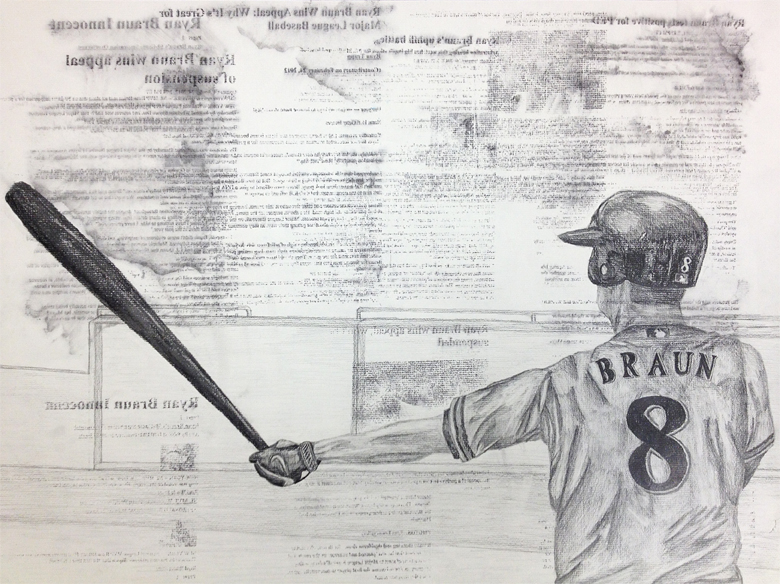
What inspires you? Ryan Braun has done a number on countless baseball fans… even with the challenges of alleged doping. Braun, Austin Schroeder, pencil and ink, 17.5″ by 23.25″, 2013.
~~~
One of my colleagues, a great leader in the building and inspiration to our 1100ish students, asked about the lengthy notes I had taken during the 2012 – 13 school year about the 2nd Edition of Classroom Instruction That Works – (An ASCD Publication [Link HERE for the ASCD Website]) by Dean, Hebbell, Pitler, and Stone. I now have the notes available to you… but I suggest getting a hold of the book as well. The Google Document is set up so that ANYONE who can access it (you bu clicking on the book) can read it and MAKE COMMENTS – GO FOR IT! (Thanks Russel.)
Click on the Book Cover to go to my not quite complete (still haven’t finished writing about Chapter 10) notes.
While this book was a great read – and is an essential reminder for all of those who already feel like I do things such as, but in no order of importance: Feedback, Recognition, Co-operative Learning, Non-Linguistic Representations… among other technique and strategies. It is one thing to DO them, daily, but it is an altogether different thing when you are AWARE of the strategies you are using and doing them with the purpose of moving Student Centered Learning FORWARD.
~~~
Another GREAT Video bit of Inspiration I recently got was the YouTube clip (26 minutes, so get a cup of coffee and a set of headphones) was by Anthony Salcito on The New Classroom Experience(my notes HERE – please add your comments).
There are a lot of GREAT thoughts in this lecture and I have been moved to look at the Look of MY Classroom. I feel that the activities ARE the most important aspect of the classroom, not the look of the classroom, and that is why I am REALLY emphasizing the use of technology to create environments for COLLABORATION and also how the ARTWORK the kids are learnign about and producing is essential to how they solve problems as well as the necessity of them failing (not necessarily with an F, but rather just not producing exactly what they thought it was “suppose” to look like), reflect on their failures, move forward from their failures, and continue to fail until they succeed – in WHATEVER WAY THEY SUCCEED!
~~~
LASTLY – Some thoughts and comments from the kids from 2012 – 13 as the school year wrapped up. The question that was posed was: What was the single greatest accomplishment for you over the past semester?
I learned to focus on visual unity and the elements of art to create pieces of art with ideas and processes being executed well.
I learned to take time while drawing and give effort towards art. I’m proud that I can now be a better drawer.
I expanded my mind. I really didn’t like art at all. When I had to take it in 7th grade I said I was never going to take it again. But this semester I took it and some parts were pretty fun with this class.
Learning how to use dimension, proportion, shading, and drawing in general.
My webpage has been ranked on Teach 100… Thanks for the badge! Let’s work to move the rating up the list!
~~~
A HUGE word of thanks to all those who attended my sessions over the past two days at InterActive Learning Conference at UW-Whitewater. The sessions I had were well attended and had a lot of great feedback. Links to ALL of my sessions are available to the RIGHT of this post under PAGES: IntertActiv 2013.
Thanks to Scott Christensen and the entire InterActive Learning Team, all the vendors, the presenters, and UW-Whitewater’s Tech crew for a fantastic couple of days.
This slideshow requires JavaScript.
Comments from Survey: Thanks All!
Enjoyed your energy. All your communication with parents. I need to get my staff to do that more. I will share all your tools.
Putting goals out there for my students. Right now, they just have to guess… and most of them don’t try, oddly 🙂
I’ve enjoyed it a lot. Learned a lot. It’s been great to have some time to work and experiment with WordPress.
I liked that it setting up a blog is easy and free.
And Even…
I think you over-explained and I grew bored.
It seemed sort of self-promotional.
I appreciate ALL the comments. I enjoyed working with each group and learning form other experts in their own fields. Criticism in essential in the learning process and I appreciate all the work and reflections from everyone. Your thoughts about my sessions… HERE.