What Students Really Need to Hear

Chase Mielke's avatarAFFECTIVE LIVING

It’s 4 a.m.  I’ve struggled for the last hour to go to sleep.  But, I can’t.  Yet again, I am tossing and turning, unable to shut down my brain.  Why?  Because I am stressed about my students.  Really stressed.  I’m so stressed that I can only think to write down what I really want to say — the real truth I’ve been needing to say — and vow to myself that I will let my students hear what I really think tomorrow.

This is what students really need to hear:

First, you need to know right now that I care about you. In fact, I care about you more than you may care about yourself.  And I care not just about your grades or your test scores, but about you as a person. And, because I care, I need to be honest with you. Do I have permission to be…

View original post 765 more words

Use of GOALS in the Day to Day

Please, read through and give me your thoughts. Goals are a huge part of attaining any desired accomplishment – bug or small. Thank you for your time and thoughts!
Frank

The Art Student (and the lessons you can learn)

“I am interested in art as a means of living a life; not as a means of making a living.” ― Robert Henri

What a great day at the Milwaukee Art Museum. It has been FAR too long. Oh to get back into the looking at the visual arts (and a lot of it at that). I was very happy to have changed my approach and began with the European Art from the Baroque era and worked my way forward. Of course, I ended in the Bradley Collection with a look at the Alex Katz painting of “Sunny” but… it wouldn’t be a trip to MAM if I didn’t end there.

As an art teacher, I look to Robert Henri as one of THE art teachers to look up to. Color Theory, Art Theory, Aesthetics, History, Art Making… if one knows me, the ideas behind the art are as (if not more) important than the final product itself. Here you go… and if you are an art student, her you are…

10 Things the Arts Teach Students

1. The arts teach children to make good judgments about qualitative relationships.
Unlike much of the curriculum in which correct answers and rules prevail, in the arts, it
is judgment rather than rules that prevail.

2. The arts teach children that problems can have more than one solution
and that questions can have more than one answer.

3. The arts celebrate multiple perspectives.
One of their large lessons is that there are many ways to see and interpret the world.

4. The arts teach children that in complex forms of problem solving
purposes are seldom fixed, but change with circumstance and opportunity.
Learning in the arts requires the ability and a willingness to surrender to the unanticipated possibilities of the work as it unfolds.

5. The arts make vivid the fact that neither words in their literal form nor numbers exhaust what we can know. The limits of our language do not define the limits of our cognition.

6. The arts teach students that small differences can have large effects.
The arts traffic in subtleties.

7. The arts teach students to think through and within a material.
All art forms employ some means through which images become real.

8. The arts help children learn to say what cannot be said.
When children are invited to disclose what a work of art helps them feel, they must reach into their poetic capacities to find the words that will do the job.

9. The arts enable us to have experience we can have from no other source
and through such experience to discover the range and variety of what we are capable of feeling.

10. The arts’ position in the school curriculum symbolizes to the young
what adults believe is important.

A long time coming… Thanks Painting Class 2008 – 2009

Waterford Union High School in Oil Painting class of 2008 – 2009

The painting class of 2008 – 2009 took the challenge of creating a series of works that documented their high school and challenged their understanding of how to use oil paints, mediums, power tools, and the very challenging linear perspective as they composed their images. BEginning with a long walk and conversation about composition, the artists came up with their favorite angles of the building and developed their own ideas for the image as they were faced with the challenge of their school as the subject matter. From photography and thumbnail sketches, teamwork and construction of the canvases, the artists created a wide variety of compositions using all the different skills and techniques they had in their art toolbox. Thanks to the following artists for their hard and dedicated work creating a strong and successful body of work. Each one of them created a unique and individual viewpoint of the building that gave them so many memories and skills to last a lifetime. Thank you Waterford Union High School artists.

  • T.E.
  • Erica
  • Daja Braatz
  • Steve Rudan
  • Cameron Robinson
  • Amandine Gerus
  • Brittany Canfield
  • Megan Barker
  • Bina Olafsdaughter
  • Alexandra Jones
  • Mike Bink
  • Maryann Little

Spring Break, but no break from ART!

January 21, 2013 - Monday - 2nd Semester WELCOME!

Happy Monday – Welcome to Spring Break!

As a note to all the artists I have the opportunity to work with when it is NOT Spring Break… I will be in the building from about 8 – Noon on Monday, April 21 hanging artwork. If you are interested in coming in to work, help, or simply gather supplies for the rest of the vacation (because there is a lot to do when we all get back) come on in and find me. I should be in the art room or in the hall between the atrium and the cafeteria. Have a GREAT SPRING BREAK!

Mr. Korb

Thursday before break… how can you continue ARTing over break?

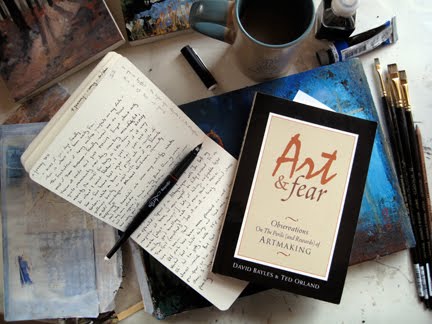
“Talent may get someone off the starting blocks faster, but without a sense of direction or a goal to strive for, it won’t count for much.” – David Bayles and Ted Orland

Art Foundations: PAINT your POP

http://i233.photobucket.com/albums/ee172/carolyn85_photos/Andy%20Warhol%20Pop%20Art/audreyhepburnpopart.png

Goals:

  1. WHAT ARE YOU DOING WELL with the application of your ACRYLIC PAINT – Give yourself that thought today! PAINT OUT AND WORK!

What is the most successful aspect of your painting? What is the least successful part of the painting? Stop and think – explain your feelings so  you can look back on this when we come back.

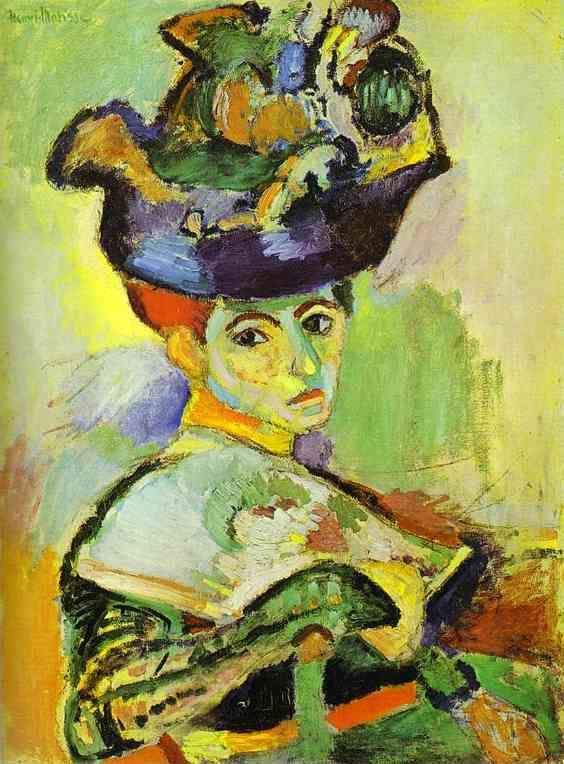
Drawing: RULES of the PORTRAIT! HERE!

How are you going to use the idea of the PORTRAIT to make your work successful? Rules in a minute… http://www.abcgallery.com/M/matisse/matisse80.JPG

Goals:

  1. Know about solving visual challenges (making art) using analysis (breaking the work into its parts).

How are you going to work on the ideas behind the portrait over the break? What FAMOUS images come to mind when you think of ART HISTORY? You are going to use ideas from Art History in the final work… What worries do you have?

AP Studio Art: Log In and Log On… AP is WAITING to hear from you!

WHAT? Look at the WORK here! WOW!

Goals:

  1.  3.2 apply subjects, symbols, and ideas in art and use skill to solve visual challenges – WHAT ARE YOUR CHALLENGES?

Which works are you most proud of and why? What is working with the pieces that you would choose as your “quality” works? Why do the other ones NOT work?  What do you have to do over break?

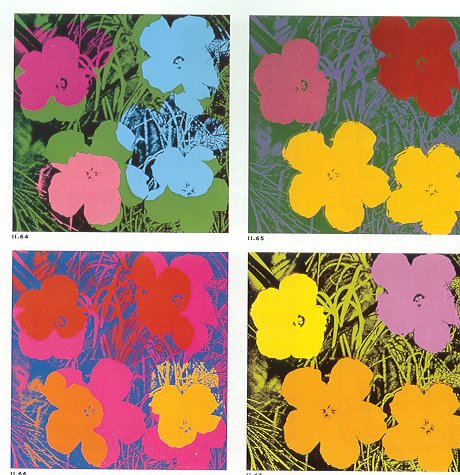
Flowers POP in the Springtime… what POPS in your asrtwork?

“Talent may get someone off the starting blocks faster, but without a sense of direction or a goal to strive for, it won’t count for much.” – David Bayles and Ted Orland

Art Foundations: PAINT your POP

Can you see a color scheme here? How about the repetition of your composition? http://www.redtedart.com/wp-content/uploads/2013/01/Andy-warhol-flowers.jpg

Goals:

  1. Create a work of art focused on color mixing with acrylic paints

What was the easiest portion of the color wheel? What do you enjoy / dislike about acrylic paints?

Drawing: Snap Chat Selfies… Matisse and Wilde

How’s your snap chat selfie? Can y ou be creative and still include the negative space? Onto Matisse and Kahine Wiley http://media.salon.com/2013/01/snapchat.jpg

Kahine Wiley – Interview Magazine Article… Research HIP HOP and Graffiti! How can you use a name, tag, slogan in your composition in the style of graffiti to add to the BACKGROUND?

Goals:

  1. Identify the intentions and purposes behind making art.
Matisse and the Tate Modern in London: http://www.tate.org.uk/whats-on/tate-modern/exhibition/henri-matisse-cut-outs

What was the most challenging way to draw? Why was this most difficult way to go? What is most important about drawing when it comes to observation?

AP Studio Art: What about the uploads? Ready for Thursday?


A bird – the same patterns and use of line… what is the common thread chasing in your art? http://www.reginaldbaylor.com/images/stories/Originals/textile_755_Untitled_Bird_in_Velvet.jpg

Goals:

  1.  4.4 evaluate and interpret your art for relationships in 4.4.1 form 4.4.2 context. 3.2 apply subjects, symbols, and ideas in art and use skill to solve visual challenges.

How does your art compare with the work of “professionals” and how can you work to create a better understanding of your approach / intent / ideas?)