#Process over #Product – Art is NOT about the FINAL PRODUCT

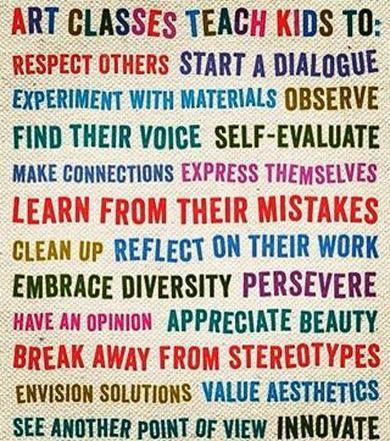
Art Classes Teach
What are you learning in your art class? What do you WANT to learn?

 “Art is the concrete representation of our most subtle feelings.” – Anges Martin, Art In America (p.124, 1996)

~~~

Follow along with the http://WHSoc20.WordPress.com 30 Day Blog Challenge – Mr. Korb’s Online discussion group.

~~~

Studio Art 360 – Critique Sketches, Demo Cardboard Constructions, National Visual Arts Standards

Ok – Now that the F’s are becoming A’s – How do you make it a 3D form rather than a flat shape? http://www.superiorlabels.com/images/black_whiteclipart/monograms/capital_letters/grey/4063266.jpg

Goals:

  • 10.1P: Document the process of developing ideas from early stages to fully elaborated ideas.
  • What is the difference in the shape and form? There are a FEW OTHER terms we are going to cover in the book – terms that help up TALK about art. Let’s focus on Shape and Form today.

How much of your letter did you get done? One shape? two shapes? Gluing / Taping sides? What helped you get work done? What got in your way?

AP Studio Art: 1 week Magazine Article Assignment, 1 week concentration work

How are you using OR NOT USING pastels? http://www.artistsnetwork.com/wp-content/uploads/2011/03/64-uart-paper.jpg

Goals:

  • 2.2Ad: Demonstrate understanding of the importance of balancing freedom and responsibility in the use of images, materials, tools, and equipment in the creation and circulation of creative work.
  • What materials are you NOT using yet? Make sure that in the body of work you are making (about 1 object) you try things you are not comfortable with.

What mediums are you afraid of using. If not afraid – haven’t used because you are not used in the past?

Painting: Collage, Critique, Sketch, Research…

Charles Demuth – Different than ANDREW WYETH – What style are YOU going to use? http://www.tfaoi.com/newsm1/n1m327.htm

GOALS:

  • 2.1Ac: Through experimentation, practice, and persistence, demonstrate acquisition of skills and knowledge in a chosen art form.
  • What did TAPING the paper down to the board help with last week? How will THIS NEW APPROACH to Stretching watercolor paper help?

What did you get done today? Be VERY specific in the tasks you accomplished.Collage? Built?

Create a ONE PAGE PAPER (double spaced, 11 or 12 point Times New Roman, Palatino – Serif-ed type font) that discusses the artists and their works. Use ideas about the work as to what drew you to the work, what styles did you like, what techniques do you appreciate? A small history of the artist and personal reflection. How will you use similar ideas in your work as they did in theirs? Here are the artists to research: Winslow Homer, Charles Demuth, Thomas Eakins, Edward Hopper, Dong Kingman, Reginald Marsh, Charles Sheeler, J.M.W. Turner, Thomas Moran, Georgia O’Keefe, James Whistler, or Andrew Wyeth. PAPER IS DUE ON MONDAY, September 15, 2014.

~~~

Sketchbooks Due:

  • 1st Hour: Tuesday
  • 2nd Hour: Friday
  • 3rd Hour: Thursday
  • 4th Hour: Wednesday
  • 6th Hour: Monday

Week ONE is DONE. What have you taken so far?

If you can’t fly then run, if you can’t run then walk, if you can’t walk then crawl, but whatever you do you have to keep moving forward.” ― Martin Luther King Jr.

Art Foundations: Paint / Line / Draw / Collage

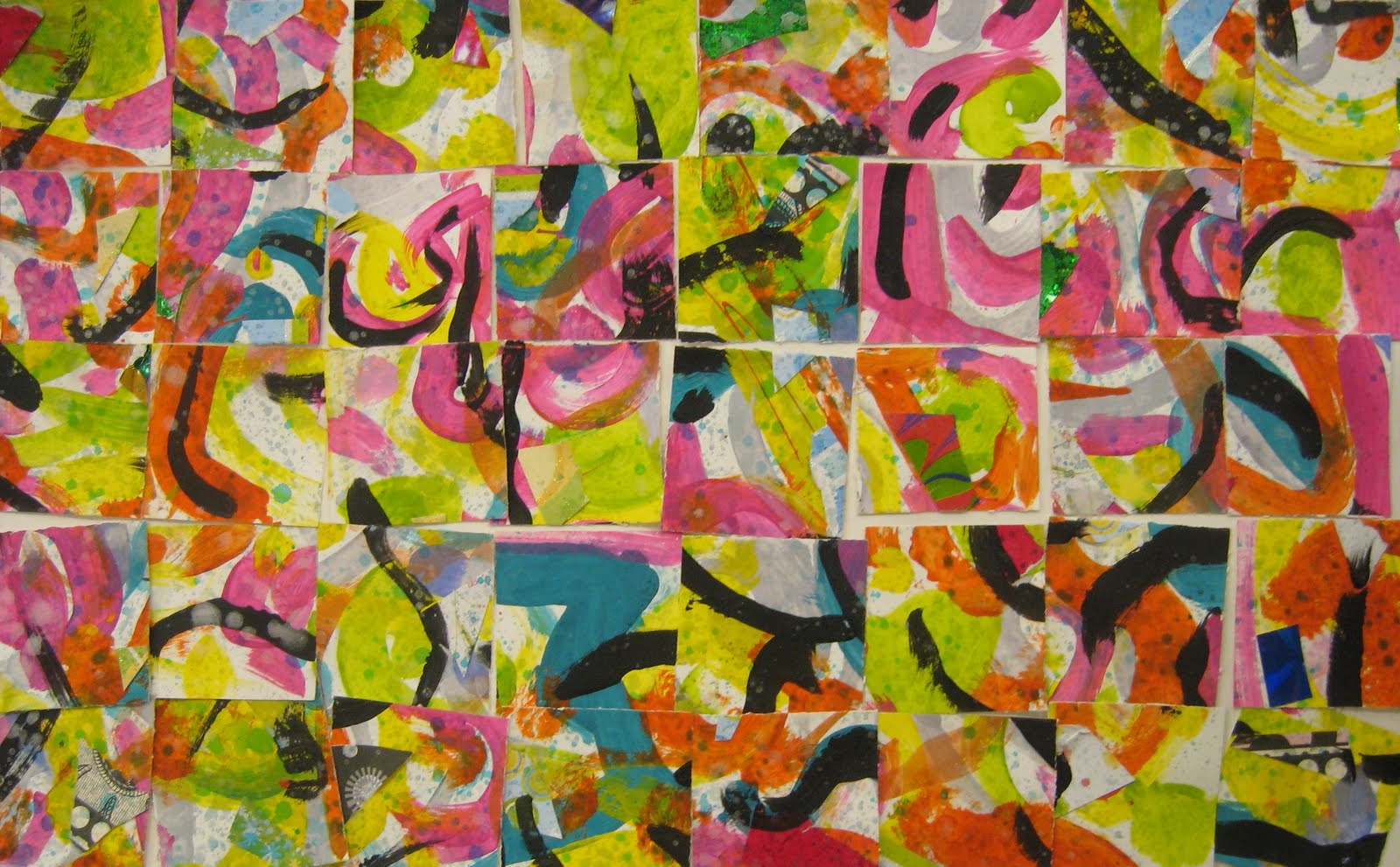
Collage and Art – We are going to be making some incredible art that, hopefully, says something about YOU! http://www.incredibleart.org/lessons/middle/images/Linda-cutpainting2.jpg

GOALS:

  1. Know about applying MARKER, CRAYON, WATERCOLOR by being AWARE of techniques, and processes so that your ideas are executed well.

What was challenging about the process? What did you enjoy about this work? What have you enjoyed (or been frustrated with) this week? FEEDBACK!

Drawing and AP Studio Art: SCAD – Presenter – HEAR ABOUT ART OPTIONS

Going to Art School? How about SCAD? http://i0.wp.com/www.psyop.tv/wp-content/uploads/2013/02/SCAD.jpg

GOALS:

  1. 4.3 compare relationships in visual art in terms of 4.3.1 history, 4.3.2 aesthetics, 4.3.3 and culture as it relates to your own art
  2. 4.4 evaluate and interpret art for relationships in 4.4.1 form, 4.4.2 context, 4.4.3 meanings showing understanding of the work of various art professionals*

What are your QUESTIONS about SCAD or OTHER art schools? Monies? Courses? Experiences? Come on… what are your QUESTIONS?

Can you handle the ABSTRACT world of the arts?

“If you can’t fly then run, if you can’t run then walk, if you can’t walk then crawl, but whatever you do you have to keep moving forward.” ― Martin Luther King Jr.

Art Foundations: Ch 1 & Ch 4 – Non-Objective Line Drawings

Non-Objective Art – Lines and REARRANGING the ideas – Collage. https://artwithkorb.com/wp-content/uploads/2014/01/eb586-633.jpg

GOALS:

  1. (4.2) describe the meaning of NON-OBJECTIVE art objects within YOUR culture and time.

What were the different kinds and variations of  lines you drew with today? What qualities of lines did you use and what messages do you think they communicate to an audience? What were your responses to the drawings that we worked on and why? Reflect with your neighbors about the drawings you did in class today and be able to identify the variety of different lines

Drawing: Value Scales and Still Life – Pencil / Value Grids

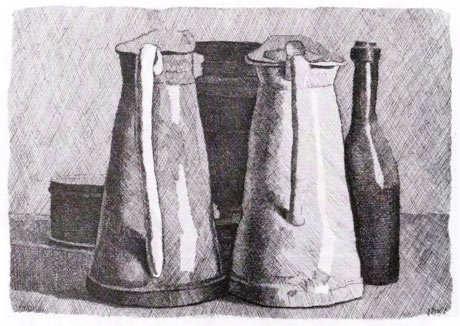
Morandi and the CLOSED Composition – Crosshatching? Yes. http://static.guim.co.uk/sys-images/Observer/Pix/pictures/2013/1/10/1357823154138/morandi-still-life-five-o-023.jpg

GOALS:

  1. (1.2) create art that demonstrates an understanding of how ideas about VALUE and CHIAROSCURO relate to the variety of pencils.

What are the differences with the three types of Pencils? What do YOU find useful from today’s exercise?

AP  Studio Art: Concentration – SET UP Artworks in Cafe!


OH NO – Watch out Captain Ahab! http://gcaptain.com/wp-content/uploads/2012/05/whale-bellyflops-on-yacht.jpg
  1. 2.1 ALLOW criticism to be formed about artworks that work to accomplish 2.1.2 personal, 2.1.3 communal, 2.1.4 or other meanings (Let’s set up your exhibit with your statements and nametags.)
  2. (1.1) Apply media, technique, and process with skill and confidence (P)

As we get to the end of the week – Share with your neighbor the plans and advancements for this and the next piece. What sort of story do you think others might be reading in your work?