“Never feel shame for trying and failing, for he who never failed is he who never tried.” – Og Mandino
My arms are too short and I can’t reach the fan…
Art Foundations: Cantilevers, How do you draw that?
What an awesome house… vacation time!
GOALS:
1.2 create 2 point perspective cantilevers that demonstrates an understanding of how your ideas relate to the 1.2.3 processes you use
Review with neighbors the process of cantilevers and the Rules of Thumb in Perspective
Advanced Drawing: Critique
What do YOU see in the work of art? Elements and Principles?
GOALS:
(3.3) describe the creation of images and ideas and explain why they are of value Orally participate in the discussion of your classmates drawing (5 minute max / work).
(4.3) compare relationships in visual art in terms of (4.3.2) aesthetics
What did you take away from the critique today? Write down what you have taken from the crit.
AP Studio Art: Concentration #2 – CLASS RUN Mid Crit.
Henri Matisse Drawings… Look at the VARIETY!
GOALS:
3.5 Evaluate and defend the manner in which subject matter, symbols, and images are used.
5.3.1 Describe meaning / rationale of artwork by analyzing how specific works are created.
What was the success in today’s self-evaluation and the class-run critique?
“If you’re not failing every now and again, it’s a sign you’re not doing anything very innovative.”
– Woody Allen
~~~
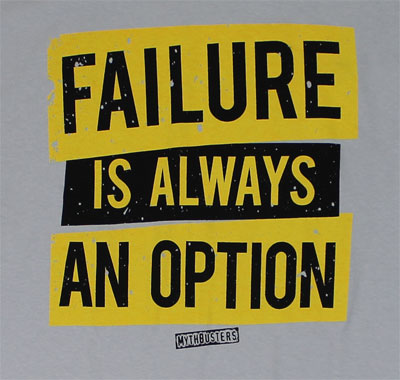
On Saturday morning, while in South Africa, and through the wonders of modern technology via Google Hangouts and YouTube, First Lady Michelle Obama joined a large group of international students, teachers, and community leaders and discussed the importance of education to move education and learning forward. One of the threads that was strung throughout the conversation was the potential of failure in the process of learning. This is an aspect that it seems current educators, administrators, students, and parents are often missing as an important aspect of the process in learning. As a parent, I miss the important aspect of failure because the failures directly affect the grades that are brought home. As a teacher, failure is an important part of my student’s learning experience and is highly encourages as it does NOT affect the grades (directly) that are taken home. PROCESS!
Taking risks and failing are an essential aspect of the world of the arts. In the great scheme of things though, the audience the artist creates for has little concern of the mistakes and process that the artist went through to get to the final product. The same can be said of the process that students go through in the learning of the materials that they are challenged with in the academics. There is a process my kids go through in the visual arts classes: Preliminary ideas (thumbnail sketches). These are the initial ideas. Great ideas, awful ideas, as well as ideas that may sprout legs and carry the artist to different places. The preliminary ideas get a lot of discussion and conversation between students and then, from that conversation, the next stage… rough drawing. Generally, even in a class like PAINTING, the drawing process comes long before the final product. There is a composition that needs to be thought through, a set of challenges that must be visually resolved before the final art work is begun. How can an idea be roughed out in another subject? In the working world? In a job or career?
From the rough drawings, the final product is then developed. Through the final drawing there is still the suggestion, the encouragement for risk taking, experimentation, failure, and then resolution. It is very important that the students, the artists challenge the ideas they come up with and take the risks that are in front of them. The second part of a final grade in the visual arts classes includes a small portion on EXPERIMENTATION. The encouragement to try something, fail, try something else, fail, try something else, until something is resolved is a key component in the process. Even when the final product is resolved and in the museum, gallery, or more importantly for the artist, the collector’s home, the imperfections are what make the artwork what it is. The slight misses, the “False Starts,” the problems that may be continued into the next work… the unresolved issues and questions that make art so interesting.
In a sketchbook note from the early 1960’s, Jasper Johns wrote, “Take an object, do something to it. Do something else to it.” A sketchbook is the perfect place to experiment and take risks. In the 1960’s, just after the AbEx movement of the 1950’s, popular culture and images was a risk, and a banal object, like a target, was truly a risk.
So… all that said… how are you taking risks? how are you challenging the status quo? How are you being a positive deviant in your environment, leading the way to innovation and positive change? What are you doing to an object? What else are you doing to it? What else are you doing to it? When have you finally got something?



 Art With Korb