WELCOME TO SECOND SEMESTER! Some NEW faces, and SOME we’ve seen before! You are ALL welcome! Let’s make some AWESOME ART together!

What is Art? Anges Martin โ€œArt is the concrete representation of our most subtle feelings.โ€ Art In America (p.124, 1996)

We are going to look at Daily and Weekly Studio Habits as a formative and perhaps summative assessment. How one works in the studio has a huge affect on how they make their art and you are going to be aware and knowledgeable of your studio choices.

More for you to explore here: https://www.artcorelearning.org/studio-habits-of-mind


Our classes begin in Google Classroom AND from the lesson plans below. To make things easier for me… I have simplified the website so that it is better for the day to day in the classroom. PLEASE feel free to visit the day to day and see what we are working on in the studio. The links SHOULD take you to the Table of Contents… find the current week to see what we are doing.

6th Grade: One Point Perspective

Link to lesson plans HERE!

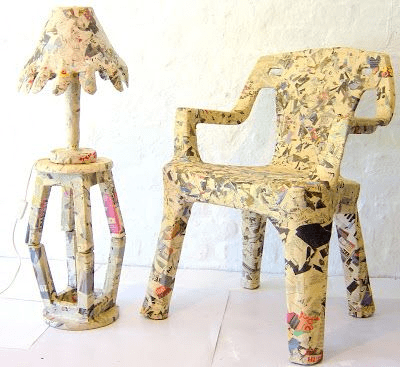
7th Grade: Paper Mache and FUNCTIONAL ART

Link to lesson plans HERE!

8th Grade 2D Design: Photoshop and FIRE

Many ways to create the illusion of fire… Dig deeper than what I am going to share in studio.

Link to lesson plans HERE!

8th Grade Sculpture: Claymation – Let’s Make a MOVIE

Link to lesson plans HERE!

ARTISTS – This is our LAST WEEK together… What Can We Accomplish In 2 Days? Monday – It’s all about TEACHERS and Encore Classes!

MONDAY!

https://www.floriangadsby.com/book

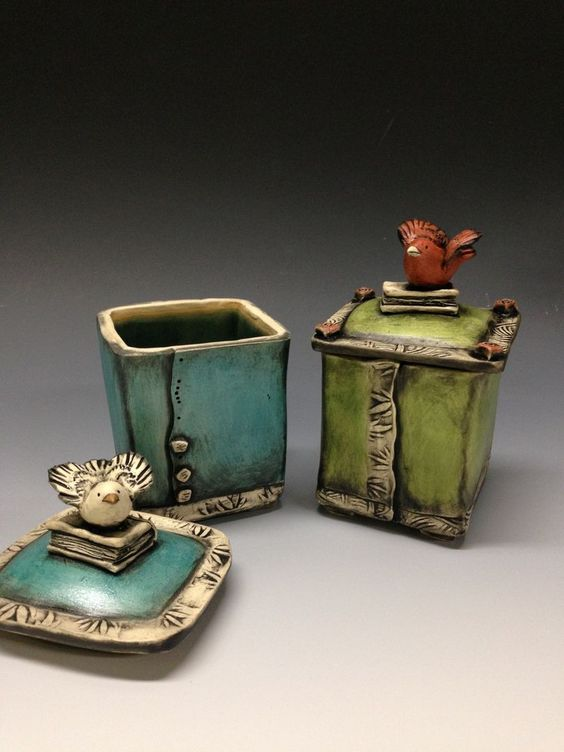
Today we are working on HAND BUILDING Cups, Mugs, or Trees.

You will also get some demonstration AND hands on the WHEEL if you are so inclined.

HERE is our assignment for the day! You EACH will have a copy of this for your own reference… if you were a student of ours you would have it in Google Classroom. Let’s get started!


Tuesday – Friday: We are going to CLEAN OUR LOCKERS and TAKE HOME ALL OUR WORK. Some will stay with me for an art show coming up so… be OK with that please.

The classes begin in Google Classroom AND from the lesson plans below… we are simplifying the website so that it is better for the day to day in the classroom. PLEASE feel free to visit the day to day and see what we are working on in the studio. The links SHOULD take you to the Table of Contents… find the current week to see what we are doing.

6th Grade: Assessment and Photography this week!

https://www.treehugger.com/tips-for-better-macro-photography-on-your-phone-4868419

Link to lesson plans HERE!

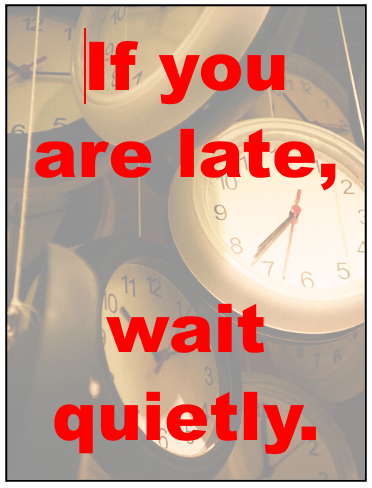
7th Grade: Photoshop and Inspirational Posters

https://www.dpreview.com/forums/post/58441894

Link to lesson plans HERE!

8th Grade 2D Design: Rotoscoping I Think I’ll Leave This Post As It Is…

Link to lesson plans HERE!

8th Grade Sculpture: Claymation

Link to lesson plans HERE!

SO MUCH TO DO and so little time to do it… Let’s Make Art!

I can use different styles of communication to express thoughts and ideas, negotiate conflicts, and resolve disagreements.

โ€œAll art is quite useless.โ€ โ€” Oscar Wilde: Art isnโ€™t utilitarian, and if it is, perhaps it isnโ€™t art. Art serves a non-practical role in our lives, but that does not mean that it is not vital or necessary. Oneโ€™s individual identity and our collective identity as a culture have no clear serviceability, but they are critical to our ability to function as a society. Kit White ยฉ 2011 Massachusetts Institute of Technology and Kit White

The classes begin in Google Classroom AND from the lesson plans below… we are simplifying the website so that it is better for the day to day in the classroom. PLEASE feel free to visit the day to day and see what we are working on in the studio. The links SHOULD take you to the Table of Contents… find the current week to see what we are doing.

6th Grade: Assessment and Photography this week!

https://images.app.goo.gl/kcbH4TvdWSgYvHos9

Link to lesson plans HERE!

7th Grade: Photoshop and Inspirational Posters

Link to lesson plans HERE!

8th Grade 2D Design: Rotoscoping

Link to lesson plans HERE!

8th Grade Sculpture: Claymation

Link to lesson plans HERE!

WELCOME BACK and HAPPY NEW YEAR! The break was SO NEEDED and now we are in the final throws of the semester. Let’s finish up with ENERGY!

Assessment is HUGE this week: I can listen to and respond appropriately when receiving constructive feedback from others.

โ€œThere are three responses to a piece of design โ€“ yes, no, and WOW! Wow is the one to aim for.โ€ Milton Glaser

The classes begin in Google Classroom and from the lesson plans below… we are simplifying the website so that it is better for the day to day in the classroom. PLEASE feel free to visit the day to day and see what we are working on in the studio. The links SHOULD take you to the Table of Contents… find the current week to see what we are doing.

6th Grade: Assessment and Photography this week!

Link to lesson plans HERE!

7th Grade: Photography Editing and Assembling the slides to print.

Link to lesson plans HERE!

8th Grade 2D Design: Digital Art and Photoshop – Assembling the slideshow and Assessment of the artwork.

Link to lesson plans HERE!

8th Grade Sculpture: Assessment and Presenting of the work.

Link to lesson plans HERE!

March 16, 2013 – Saturday – ABC’s Art 2013

A special note of thanks to my friend Janie Pollock for bringing me into the ASCDย Conferenceย in Chicago, IL on March 15 to talk about my ideas and uses of technology in the classroom as a means of interaction with students, parents, and the world at large.

~~~

The Newest ABC of the Arts: S and T
By: Frank Korb

Frank Korb

Frank Korb

In 2002 and again in 2007,ย John Tusaย ofย The Guardianย wrote the ABCโ€™s of what was facing the world of the arts and how to deal with them. Inspired by his ABCโ€™s, these are my 26 thoughts on the importance of support of the arts in school systems and communities across the country / world.

~~~

S is for Society – Art has defined, redefined, reflected, and changed society since the beginning of humankind. The arts challenge our perceptions and help us see the world in new and creative ways (Sixteen Trend: Their Profound Impact on Pur Future, p 170). From the cave paintings at Lascaux, where the artists painted their ceremony and day to day activities to the Renaissance artists where Leonardo Da Vinci and Michelangelo di Lodovico Buonarroti Simoni defined what it was to create perfection and question the status quo. Pablo Picasso and his , the visual representation of the horror, bloodshed, and devastation of the small Basque Country village of Guernicaย during the Spanish Civil War. ย Society of the past would not be known without the arts and the society of today requires the same.

T is for Teamwork – By working together, students, faculty, community members can create exhibitions, ย build collections, and develop relationships, “conceive of ideas, products, services, performances and pathways to peace and understanding. The arts can help us find common ground (170)”. They can build the skills to really understand what it’s like to work as a team and come up with extraordinary results.

~~~

NEXT WEEK: U, V, and W

Please follow me via e-mail, like me on Facebook, Follow me on Twitter, and share me around to the world! Thanks!

Frank

March 9, 2013 – Saturday – ABC’s of Art 2013

The Newest ABC of the Arts: P, Q, and R
By: Frank Korb

Frank Korb

Frank Korb

In 2002 and again in 2007,ย John Tusaย ofย The Guardianย wrote the ABCโ€™s of what was facing the world of the arts and how to deal with them. Inspired by his ABCโ€™s, these are my 26 thoughts on the importance of support of the arts in school systems and communities across the country / world.

~~~

P is for Professionalism – As a high school teacher (and former high school student) it is one thing to move a pushpin display board around the cafeteria and pin artwork to it in hopes that it gets looked at and appreciated (and not touched and smeared up by other students). It is another thing altogether to give the work by our quality students a place to be appreciated in a space that allows the viewer to step back and see the hard fought efforts on display is a safe and protected space. Many people (students, myself as a high school student and even at the college level) are often too intimidated to even venture into an art gallery if they stumbled upon one. While a critique can often be a goodย destinationย for artwork, a gallery IS the destination for artwork (MoMA will be calling soon enough) while a pushpin display board is a destination for a mid-critique… maybe.

Q is for Quiet – Reflection is always a wonderful and necessary skill to develop as one thinks about the skills that have been mastered and the skills that need refining. The arts, and a place to properly view the visual arts, allow for that necessary practice of self-reflection and contemplation to occur. As artists work through the process of making art, the sense of reflection (and feedback from those involved and interested in the work) is essential to that process of making art.
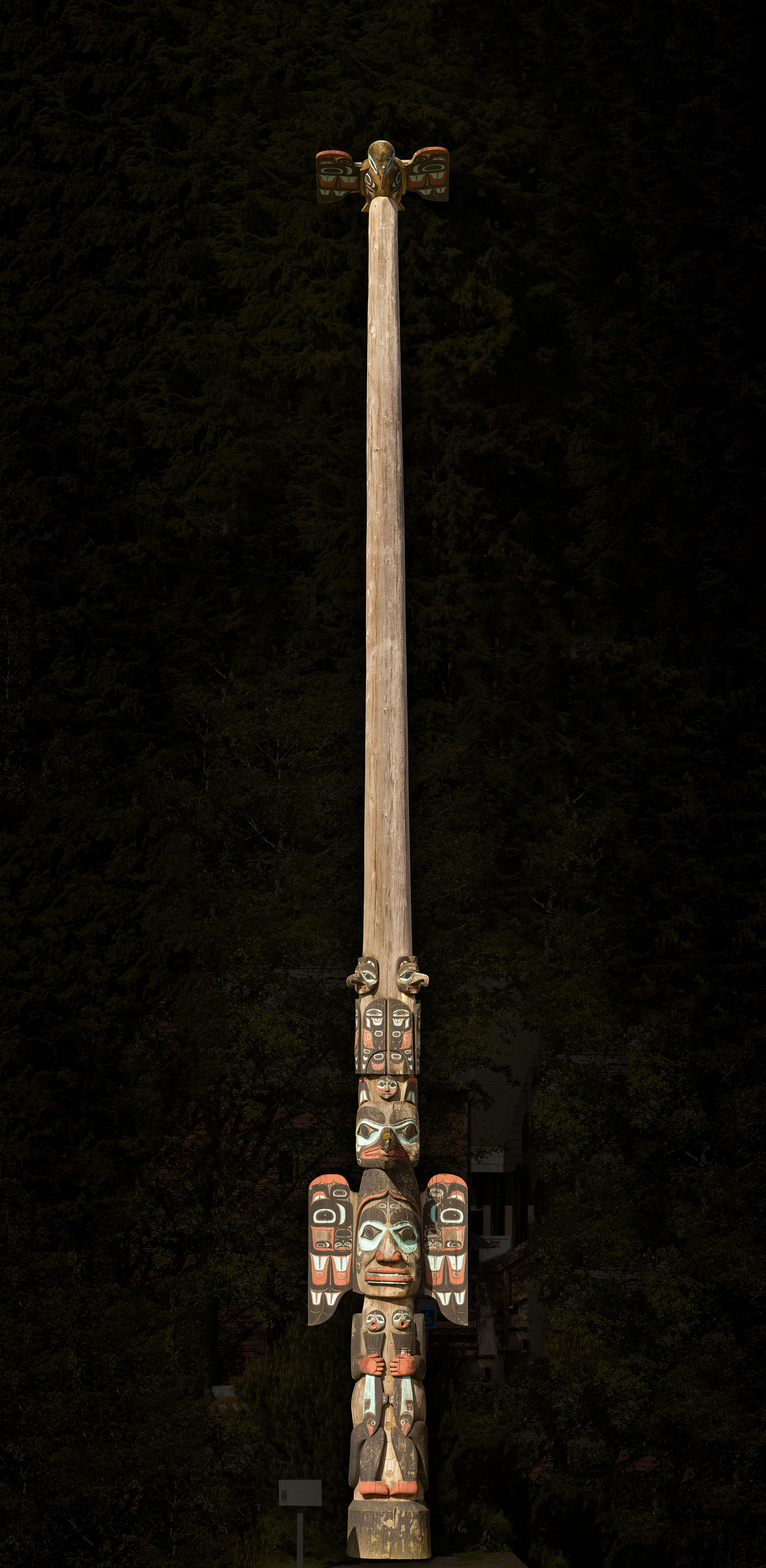
R is for Reflection – See above (Quiet). If the above is not convincing enough, try Socrates out for size with”The unexamined life is not worth living.”

~~~

NEXT WEEK: S, T, and U

Please follow me via e-mail, like me on Facebook, Follow me on Twitter, and share me around to the world! Thanks!

Frank

March 2, 2013 – Saturday – ABC’s of Art 2013

The Newest ABC of the Arts: M, N, and O
By: Frank Korb
January 2013

Frank Korb

Frank Korb

In 2002 and again in 2007,ย John Tusaย ofย The Guardianย wrote the ABCโ€™s of what was facing the world of the arts and how to deal with them. Inspired by his ABCโ€™s, these are my 26 thoughts on the importance of support of the arts in school systems and communities across the country / world.

~~~

M is for Mediums – So often students are afraid of the learn the basics of handling a medium, yet tend to be amazed at what a completed artwork in an unfamiliar (or all too familiar) medium is. Through the use of the visual arts, high quality and resolved ideas, ย images, experiments, mediums, topics, sizes, colors… you name it… are experienced in a way that allows the risk of failure to beย supersededย by the potential of new success.

N is for New – New ideas and opportunities ย that individuals come up with allow for a different approach for problem solving and discoveries of the self that other ways of thinking may not be able to provide.

O is for Opportunities – The arts offer the students so many opportunities to create and work their minds in different ways that other areas of academia do not. Studio spaces, drawing tables, sketchbooks, empty canvases, open minds, supportive communities and families offer that opportunity.

~~~

NEXT WEEK: P, Q, and R

Please follow me via e-mail, like me on Facebook, Follow me on Twitter, and share me around to the world! Thanks!

Frank

Share this:

February 23, 2013 – Saturday – ABC’s of Art 2013

The Newest ABC of the Arts: I – L
By: Frank Korb
January 2013

Frank Korb

Frank Korb

In 2002 and again in 2007,ย John Tusaย ofย The Guardianย wrote the ABCโ€™s of what was facing the world of the arts and how to deal with them. Inspired by his ABCโ€™s, these are my 26 thoughts on the importance of support of the arts in school systems and communities across the country / world.

~~~

I is for Importance – The importance of the visual arts is often overlooked, yet when walls need decorating, fliers need printing, shirts need designing, sets need painting, the visual artists are the ones that are called upon. Image the walls of a household, office, classroom without the visuals – how sterile and unimportant would that space be (think of a prison cell… maybe I have offered up too much information – Just Kidding.)?

J is for Juxtaposition – The side by side comparison of professional artists, the community artists, and the student artists is essential to the community of artists and learners. The professional, weekend warrior, and the student learning what it is to work in and be around art may not always be attained by those in the arts BUT it is essential to the arts. The Artist, the Critic, the Historian, the Consumer… Art does not get made in aย vacuum and is essential to all those involved.

K is for Kindred Spirits – The closeness of a group of artists (professionals and students alike) who are making work, discovering skills and abilities, solving problems and coming up with new and inventive solutions, and then showing work together with a sense of pride… this is something desperately needed in our world – here is an opportunity to promote that spirit of unity. Start an art group with your friends and have pizza while talking about the art you make.

L is for Lifelong Learning – What does it take to be an artist? This is a question that many colleges and universities fail to provide a solid answer for. Opportunities abound as one learns what it is to juggle the time, management, resources, artworks, and all the other things that are part of a successful artist (professional and students alike).

~~~

NEXT WEEK: M, N, and O

Please follow me via e-mail, like me on Facebook, Follow me on Twitter, and share me around to the world! Thanks!

Frank

February 16, 2013 – Saturday – ABC’s of Art 2013

The Newest ABC of the Arts: E – H
By: Frank Korb
January 2013

Frank Korb

Frank Korb

In 2002 and again in 2007,ย John Tusaย ofย The Guardianย wrote the ABCโ€™s of what was facing the world of the arts and how to deal with them. Inspired by his ABCโ€™s, these are my 26 thoughts on the importance of support of the arts in school systems and communities across the country / world.

~~~

E is for Education – The lessons and skills learned in the making of art are enhanced through the lessons and skills developed through the exhibition of art as the artist keeps the goals of presentation, conversation, and appreciation in mind as the work is created.

F is for Fine Art – The final product (but for the artist not the most important part of the art – that would be process) that the hard and dedicated work an artist strives to produce and be recognized for.

G is for Goals – It is all about setting them, working towards them, and then reflecting upon them as they are completed (or not completed). The presentation and conversation allows for the โ€œwallโ€ to be the Goal for the learning and a place for reflecting upon the ideas of whether or not those goals were accomplished in the process. What is it that we hope to learn from the process of making art? Is is only about the manipulation of a medium on a ground? Is it only about the plasticity of a clay or metal? Is it just the digital images put into the computer and reproduced through the printer? NO! The objectives are larger than the simple โ€œart makingโ€ and revolve around History, Aesthetics, and Art Criticism.

H is for Holistic – It starts with concepts to practice, then practice to presentation,ย presentationย to conversation, conversation to appreciation. The appreciation on a gallery wall is the final space that artists work long and hard to achieve recognition (one more step would be to the hands and walls of the arts patron – but that is another story).

~~~

NEXT WEEK: I, J, K, AND L.

Please follow me via e-mail, like me on Facebook, Follow me on Twitter, and share me around to the world! Thanks!

Frank