Principal fires security guards to hire art teachers — and transforms elementary school – Orchard Gardens, Roxbury, MA
A curious news article about how the arts can transform a school – in this case a specific elementary school in Roxbury, MA. Visit NBC News HERE to read the article.
The Arts in Education.
I can’t get the videos to post to my website, take a few minutes to visit the NBC Site.
This Weekend in NYC at the Whitney… Edward Hopper’s “Early Sunday Morning” Click on the PAINTING to listen about THIS painting… then let’s look at more of Hopper’s Work.
NVAS: 3.1Ac: Engage in constructive critique with peers, then reflect on, re-engage, revise, and refine works of art and design in response to personal artistic vision.
Question to begin with: How have you seen a dramatic change in your approach to painting since you began this class? Are you tighter with your painting or looser? Are you more anxious about the process or have you relaxed about the process? Explain your answers please.
End of the Day Reflection (use the back of this page for more reflection space): As you look back on the paintings and reflections from the week, what are you most proud of? What are the three strongest aspects of the paintings that you have completed this week? What are two compositional styles that you are really seeing as dominant in how you set up your paintings? What is one thing you would like to focus on as you create a couple of plein air paintings this weekend? Homework is 2 or more plein air paintings all on your own. Remember that this is suppose to be FUN – so get out there and enjoy your works.
NVAS: 1.2P: Shape an artistic investigation of an aspect of present-day life using a contemporary practice of art or design.
Question to begin with: How did simplifying the shapes and forms of the landscape help you to see the space differently than if you were simply looking at the landscape as a gathering of trees, fields, roads, etc? How do you think you can to to use these “abstract ideas” to make the real space that you are seeing happen on your watercolor paper as representational paintings versus abstractions? Of the techniques you experimented with yesterday, what few stood out to you as approaches you’d like to continue with (and don’t forget the ever important WHY behind that answer)?
End of the Day Reflection (use the back of this page for more reflection space): From the day of being off campus – what were the areas of town that you were most drawn to? Why? From the abstractions yesterday, how did you use those ideas (did you) to start with and then move on from there to a more “representational” landscape in the finished paintings of today? Explain your answers. Lastly… what challenges did you find yourself really struggling with visually today in your paintings? Why? How did you work to solve them? Explain.
Plein Air Painting: Richard Dibenkorn and the Bay Arts Figurists
Click on the image above to visit the link to the watercolor technique experiments.
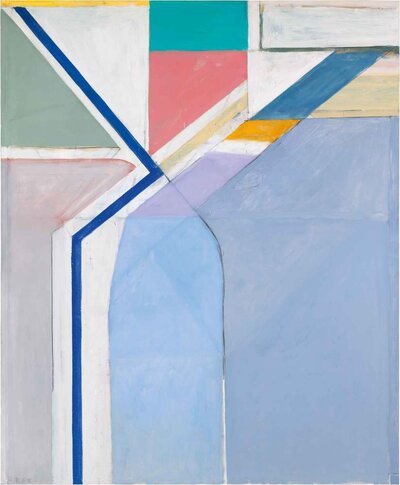
Click HEREto Listen to the 7 minute interview from NPR with Richard Dibenkorn and take a look at how Diebenkorn breaks up the space into the shapes and colors – not recognizable forms (trees, streets, houses etc…) and think about those shapes as you paint today. Look at the images on the website as examples. You will have examples to take with you out with you to reference. Make sure you are working with the techniques that the first part of the class gave you – image above and videos we have just watched.
NVAS: 2.1Ac: Through experimentation, practice, and persistence, demonstrate acquisition of skills and knowledge in a chosen art form.
Question to begin with: What is it you KNOW about watercolors at this point in your art making career? Stop and think about this for a moment. Don’t RUSH your answer. Take a few minutes…
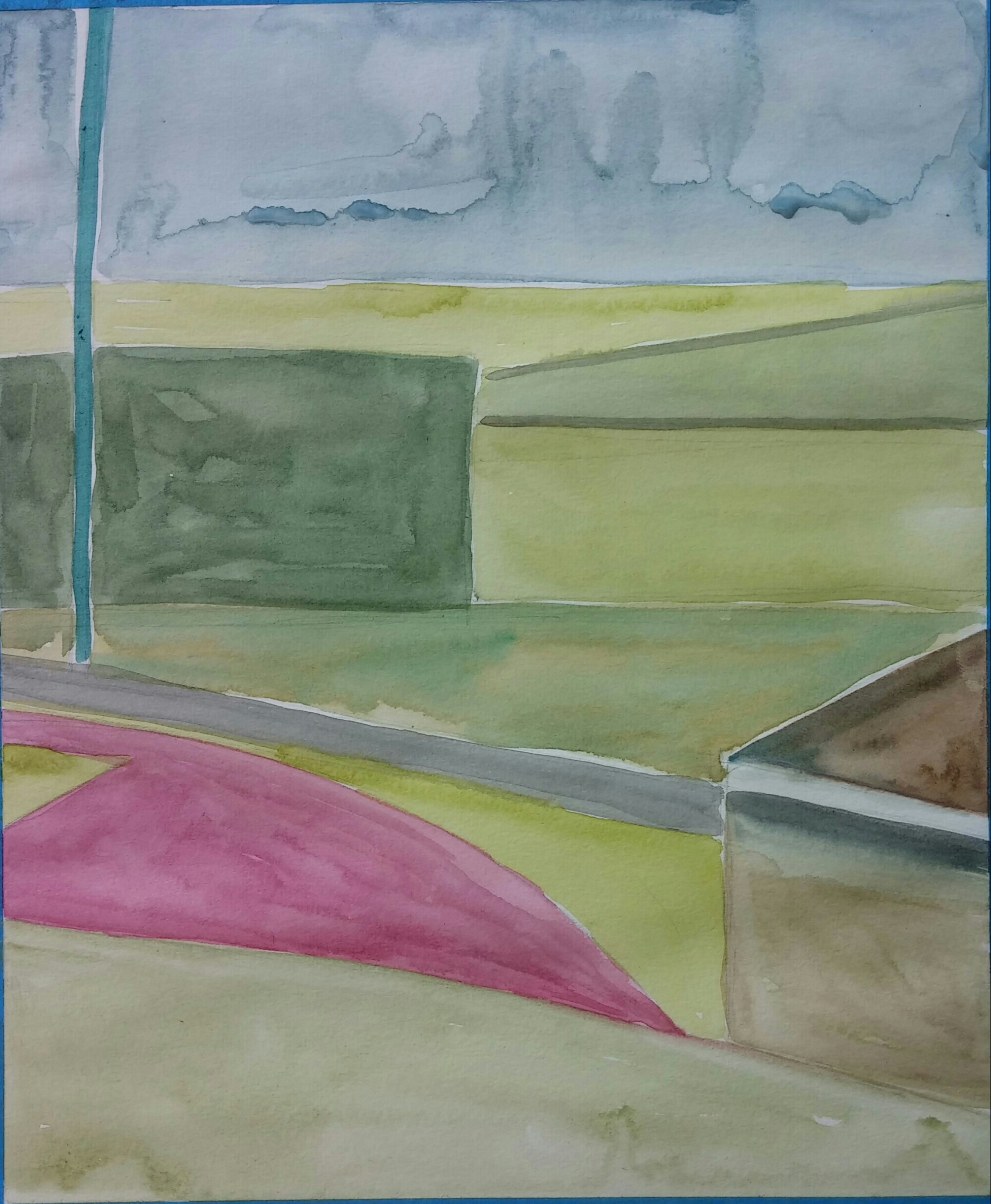
Here is my Richard Diebenkorn”esque” painting from yesterday. I am no Diebenkorn, but the ideas help me, well, let’s see what the ideas help you do first.
End of the Day Reflection (use the back of your page for more reflection space): How did you use the techniques / experiments from the video and the examples from Richard Diebenkorn to create compositions that reflect your observations from the day? Make sure you elaborate on the answers – not just one comment that is vague – think about it!
NVAS: 2.1Ac: Through experimentation, practice, and persistence, demonstrate acquisition of skills and knowledge in a chosen art form.
Question to begin with: What is it you KNOW about watercolors at this point in your art making career? Stop and think about this for a moment. Don’t RUSH your answer. Take a few minutes…
Looking at your paintings from the day (really look at them) what are three things that you are happy with? Be specific and elaborate on your comments. What are two things you discovered about the idea of painting out of doors (Plein Air)? What is one thing you look forward to tomorrow? Remember to elaborate.
Thursday evening I had a wonderful opportunity to meet and speak with Todd Mrozinski about his artwork. In addition to the work in his “Shadow Series,” which consisted of 20+ (must be hundreds of paintings), Todd shared the Pop-Up Gallery installation in a former boutique at the Pfister. His work as well as the works of Timothy Westbrook’s are on display and the opening reception is this evening (Friday, June 12). Thank you to Todd and his wife Renee Bebeau as well as Pamela Anderson (from Milwaukee’s Plaid Tuba Gallery) and her husband Steven Kaishian for the wonderful conversation.
Also below is a great review of student created art inspired by the works of Midwest Artists from Frank Juarez’s (Sheboygan Artist / Educator) book Midwest Artist Studios (MAS). The link to the original site it here, but you can read my excerpt below. Please explore at all the student’s working and works HERE.
A Midwest Artist StudiosReflection, by Frank Juarez (and Frank Korb) – Here
Reflection on Todd Mrozinski and Silhouette Drawings
Written by Frank Korb, art teacher
2015 Drawing Class – Waterford Union High School
I introduced my students to Todd Mrozinski through theMidwestern Artist Studios Project workbook designed by Frank Juarez. In order to help my students better understand who Todd Mrozinski is, I used Frank Juarez’s writing and interview with Todd from the M.A.S. Workbook as well as looking at Todd’s website and video prepared as his application for the Pfister Artist in Residence. From there, we discussed the ideas and history behind diptychs and triptychs. The ideas behind the works were planned around the idea of working with a partner, learning about them as individuals and then working together to create works about one another through the same ideas of Todd – working with the Silhouette of one another and also working with the ideas of shadows cast from plants or trees. Originally, we were going to be creating a triptych and including the shadow of a person made object, one chosen by the partner in the pair, but because of time limitations we only had one artist get that far with the drawing.
In the very beginning, we introduced one another through learning the ideas behind the elevator pitch. Using an elevator pitch approach to introduce themselves gave them a good understanding about who they are, what they believe in, how they make art, what their ideas about life and art. From there we all went outside and looked at shadows and the partners worked together to choose which types of plant shadows to trace. The artist traced the shadow their partner liked or felt symbolized them. They then traced the sitters silhouette. From there we all worked in studio and created these wonderful images through the use of oil pastels. Over these quick 2 weeks or so, a large assortment of strong and conversation starting compositions were created. Works were focused on the positive and negative space the silhouettes created while also being built up upon the idea of color scheme. Working together gave the artwork a collaborative element that previous works did not have. Students were a bit apprehensive about the use of oil pastels, but this was a good choice as time was of a concern. Oils have a quality that really show the mark of the artist and this showed through in many of the works. A few thoughts about the next time that this lesson is taught are to allow more time to work, a mid-critique, as well as a field trip to Todd’s studio in Milwaukee.
Each class period began with a virtual trip to Todd’s gallery and discussion about a few works. Personal written reflection happened at the end of each day with students thinking about and responding to the successes and failures that they were experiencing in the work. When we had about a week left, I provided an online written critique (google forms) for them to use as their final exam. All said and done – kids came into the final exam period with their finished artwork, Skype TV turned on, and Todd, my students, and myself I met up online to talk about the ideas and works that were created.
Over the course of two days and two separate classes, 20 kids each, a 1 1/2 hour time period we had GREAT critiques, conversation, and reinforcement of many words I spoke of earlier. Todd added a lot of new ideas about intention and symbolism, compositional ideas that were new ideas for the students. The young artists were very interested in Todd’s comments, critique, and support about the work. Discussion of the works was very strong and the students took to the conversation with elements and principles in mind with interpretation becoming even more a highlight. I sincerely hope that the ideas spoken about are carried forward into the individual student work.
During the first week of summer vacation, I put out a brief survey to the kids that asked four questions. 1) What are THREE (3) highlights that you found, experienced, or achieved in the working on your shadow / color scheme drawings? 2) What are TWO (2) suggestions you suggest for the next time this artwork / experience gets taught? 3) What is the ONE (1) thing that you feel you will remember / use in the future that you learned from this work of art? 4) Do you have ANYTHING ELSE that you would like to add? Please let me hear more of your thoughts. Survey resultsHERE. While I am not expecting a lot of responses, summer vacation having started, I do hope to get a few comments in about the project. My students works as well as images of the kids in the process of working and critiquing can be seen through this link: https://goo.gl/UgFmbo.
TheMidwest Artist Studios™ Project is supported by a grant from the Kohler Foundation, Inc and the Wisconsin Art Education Association.
Students who study art are 4 times more likely to be recognized for academic achievement and 3 times more likely to be awarded for school attendance.
Arts and music education programs are mandatory in countries that rank consistently among the highest for math and science test scores, like Japan, Hungary, and the Netherlands.
The No Child Left Behind Act clearly mandates The Arts (music, art, foreign language, etc.) as a core academic subject.
One study group showed that third-, fourth-, and fifth-grade students who were taught a foreign language every day in school outperformed the students who were not exposed to a foreign language on their Basic Skills Test.
While nearly all schools in America are required to offer coursework in languages, the amount of instruction provided for those subjects does not come close to that of math, science, and english courses.
Federal funding for the arts and humanities rolls in around $250 million a year, while the National Science Foundation is funded around the $5 billion mark.
Researchers find that sustained learning in music and theatre correlates strongly with higher achievement in both math and reading.
In a study of a high-poverty schools in Chicago, the schools that were participating in the Chicago Arts Partnerships in Education (CAPE) made huge strides in closing the gap between high- and low-income students’ academic achievement.
Multiple studies have concluded that curricular and extracurricular art studies and activities help keep high-risk dropout students stay in school.
New brain research shows that not only does music improve skills in math and reading, but it promotes creativity, social development, personality adjustment, and self-worth.
Research suggests that studying a second language is essential to the learning process, creative inquiry, and critical thinking. Foreign language studies have proven to increase problem-solving skills and overall cognitive development.
1 National Endowment for the Arts, the National Endowment for the Humanities and the Institute of Museum and Library Services, “Re-Investing in Arts Education: Winning America’s Future Through Creative Schools.” The President’s Committee on the Arts and Humanities. Accessed February 28, 2014.
2 “Lessons from PISA for the United States, Strong Performers and Successful Reformers in Education”, OECD Publishing, 2011. Web Accessed February 28, 2014.
3 “Arts Education in Public Elementary and Secondary Schools, 1999-2000 and 2009-2010”,National Center for Education Statistics, 2012. Web Accessed February 2014.
4 U.S. Department of Education, “No Child Left Behind, A Toolkit for Teachers.” Accessed February 28, 2014.
5 Armstrong, P. W., J.D. Rogers, “Basic skills revisited: The effects of foreign language instruction on reading, math, and language arts.” 1997. Web Accessed February 28, 2014. http://eric.ed.gov/?id=EJ575427.
6 Rebaudengo, Giuseppe. “Saving the Arts in our Nation’s Schools.” Thinking in Public. Accessed February 17, 2015. .
7 Americans for the Arts. “SUMMARY OF KEY ADDITIONAL ARTS EDUCATION RESEARCH AND FACTS .” City of Providence. Accessed February 25, 2014, http://www.providenceri.com/efile/3411.
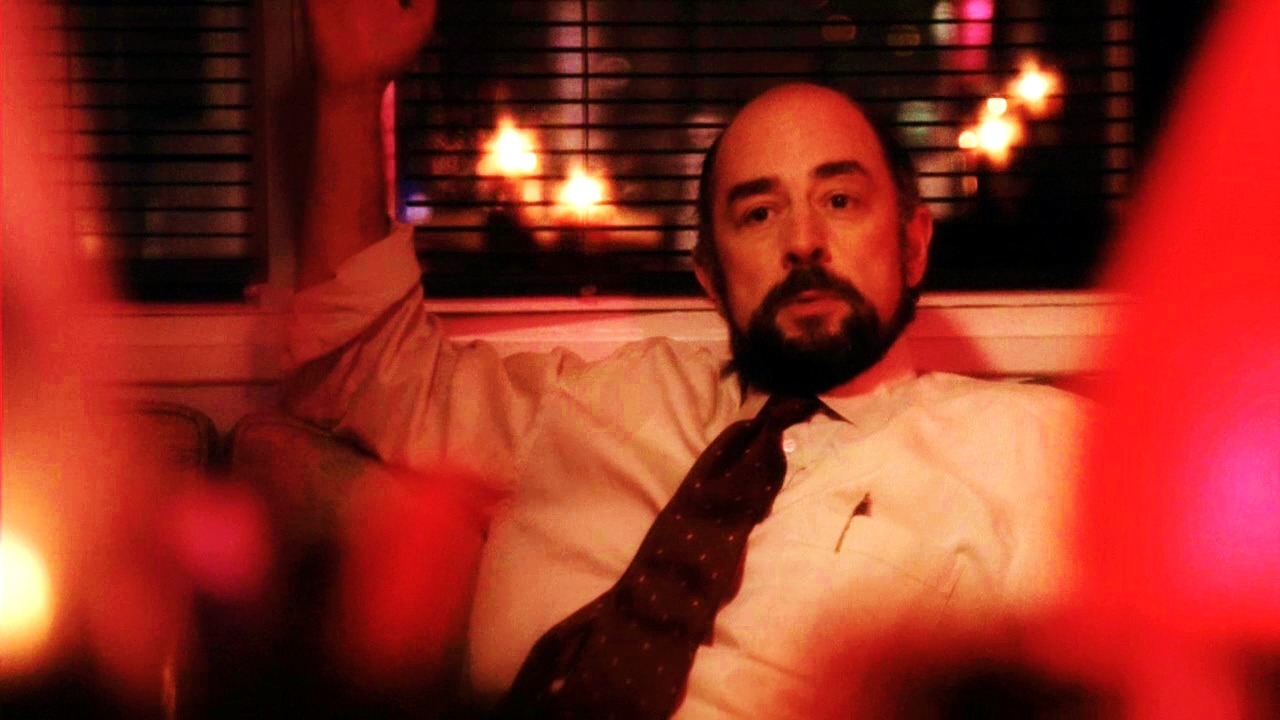
“There is a connection between the progress of a society and progress in the arts. The age of Pericles was also the age of Phidias. The age of Lorenzo de Medici was also the age of Leonardo da Vinci. The age of Elizabeth was the age of Shakespeare.” Toby Zieger – Communications Director of the White House – The West Wing, “Gone Quiet” (Season 3, Episode 6).
While these words were spoken by the fictional Communications Director Toby Ziegler on the TV series The West Wing, the words still ring true. Great moments and movements in history were also the great moments and movements in the arts. Throughout history the visual, musical, written, dramatic arts were alive, abundant, and supported by the societies they were part of.
The arts carry the messages of the society with them as time moves forward. The ideas, passions, troubles, victories, tragedies, inventions, failures, and people of the times are represented by the arts. While academics are essential in school; memorizing dates and formulas, the important people, places, things, and ideas in society are necessary to a quality education, there is much more to the learning process than that. Dealing with the development of observation of the world around us, the creation of new and imagined objects and materials, the process hind the development of a product versus simply the end product are aspects of life that the arts offer those who study it.
Through the arts there is an expectation and desire for struggle, failure, discovery, frustration, the unknown, and, finally, success in the learning that happens in a very different way than in other courses of study. The arts, in all their shapes and sizes, means and methods, are essential in the development of the keen and well educated mind.




 Art With Korb