The WordPress.com stats helper monkeys prepared a 2012 annual report for this blog.
Here’s an excerpt:
4,329 films were submitted to the 2012 Cannes Film Festival. This blog had 28,000 views in 2012. If each view were a film, this blog would power 6 Film Festivals
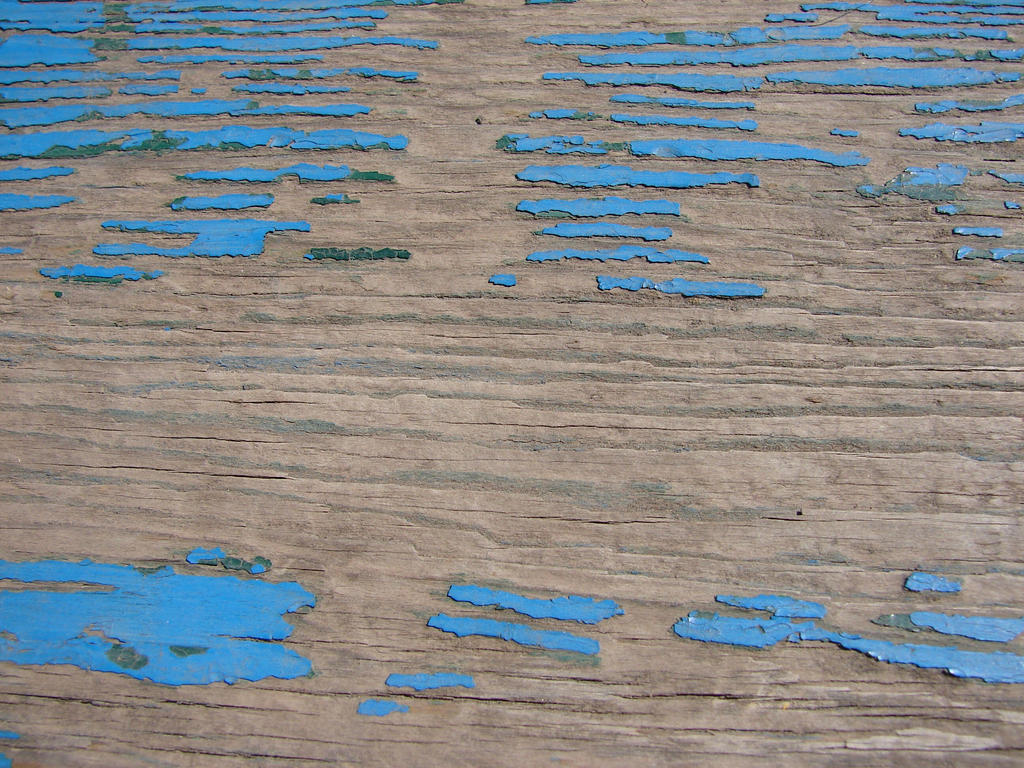
Art Foundations 2D – Wrap up Chapter 9 – Texture, Grattage and Decalcomania (Frottage from Yesterday).
Paint!
2.3 Work on creating artworks that solve visual challenges using TEXTURE making techniques.
1.1 Work on applying media, techniques, and processes with 1.1.3 awareness so that your ideas are executed well.
Max Ernst – Grattage, Decalcomania, and Frottage – Texture in Abstract Artwork.
A crumbling city looms oppressively below the ring-shaped moon. Ernst made a whole series of such works. The imagery may reflect his pessimism as Nazism took hold in his native Germany. The ruined cityscape was created using a technique that Ernst called ‘grattage’ (scraping). It involved placing the canvas over planks of wood or other textured surfaces, then scraping paint across it. The shapes that emerged formed the basis of the image. Grattage was one of a number of techniques that Surrealist artists explored as a way of letting a chance element into their work. – http://www.tate.org.uk/art/artworks/ernst-the-entire-city-n05289
Of ALL the different types of texture making… what was your favorite? What about the process was so much fun? What part of the process gave you NEW approaches that you NEVER would have thought of?
~~~
Advanced Drawing – Inside / Outside Portrait – PLAN FOR BREAK!
“New York Movie” Edward Hopper. How does this painting reflect your work? What do you find as being similarities between the two? What are the differences?
Yesterday we FAILED on Goals (and I mean ME…)
3.4 Know about the evaluation and defense of your sources for ideas
3.2 Work on applying subjects, symbols, and ideas in art and use skill to solve visual challenges.
What are the aspects of the work that you really need to focus on during the break? What supplies do you need to bring home with you so that you are fully prepared to finish the work that you need to finish. Tell your neighbor all that you need to do in order to accomplish the work you need to do. WRITE DOWN the supplies you need to pick up and take home.
~~~
AP Studio Art – Concentration work, 1″ Artwork, Planning on the work for the break – TAKE WORK HOME!
LINE is the ELEMENT of FOCUS in this artists work. What are you FOCUSING on? Do you see that focus and development in your work? How do I need to kick you in the behind or light a match under your feet to get you moving (do I)?
1.2 Work on creating art that demonstrates an understanding of how your ideas relate to the 1.2.1 materials 1.2.2 techniques 1.2.3 and processes you use.
2.6 Work on creating multiple solutions to solve visual challenges.
Regrettably, I am going to have to REALLY start holding the grades to a higher level. I feel as though I have been VERY soft this first semester. I have had some VERY good conversations with some of you about the works and with some of you… I am worried about shutting you down and turning you off from making art. That day ends today. Be prepared for a new set of expectations from me and new expectations I hope you have for yourself. WHAT DO YOU NEED TO DO TO ADVANCE YOURSELF? What do you need to do to UP YOUR GAME? Look over the body of work you have made so far… what is successful? What is failing / falling short of the quality that you need to do.
AP Studio Art: Concentration and Breadth work. One on One Concentration Work Conversations. Review current assortment of CONCENTRATION (today and Friday) and reflect on the 2 questions from the AP Poster.
1.2 create art that demonstrates an understanding of how your ideas relate to the 1.2.1 materials 1.2.2 techniques 1.2.3 and processes you use
2.2 evaluate the effectiveness (and cohesiveness) of artworks / cocentration
What are your thoughts about the 2 questions? What are your answers to the questions regarding the concentration? Do YOU think that you are growing in the development of your body of work? What is the common thread that is holding your classmates works together? What is missing in the body of work they have as a concentration thus far?
3.4 evaluate and defend the validity of sources for ideas
3.2 apply subjects, symbols, and ideas in art and use skill to solve visual challenges
What have you been doing to make the story more obvious in your artwork? What can you do to clearly define the inside / outside idea in the artwork? Is this a successful work of art?
AP Studio Art: Concentration and Breadth work. One on One Concentration Work Grading.
Sean Scully hard at work. How are you doing in YOUR studio? Can WE see the continuity in your body of work?
1.2 Work on creating art that demonstrates an understanding of how your ideas relate to the 1.2.1 materials 1.2.2 techniques 1.2.3 and processes you use
2.6 Work on creating multiple solutions to solve visual challenges.
What are your thoughts about the 2 questions? What are your answers to the questions regarding the concentration? Do YOU think that you are growing in the development of your body of work?
Art Foundations 2D:Finish written critique on grid drawings. Read second part – Chapter 9: Balance. Begin group work: non-objective, asymmetrical collage artwork.
What are YOUR thoughts about the critique? What do you think you can take away from Self-Reflection?
2.2 Work on evaluating the effectiveness of artworks.
3.3 describe the creation of images and ideas and explain why they are of value
Character: Comments: What were some things you thought about AS you judged your drawing WHILE you worked? Did you make changes as you worked? Did you FEEL a “light” pop on in your head, an “Ah Ha!” moment about the process? Write about those thoughts and how you feel they helped you become a better drawer during this work.
Critiquing: Comments: What ARE your thoughts about the process of critiquing? Do you feel as though you CAN learn something about yourself when you do a critique? In your thoughts, not what you think I want to hear, could you be more reflective about your work as you work versus only at the end?
Hard Edged – Balanced – Non-Objective Art
Advanced Drawing: Mid–Critique of other’s works and reflect upon the comments. Continue working on portraits.
Lay your works out on the desk along with a blank sketchbook page… take 10 minutes and write something about everyone else’s work. DO NOT read the comments of anyone else. Make this a WORTHWHILE critique, something that you feel would be helpful to you.
2.2 Work on evaluating the effectiveness of artworks.
3.3 Describe the creation of images and ideas and explain why they are of value
Based in today’s MID-CRIT what are you able to take away from the process and putting toward the making of your artwork?
AP Studio Art: Finish critique of breadth work. Discuss and reflect on the concentration work. Plan ahead for the break.
What is holding your concentration together? What are the answers to the questions the AP Board has put in front of you (on the poster)?
1.2 create art that demonstrates an understanding of how your ideas relate to the 1.2.1 materials 1.2.2 techniques 1.2.3 and processes you use
2.6 Work on creating multiple solutions to solve visual challenges.
Critiquing is an ESSENTIAL process in the making of art. Yesterday was a struggle for me… what did you take away from the critiquing process that you can put to use in your future works? Was it about the composition? Was it about the technique? Was it about your execution with the materials? What was it?
“Tragedy is a tool for the living to gain wisdom, not a guide by which to live.” — Robert Kennedy
Art Foundations
Critiquing a work of art… What to think about?
2.2 Work on evaluating the effectiveness of artworks.
3.3 Work on describing the creation of images and ideas and explain why they are of value… what have you learned?
Execution: Comments:
What was the most challenging aspect of this work for you? Was it the materials? Was it the process? How did you overcome the problems?
What do you feel you learned the most about in how you used the materials or techniques in this assignment?
Composition: Comments:
Explain what you felt was the biggest challenge in the use of the COLOR behind this work (the ELEMENT we focused on the most). Was it the RYB set of squares? Was it the Achromatic set of squares? Was it the Complimentary set of squares? Why did you struggle so much and how do you feel you resolved them?
What techniques do you feel that you have developed and might be able to rework into the future works that you create (either for yourself or for other classes and projects)?
Advanced Drawing
Automat… What does this painting by Edward Hopper tell you about the woman in the cafe?
Edward Hopper – Automat (unofficial but reliable website).
1.1 Work on applying media, techniques, and processes with 1.1.1 skill 1.1.3 and awareness so that your ideas are executed well.
3.2 Know about your application of subjects, symbols, and ideas in art and use your skills to solve visual challenges.
What’s working and what is not? Where have you struggled in this drawing so far?
AP Studio Art
Let’s sit back and have a conversation about this work.
2.2 Work on evaluating the effectiveness of artworks.
3.3 Know about and describe the creation of images and ideas and explain why they are of value.
What was difficult about this project? What have you learned and what are you going to take intot he next work?
“One important key to success is self-confidence. An important key to self-confidence is preparation.”—Arthur Ashe – http://goalhabits.com/
Art Foundations 2D
Jennifer Bartlett makes a NEW use of the grid!
1.4.3 evaluation [critique] (formative reflections about your artwork).
1.2 create art that demonstrates an understanding of how your ideas relate to the, 1.2.1 materials, 1.2.2 techniques, 1.2.3 and processes you use.
Journal Portion of this week’s Goals Page:
What is new to you about the way in which you are able to use colored pencils?
Where else in your day / year / life might you be able to successfully use the idea of the grid and enlargement or ratios?
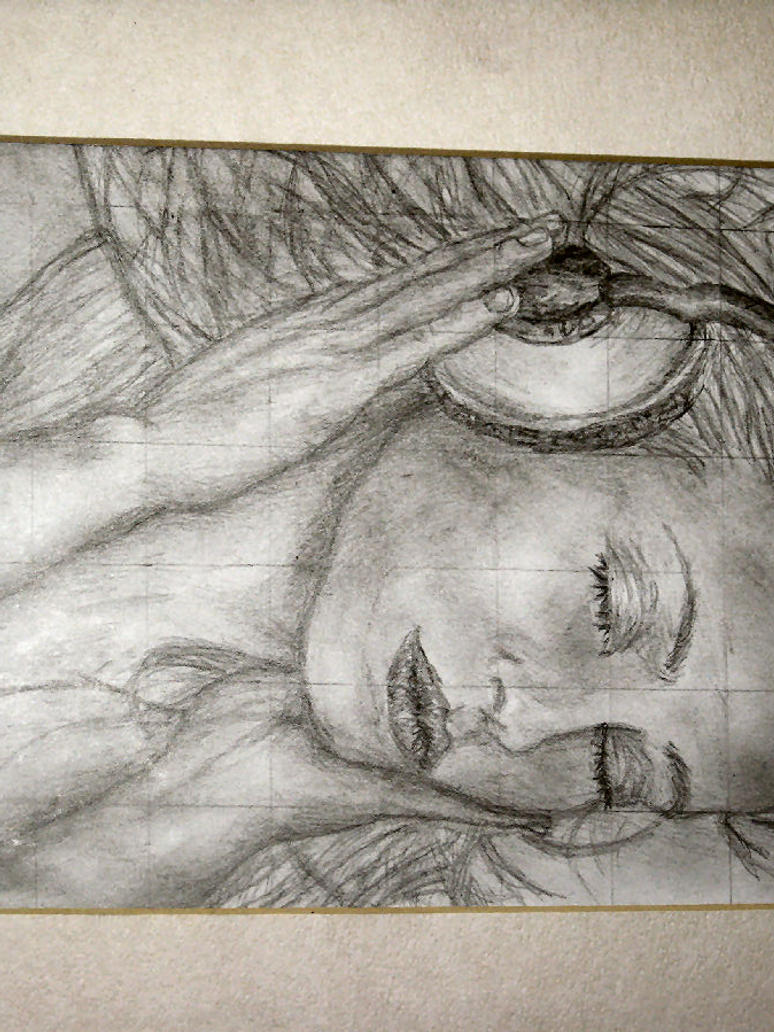
How has focusing on ONE SQUARE AT A TIME helped you with the making of this colored pencil drawing?
If you were given the opportunity to do another colored pencil drawing, what would you go about and do differently the next time BASED on your experiences with colored pencils this time around?
BONUS THOUGHT: You used a photograph from someone else’s imagination. What do you think your feelings toward the project might have been if you would have used an image from your own life? A photograph that you created?
Advanced Drawing
Paul Gaugin “Portrait of Jacob Meyer de Haan”
Gaugin’s Self – Portrait – Companion piece to “Portrait of Jacob Meyer de Haan”
Work on create portraits that use organization and function to solve specific visual challenges.
Know about and identify your intentions and purposes behind making this portrait.
Symbolism can be important in an artwork. Why do YOU think an artwork that is ABOUT something may be more interesting than an artwork that is art for art’s sake?
AP Studio Art
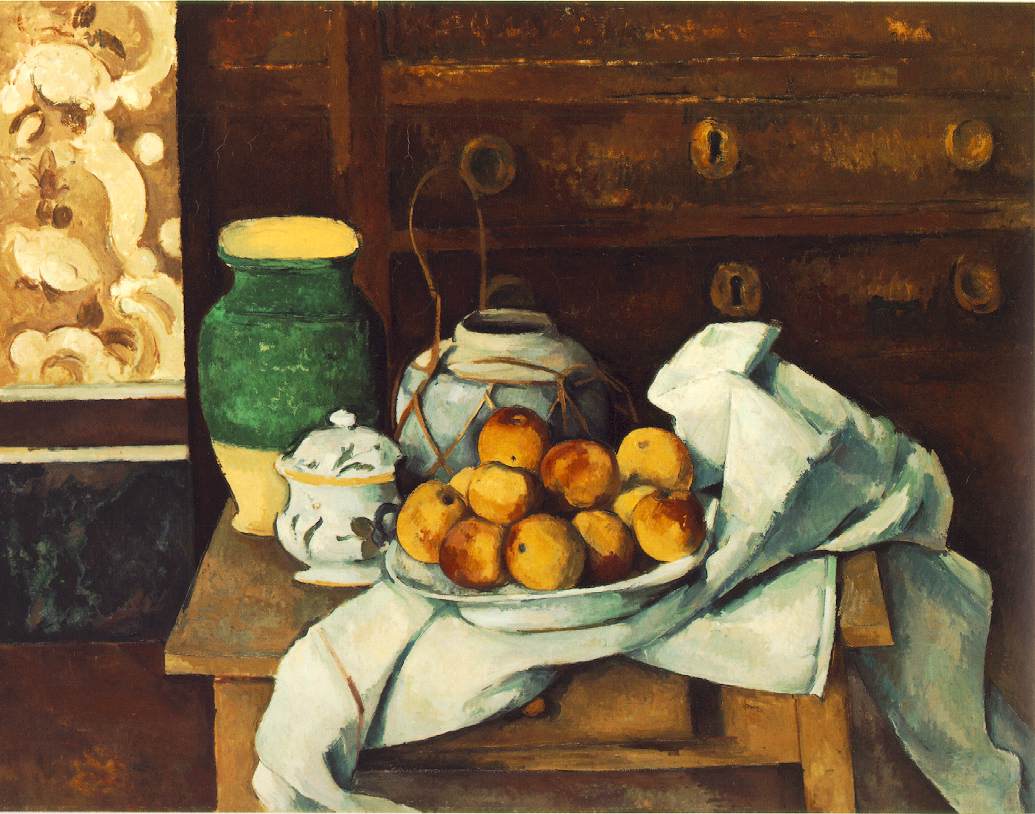
What do you see as something that Paul Cezanne might have been working to explain, figure out, or demonstrate through this painting? Think about the ELEMENTS of Art and the PRINCIPLES of design. Have a conversation and then consider the ideas for your own art. What are YOU hoping to explain, figure out, or demonstrate with your art?
3.2 apply subjects, symbols, and ideas in art and use skill to solve visual challenges.
(5.4) Reflect on various interpretations as a means for understanding and evaluating works of art.
What do you need to do in order to have your Oil Pastel Drawing completed as well as your next concentration work done on MONDAY when you WALK IN THE DOOR? Take it home? Lay them out and have a conversation with your partner about their progress.
1.2 Create art that demonstrates an understanding of how your ideas relate to the techniques (colored pencil layering) and process (grid and drawing) you are using.
1.4.3 evaluation [critique] (formative reflections about your artwork)
How are you doing? What do you feel needs work? Can you work with focus so that the learned goals are in your head and you are aware of what you are doing?
Advanced Drawing
So… what is the symbolism you might see in this work by Pablo Picasso from his Blue Period (1901 – 1904)?
Work on create portraits that use organization and function to solve specific visual challenges.
Know about and identify your intentions and purposes behind making this portrait.
AP Studio Art
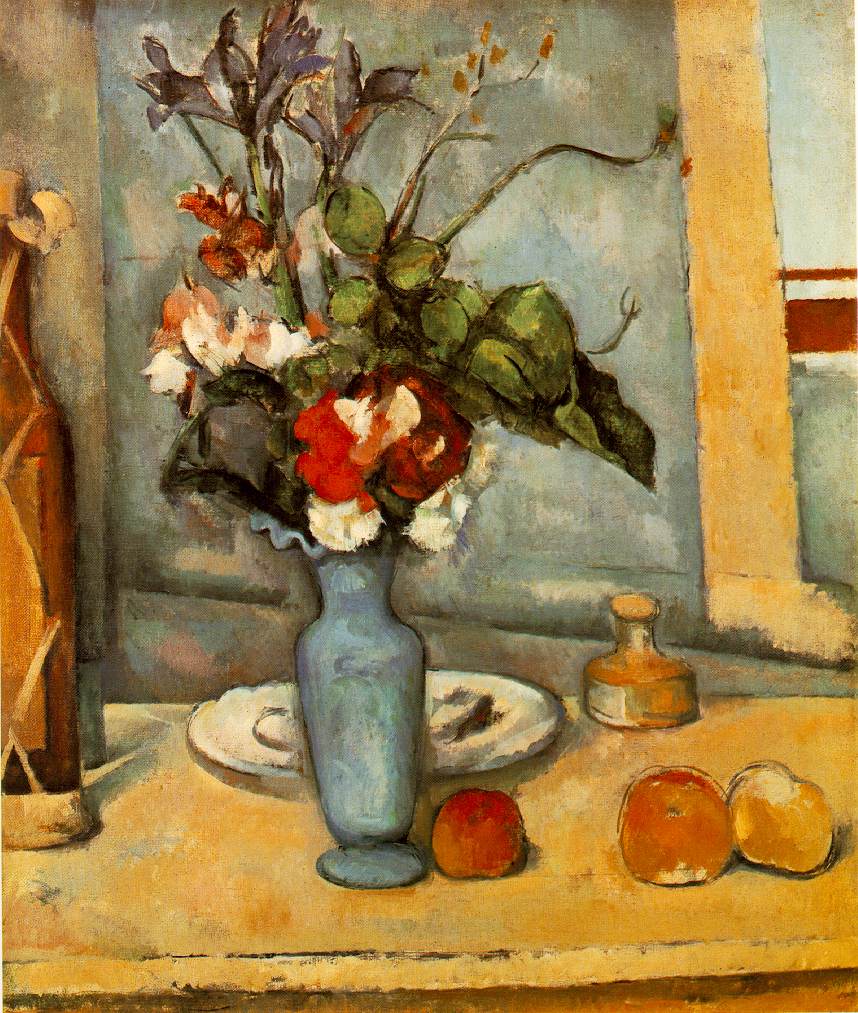
Another Cezanne – look at the right adge of the table and the left edge… do they line up? Didn’t we see this yesterday? Nope – same subject – almost exact… different painting.
3.2 apply subjects, symbols, and ideas in art and use skill to solve visual challenges
(3.5) Evaluate and defend how subject matter, symbols, and images are used in art.
What do you need to do in order to make sure you are prepared for tomorrow? What did you do today to make the most of your time and efforts?
“Until you value yourself, you won’t value your time. Until you value your time, you will not do anything with it.” — M. Scott Peck – Goal Habits
Art Foundations 2D
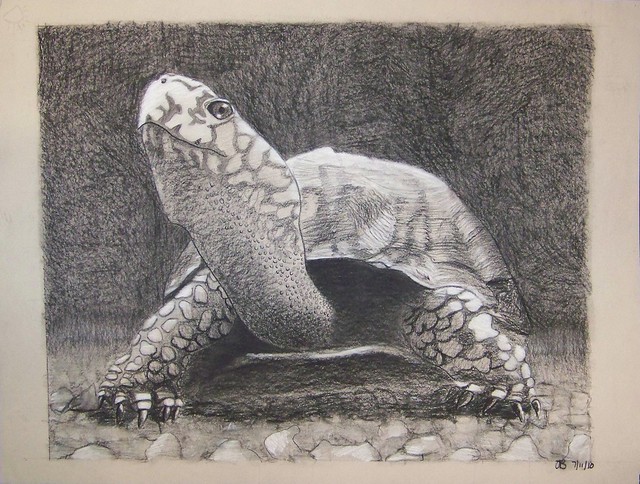
This turtle was drawn with the grid – no grid lines to see however!
4.4 Evaluate and interpret art for its relationship in meanings showing understanding of the work of various art professionals (how different artists make different works)
What is your favorite square of the entire drawing? Why?
Advanced Drawing
***START HERE*** With your classmates – discuss the many uses of symbolism that you are using in your artwork. TONIGHT – create a NEW RUBRIC / TEMPLATE in Google Docs and WRITE OUT in the preliminary stage section a list of the SYMBOLS and DEFINITIONS of the symbols (what they mean) as well as including a photograph of ALL of your preliminary drawings. (15 – 20 minutes tops).
Work on create portraits that use organization and function to solve specific visual challenges.
Know about and identify your intentions and purposes behind making this portrait.
AP Studio Art
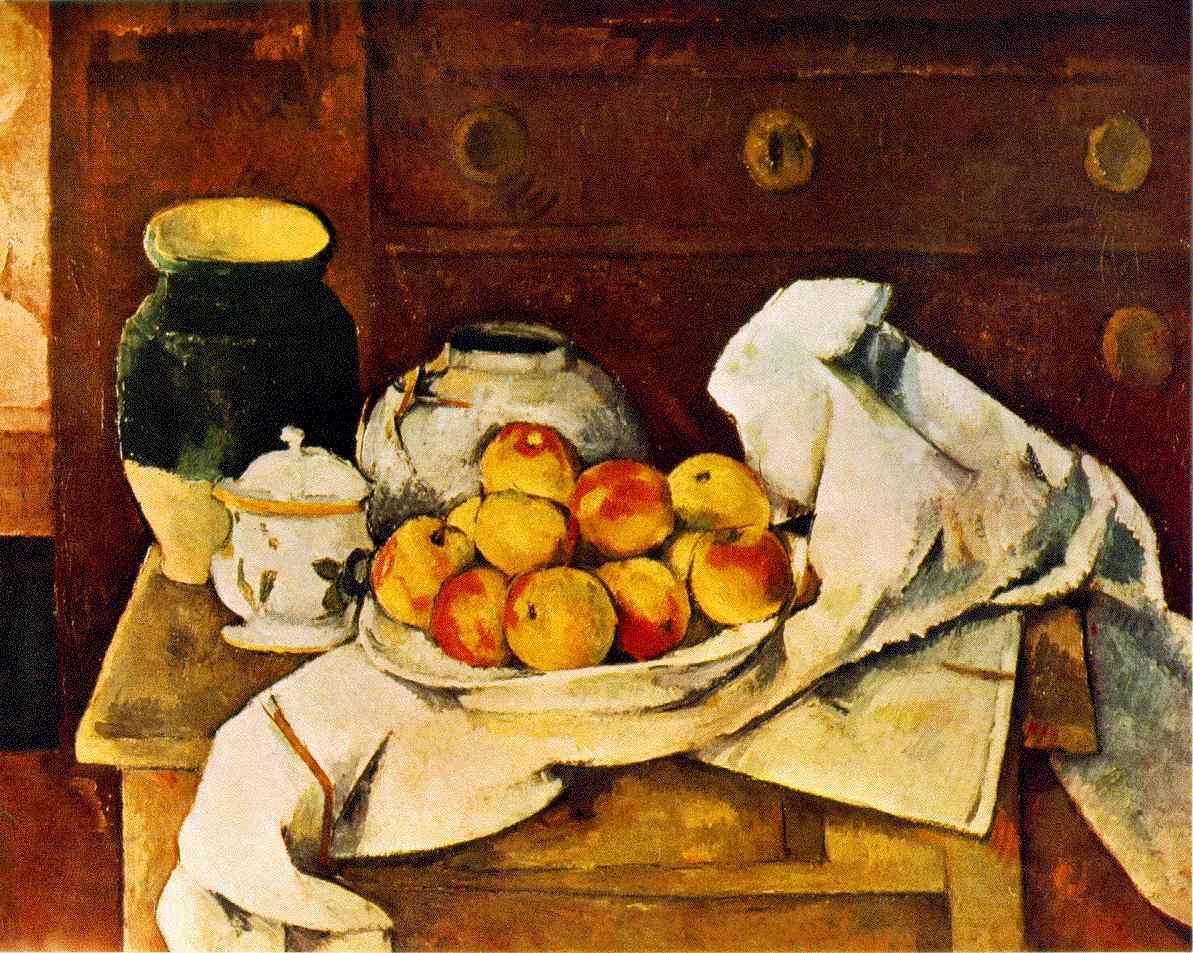
Cezanne’s still life with apples. What do you think Paul Cezanne was trying to accomplish with this painting?
3.2 apply subjects, symbols, and ideas in art and use skill to solve visual challenges.
How will you use your time wisely to complete the work? How can you work these pieces into your concentration? How have you been FOCUSED on the tasks at hand?
“The illiterate of the 21st century will not be those who cannot read and write, but those who cannot learn, unlearn, and relearn.” — Alvin Toffler – Goal Achievement Quote: Paul Mark Sutherland
Know about and demonstrate ideas (grid) and techniques )colored pencil) and use your skill to grid the drawings up.
Work on using knowledge of color wheel in the blending of colors.
What was your biggest accomplishment today? What classmates comment about your drawing are you most proud of? What was your honest EFFORT in the work (1 – 5)?
Work on create portraits that use organization and function to solve specific visual challenges.
Know about and identify your intentions and purposes behind making this portrait.
With your classmates – discuss the many uses of symbolism that you are using in your artwork. TONIGHT – create a NEW RUBRIC / TEMPLATE in Google Docs and WRITE OUT in the preliminary stage section a list of the SYMBOLS and DEFINITIONS of the symbols (what they mean) as well as including a photograph of ALL of your preliminary drawings. (15 – 20 minutes tops).







 Art With Korb